

Regarding the Ho Chi Minh City Department of Transport's written opinion on the assessment of the performance capacity of the Project Management Board for Investment and Construction of Transport Projects (Transport Board), the unit has just sent a written response to the Department of Internal Affairs.
Accordingly, the Transport Committee disagreed with some of the contents reported by the Department of Transport. The Transport Committee argued that the Department of Transport had used many inaccurate figures and assessments that did not reflect the true nature of the events, leading to many biased and inappropriate conclusions. In particular, this approach could easily create the misconception that all current delays are caused by the Transport Committee.
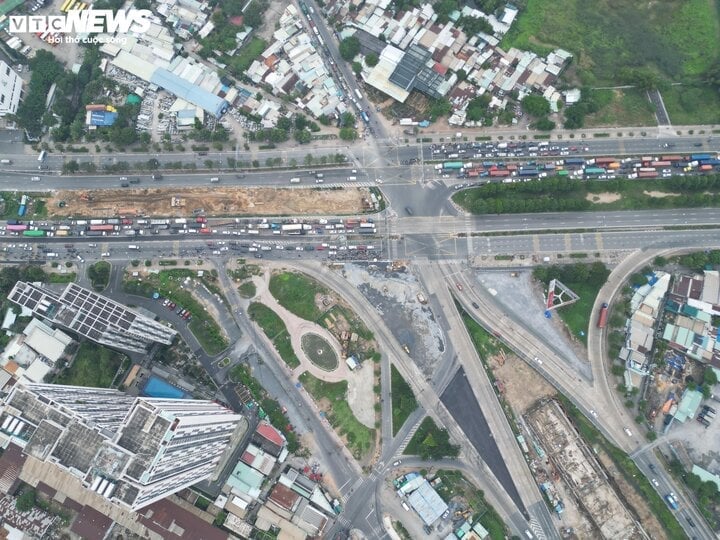
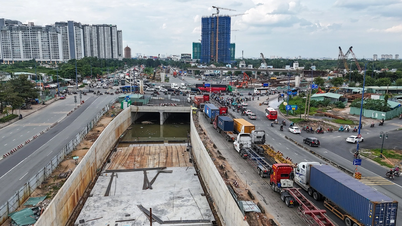
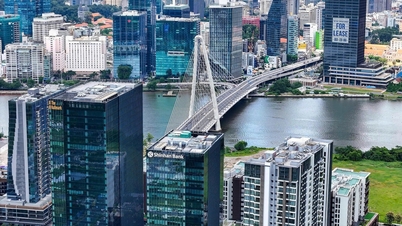
The An Phu intersection is one of the key projects managed by the Department of Transportation.
Ho Chi Minh City Department of Transport proposes establishing a new Management Board.
Previously, in its report, the Ho Chi Minh City Department of Transport stated that the Transport Board is the investor for 162 projects and is performing state supervision for 8 PPP projects. These include 2 nationally important projects, 10 Group A projects, and several Group B and C projects. The workload is enormous, with a current workforce of 239 people, meaning an average of less than 2 people managing one project.
The Department believes that with the current model and number of project managers, the Transport Board still has many limitations and shortcomings. Currently, the Transport Board has 10 project management boards managing more than 162 projects, but they lack legal personality and sufficient authority and functions to coordinate with relevant agencies, units, and organizations, leading to an overload on the leadership's management and operational tasks.
Furthermore, the shortcomings of the Transport Department also lie in the project preparation phase: the quality of project preparation and advisory work is not high, and at times, interruptions reduce investment efficiency. For example, the Ho Chi Minh City - Moc Bai expressway project has not yet had its pre-feasibility study report approved after nearly two years.
During the project implementation phase, limitations and shortcomings still exist that affect the progress, quality of construction, and investment efficiency. For example, the Ring Road 3 and the Ho Chi Minh City - Moc Bai Expressway are large-scale projects with complex technical aspects, involving many sectors and participating entities. The investor did not promptly identify complex and difficult issues to proactively propose solutions and report them to the competent authorities for timely resolution.
The Department of Transport believes that the number of projects managed by the Transport Board is very large, especially in recent years when it has been assigned as the investor for two key national projects on Ring Road 3 and other key projects such as the road connecting Tran Quoc Hoan and Cong Hoa roads, the construction of the An Phu interchange, and the expansion of National Highway 50.
Furthermore, many large projects will be implemented in the near future, such as the Ho Chi Minh City - Moc Bai expressway, Ring Road 2, and 5 BOT investment projects on existing roads under the special mechanism of Resolution 98.
Therefore, the Department of Transport proposes the establishment of an additional Project Management Board for specialized transportation construction projects, directly under the People's Committee of Ho Chi Minh City.
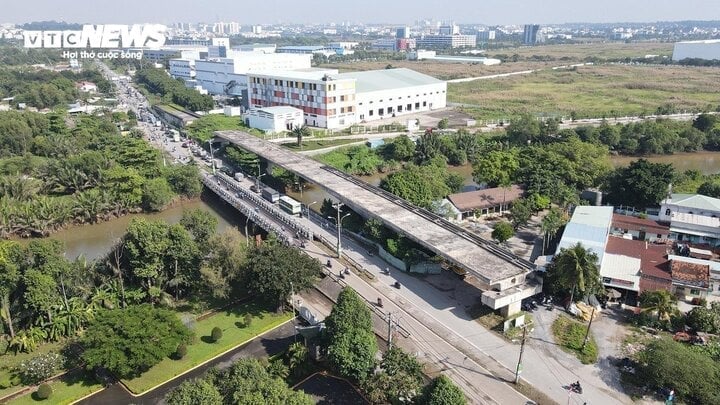
The Ho Chi Minh City Department of Transport stated that the Transport Board has 239 people but manages as many as 162 projects.
The Department of Transportation responds.
Responding to comments from the Ho Chi Minh City Department of Transport, the Transport Board stated that although the total number of projects assigned to the board as the investor is 162, this includes 67 projects that have been or are in the process of finalizing accounts and 24 projects that are in the investment preparation phase. Therefore, the focus of work in practice is only on 71 projects, including 23 projects that are directly under construction and 48 projects that are resolving difficulties and obstacles in compensation and land clearance.
According to the Department of Transportation, if the actual characteristics of the projects under its management are updated, this number would be 10 people managing one ongoing project (239 people divided among 23 ongoing projects).
Regarding the Department of Transport's assessment that the Project Management Boards of the Transport Department lack legal personality and authority, the Transport Department stated that, according to regulations, each project management board has only one Board of Directors and subordinate Project Management Boards. The heads of the subordinate Project Management Boards can still preside over and coordinate daily with local authorities.
The Transport Committee also posed a counter-question to the Ho Chi Minh City Department of Transport: "If the Ho Chi Minh City Department of Transport argues in this way, how will the upcoming specialized project management board (assuming it is established based on the Ho Chi Minh City Department of Transport's proposal) address this inadequacy? Will each subordinate project management board have its own seal and accountant to have sufficient authority to transact with local authorities?"
Regarding the Ho Chi Minh City - Moc Bai expressway project, which was assigned a two-year timeframe but whose pre-feasibility study report has not yet received approval from the competent authority, the Transport Department stated that the delay over the past two years has been due to various reasons not attributable to the unit.
Specifically, this includes recalculating the project's scale, changing it from a limited 4-lane to a full 4-lane highway in accordance with the Prime Minister's new policy; completing the procedures to secure an additional 2,900 billion VND from the central government budget for the two localities (unprecedented); and differing views between the Ministry of Transport and the Ministry of Planning and Investment regarding whether or not to connect the Ho Chi Minh City - Moc Bai expressway with the Ho Chi Minh Highway.
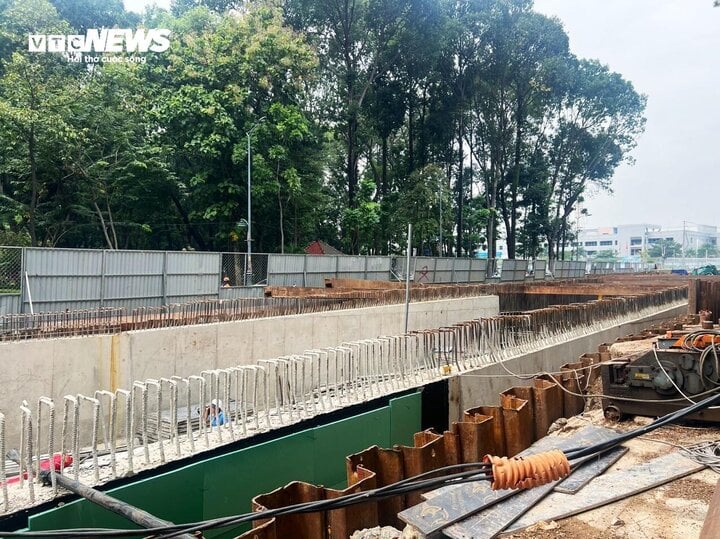
The transport department believes there are many reasons for the delays in project implementation.
Furthermore, many projects are delayed, facing obstacles in land clearance, and have weak construction contractors, all stemming from previous units. The Transport Department only took over and began implementing these projects from May 2019.
"In summary, regarding the content of document No. 12456 dated October 16th from the Department of Transport, the Board unanimously agrees that it is necessary to continue perfecting the organizational structure, strengthening the application of information technology in management, enhancing inspection and supervision, and accelerating the progress of transport projects. However, the Board disagrees with the Department's selection of information, data, analysis, and assessments for the reasons mentioned above," the Transport Board's document stated.
Regarding the proposal to establish a new Project Management Board by the Ho Chi Minh City Department of Transport, the Transport Committee believes that if the Ho Chi Minh City People's Committee and the Department of Transport determine that in the coming years there is a need for an additional specialized transport project management board directly under the Ho Chi Minh City People's Committee (temporarily referred to as the new transport project management board), the Transport Committee proposes the following model for the new board and its relationship with the current Transport Committee:
The new Transport Project Management Board will have similar functions and responsibilities to the current Transport Board, with the added responsibility of managing transport projects implemented under the PPP method and pilot projects that are groundbreaking in terms of mechanisms, in the spirit of Resolution 98.
The new Transport Management Board will prepare for investment and implementation of PPP projects, including several new transport projects, and will take over some compensation and land clearance projects, as well as projects from previous investors (currently under final settlement) from the Transport Board, so that both sides can work together to accelerate the resolution of outstanding projects.
Both the old and new boards will jointly implement key transportation projects (a separate Key Transportation Project Management Board will not be established as proposed by the Ho Chi Minh City Department of Transportation because this model would create an imbalance in personnel between the two boards and could easily affect the morale and motivation of staff and workers).
Luong Y
Source
![[Photo] Prime Minister Pham Minh Chinh presides over a meeting on private sector economic development.](/_next/image?url=https%3A%2F%2Fvphoto.vietnam.vn%2Fthumb%2F1200x675%2Fvietnam%2Fresource%2FIMAGE%2F2025%2F12%2F20%2F1766237501876_thiet-ke-chua-co-ten-40-png.webp&w=3840&q=75)









































































Comment (0)