

Climate change is now identified as one of the greatest challenges to the global environment and sustainable development, with far-reaching impacts on both natural ecosystems and socio-economic systems.
International reports indicate that humans are the primary cause of global warming, with average temperatures having risen by approximately 1.1°C compared to pre-industrial levels. Since 1980, each decade has been hotter than the previous one, with greenhouse gas concentrations consistently reaching record levels, making recent years among the hottest on record.
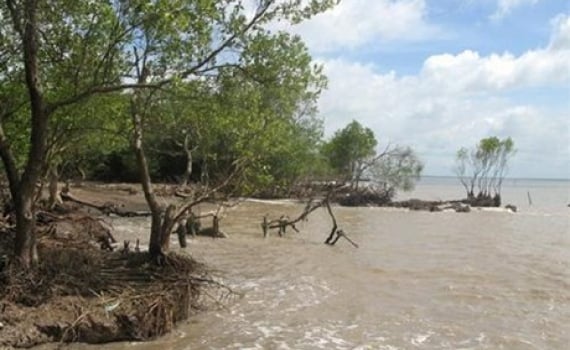
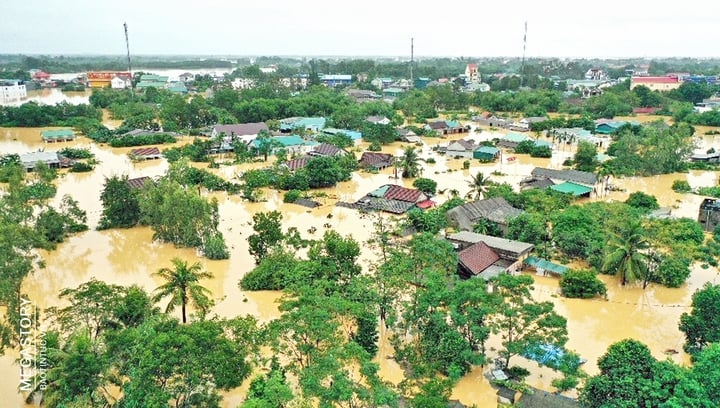
Vietnam is one of the countries most severely affected by climate change, facing simultaneous risks from strong storms, heavy rainfall, flash floods, droughts, sea level rise, saltwater intrusion, and coastal erosion. National scenarios show that by the end of the 21st century, sea levels could rise by up to 1 meter in extreme scenarios, seriously threatening major deltas and many coastal cities.
Recent studies show that Vietnam has lost a significant percentage of its GDP due to the impacts of natural disasters and climate change; without decisive action, the damage could increase sharply in the future and set back progress towards achieving the Sustainable Development Goals.
In response to these challenges, the Party and State have implemented many strong policies and initiatives. The National Climate Change Strategy to 2050 aims for proactive and effective adaptation, reducing vulnerability, decreasing greenhouse gas emissions, and striving for net-zero emissions by 2050, while simultaneously enhancing climate forecasting, warning, and monitoring capabilities to be on par with developed countries. Resolution No. 57-NQ/TW of the Politburo on breakthroughs in national science, technology, innovation, and digital transformation further emphasizes the role of science and technology, including AI, as a key factor in enhancing the adaptability and competitiveness of the economy.
In this context, AI emerges as a disruptive tool, a crucial complement to traditional climate models. Previously, global and regional climate dynamics models required complex problems, demanding significant computational time and infrastructure costs. Now, AI allows for significantly shorter simulation times, reduced costs, and expanded capabilities for building and comparing thousands of climate change scenarios. Several machine learning-based climate simulation systems have demonstrated the ability to run much faster than traditional models, while still producing comparable results regarding temperature and rainfall trends and distribution.
The new trend is to develop hybrid models, combining physical dynamics models with machine learning models. This approach does not replace but complements physical models, leveraging both the solid scientific foundation and AI's ability to correct errors and handle complex nonlinear processes. Observational data, satellite data, model data, and historical data are integrated to produce more detailed and reliable forecasts. AI is also used to parameterize physical processes that are "bottlenecks" in traditional models, such as convection, clouds, and radiation, helping to reduce computational costs while maintaining the scientific basis.
In Vietnam, the Institute of Meteorology, Hydrology and Climate Change has initially applied AI and machine learning to refine models and improve the quality of forecasts for heavy rainfall, flash floods, and extreme weather events. Simultaneously, it has built digital infrastructure and high-performance computing systems to handle the ever-increasing volume of meteorological and hydrological data. A key highlight is the experimental use of AI in constructing flood maps due to sea level rise within the framework of the project "Updating Climate Change and Sea Level Rise Scenarios for Vietnam". Machine learning models such as Random Forest, XGBoost, LightGBM, and convolutional neural networks are deployed on multi-source datasets (topography, soil, remote sensing, land use, hydrology) to shorten computation time, improve resolution, and enhance the reliability of flood maps.
A new step forward is that simulation results will be integrated into the WebGIS system, allowing ministries, departments, and localities to access and compare them online across scenarios and timelines, directly serving spatial planning, urban planning, infrastructure planning, and climate change adaptation plans. This represents a significant shift from "static maps" to "dynamic, interactive digital maps," linking climate science with practical governance tools.
Beyond the fields of meteorology and hydrology, AI, when integrated with digital transformation, is increasingly demonstrating its role as a sustainable, interdisciplinary governance platform.
In resource management and agriculture, AI can analyze climate, soil, and crop data to predict yields, monitor droughts, optimize irrigation, and assist farmers in adjusting cropping seasons, plant varieties, and inputs, thereby reducing risks and increasing economic efficiency.
In urban and infrastructure development, AI helps simulate the impacts of extreme rainfall, flooding, urban heat islands, and land subsidence, supporting climate-adaptive urban planning and optimizing transportation, drainage, and green spaces.
In the field of environmental security and policy planning, AI can be integrated into digital platforms to quantify the value of ecosystem services, assess losses and damages, analyze risk scenarios, and support the development of strategies, plans, and action programs for adaptation and emission mitigation.
In disaster risk management, AI plays a crucial role in multi-hazard early warning systems, analyzing real-time data from observation networks, satellites, and sensors to provide earlier and more accurate warnings to authorities and the public.
However, much remains to be done for AI to truly become a "new force" in sustainable governance. Vietnam's data and computing infrastructure still lags significantly behind requirements. Meteorological, hydrological, remote sensing, and socio-economic data are fragmented, lack standardization, and are difficult to share, while open data – a crucial foundation for AI – has not been fully promoted. High-performance computing systems dedicated to climate modeling and AI are limited and struggle to support large-scale deep learning models.
Interdisciplinary human resources combining meteorology-climatology, climate change with data science, high-performance computing, and risk management are lacking and weak. Many new AI products remain at the experimental stage and have not been deeply integrated into operational processes and decision-making. The legal framework for data, sharing, security, and the use of AI in public sectors is still incomplete; the coordination mechanism between the meteorological-hydrological sector and other ministries, sectors, and localities is not yet truly seamless. Financial resources, especially for research, development, and long-term operation of AI systems, still heavily depend on international aid and support projects.
In this context, the development and application of AI in meteorology, hydrology, climate change, and sustainable governance should be considered a strategic direction, closely linked to the National Climate Change Strategy, net zero emission commitments, the meteorological and hydrological sector development strategy, and the national digital transformation program.
Along with investing in digital and computing infrastructure, Vietnam needs to focus on building a unified national climate data system, integrating observational data, models, remote sensing, and socio-economic data, creating a foundation for developing independent AI models and hybrid models with physical models.
Simultaneously, attention must be paid to training interdisciplinary human resources, encouraging training institutions and research institutes to incorporate AI, big data, and climate modeling into their training programs; strengthening international cooperation and participating more deeply in global AI and climate networks, both to access new knowledge and to mobilize additional financial and technological resources. Improving institutions and policies, especially regarding data, standards, safety, responsibility, and ethics in AI applications, is an indispensable condition for the widespread and reliable use of AI products in decision-making.
In the era of climate change and digital transformation, AI is not just a technological tool, but is becoming the "soft infrastructure" of sustainable governance. If Vietnam seizes the opportunity and overcomes bottlenecks in data, infrastructure, human resources, and institutions, it can transform climate challenges into a driving force for innovation in its growth model, enhance forecasting capabilities, mitigate risks, and make steady progress on the path to green, inclusive, and sustainable development.
Source: https://mst.gov.vn/bien-doi-khi-hau-va-cuoc-dua-moi-suc-manh-cua-ai-va-chuyen-doi-so-trong-quan-tri-ben-vung-197251210181319362.htm

















![[Video] The craft of making Dong Ho folk paintings has been inscribed by UNESCO on the List of Crafts in Need of Urgent Safeguarding.](https://vphoto.vietnam.vn/thumb/402x226/vietnam/resource/IMAGE/2025/12/10/1765350246533_tranh-dong-ho-734-jpg.webp)























































Comment (0)