

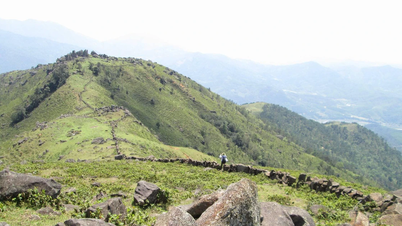
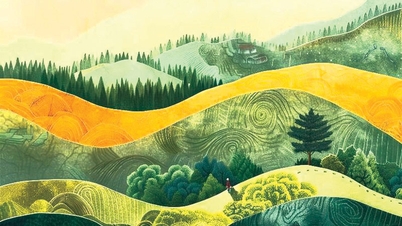
Binh Lieu is a poor border district in the eastern part of Quang Ninh province, located more than 100 km from the center of Ha Long City, with nearly 50 km of border shared with China. Unlike the glitz and glamour of the city, Binh Lieu possesses a pristine, rustic beauty, sheltered by majestic mountains, dreamy waterfalls, and clouds drifting lazily over small stilt houses or swirling over golden terraced rice fields, making the scenery of Binh Lieu appear like a painting.
Go to Binh Lieu to drink rượu (rice wine) and sing Pả dung (traditional Vietnamese folk songs).
It is said that the best time to visit Binh Lieu is in September and October, when the forest is covered in vibrant red maple leaves, the roadsides are lined with pristine white reeds glistening in the sun, and the rice terraces are gilded with gold... December, January, and February, on the other hand, are bitterly cold but offer many festivals.
Thanh, the owner of a charming homestay in Binh Lieu, proudly states: "Each season in Binh Lieu has its own unique beauty. And: 'The most beautiful time is when you arrive in Binh Lieu.'"
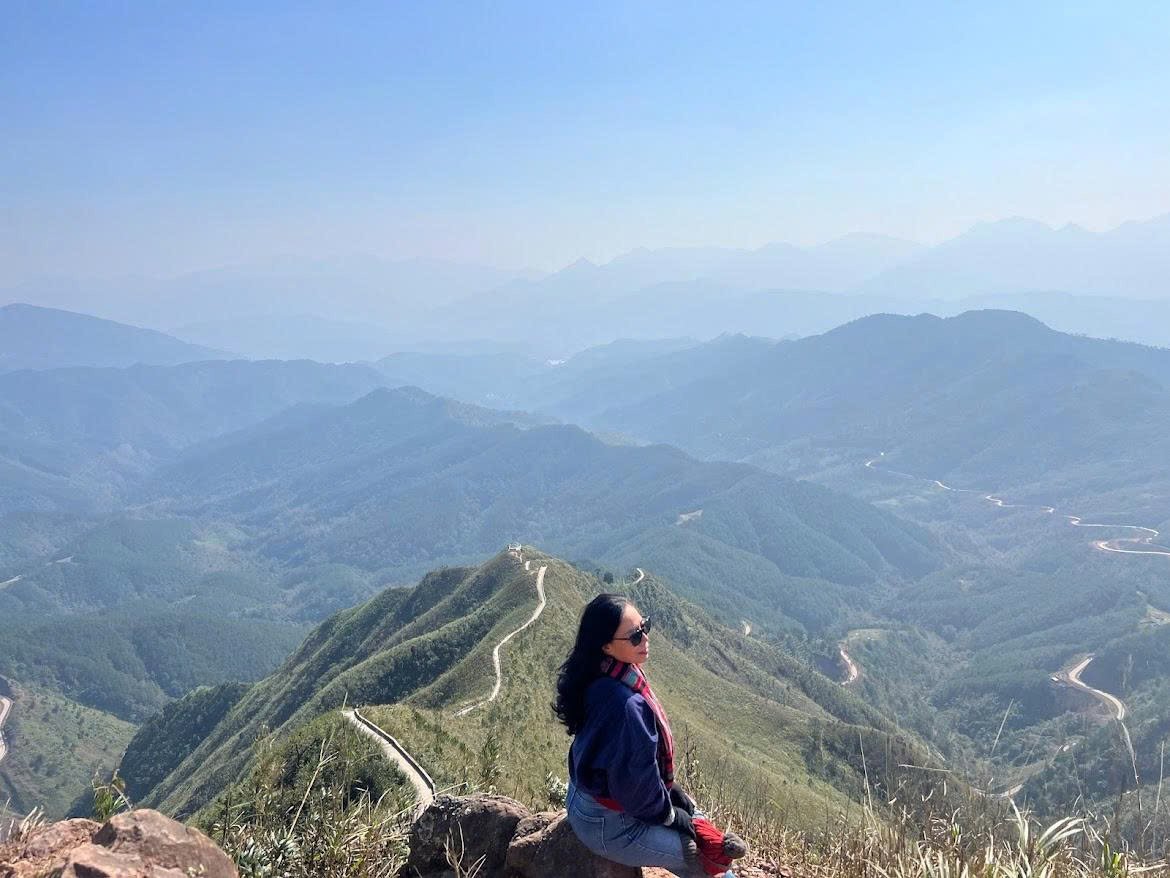
Binh Lieu welcomed me on a day bathed in golden, honey-like sunlight. The road to this border region was beautiful, with sections along the coast and others winding along the cliffs, between rows of casuarina trees that captivated the heart. In the distance, glimpses of red-leaved trees could be seen. All along the way, I could only marvel and marvel: Quang Ninh is so blessed by nature!
Binh Lieu now has many farmstays and homestays. I stayed at Thanh's farmstay. It was a small, charming place nestled against the cliffside, with about 10 fairly comfortable rooms, a BBQ area, a campfire spot, and especially lots of roses, purple rhododendrons, and peach blossoms. The early morning was bitterly cold, but looking at the mountainside bathed in a soft, radiant golden sunlight, I felt like I was in Switzerland, like the scenery I'd seen in movies. The thin wisp of smoke rising from my coffee cup made me feel like time was passing very slowly.
Binh Lieu District is home to many ethnic groups, with the Tay, San Chi, and Dao being the most populous. The Kinh people make up about 5% of the population, and there are also the Hoa and Nung people. The Tay are studious and pursue education, the San Chi are hardworking and skillful, and are famous for their vermicelli-making and... women's football. And the Dao are very "gentle" (Thanh recounted).
They dislike competition and seek out the highest mountain to live on. The agricultural economy in Binh Lieu mainly relies on anise and cinnamon trees, which are cultivated by the Dao people. They are not poor; every household has anise and cinnamon gardens, rice paddies, buffaloes, and cattle… but their lives are simple, mostly self-sufficient, and they don't want to compete with anyone, so the high, uninhabited mountains are their haven.
During a tour, I asked Ha, a Tay ethnic man who was a doctor and weekend tour guide, and who lived in Binh Lieu town: "Do you have a garden of star anise or cinnamon?" Ha said no. Only the Dao people grow cinnamon and star anise. I asked again: "Then we could buy them." "Oh no, they don't sell them, they keep them for themselves."
That afternoon, the day I arrived at Thanh's farmstay, it was already dark. After unpacking, Thanh told my sisters and me to go to Mr. Say's house for dinner. Thanh explained that Mr. Say's family were from the Dao Thanh Phan ethnic group and were her neighbors. Thanh and her friend's farmstay was on land they rented, and the family worked for the farmstay. Whenever they had guests, their house was a popular place for visitors to experience the local culture.
Because we had been informed in advance, when my friends and I arrived, Mr. Say's whole family was preparing dinner. Some were preparing ducks and chickens, slicing meat, and stir-frying vegetables. By the blazing fire, Mrs. Say was tending to the pot of braised meat. She looked gentle, kind, and spoke little. She just listened quietly and smiled. In the glowing embers of the fire, she had buried several cassava roots somewhere. After we sat down and warmed our hands, she broke off a piece of the roasted cassava and gently said, "Eat the cassava, it's delicious."
Outside, it was freezing cold, but the small kitchen was very warm. As I ate cassava and watched Mr. Say's family prepare dinner, I felt like I had wandered into a novel by Ma Van Khang, such as "The Silver Coin with Blooming Flowers," or a story from Duong Thu Huong's "Journey of Childhood."
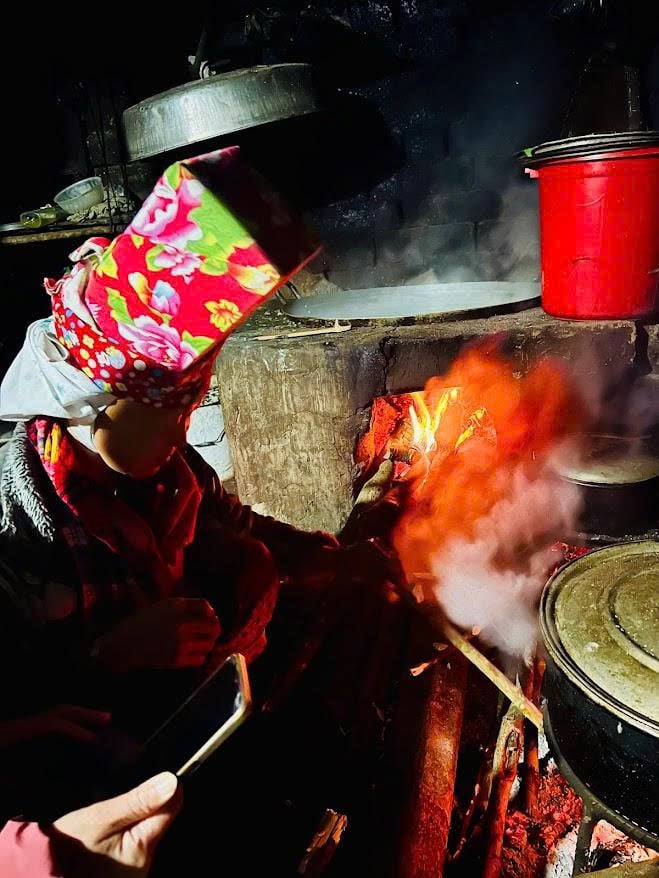
I wasn't used to the food at Mr. Say's house because it was too meaty and fatty. That's understandable; they live high up in the mountains, where the weather is cold, so they need a lot of fat and protein to tolerate it. Besides, their meals absolutely had to include alcohol. Homemade alcohol. The special dish they treated my sisters and me to that day was duck cooked in alcohol. The duck was cleaned, stir-fried, seasoned to taste, and then about a liter of alcohol was poured into the pot and simmered until only a little liquid remained.
This dish is unique and quite delicious. The broth has the richness of the meat, the savory flavor of the spices, and especially the spicy heat of ginger blended with the pungent, sweet taste of rice wine. Drinking a cup, the rising heat brings a feeling of lightheadedness, and fatigue disappears.
Everyone at Mr. Say's house drank a lot of alcohol, but it wasn't noisy. They laughed, talked, and joked around, but there was no shouting "cheers!" or shaking hands like in the lowlands. Midway through the drinking, in the tipsy haze, I sang them the Vam Co Dong folk song, and then Mr. Say sang "Pa Dung," a Dao folk tune. I didn't understand the lyrics, but I felt the melody was melancholic yet poignant.
Mr. Say explained the meaning of the song: if a flower is beautiful and fragrant, people cherish it; if a person is beautiful and good, people love them… After singing, the whole family drank wine. It seemed only Mrs. Say didn't drink. She sat silently beside her husband, listening to him sing, talk, and laugh. Occasionally, she would get up to get food. That's all, but looking into Mr. Say's eyes, it was clear that she was his very own "beautiful and fragrant flower."
As we left, the sounds of pa dung singing and laughter still echoed in the wind. Thanh said, "They drank until late at night. Yet, they were still working as usual the next morning. Amazing!"
The A Mấy girls have no eyebrows and no hair.
Mr. Say's family has three women, including his wife, and all three are named May. Hai, a young man who graduated in electronics and telecommunications but put his engineering degree away to go to Binh Lieu to grow antique roses, said: "Now, if you go to the crossroads and call out, 'A May,' two-thirds of the women in the village will run out." I was surprised: "Wow, is that name special?" Hai didn't know either, only guessing that it must be a beautiful name, like the name Mai in the lowlands.
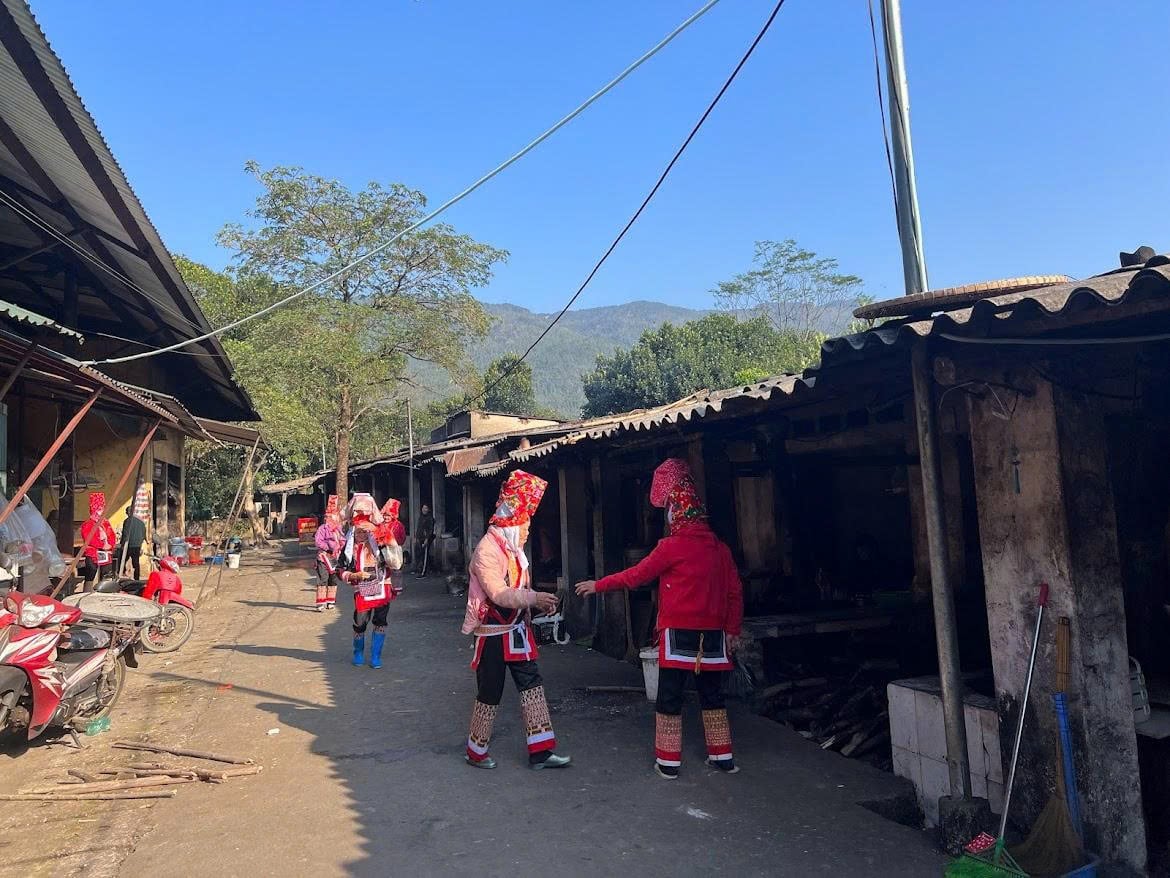
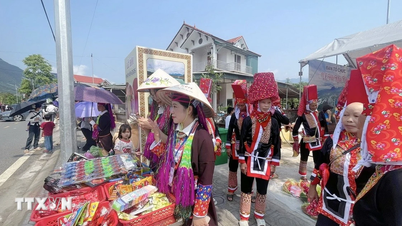
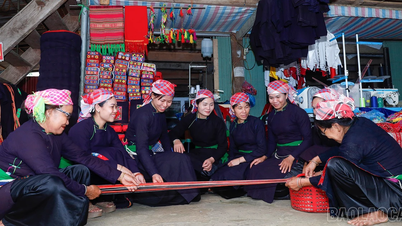
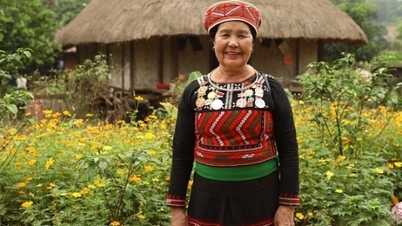
The A Mấy women, once married, don't grow their eyebrows or hair long. I knew about this custom from reading stories about the highlands, so I wasn't surprised; in fact, I found it beautiful. The old story goes that long ago, a Dao woman was preparing a meal for her husband. Unbeknownst to her, there was hair in the rice bowl, which her husband accidentally swallowed. Filled with remorse, she shaved her head and eyebrows to keep them clean and free from obstructions while preparing meals. Dao Thanh Phan women in Binh Lieu wear predominantly red clothing, a red square headpiece, and are always busy cooking, preparing meals, and serving guests and their husbands thoughtfully with a constant smile on their faces.
At the dinner table, they sat next to their husbands, laughing, joking, and drinking together. Hai boasted, "Oh my goodness, those women drink like crazy! Tomorrow is market day, you'll see it when you go there, it's so much fun." Indeed, a visit to Dong Van market, seeing the A May women, whether old or young, was truly delightful. The market day is not just for buying and selling, but also a place for dating and drinking. In the small eateries, every place has tables occupied by women, carefree and relaxed. The Dao people are less constrained by conventional norms; for example, they have a love market once a year. On that day, those who were once together seek each other out and fall in love again. It's only for one day, then everyone goes home. The remaining 364 days are for the present and the future.
I really enjoyed watching the way Mr. Say looked at his wife. It was tender, gentle, and respectful. Thanh whispered, "Men here really cherish their wives." I asked Ha, "Are there any cases of husbands abusing their wives in our area?" Ha laughed, "Very few, sister. Getting married isn't easy. You have to pay a dowry, prepare a feast... And wives work hard too, they have to cook breakfast, clean up, and so on. You have to love them."
Oh, there are women everywhere who love their husbands and care for their children, but not everywhere are women treated so freely and viewed with such respect by their husbands as the A Mấy women I saw in Bình Liêu.
We visited Dong Van Market and ate stir-fried pho, a culinary specialty of Binh Lieu (when Thanh said that after visiting the dinosaur spine the next day we would go to Dong Van Market, I wondered, "I thought Dong Van was in Ha Giang," but it turns out that many localities have "Dong Van Market," though I haven't looked into why). Dong Van Market in Binh Lieu is also a place where ethnic minorities such as Hoa, Dao, Tay, San Diu, Kinh, etc., trade and socialize. Luckily, the day I visited was Saturday and Sunday, so it was the weekend market day.
Even though it was a market day, it usually closed around noon. By then, the vendors stopped enthusiastically calling out to customers, and buyers didn't bother haggling. Observing them all, I thought they must be spending their time on other, more interesting things than making money. For example, the woman selling clothes was engrossed in playing her zither with her eyes closed, oblivious to everyone passing by. Only when I applauded and praised her did she open her eyes, smile, thank me, and continue playing.
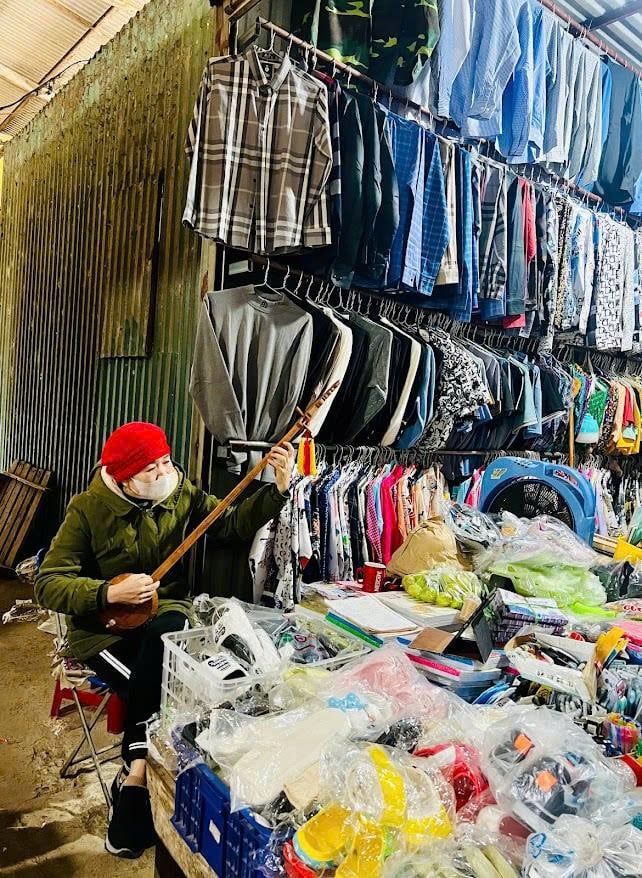
The "stage" of the market at closing time is probably for those seeking pleasure, or forgetting, or neither remembering nor forgetting, because many people gather to drink, laugh and chat happily, or sit alone, or… drink while walking. Somewhere there are drunken husbands staggering and their wives patiently following behind. Then there's a man stumbling home, his legs giving way, and I look around but don't see his wife. Ha laughs: "She's probably gone drinking too." That's probably true because in every stir-fried noodle shop, there are tables where women sit and drink.
Some people criticize me for telling stories about women sitting in bars and tea houses (?!). However, everyone has their own perspective and viewpoint. I like seeing my A Mấy girls drink alcohol with carefree confidence. That kind of confidence, that truly free spirit—how many people possess that?
And the hibiscus flower - a simple yet vibrant petal.
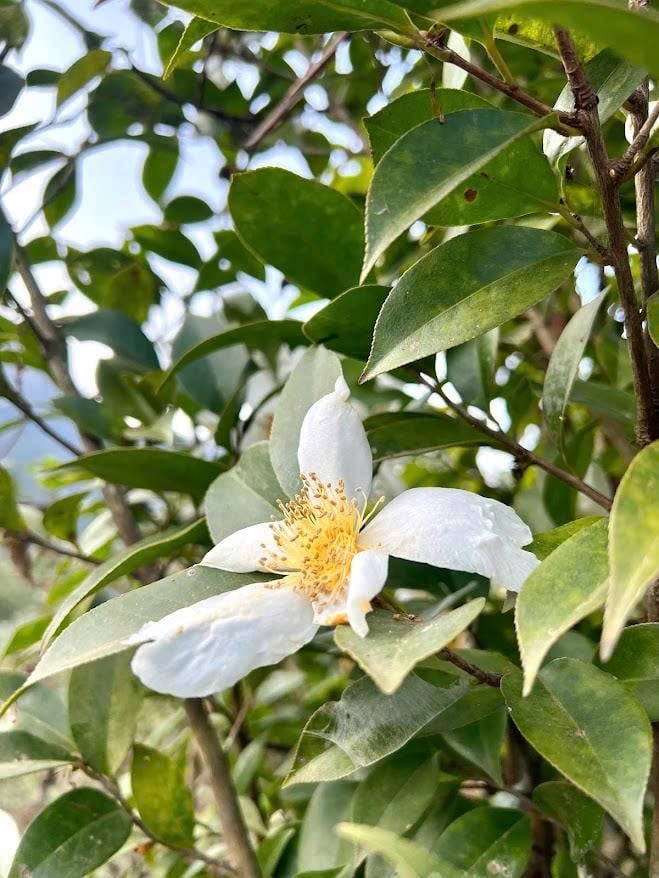
Since returning from Binh Lieu, I've shared many stories, but I've never told the story of the Sophora japonica flowers. However, whenever I think of Binh Lieu, that beautiful and poetic land, the image of a white flower with a yellow pistil and a gentle fragrance comes to mind. Sophora japonica flowers usually bloom profusely in December, during the season when the biting winds blow. At that time, the hillsides and roadsides are covered with vast fields of these flowers. The flowers aren't dazzling or extravagant, but simply captivating, making them unforgettable once you've fallen in love with them; just like the people of Binh Lieu, simple, honest, and full of life, inspiring admiration once you've met them.
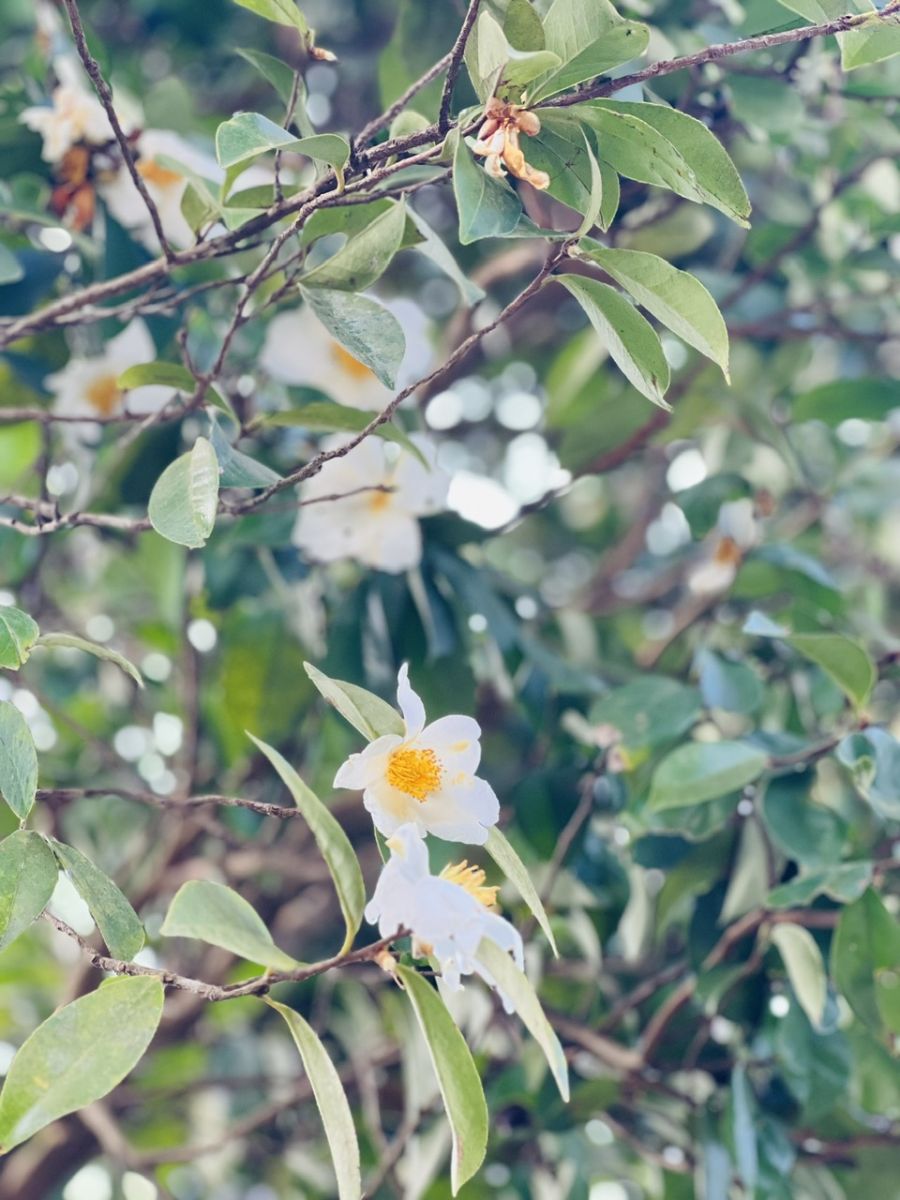
The beauty of the crape myrtle flower lies not only in its color and fragrance but also in its intrinsic value. The crape myrtle tree has many uses. The seeds are used to extract oil. According to literature, crape myrtle oil contains many beneficial nutrients, fights cancer, aids in weight loss, and boosts the body's immunity. The oil content and quality of crape myrtle varieties from Binh Lieu are highly regarded, especially the Omega 3, 6, and 9 content, which is comparable to olive oil. Furthermore, it serves as an important raw material in industries such as machine oil, lubricating oil, anti-rust oil, printing oil, and oil used in medicine.
Other parts of the Sophora japonica tree also have many uses, such as the roots, which are used to treat acute pharyngitis, stomach pain, and sprains. The roots and bark are used to treat broken bones and sprains, the dried bark is used as fuel and activated charcoal, and the residue after pressing out crude oil is used to clean shrimp ponds, produce pesticides, and as fertilizer.
Besides star anise and cinnamon, the oil from the Styrax tree provides a significant source of income for the local people. A liter of Styrax oil currently costs around four hundred thousand dong. Furthermore, the local government has enhanced the value of the Styrax flower by organizing the Styrax Flower Festival, usually in December, both to honor the flower's value and to promote local tourism. During the festival, visitors can immerse themselves in a sea of snow-white Styrax flowers, admire ethnic minority girls in their most beautiful costumes, take photos with the flowers, and experience cultural activities, folk games, exhibitions, and local cuisine.
I must say I greatly admire the tourism development approach of the Binh Lieu authorities in particular and Quang Ninh province in general, as they effectively exploit each local strength. Visiting Binh Lieu now, you'll find festivals almost year-round. Besides the four major festivals – the Hoa So festival, the Kieng Gio festival, the Soong Co festival, and the Luc Na communal house festival – there are also the Golden Harvest festival, the baby's first birthday celebration, and more.
Moreover, they regularly organize competitions such as women's football for the San Chi ethnic group, running races on the "dinosaur's spine," and weekend markets. Each festival focuses on promoting the unique cultural values of the locality. As a result, not only are these cultural values preserved, but they are also exploited to the fullest, attracting more and more tourists to Binh Lieu, thereby improving the economic lives of the people and making Binh Lieu's mark increasingly prominent on the world tourism map.
This is a story that not every locality can tell!
Thanh Nam
Source: https://baotayninh.vn/binh-lieu-noi-nang-rat-diu-dang-a191688.html


![[Photo] General Secretary and President To Lam meets with National Assembly delegates from ethnic minorities.](https://vphoto.vietnam.vn/thumb/1200x675/vietnam/resource/IMAGE/2026/04/20/1776696701056_a1-bnd-8331-3342-jpg.webp)
![[Image] National Assembly discusses the implementation of the socio-economic development plan.](https://vphoto.vietnam.vn/thumb/1200x675/vietnam/resource/IMAGE/2026/04/20/1776696707422_ndo_br_img-20260420-185419-jpg.webp)






























































Comment (0)