

Russia dropped a series of guided bombs on targets in the Kharkiv province, but one was hit by shrapnel from the ground and detonated before hitting its target.
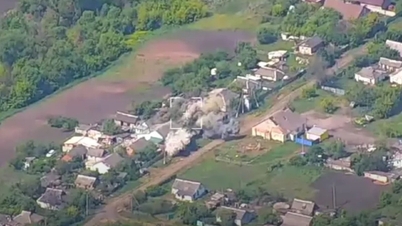
A Russian fighter pilot's account, Fighter Bomber, posted a video today from a drone (UAV) showing the moment a series of FAB-500 bombs equipped with the Unified Lifting and Guidance Module (UMPK) crashed into "Ukrainian military equipment and ammunition depots" near the city of Vovchansk in the Kharkiv province.
In the video, at least two bombs are seen crashing into the warehouse area, creating massive explosions. A third bomb detonates in mid-air, sending shockwaves and a shower of debris raining down on the area below. "The bombs detonated in mid-air because they hit the debris that had been flung upwards earlier. This is a very rare occurrence," the pilot said.
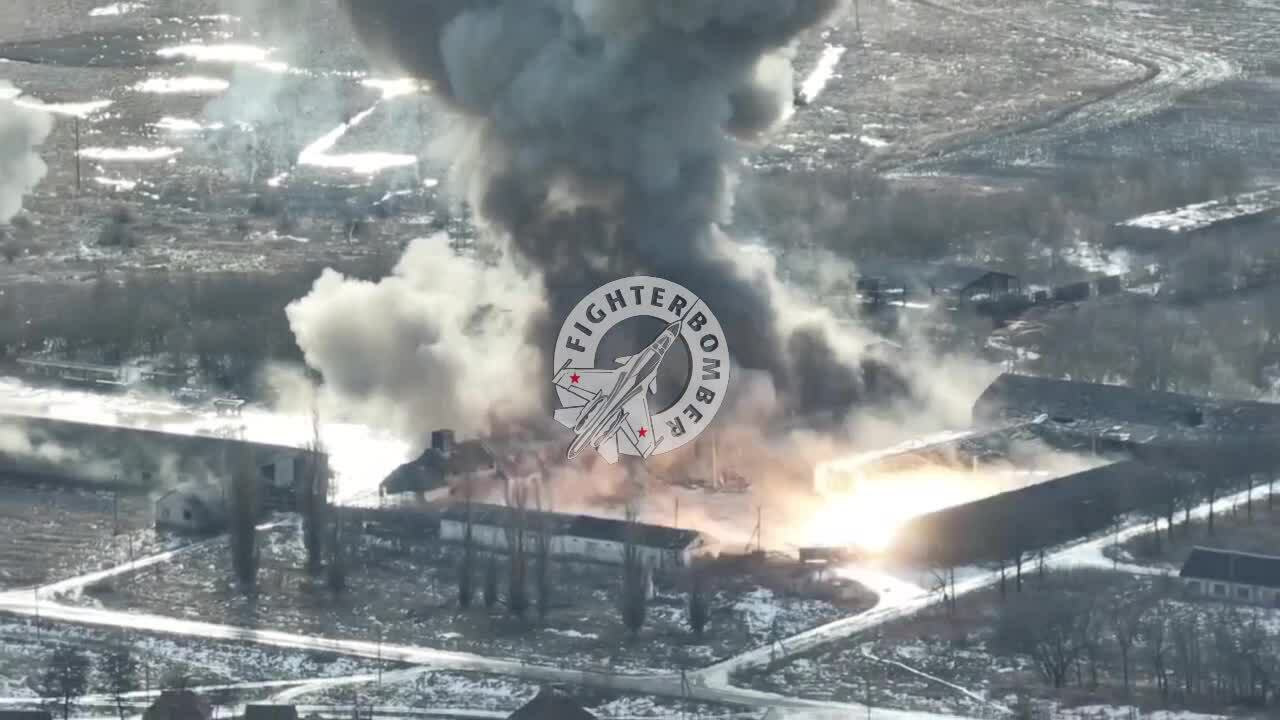
The moment a Russian guided bomb explodes on its target is captured in a video released today. Video: Telegram/Fighter_Bomber
The FAB-500 is a conventional bomb weighing 500 kg, containing a high explosive charge equivalent to 300 kg of TNT. This type of bomb is capable of inflicting damage within a radius of 250 m, specializing in destroying unprotected targets or those with thin armor.
The UMPK incorporates GLONASS satellite navigation and a control system to significantly increase accuracy, along with lifting wings that allow the bomb to fly farther than its original counterpart. This is similar to the US JDAM-ER system, transforming conventional bombs into smart bombs instead of requiring the production of expensive, specialized guided bombs.
The UMPK guided bomb can fly 50-70 km, allowing Russian fighter jets to operate outside the range of most Ukrainian air defense systems. Ukrainian Air Force spokesman Yuri Ignat admitted that Kyiv does not yet have a countermeasure for this type of bomb.
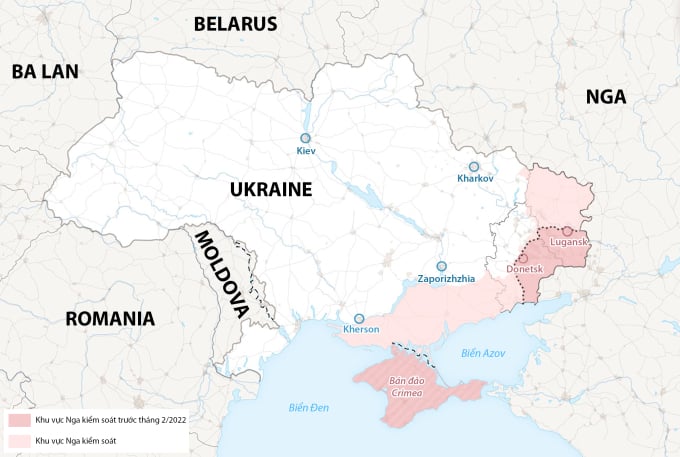
The Russia-Ukraine conflict situation. Graphic: WP
Russia launched several large-scale airstrikes against Ukraine from late December 2023, amidst Kyiv's intensified efforts to produce military supplies domestically to ensure a stable supply and reduce dependence on foreign partners, who were facing shortages and unable to meet the needs of their military.
Ukrainian officials acknowledge that military facilities have been among the targets of recent Russian attacks, but often refrain from detailing the extent of the damage. Vadym Skibitsky, deputy head of Ukraine's Main Directorate of Defense Intelligence, noted that Russia has not repeated its trend of attacking energy infrastructure, instead focusing on defense industry facilities.
Vu Anh (According to Rossiyskaya Gazeta, Reuters )
Source link





























































































Comment (0)