

Medical news update, December 20th: Significant progress in the treatment of thalassemia.
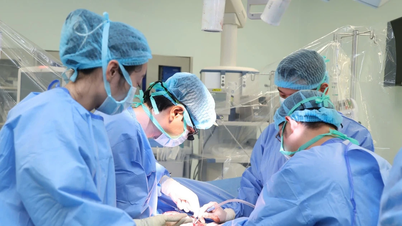
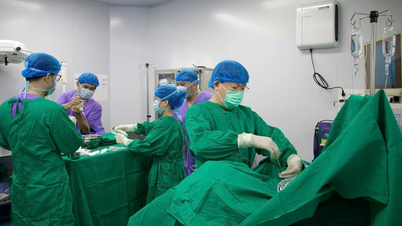
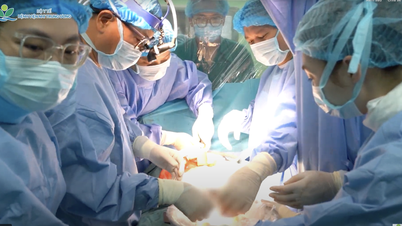
Hue Central Hospital announced the successful completion of two allogeneic bone marrow transplants for children with thalassemia, opening up new opportunities for other patients.
Allogeneic bone marrow transplants were performed on two patients with thalassemia.
These two allogeneic bone marrow transplants mark a significant step forward in the treatment of thalassemia in Vietnam, as the hospital continues to apply allogeneic stem cell transplantation techniques to children with various forms of thalassemia. This is also a continuation of the success of the first two transplants performed previously.
The third transplant case was for a 38-month-old child from Quang Tri province, diagnosed with alpha-thalassemia a year ago, who required monthly blood transfusions.
After HLA testing, the child was a perfect match for his 8-year-old brother and underwent a bone marrow transplant on November 12th. Following the transplant, the child's health indicators recovered well, with platelet count recovering on day 10 and granulocyte count recovering on day 19.
The fourth transplant case was for 10-year-old D.MAT from Da Nang City, who was diagnosed with alpha-thalassemia at 20 days old. Despite requiring monthly blood transfusions, HLA testing showed a perfect match with his 15-year-old brother, and he received an allogeneic bone marrow transplant on November 27th.
The transplant was successful, although the child experienced mild neutropenia (fever) but recovered quickly, with platelets recovering by day 21 and granulocytes recovering by day 19.
According to the leaders of Hue Central Hospital, the success of these two allogeneic bone marrow transplants is a significant breakthrough in the treatment of thalassemia. Allogeneic bone marrow transplantation not only helps pediatric patients escape dependence on frequent blood transfusions but also allows them to develop normally, eliminating the need for daily iron chelation therapy.
Thalassemia, a genetic disorder causing microcytic anemia, severely impacts a child's physical and mental development.
In severe cases, children become dependent on frequent blood transfusions, leading to iron overload in the body and affecting internal organs. Allogeneic bone marrow transplantation is considered the optimal treatment method to restore health and provide a chance for a healthy life for these children.
In addition to allogeneic bone marrow transplantation, Hue Central Hospital also successfully performed its 40th autologous bone marrow transplant on Nguyen Phuoc Quynh M., a 4.5-year-old child from Tien Giang province suffering from high-risk neuroblastoma. This autologous stem cell transplantation technique helps prolong the patient's lifespan and improve the effectiveness of neuroblastoma treatment.
Hue Central Hospital is currently the only hospital in Vietnam with a full range of treatment modalities for neuroblastoma, including chemotherapy, surgery, bone marrow transplantation, and radiotherapy.
With these successes, Hue Central Hospital continues to affirm its pioneering role in applying advanced medical techniques, bringing hope and opportunities for life to patients with life-threatening diseases.
Warning about accidents caused by homemade fireworks.
Children's Hospital 2 (Ho Chi Minh City) recently admitted three consecutive cases of children with serious accidents due to firework manufacturing, including several cases of second-degree burns and open fractures of the fingers and toes. These cases once again highlight the dangers of manufacturing and using homemade fireworks, especially during holidays and Tet (Lunar New Year).
The first case involves a 12-year-old patient, D.SR., from Binh Phuoc province, who was admitted with serious injuries to his left hand after attempting to make firecrackers using matchstick powder and a car tire valve. The explosion caused severe injuries and heavy bleeding in his left hand.
The second case involves a 12-year-old patient, ATV, from Gia Lai, who suffered extensive second-degree burns covering up to 35% of his body, including his face, chest, arms, and legs, due to an explosion caused by firecrackers. At the hospital, V. received emergency treatment and surgery.
The third case involves a 12-year-old patient, HKB, from Lam Dong province, who suffered burns while making firecrackers with his older brother. When the firecrackers exploded, B. didn't have time to escape and suffered burns in multiple areas of his body.
Doctors at Children's Hospital 2 said that many firework-related accidents occur at the end of the year, when the demand for fireworks and homemade fireworks increases. These accidents not only leave serious injuries but can also cause permanent disability, affecting the health and lives of children.
Dr. Nguyen Thi Ngoc Nga, Deputy Head of the Burn and Orthopedic Department at Children's Hospital 2, warns that families and schools need to remind children absolutely not to make or use firecrackers on their own, especially at the age when they are active and curious. Parents should also educate children about the dangers of firecrackers, from severe burns and injuries to disability and even death.
Furthermore, Dr. Ngoc Nga emphasized that injuries from firecrackers are very complex and difficult to treat. These accidents often cause injuries to multiple areas of the body such as the hands, face, and torso. The treatment process is lengthy and expensive, and leaves behind severe sequelae.
Recently, information from Viet Duc Friendship Hospital also indicated that the facility frequently receives patients admitted due to accidents involving homemade fireworks.
In light of this situation, authorities, schools, and communities need to continue to strengthen propaganda efforts and raise awareness among children and parents about the dangers of firecrackers. At the same time, people should be encouraged to comply with regulations on firecracker management, avoid manufacturing and using homemade firecrackers, thereby reducing the number of tragic accidents that may occur.


![[Photo] Two flights successfully landed and took off at Long Thanh Airport.](/_next/image?url=https%3A%2F%2Fvphoto.vietnam.vn%2Fthumb%2F1200x675%2Fvietnam%2Fresource%2FIMAGE%2F2025%2F12%2F15%2F1765808718882_ndo_br_img-8897-resize-5807-jpg.webp&w=3840&q=75)






























































Comment (0)