

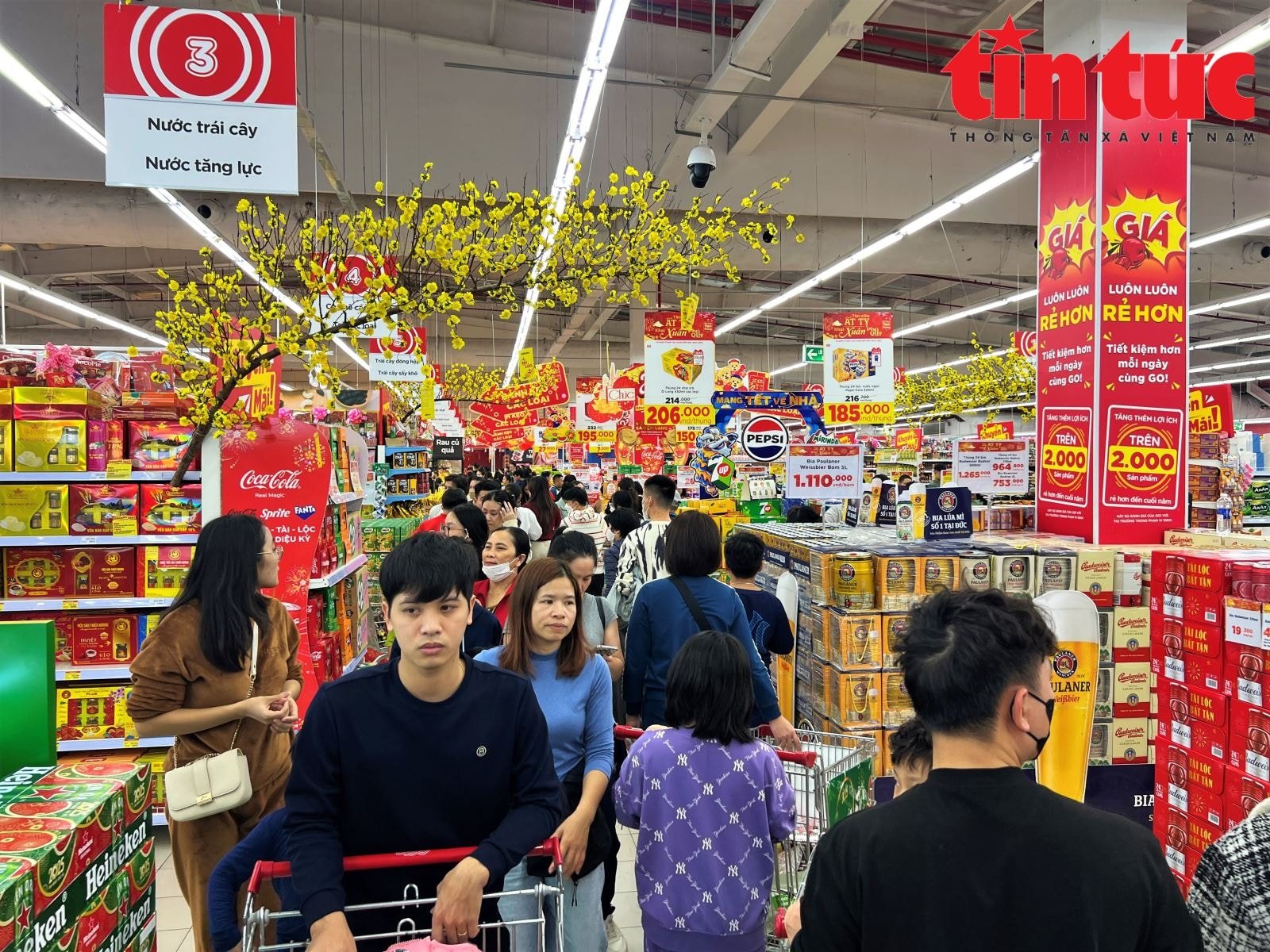
CPI increased by 3.63%, meeting the target set by the National Assembly .
According to the General Statistics Office, the average consumer price index (CPI) in 2024 increased by 3.63% compared to 2023, meeting the target set by the National Assembly. Of the 11 main consumer goods groups, 5 saw price increases and 1 saw a price decrease. The price index for food and beverage services increased by 4.03% year-on-year, contributing 1.35 percentage points to the overall CPI increase.
The price index for housing, electricity, water, fuel, and construction materials increased by 5.2% year-on-year, contributing 0.98 percentage points to the overall CPI increase. This was mainly due to a 7.68% increase in the price index for household electricity, driven by increased demand and EVN's adjustment of the average retail electricity price, which contributed 0.25 percentage points to the overall CPI increase. The price index for rental and owner-occupied housing (converted) increased by 4.6% due to increased rental demand, contributing 0.48 percentage points to the CPI increase. Additionally, the price index for household water in 2024 increased by 8.33% year-on-year.
The price index for medicines and medical services increased by 7.16%, contributing 0.39 percentage points to the overall CPI increase due to the adjustment of medical service prices according to Circular No. 22/2023/TT-BYT from November 17, 2023 and Circular No. 21/2024/TT-BYT from October 17, 2024 of the Ministry of Health .
The price index for the education group increased by 5.37% due to tuition fee increases in some localities during the 2023-2024 and 2024-2025 school years, contributing 0.33 percentage points to the overall CPI increase. The price index for the transportation group increased by 0.76%, contributing 0.07 percentage points to the overall CPI increase. However, the price index for the postal and telecommunications group decreased by 1.02% in 2024 compared to 2023 due to lower prices of older generation phones as businesses implemented discount programs to stimulate demand for smartphones released after a period of time.
On average in 2024, core inflation increased by 2.71% compared to 2023, lower than the overall CPI increase (3.63%), mainly due to the increase in prices of food, electricity, education services, and healthcare services, which are factors contributing to CPI growth but are excluded from the list of items used to calculate core inflation.
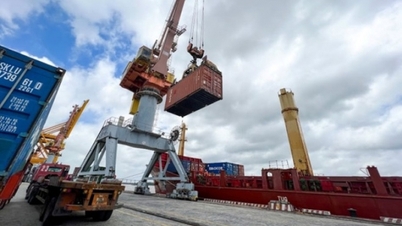
Goods exports and imports reached US$786.29 billion.
Overall in 2024, total merchandise exports and imports reached US$786.29 billion, an increase of 15.4% compared to the previous year, with exports increasing by 14.3% and imports by 16.7%. The trade balance showed a surplus of US$24.77 billion. The United States was Vietnam's largest export market with a value of US$119.6 billion. China was Vietnam's largest import market with a value of US$144.3 billion.
In 2024, the trade surplus with the US will reach 104.6 billion USD, up 25.6% over the previous year; the trade surplus with the EU will be 35.4 billion USD, up 23.2%; the trade surplus with Japan will be 3.2 billion USD, up 91.9%; the trade deficit with China will be 83.7 billion USD, up 69.5%; the trade deficit with South Korea will be 30.7 billion USD, up 5.9%; the trade deficit with ASEAN will be 9.9 billion USD, up 18.9%.
Actual FDI reached US$25.35 billion.
Total registered foreign direct investment (FDI) in Vietnam as of December 31, 2024, including newly registered capital, adjusted registered capital, and the value of capital contributions and share purchases by foreign investors, reached US$38.23 billion, a decrease of 3.0% compared to the same period last year.
Among the 80 countries and territories with newly licensed investment projects in Vietnam in 2024, Singapore was the largest investor with US$6.26 billion, accounting for 31.7% of the total newly registered capital; followed by South Korea with US$2.89 billion, accounting for 14.6%; China with US$2.84 billion, accounting for 14.4%; and the Hong Kong Special Administrative Region (China) with US$2.17 billion, accounting for 11.0%.
Notably, foreign direct investment (FDI) implemented in Vietnam in 2024 is estimated at US$25.35 billion, an increase of 9.4% compared to the previous year. Of this, the processing and manufacturing industry accounted for US$20.62 billion, representing 81.4% of total FDI; real estate business activities reached US$1.84 billion, accounting for 7.2%; and electricity, gas, hot water, steam and air conditioning production and distribution reached US$1.07 billion, accounting for 4.2%.
International visitors reached nearly 17.6 million people.
According to the General Statistics Office, favorable visa policies, intensified tourism promotion programs, and prestigious tourism awards from international organizations have led to a significant increase in international visitors to Vietnam in 2024.
In 2024, the number of international visitors to Vietnam reached nearly 17.6 million, an increase of 39.5% compared to the previous year and equivalent to 97.6% of the 2019 figure, before the COVID-19 pandemic. Of these, over 14.8 million arrived by air, accounting for 84.4% of international visitors to Vietnam and increasing by 35.6% compared to the previous year; nearly 2.5 million arrived by land, accounting for 14.2% and increasing by 63.3%; and nearly 248,100 arrived by sea, accounting for 1.4% and increasing by 96.7%.
According to the Director General of the General Statistics Office, Nguyen Thi Huong, the positive results of 2024 are an important foundation for the economy to accelerate and reach its goals in 2025, achieving the highest possible targets in the 5-year socio-economic development plan for the period 2021-2025. To accomplish this important task, according to the General Statistics Office, ministries, sectors, and localities need to proactively and flexibly manage monetary policy, stabilize exchange rates and interest rates; control prices and markets; ensure major economic balances; accelerate the implementation and disbursement of public investment capital; quickly and effectively implement large-scale investment projects; and strengthen the attraction of high-quality foreign investment.
In addition, it is necessary to boost consumption and focus on developing the domestic market; strengthen support measures for businesses; promote and create breakthroughs for new growth drivers, accelerate the development of the green economy, circular economy, e-commerce, new business models, and strengthen disease prevention and control; proactively develop plans for disaster prevention and control…
Source: https://baohaiduong.vn/cac-chi-so-phat-trien-kinh-te-viet-nam-deu-khoi-sac-402354.html




























![[Video] The craft of making Dong Ho folk paintings has been inscribed by UNESCO on the List of Crafts in Need of Urgent Safeguarding.](https://vphoto.vietnam.vn/thumb/402x226/vietnam/resource/IMAGE/2025/12/10/1765350246533_tranh-dong-ho-734-jpg.webp)
































































Comment (0)