

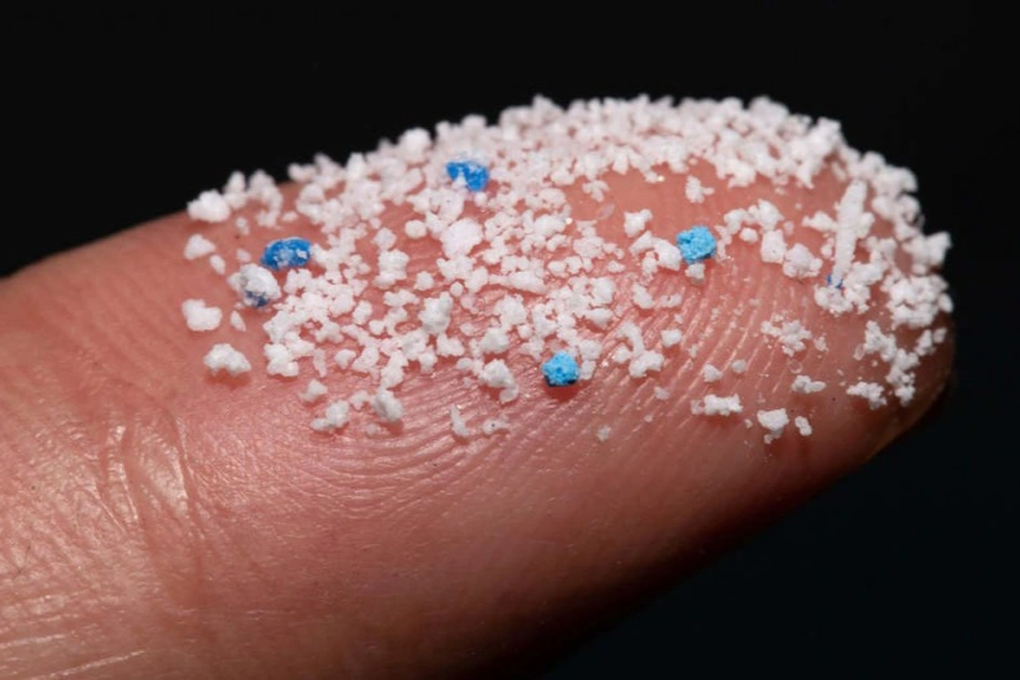
Microplastic particles can be found in many different environments and foods (Photo: Getty).
Microplastics are gradually becoming a global problem, as they can easily enter our bodies in many different ways, especially through food and drinks.
Previous studies have shown that microplastics, including polystyrene, polyethylene, polypropylene, and polyethylene terephthalate, are present in the tap water we drink every day in varying amounts, depending on the water quality in each area.
Faced with this reality, a group of scientists from Guangzhou Medical University and Jinan University (China) have found a relatively simple and effective method to remove them from drinking water.
It involves a combination of boiling and filtering out any precipitates present in the water. This seemingly simple method is incredibly effective in combating microplastics.
According to published research, up to 90% of nanoplastics and microplastics (NMPs) can be removed by boiling and filtration, although the effectiveness will vary depending on the type of water.
From a user's perspective, the biggest benefit is that we can do it using what we already have in the kitchen.
"Boiling water before drinking is incredibly simple and effective. This method has been shown to 'decontaminate' NMPs from household tap water, as well as reduce the amount of NMPs absorbed by humans through water consumption," the researchers emphasized.
However, it's important to note that we should still filter the water before drinking it to remove limescale (scientifically known as calcium carbonate) that forms after boiling. This filtering process can be easily done with a tea strainer.
The research team hopes that by raising awareness about the harmful effects of microplastics and how to eliminate them, the habit of drinking boiled water can become more widespread, given that plastic waste remains a global problem.
Source



























![[Video] The craft of making Dong Ho folk paintings has been inscribed by UNESCO on the List of Crafts in Need of Urgent Safeguarding.](https://vphoto.vietnam.vn/thumb/402x226/vietnam/resource/IMAGE/2025/12/10/1765350246533_tranh-dong-ho-734-jpg.webp)
















































Comment (0)