

(To Quoc) - Two whale skeletons (locally known as "Ong fish") dating back over 300 years in Ly Son island district ( Quang Ngai province ) have been completely restored by experts and are now on display and introduced to domestic and international tourists.
Prepared by: H.An | November 2, 2024
(To Quoc) - Two whale skeletons (locally known as "Ong fish") dating back over 300 years in Ly Son island district (Quang Ngai province) have been completely restored by experts and are now on display and introduced to domestic and international tourists.
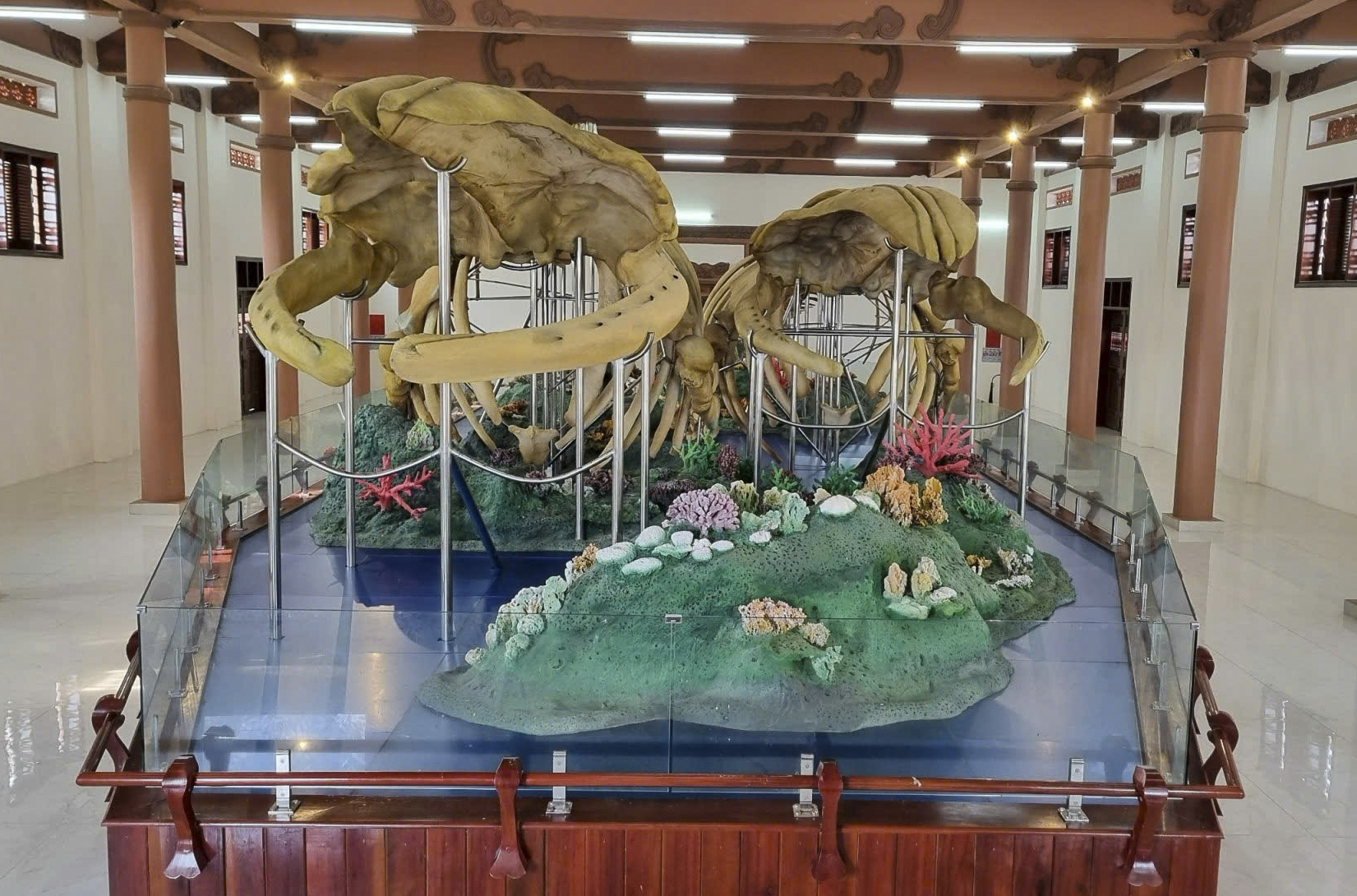
The Vietnam Record Organization has just established a record for Tan Mausoleum in Ly Son island district (Quang Ngai province), as the place that houses and displays two reconstructed whale skeletons (also known as "Ong" whales) on the largest island in Vietnam...
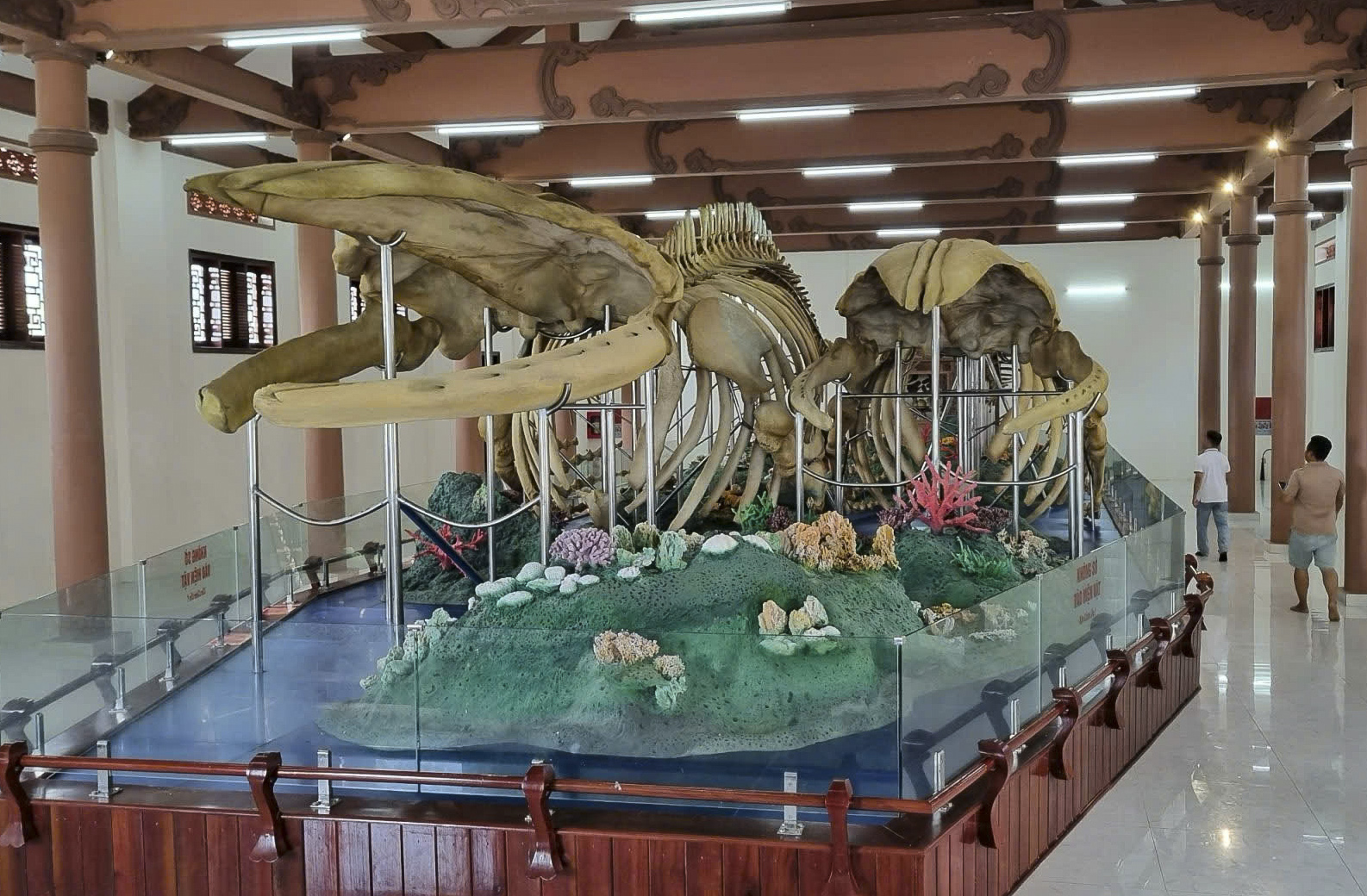
Tan Mausoleum (also known as the Ocean Museum) has been classified as a national historical and cultural relic by the Ministry of Culture, Sports and Tourism as the place that preserves many of the oldest and largest whale skeletons.
Two whale skeletons, preserved by the people of Ly Son for approximately 250-300 years, measure 18m and 22m in length and nearly 4m in height, respectively.
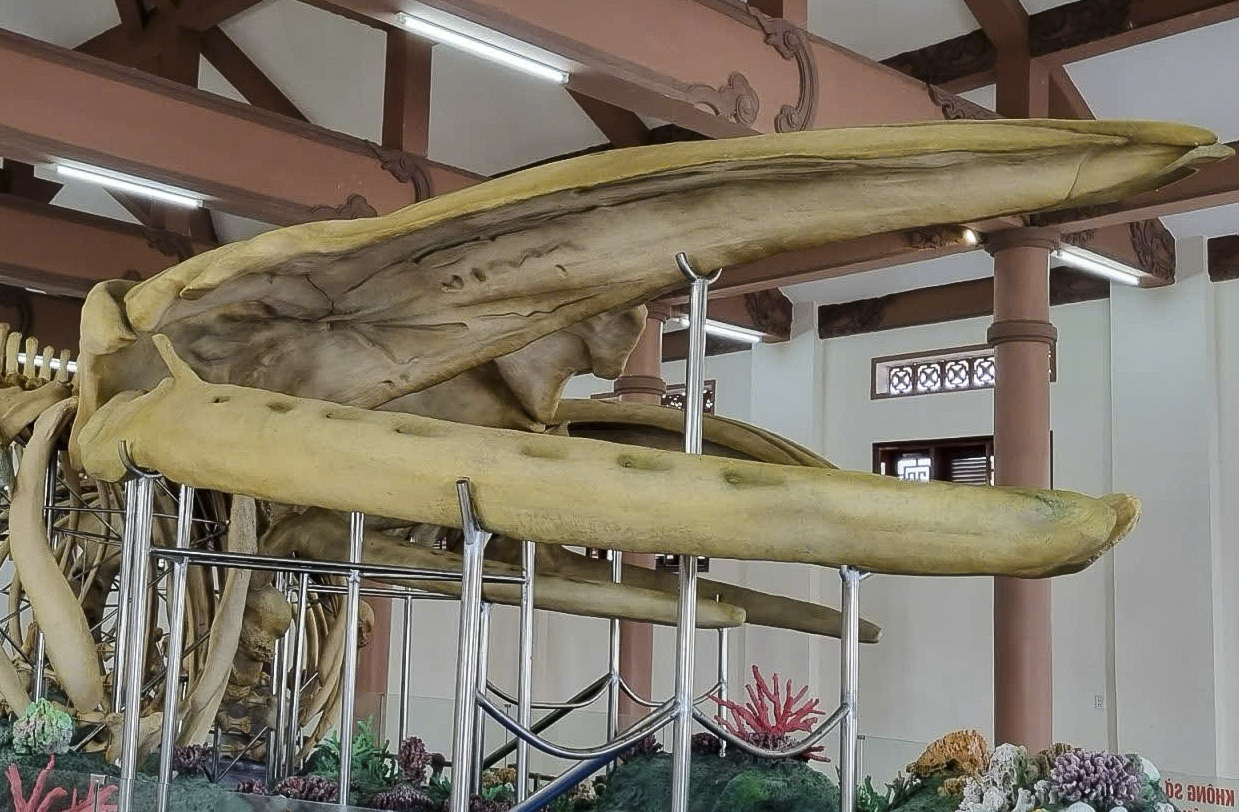
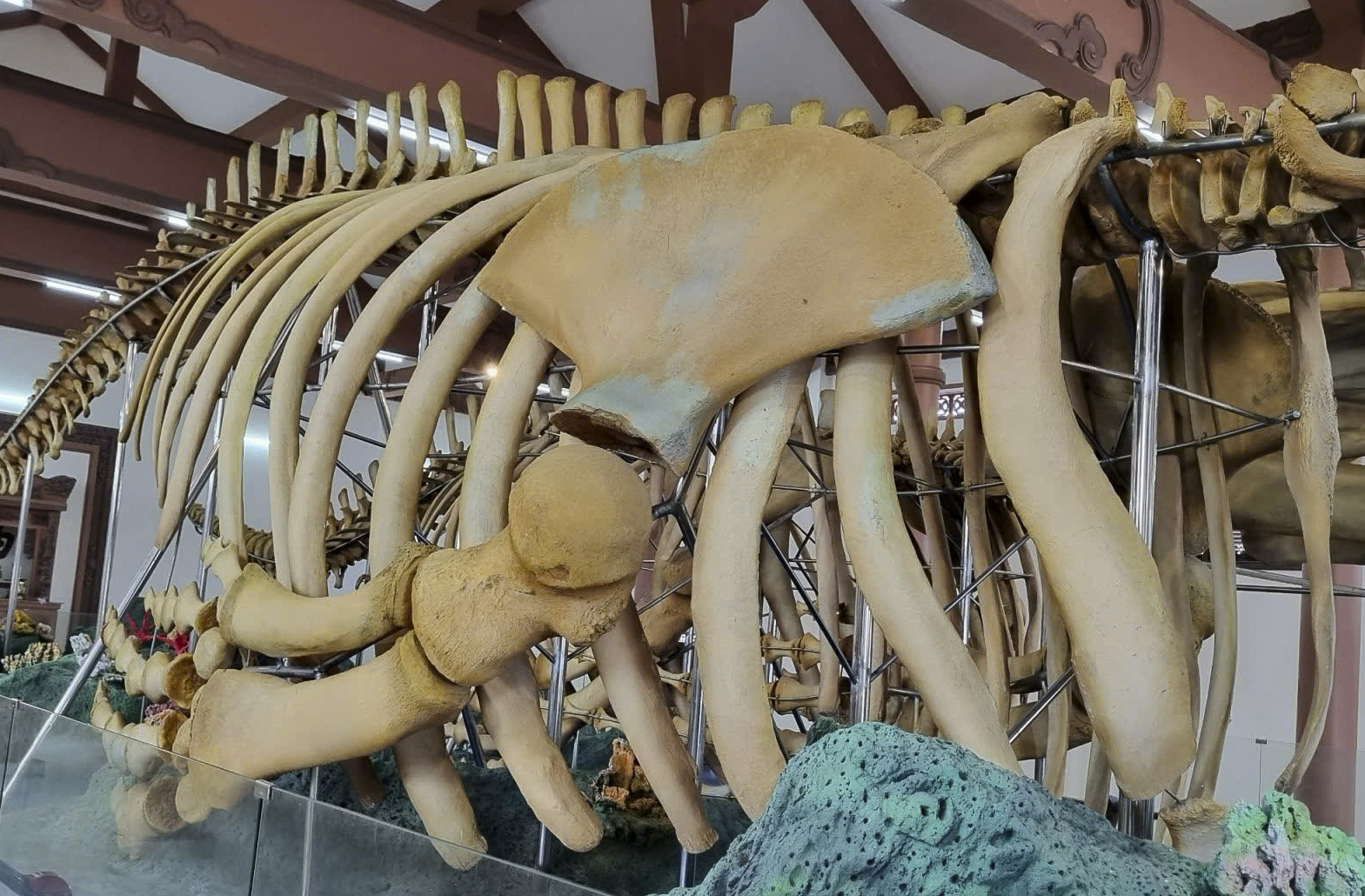
Each whale skeleton has 50 vertebrae. The largest vertebra has a diameter of over 40cm, the skull is 4m long, and the tusks are 4.7m long.
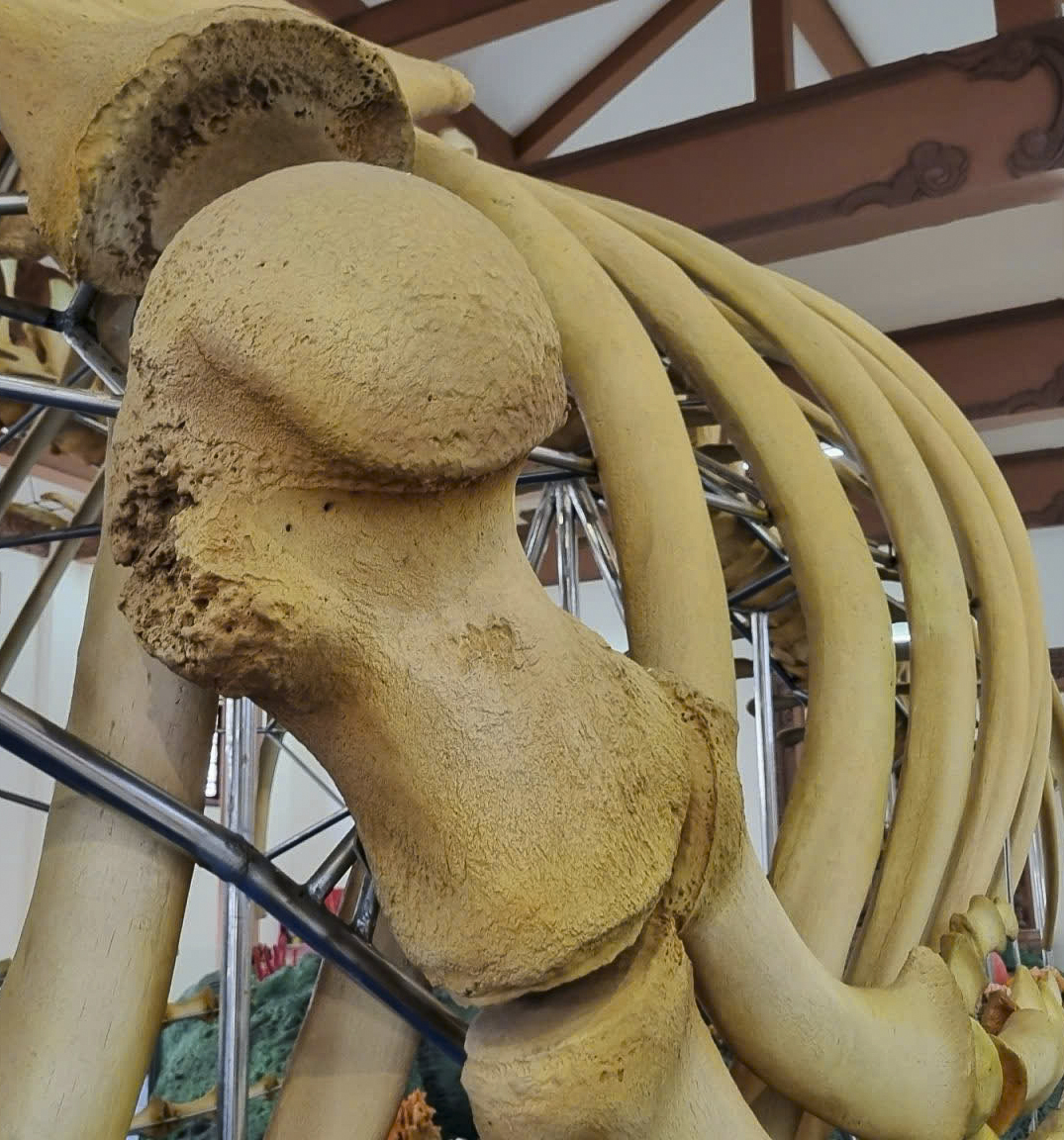
The fish bones are respectfully called "jewel bones" by the fishermen.
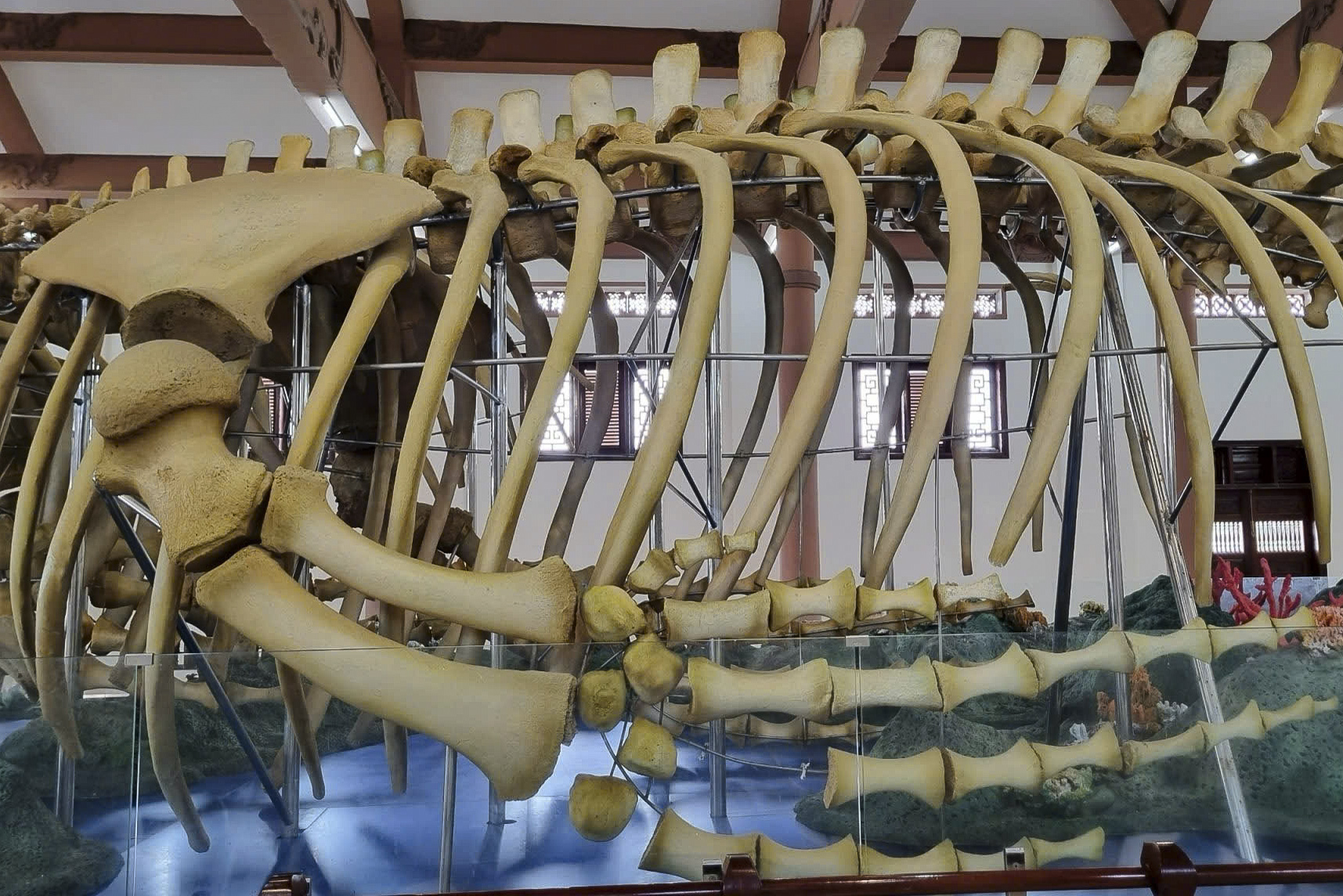
According to researchers, these are the two largest whale skeletons in Vietnam. The larger one, measuring over 22 meters in length, is known as "Dong Dinh Dai Vuong," while the smaller one, measuring 18 meters in length, is called "Duc Ngu Nhi Vi Ton Than" by the locals.
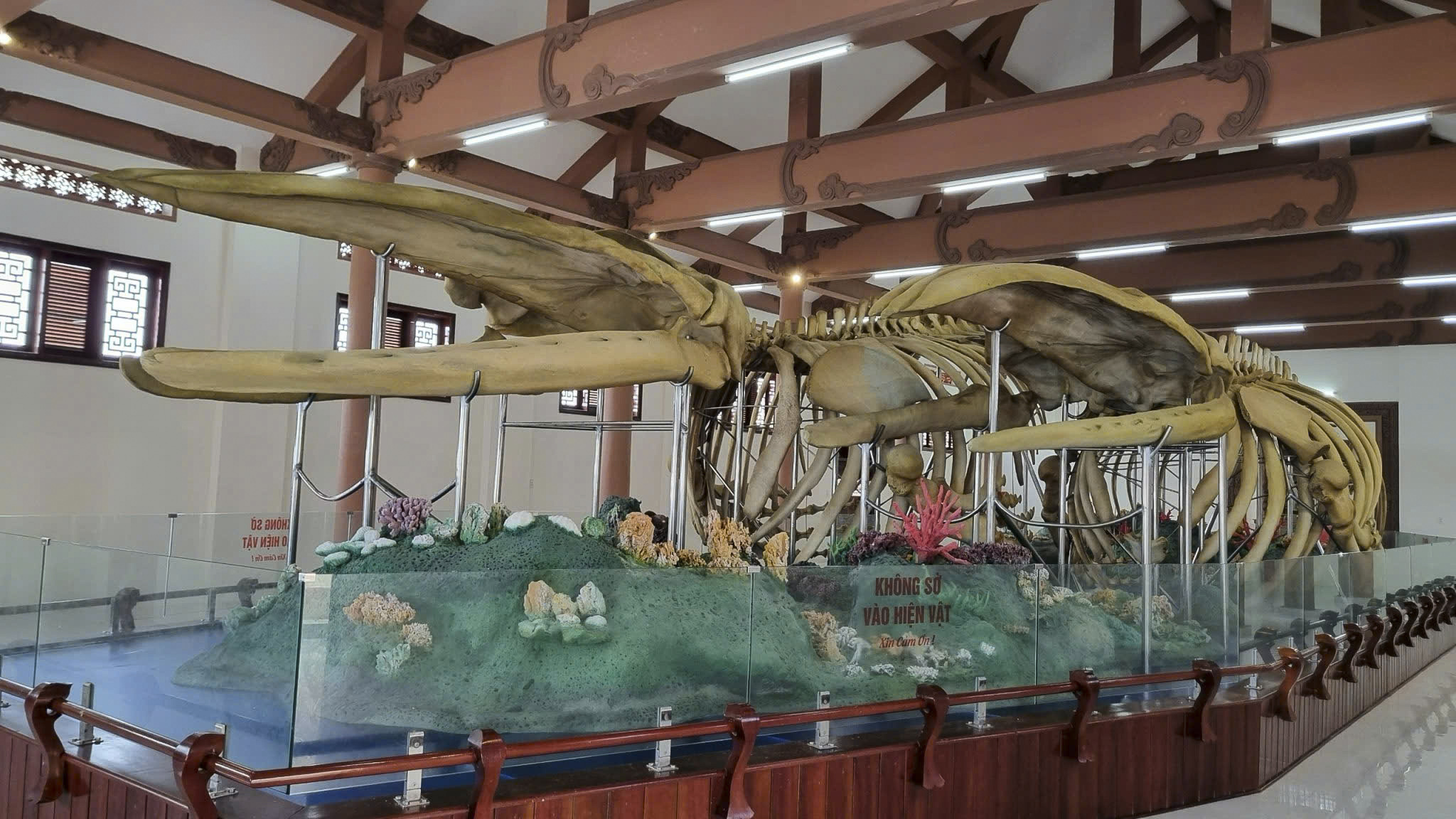
According to local historical records, two whales beached themselves in the early 19th century. After their deaths, a large funeral ceremony was held on the island, attended by many fishermen. Instead of burying them, the whale carcasses were left exposed. For many years afterward, they collected the gradually dissolving whale fat in buckets and stored it in water containers. After about 15 years, only the bones remained. When the skeletons were brought to the shrine for worship, the people of Ly Son Island applied the whale fat to the bones for preservation.
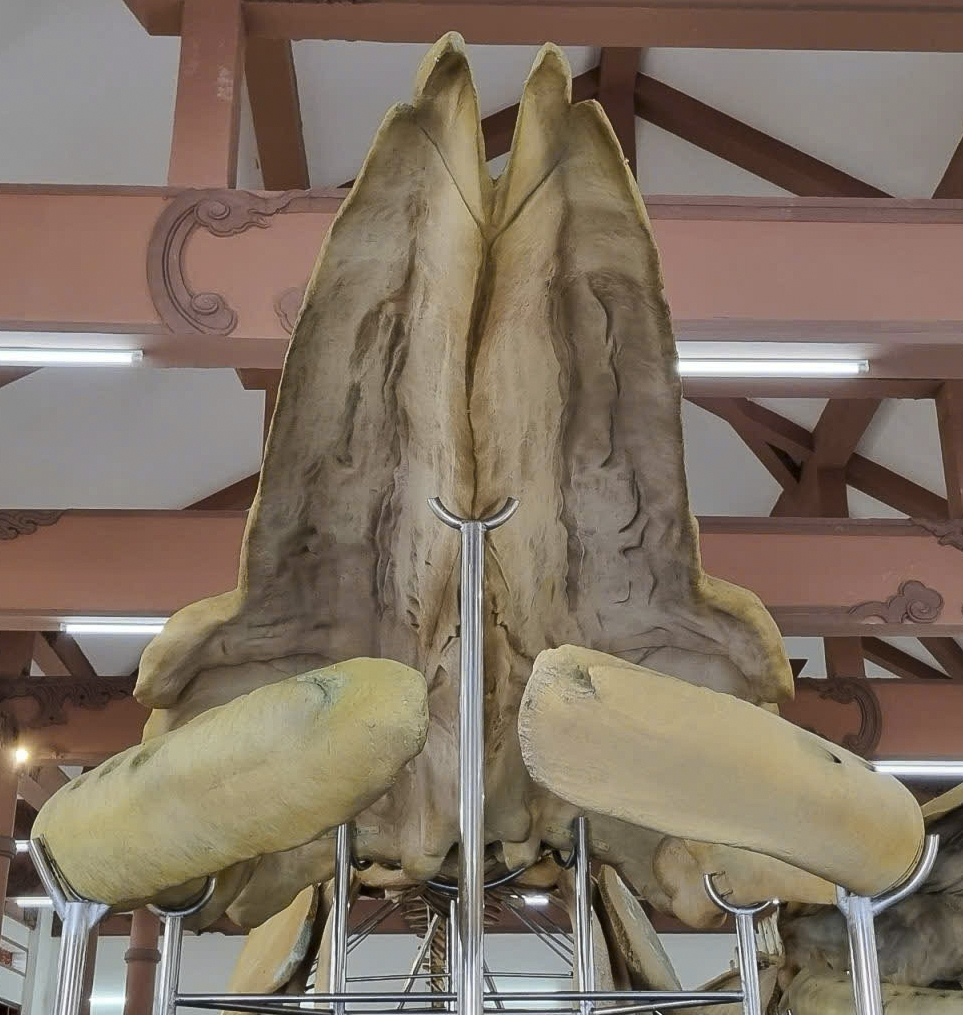
In 2022, experts successfully restored these two whale skeletons and put them on display, introducing them to domestic and international tourists; becoming a unique and novel tourism product for visitors to Ly Son Island.
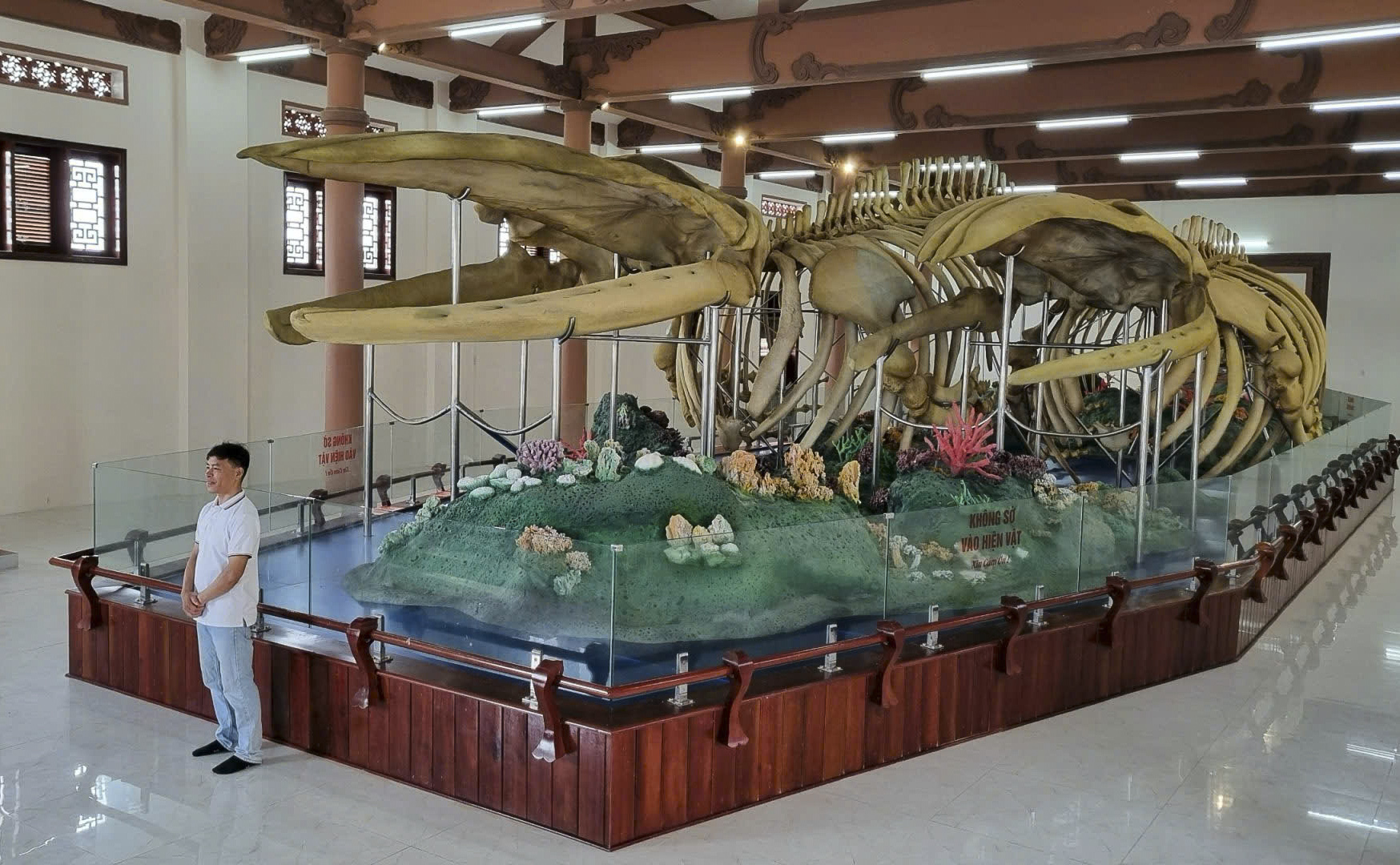
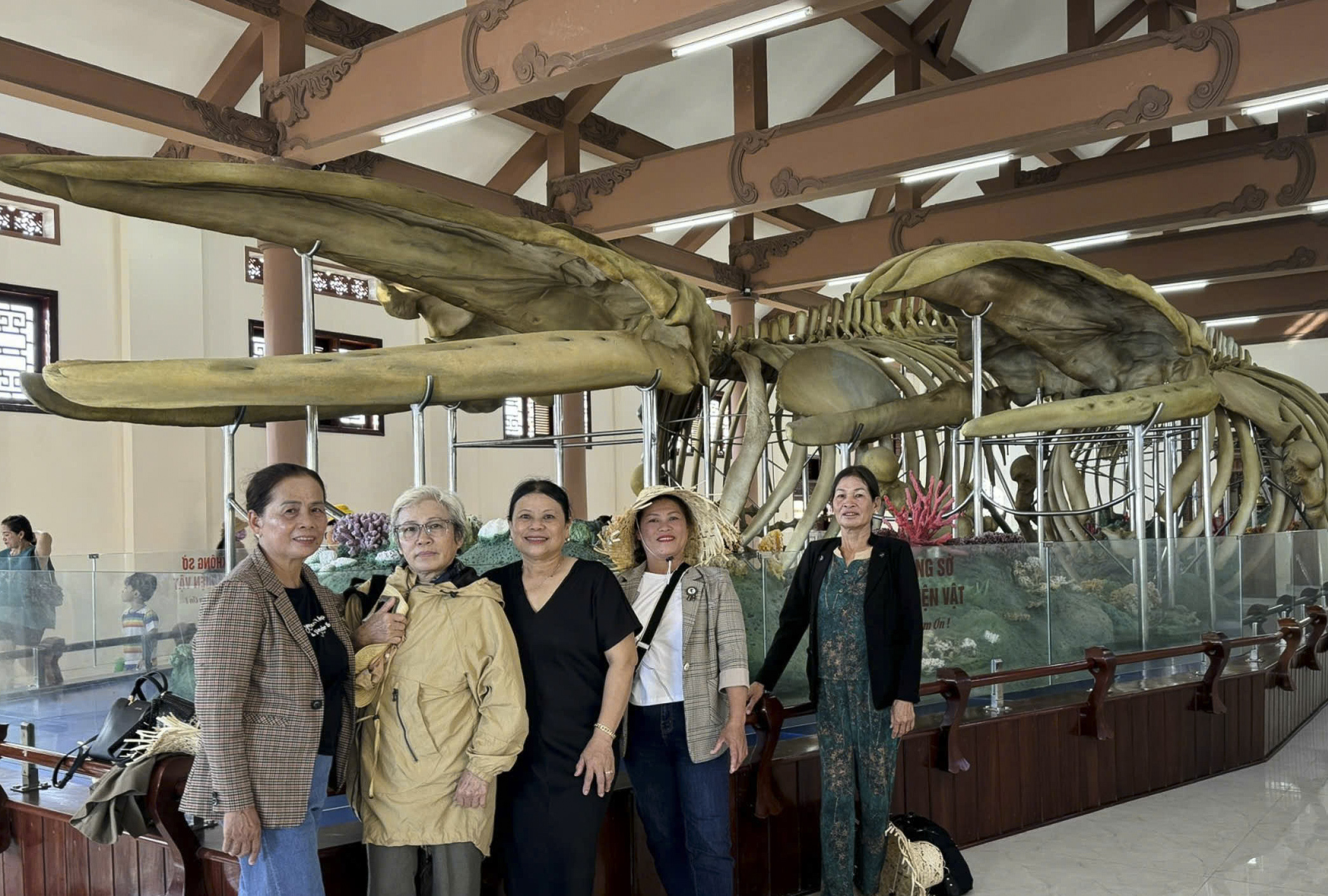
Statistics from 2023 to the present show that more than 150,000 visitors have come to Tan Mausoleum to see the two whale skeletons.
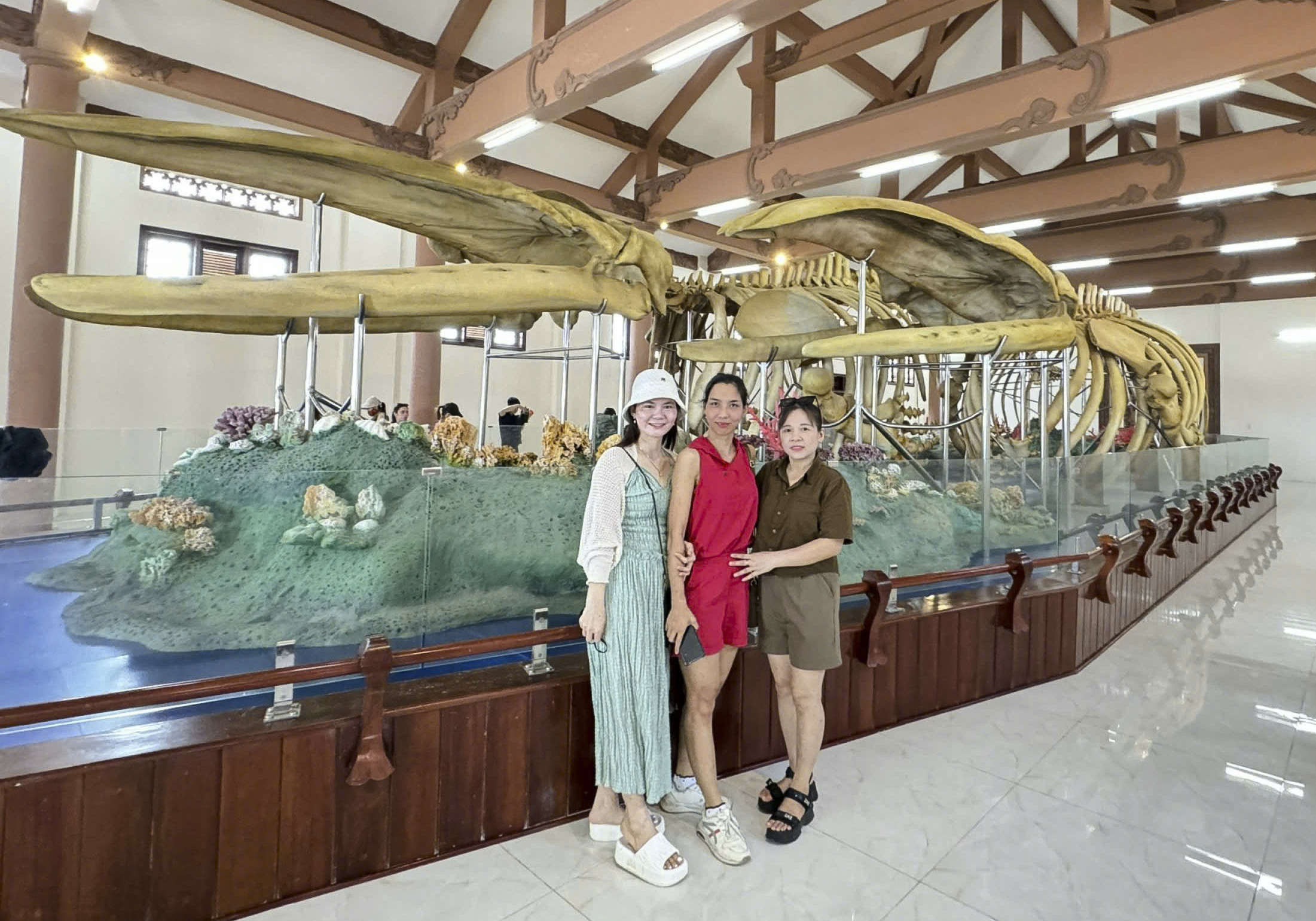
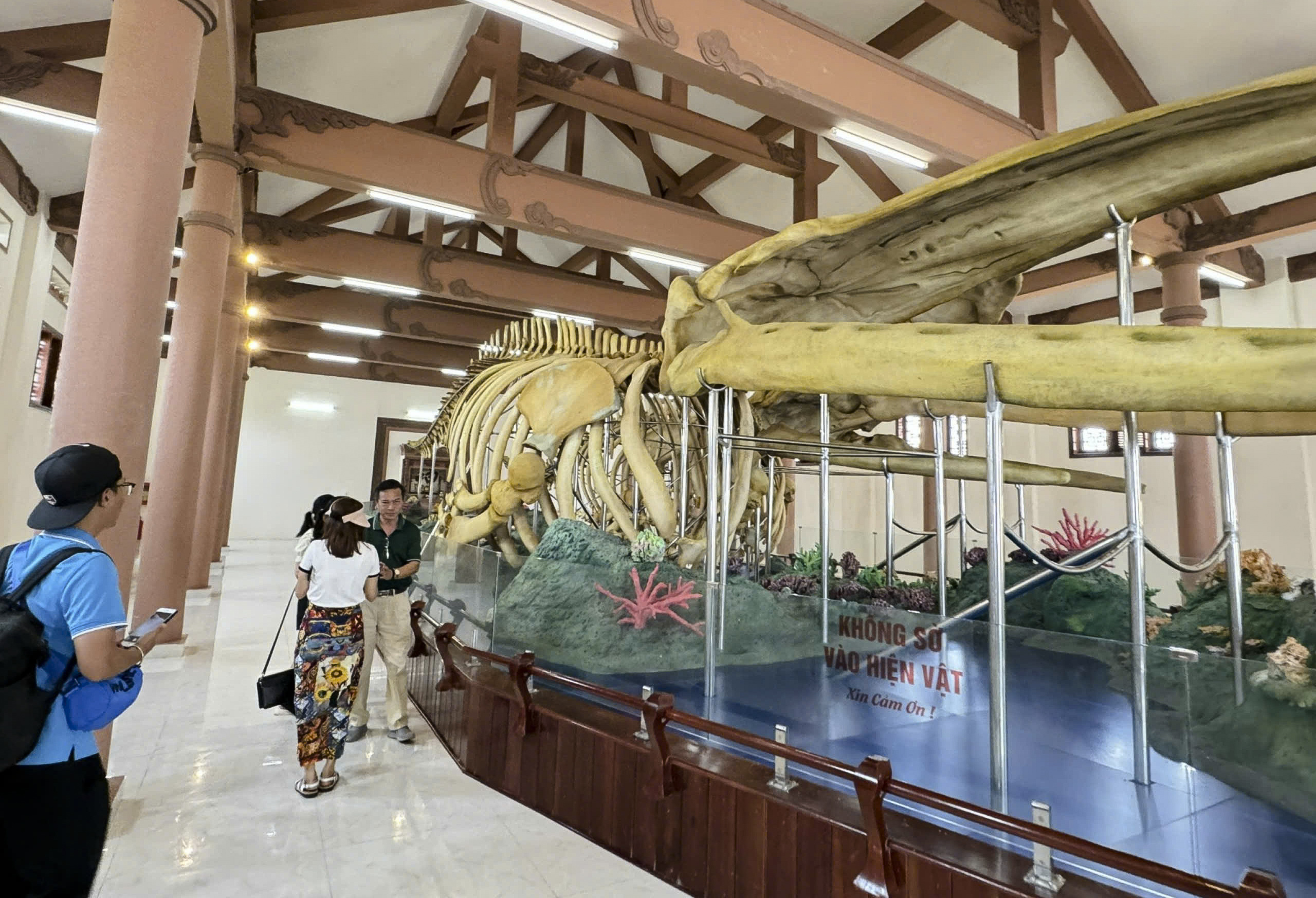
Tourists visit the exhibition hall displaying the whale skeleton at Tan Mausoleum in Ly Son island district.
Source: https://toquoc.vn/can-canh-hai-bo-xuong-ca-ong-duoc-phuc-dung-hoanh-chinh-trung-bay-phuc-vu-du-khach-tham-quan-20241102105930594.htm

![[Photo] Closing Ceremony of the 10th Session of the 15th National Assembly](/_next/image?url=https%3A%2F%2Fvphoto.vietnam.vn%2Fthumb%2F1200x675%2Fvietnam%2Fresource%2FIMAGE%2F2025%2F12%2F11%2F1765448959967_image-1437-jpg.webp&w=3840&q=75)
![[Photo] Prime Minister Pham Minh Chinh holds a phone call with the CEO of Russia's Rosatom Corporation.](/_next/image?url=https%3A%2F%2Fvphoto.vietnam.vn%2Fthumb%2F1200x675%2Fvietnam%2Fresource%2FIMAGE%2F2025%2F12%2F11%2F1765464552365_dsc-5295-jpg.webp&w=3840&q=75)




































![[OFFICIAL] MISA GROUP ANNOUNCES ITS PIONEERING BRAND POSITIONING IN BUILDING AGENTIC AI FOR BUSINESSES, HOUSEHOLDS, AND THE GOVERNMENT](https://vphoto.vietnam.vn/thumb/402x226/vietnam/resource/IMAGE/2025/12/11/1765444754256_agentic-ai_postfb-scaled.png)









































Comment (0)