

| Goods exports in early 2024 face new challenges; Red Sea tensions keep export coffee prices at peak levels. |
According to the Vietnam Association of Seafood Processing and Export, in 2023, seafood exports seemed to return to their usual trajectory of gradually increasing from the second quarter, peaking in the third quarter when orders increased to meet year-end demand, and typically lower in the fourth quarter than in the third quarter.
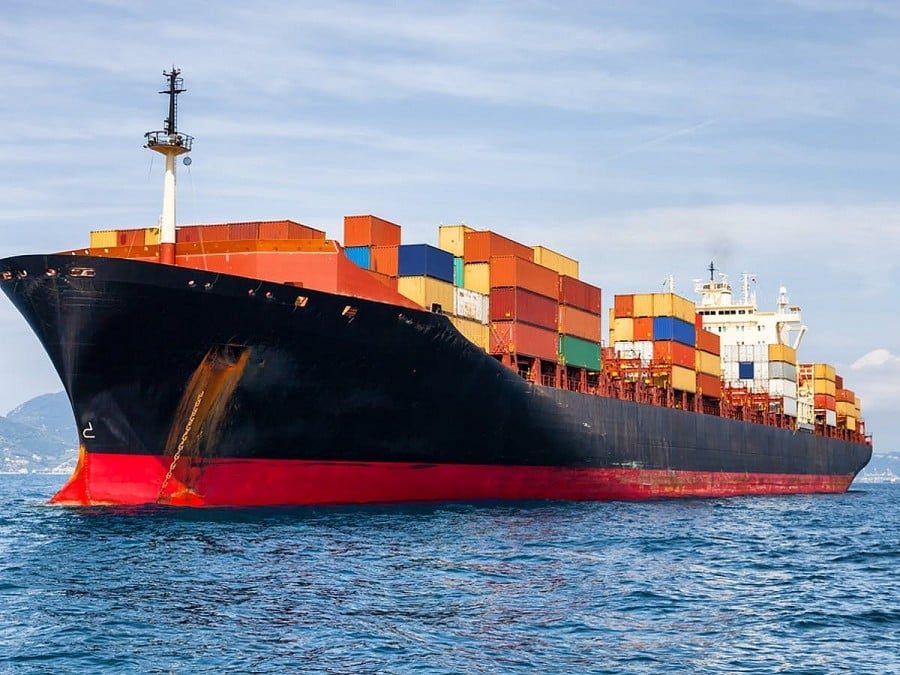 |
| Rising sea freight costs pose a double challenge for export businesses (Illustrative image) |
This indicates that market signals and the business situation of the seafood industry are gradually returning to normal.
Forecasts indicate that the low price trend of the previous year will end this year. Prices of seafood species will rise again from the second quarter and may increase even more sharply in the second half of 2024.
However, what businesses are most concerned about is the potential disruption of global trade, including seafood, caused by conflicts in the Middle East. Instability in the Red Sea is severely impacting global supply chains. Shipping companies are rerouting their routes, resulting in longer shipping journeys between Asia, Europe, and the East Coast of North America. Freight rates are rising sharply, and cargo insurance costs are increasing.
Recently, there have been reports that shipping routes through the Panama Canal are also being affected by low water levels, causing a decrease in container traffic.
Thus, the new and major challenge for global seafood trade this year is that shipping through both the Suez and Panama canals is facing difficulties. The consequences could be cargo backlogs, a shortage of container ships, and empty containers. This will disrupt the supply chain and risk exacerbating global inflation.
Over the past period, the efforts and flexibility of businesses have helped the seafood industry overcome the Covid-19 period with similar logistical challenges that disrupted the supply chain.
There may be shifts in export markets and export products, turning challenges into opportunities. For example, China may attract more businesses this year due to its geographical proximity, low transportation costs, and easier control.
More importantly, China will certainly face a reduction in its supply from Ecuador due to both the unstable security situation in the South American country and the difficulties and increased costs of sea transport. Therefore, China will have to compensate by sourcing from Vietnam and other Asian countries.
Or another example of export product trends: With their ease of preservation, long shelf life, and reasonable prices, canned and packaged seafood and dried goods will see increased demand this year amidst war, conflict, and inflation.
In 2024, challenges from the previous year remain, along with the added challenge of conflict in the Middle East. However, with the efforts, resourcefulness, and adaptability of seafood businesses, coupled with signs of market recovery, seafood exports are projected to reach US$9.5 billion, a 6% increase compared to 2023.
Source link

![[Photo] Closing Ceremony of the 10th Session of the 15th National Assembly](/_next/image?url=https%3A%2F%2Fvphoto.vietnam.vn%2Fthumb%2F1200x675%2Fvietnam%2Fresource%2FIMAGE%2F2025%2F12%2F11%2F1765448959967_image-1437-jpg.webp&w=3840&q=75)



![[Photo] Prime Minister Pham Minh Chinh holds a phone call with the CEO of Russia's Rosatom Corporation.](/_next/image?url=https%3A%2F%2Fvphoto.vietnam.vn%2Fthumb%2F1200x675%2Fvietnam%2Fresource%2FIMAGE%2F2025%2F12%2F11%2F1765464552365_dsc-5295-jpg.webp&w=3840&q=75)
















































































Comment (0)