

The effectiveness of appropriate livelihood models
Along the province's border, the two communes of My Quy and Ben Cau were once considered among the most disadvantaged areas. The people mainly engaged in small-scale agricultural production. Unstable incomes, affected by weather and diseases, meant that the lives of most households there faced the risk of falling back into poverty.
However, in recent years, the two border communes have gradually changed. Thanks to the National Target Program for Sustainable Poverty Reduction and the proactive involvement of the government and organizations, many households in the border region have had the opportunity to access preferential capital, new livelihood models, and more effective production techniques.
In My Quy commune, poverty reduction models linked to the transformation of production structures have been implemented synchronously and practically. According to Dang Van Thuc, Head of the Economic Department of My Quy commune, the commune has implemented many projects to support poor households with breeding cows, agricultural machinery, and essential supplies.
“In the context of a border commune still facing many difficulties, the most important goal of the locality is to create sustainable livelihoods so that people not only escape poverty but also stand firm against market fluctuations and climate change. Therefore, the commune has implemented many models, from supporting breeding cows, agricultural machinery, fertilizers to connecting technical expertise. Over the years, it can be seen that the labor structure in the commune has shifted significantly, and people are no longer completely dependent on rice cultivation as before,” Mr. Dang Van Thuc added.
With financial support and the cooperation of the local authorities, many households in My Quy have boldly invested in raising cattle and goats or expanding their cultivated area. Mr. Phan Thanh Tuan (residing in Hamlet 1), formerly a poor household with unstable employment, has now escaped poverty thanks to raising cattle and cultivating rice.
Mr. Tuan said: “My family received funding from the National Target Program for Sustainable Poverty Reduction to buy a water pump for rice production. In addition, I also received support with rice seeds and fertilizer, which significantly reduced initial investment costs. Thanks to favorable production conditions, my wife and I have been able to save up and raise four cows, creating a stable source of income and helping us escape poverty and stabilize our lives.”
As a border commune, Ben Cau has made its mark in poverty reduction with many livelihood models suitable to the local natural conditions and labor force. One of the models that brings high economic value is raising bats for guano by Mr. Ho Minh Tam (residing in Chanh hamlet).

Mr. Ho Minh Tam's bat guano farming model (from Ben Cau commune) provides a stable source of income, opening up a sustainable poverty reduction path for people in border areas.
Mr. Tam shared: “The model of raising bats for guano initially sounded strange, but thanks to the local authorities' encouragement, I boldly researched and built the cages. Bats are very sensitive to the environment, so in the beginning, I had to constantly adjust the cages to help them get used to it. Currently, I have 3 bat cages, collecting 4-5 kg of guano per cage daily, with a stable selling price of 55,000-60,000 VND/kg. The income from selling bat guano has significantly improved my family's life.”
In addition, goat farming has also proven effective in Ben Cau commune. Mr. Pham Van Ngot (residing in Bau Tram Lon hamlet) started with 3 goats, and after 5 years, his herd has grown to over 50. He plans to further expand his farm in the future with the support of a loan.
Mr. Ngọt said: “Initially, I just tried raising a few goats to see if they were suitable for the land and climate. Goats are easier to raise than cows, require less care, and have a quick return on investment, so after a while, I decided to increase the herd. From 3 goats, I now have over 50. Thanks to the goat herd, my family has a stable income each year. In the future, if I receive loan support, I will expand the barn to raise more goats and also introduce new breeds to improve the quality of the herd.”

Mr. Pham Van Ngot (residing in Ben Cau commune) earns a stable income by raising a herd of over 50 goats.
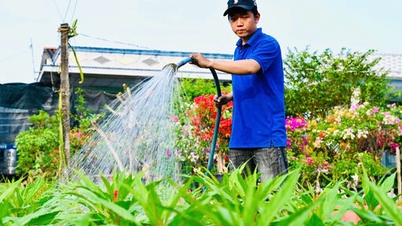
Besides livestock farming, people in Ben Cau commune have also boldly switched to growing short-term vegetables. Mr. Nguyen An Nhan (residing in Bau Tep hamlet) is cultivating 0.4 hectares of bitter melon, selling it at a stable price of 18,000-20,000 VND/kg. Thanks to proper crop rotation, Mr. Nhan earns significantly higher profits each season compared to rice cultivation.
Mr. Nhan shared: “I switched to growing bitter melon because I realized the market is more stable than growing rice. With 0.4 hectares, each crop lasts 50-60 days, but the profit reaches 70-80 million VND if well cared for. Thanks to this, my family has the means to take care of our children and have a better life.”
According to Nguyen Thai Binh , Chairman of the Farmers' Association of the commune, the Association has implemented many models such as raising civets, growing onions, raising cattle and goats, etc., and continues to support members in accessing capital from the Farmers' Support Fund to replicate effective models.
Border regions are thriving.
Sustainable poverty reduction involves not only providing capital or production models but also closely linked to the goal of improving the quality of life and promoting the development of new rural areas.
In My Quy commune, the government has focused on investing in infrastructure, expanding roads, strengthening the electricity and water systems, and supporting households in improving their living conditions. Ms. Nguyen Thi Thu Ba, Head of Hamlet 1, My Quy commune, said: “From the beginning of 2025 until now, the number of poor households in the hamlet has decreased from 16 to just 1. With the infrastructure investment, people are confident in developing production and gradually stabilizing their lives.”

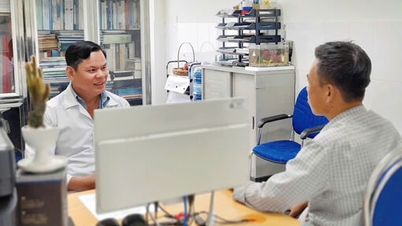
Officials from the Economic Department of My Quy commune visited a poor household's cattle farming model, provided technical support, and assessed the people's livelihood development needs.
According to information from the People's Committee of the commune, in the coming time, the commune has identified the transfer of science and technology and the development of small-scale production models associated with cooperatives as the main orientation. The commune aims to eliminate poverty by 2028. At the same time, the commune will coordinate with the Social Policy Bank to allocate appropriate loan capital, linking policy credit with poverty reduction goals, ensuring that each poor household receives support that meets their specific needs.
Ben Cau commune, a densely populated area with a long border, has also achieved many positive results in poverty reduction. According to Trinh Van Dong, Vice Chairman of the Commune People's Committee, the commune currently has only 1 poor household and 141 near-poor households.
Mr. Trinh Van Dong emphasized: “Ben Cau commune has a large population and a long border, so poverty reduction requires close monitoring of each household and understanding of their specific circumstances. We carefully review each criterion of multidimensional poverty: income, health, education, living conditions, etc., to provide appropriate support solutions. For households lacking employment, we support them with model projects; for households facing tuition fee difficulties, we help their children attend school; and for households with housing difficulties, we allocate resources for repairs. In particular, we emphasize sustainability, meaning helping them acquire skills and models to become self-sufficient. As a result, the commune now has only one poor household. This is a result of the great efforts of the entire political system and the people.”
These results reflect the persistent efforts of the entire political system and the self-reliance of the people in the border region. From families struggling to make ends meet, they now have stable incomes thanks to livestock farming, vegetable cultivation, or small-scale local services.
Poverty reduction in border areas not only improves material living standards but also contributes to strengthening public support, maintaining border security, and promoting sustainable socio-economic development. Today, My Quy and Ben Cau communes are steadily progressing, with thriving household economies, improved infrastructure, diversified livelihoods, and increased initiative among the people in labor and production. These changes are crucial foundations for the continued sustainable development of these border communes in the future.
Thanh Tung
Source: https://baolongan.vn/giam-ngheo-o-cac-xa-bien-gioi-a208218.html
![[Photo] Mrs. Ngo Phuong Ly meets and exchanges views with Mrs. Peng Li Yuan](https://vphoto.vietnam.vn/thumb/1200x675/vietnam/resource/IMAGE/2026/04/16/1776277858080_phu-nhan-1-jpg.webp)
![[Photo] National Assembly Chairman Tran Thanh Man attends the opening session of IPU-152](https://vphoto.vietnam.vn/thumb/1200x675/vietnam/resource/IMAGE/2026/04/16/1776277863731_ctqh5-jpg.webp)
![[Photo] My Son at night: A thousand-year-old heritage site amidst the Milky Way](https://vphoto.vietnam.vn/thumb/1200x675/vietnam/resource/IMAGE/2026/04/15/1776261039184_ndo_br_chon6-jpg.webp)

![[Photo] The General Secretary, President and his wife meet with Vietnamese-Chinese friendship leaders.](https://vphoto.vietnam.vn/thumb/1200x675/vietnam/resource/IMAGE/2026/04/15/1776264829725_vna-potal-tong-bi-thu-chu-tich-nuoc-to-lam-gap-mat-nhan-sy-huu-nghi-viet-nam-trung-quoc-8703641-3130-jpg.webp)











































































Comment (0)