Impressive results
High-tech agriculture involves the application of new and advanced technologies in production. The goal of high-tech agriculture is to improve efficiency, create breakthroughs in productivity and quality of agricultural products, meet the increasing societal demand for clean and safe agricultural products, and ensure sustainable agricultural development. With this objective in mind, Long An province (before its merger) selected three crops (rice, vegetables, and dragon fruit) and one animal (cattle) to implement the Project on Developing High-Tech Agriculture in conjunction with the restructuring of the agricultural sector for the period 2015-2020.
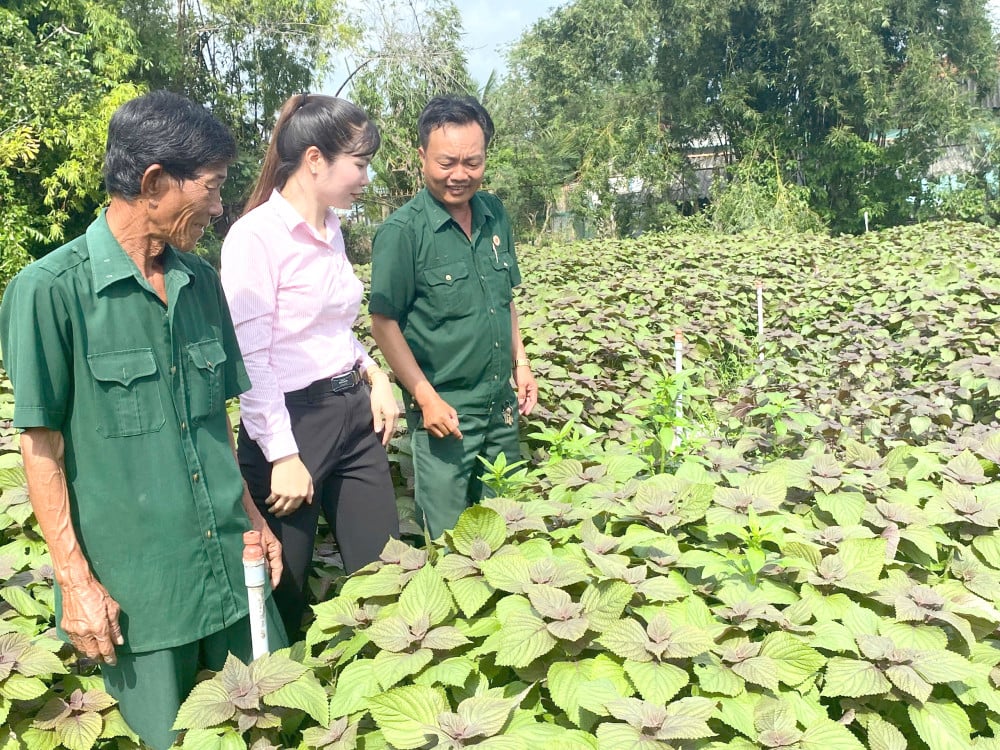
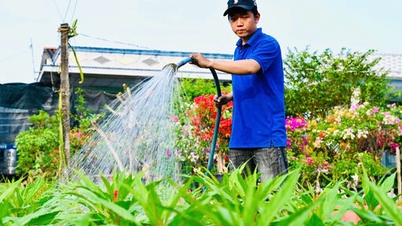
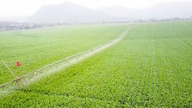
The entire province has 2,148 hectares of vegetables grown using high-tech methods.
After implementation, the project achieved many outstanding results, including the formation of large raw material areas with strong market competitiveness, improved product quality, changes in production practices, and contributions to increased productivity and profit per unit of cultivated land.
Building upon and developing the achievements, the Resolution of the 11th Provincial Party Congress, term 2020-2025, identifies the development of high-tech agriculture linked with the restructuring of the agricultural sector as one of the three breakthrough programs, contributing to the province's rapid and sustainable development. The province has expanded this to include four crops (rice, vegetables, dragon fruit, and lemons) and two livestock species (brackish water shrimp and beef cattle).
For rice cultivation, the focus is on building export-standard rice production areas with consumption linkages to businesses, and continuing to develop pilot models and replicate models applying advanced techniques, while maintaining the results achieved in the 2016-2020 period. To date, farmers have applied mechanization to land preparation, fertilization, spraying, harvesting, and drying rice at 100%; 85% of irrigation is done using water pumps and electric pumping stations, etc.
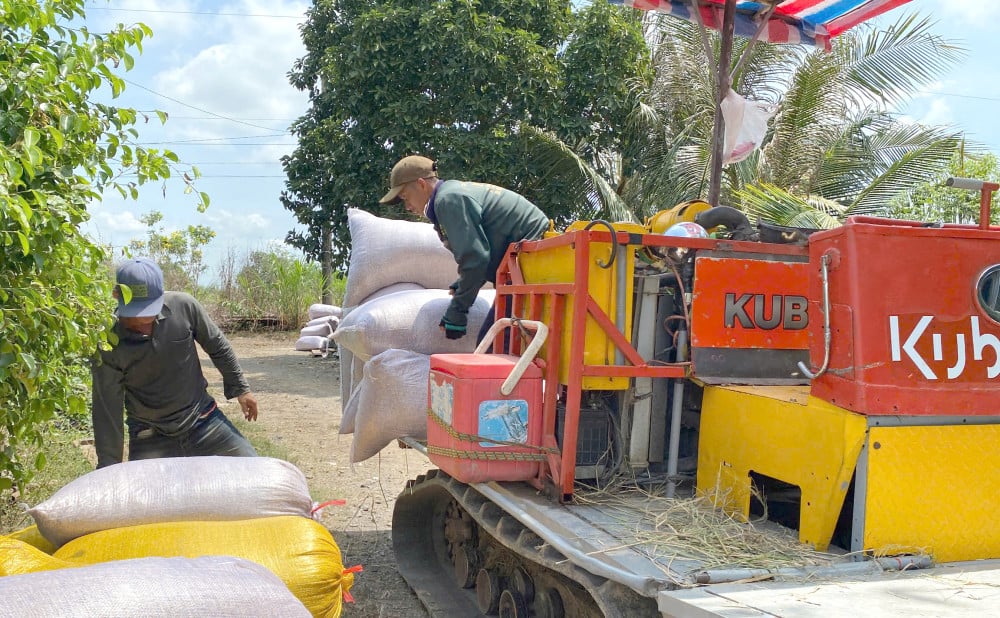
In rice cultivation, farmers have applied mechanization to land preparation, fertilization, pesticide spraying, harvesting, and drying.
In particular, farmers have changed their production practices, using certified seeds for sowing, reducing sowing density by 10-30 kg/ha, and increasing the use of organic fertilizers and biological products, thus reducing the amount of chemical fertilizers by 10-30%. As a result, farmers have reduced production costs by 5-15% and increased profits by 5-20% compared to before. To date, the area applying high-tech methods in rice cultivation has reached over 115% of the plan for the 2021-2025 period.
The province's traditional vegetable growing areas have also undergone significant transformation with the application of advanced technologies. Almost 100% of farmers use organic fertilizers in production, which helps improve soil quality, promotes better plant growth, and extends the time between land changes. The synchronized application of scientific and technical solutions not only increases productivity and improves the quality of vegetables compared to traditional methods, but also saves farmers a great deal on fertilizer, pesticides, and labor costs. The products are safe for consumers, contribute to environmental protection, and move towards sustainable agriculture that adapts to climate change. To date, the entire province has 2,148 hectares of vegetables grown using advanced technologies, achieving 107% of the plan for the 2021-2025 period.
A key highlight of the application of high-tech methods in dragon fruit cultivation is that 100% of dragon fruit farmers no longer use untreated chicken manure. Instead, organic fertilizers are used more rationally, reducing the amount of chemical fertilizers by 10-15%, contributing to lower production costs and increased profits by 15-20% compared to before participating in the Project.


Truong Minh Trung, Director of Long Hoi Dragon Fruit Cooperative (An Luc Long commune), shared: “Growing dragon fruit using advanced technology is not easy because it requires investment in water-saving irrigation systems, lighting, and the use of organic fertilizers… The initial costs are much higher than traditional methods. But after receiving technical training and establishing sales linkages, we clearly see the effectiveness: the plants are less susceptible to pests and diseases, the fruit has a beautiful appearance, and it's easier to meet export standards, so the selling price is higher. Importantly, besides immediate profits, the cooperative also aims for sustainable farming, protecting the land and the environment so that we can continue to be involved with dragon fruit cultivation in the long term.”
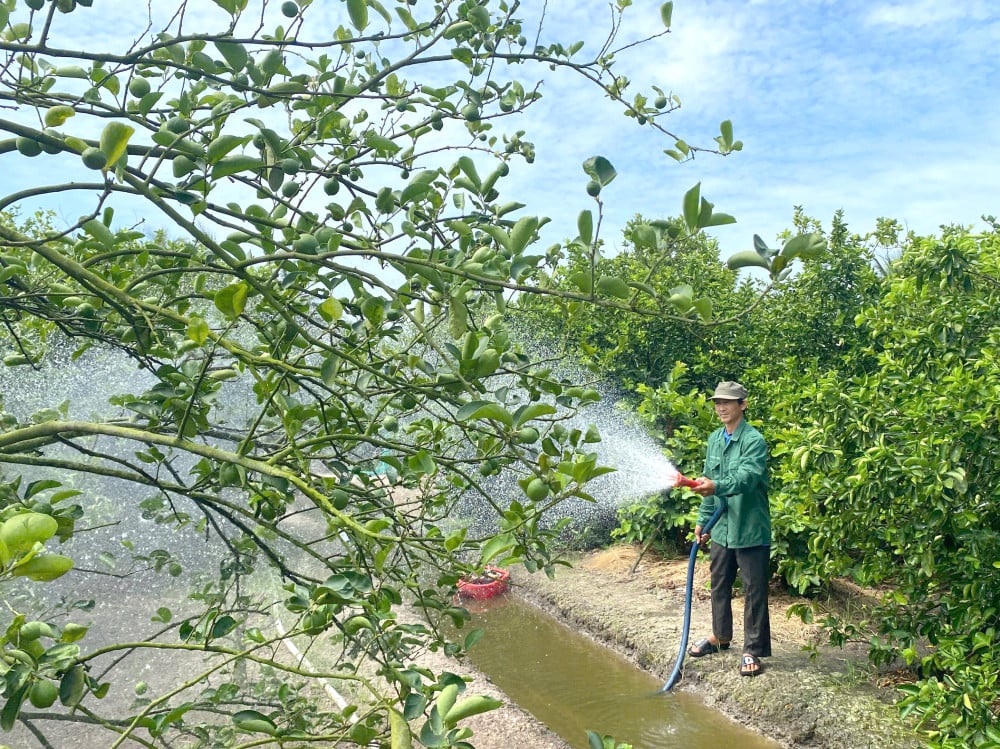
Farmers applying high technology to lemon cultivation have reduced production costs by 3-5 million VND/ha, increasing profits to 21.5-50 million VND/ha.
In lemon cultivation, farmers have shifted from a purely agricultural production mindset to an agricultural economic one, focusing on product quality and market demand rather than simply producing based on existing resources as before. Consequently, farmers have begun adhering to the stringent production processes of demanding markets such as Japan and the EU. This has led to an increasing area of lemon orchards achieving GAP certification. More importantly, farmers have reduced production costs by 3-5 million VND/ha, while profits have increased, reaching 21.5-50 million VND/ha.
Shrimp farming has been added to the High-Tech Agricultural Development Program linked to the restructuring of the agricultural sector in the 2021-2025 period. The agricultural sector's goal is to focus on building pilot models of high-tech shrimp farming, creating confidence for people to switch. Through these pilot models, people have boldly expanded the area of high-tech shrimp farming, and to date, approximately 1,172.14 hectares/2,146 households have been involved.
Deputy Director of the Department of Agriculture and Environment, Dinh Thi Phuong Khanh, affirmed: “High-tech agriculture has contributed to changing the mindset and practices of farmers, creating a better value chain, and gradually positioning Tay Ninh's agricultural products in the international market. In fact, wherever high-tech agriculture is invested in and given attention, it develops, establishing planting area codes and achieving OCOP certification for its products. Through this, people's lives are increasingly improved, contributing to building a green, modern, and sustainable agricultural sector.”
There are still many difficulties.
Despite the achievements, the implementation of the High-Tech Agriculture Development Program, linked with the restructuring of the agricultural sector in the province, still faces numerous difficulties and limitations, especially for cooperatives. Establishing cooperatives in many areas is challenging, and the number of cooperatives participating in the value chain is still limited, failing to truly become a solid "bridge" between production and consumption. The management capacity of cooperative officials remains limited, failing to effectively mobilize and connect farmers to foster long-term commitment to the cooperative. These limitations indicate that for high-tech agriculture to be effective, comprehensive support is needed in terms of capital, markets, and human resources.
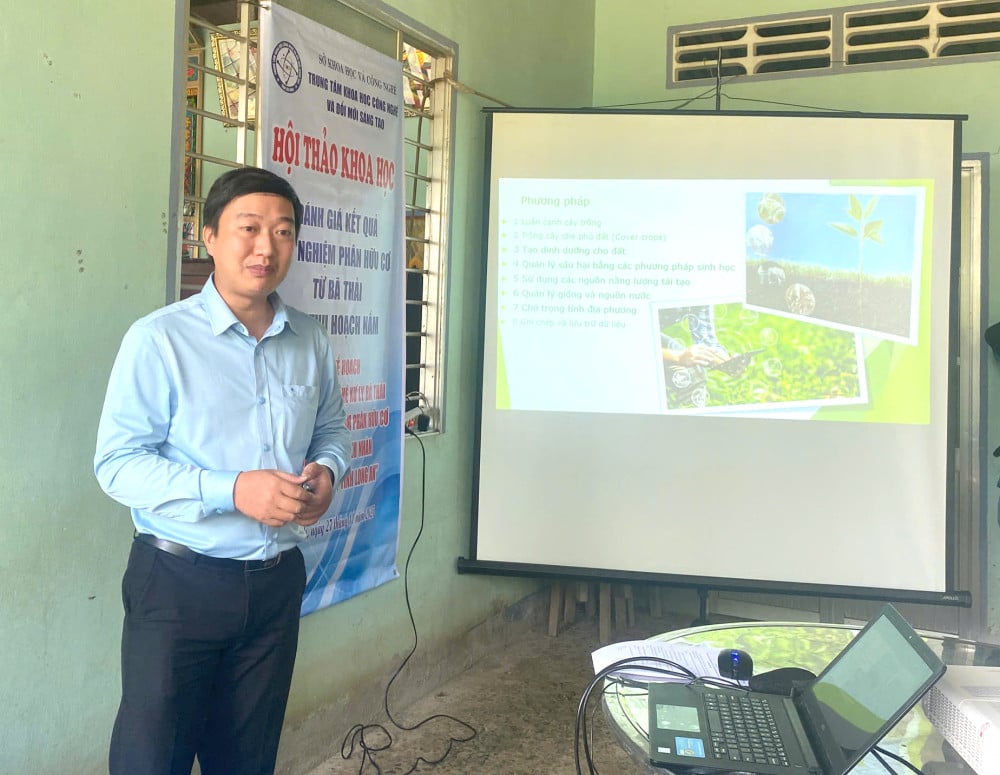
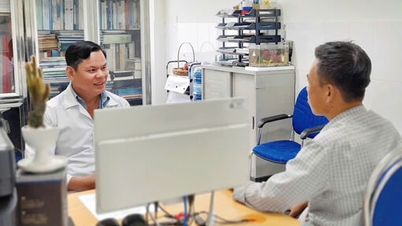
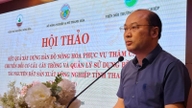
Training courses on the transfer of scientific and technical knowledge help farmers change their production practices.
According to Le Van Giay, director of the Muoi Hai Safe Vegetable Cooperative (Rach Kien commune): “The biggest challenges for the cooperative are capital and market access. Investing in greenhouses, water-saving irrigation systems, organic fertilizers, etc., involves very high costs, while the ability to mobilize members is limited. Furthermore, although the products meet VietGAP standards, the market is not yet stable and still heavily dependent on traders. Without policies supporting credit and sustainable consumption linkages, it will be very difficult for the cooperative to expand production.”
Along with the difficulties faced by cooperatives, although investment in technical infrastructure serving agricultural production has been prioritized, many areas still do not meet requirements, especially irrigation systems, cold storage facilities, and post-harvest processing and preservation centers. The availability of clean land to attract business investment remains limited, hindering the formation of large-scale, modern production models.

Meanwhile, the number of agricultural enterprises applying high technology in the province is still small, lacking leading companies to guide and connect with the market. Research and application of technology in the preliminary processing and manufacturing stages to enhance the value of agricultural products have not received adequate attention. Therefore, the participation of businesses in the production chain is limited, leaving farmers still facing many risks regarding prices and output.
Mr. Le Van Bich, a lemon farmer in Binh Thanh commune, said: “We know that using high technology will yield better productivity and prices, but the initial investment costs are too high, and many households cannot afford it. Furthermore, the market for agricultural products still depends on traders; without a partnership, we worry about price drops.”
To address these challenges, the province is focusing on solutions that link farmers, cooperatives, and businesses to create large-scale operations, reduce risks, and enhance competitiveness. The application of new technologies such as artificial intelligence (AI) in pest monitoring, weather forecasting, and optimizing irrigation and fertilization is being piloted in many models. Simultaneously, the province is promoting a circular economy: utilizing agricultural by-products to produce organic fertilizers and biogas, reducing emissions; and gradually participating in the carbon credit market to increase revenue for farmers and businesses.
With its potential, advantages, and the fruits of its labor already achieved, the province confidently enters the 2026-2030 period with the aspiration to build a green, modern, and internationally integrated agricultural sector, for a prosperous life and a sustainable environment for today and tomorrow.
Le Ngoc
Source: https://baolongan.vn/nhin-lai-nong-nghiep-ung-dung-cong-nghe-cao-a208217.html



![[Photo] Prime Minister Le Minh Hung presides over the thematic session on promoting science and technology development and innovation.](https://vphoto.vietnam.vn/thumb/1200x675/vietnam/resource/IMAGE/2026/06/23/1782207872934_ndo_br_dsc-1724-jpg.webp)




![Rubber continues its miraculous journey [Part 2] Science gives wings to rubber](https://vphoto.vietnam.vn/thumb/402x226/vietnam/resource/IMAGE/2026/06/23/1782221693721_0013-2aoboqcxqwjiag0z4vx8ivontsypahh1ok7hb24e-165245_895.jpeg)