

But for the past 100 years, almost no one has lived there.
The town of Kayaköy, in Muğla province, southwestern Türkiye, has been abandoned by its inhabitants and haunted by its past. It serves as a reminder of the country's turbulent times.
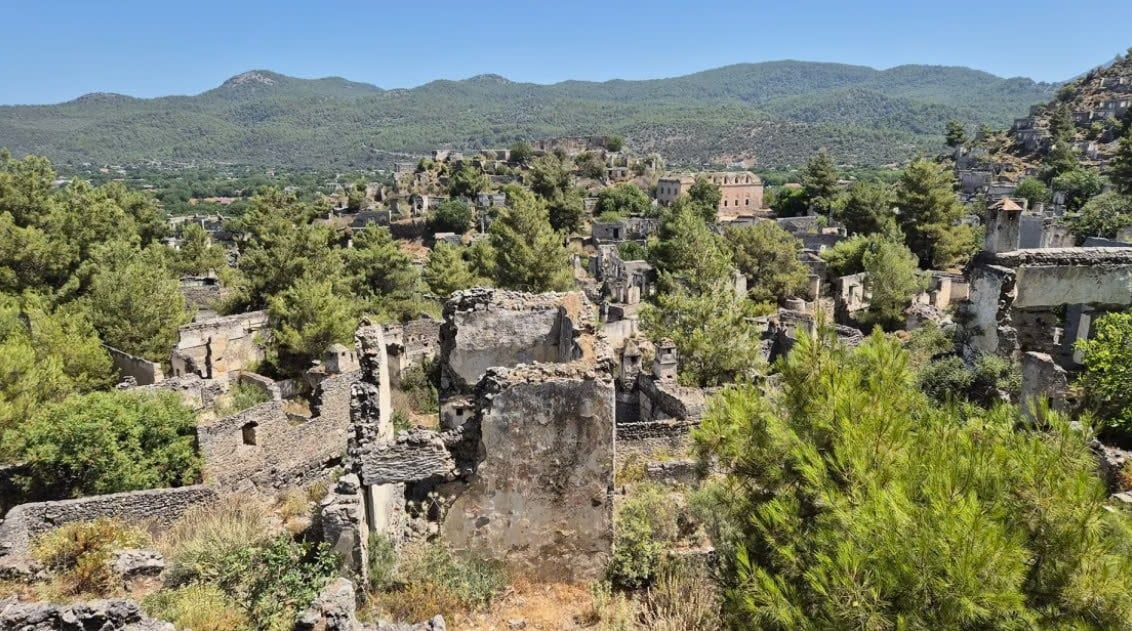
Karaköy, located in southwestern Türkiye, was once a thriving town, but its Greek Orthodox community was forced to leave. Photo: CNN
Memories of a bustling town more than a century ago.
Just over a century ago, Kayaköy was a bustling town of between 10,000 and 20,000 Greek Orthodox residents, many of them artisans, living in harmony with Turkish Muslim farmers. But the upheavals following Turkey's rise to independence have torn its people apart.
After the Greek-Turkish War ended in 1922, the town of Livissi became isolated due to the expulsion of its inhabitants. It was then inhabited by Muslims returning from Greece, but they were unaccustomed to the arid conditions and gradually moved elsewhere.
Among the few people who remained were Aysun Ekiz's grandparents, who owned a small restaurant near the main entrance to Kayaköy, serving food and drinks to visitors to the town. Stories of those difficult times have been passed down through generations.
"The Greeks didn't want to leave and they cried, my grandparents told me," said Ekiz, who now sells handcrafted jewelry to tourists. "Some even left their children with Turkish friends because they thought they would come back. But they never did."
Jane Akatay, co-author of “The Kayaköy Guide,” says the reason the town was abandoned is the lingering sadness following the tragic events of the 1920s. Nature also played a role in its downfall.
Earthquakes and storms
“There have been earthquakes and storms. The climate, the weather, the rainstorms… everything has impacted this place,” Ekiz said. “Over the years, the mortar holding them together has crumbled, and everything will fall apart if you don’t take care of it.”
Visitors only need to pay 3 euros at a small kiosk on the main road into Kayaköy. They can then walk to the alleyways, which may be steep and uneven. There are signs pointing to the school, church, and fountain.
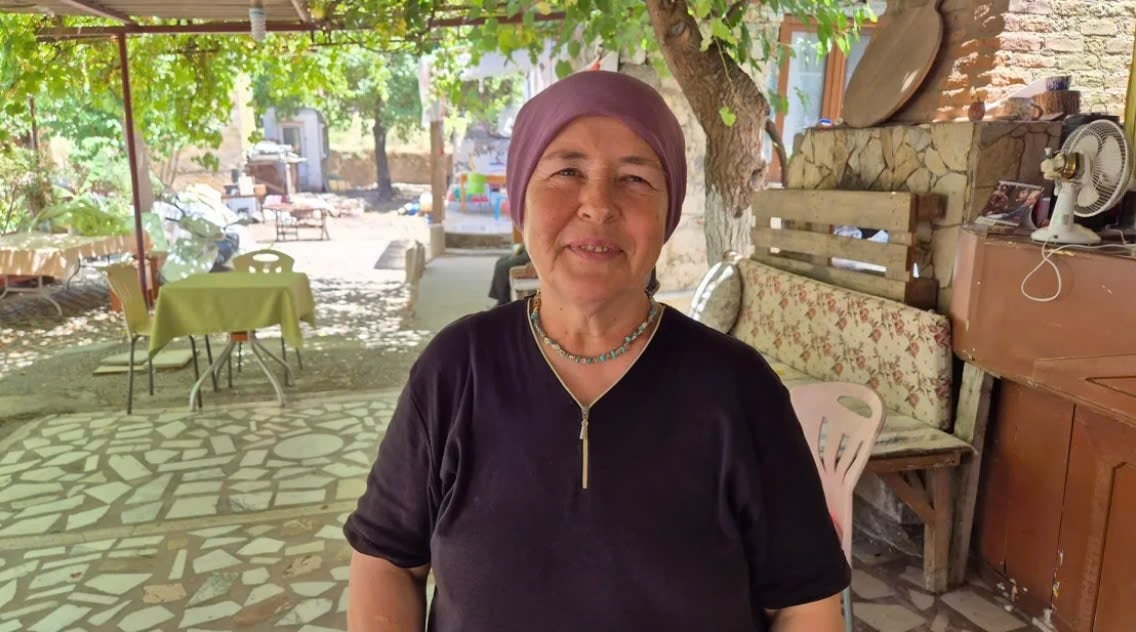
Aysun Ekiz is one of the few people living in Kayaköy. Photo: CNN.
It's well worth spending a few hours exploring this place. With fewer visitors even during peak season, you can enjoy the peaceful atmosphere, imagining a time when it was bustling, especially in the old town square, where local men used to gather to drink tea and tell stories.
Most of the houses now have no roofs, and the walls are overgrown with vegetation. Some houses have pits in the basement, formerly used for tanning leather – shoemaking was once one of the common trades here.
Many houses still have intact water tanks – crucial because the town has no plumbing system.
Kayaköy was once quite prosperous and served as the commercial center of the region, even more so than the nearby port of Fethiye – now a thriving urban center and a popular tourist destination.
"Each two-story house here is spaced a reasonable distance apart. They're all built so that no one gets any sunlight," she shared.
"A mirror reflecting the past"
One of the town's most striking landmarks is the Upper Church, a grand structure with faded pink plastered walls and barrel-shaped vaulted ceilings. Unfortunately, the building has been sealed off due to its dilapidated condition.
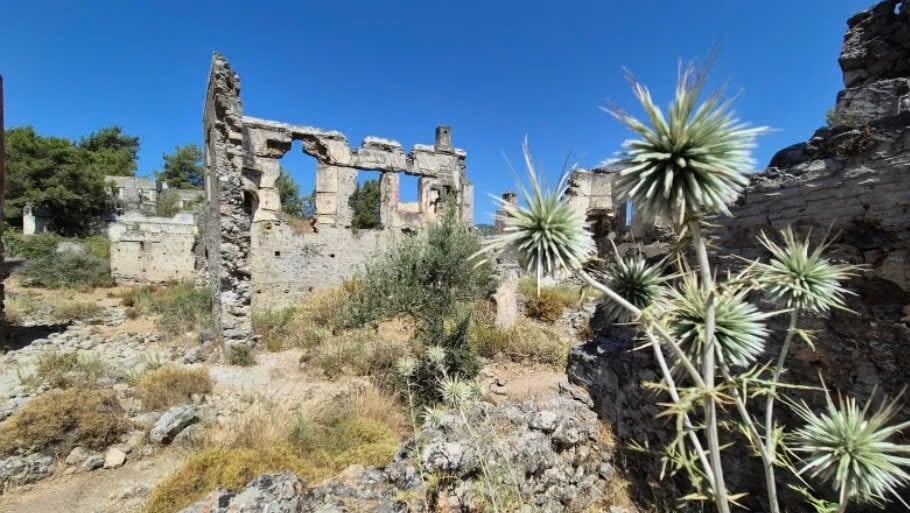
The ruins of hundreds of houses in the town. Photo: CNN
Perched atop the town, the ruins of the old Kayaköy school overlook the church and the houses below. Observing the landscape, Yiğit Ulaş Öztimur described Kayaköy as “a dark mirror reflecting our past.”
“This used to be a Christian village, and what we see now is a bitter reflection of what happened,” he said. “Because most of the houses are still intact, you can get a sense of what life was like here.”
There are guided trails through Kayaköy from nearby towns, but it's easy to get lost wandering through the streets. Some alleyways turn into dead ends. Entrances and staircases are everywhere (although due to the dilapidated condition of many buildings, visitors are advised not to enter).
Crossing the valley, navigating winding streets, and visiting small churches are must-do experiences for tourists. Climbing uphill, past rocks and pine trees, you'll reach the hilltop.
The church, with its typical small, classical architecture, overlooks villages on the Greek islands. It's a small building with a dome and small, unglazed windows. Inside, it's completely empty.
A Turkish flag flutters, its bright red against a deep blue sky. And below the hillside lies the sparkling waters of the Aegean Sea. It's a spectacular scene, hardly changed since the days when Kayaköy was a bustling thoroughfare.
Ha Trang (according to CNN)
Source: https://www.congluan.vn/dieu-gi-xay-ra-khi-mot-thi-tran-bi-bo-hoang-trong-hon-100-nam-post309610.html


![[Photo] Prime Minister Pham Minh Chinh attends the Conference on the Implementation of Tasks for 2026 of the Industry and Trade Sector](/_next/image?url=https%3A%2F%2Fvphoto.vietnam.vn%2Fthumb%2F1200x675%2Fvietnam%2Fresource%2FIMAGE%2F2025%2F12%2F19%2F1766159500458_ndo_br_shared31-jpg.webp&w=3840&q=75)












































































Comment (0)