

Hands-on guidance, changing production mindset.
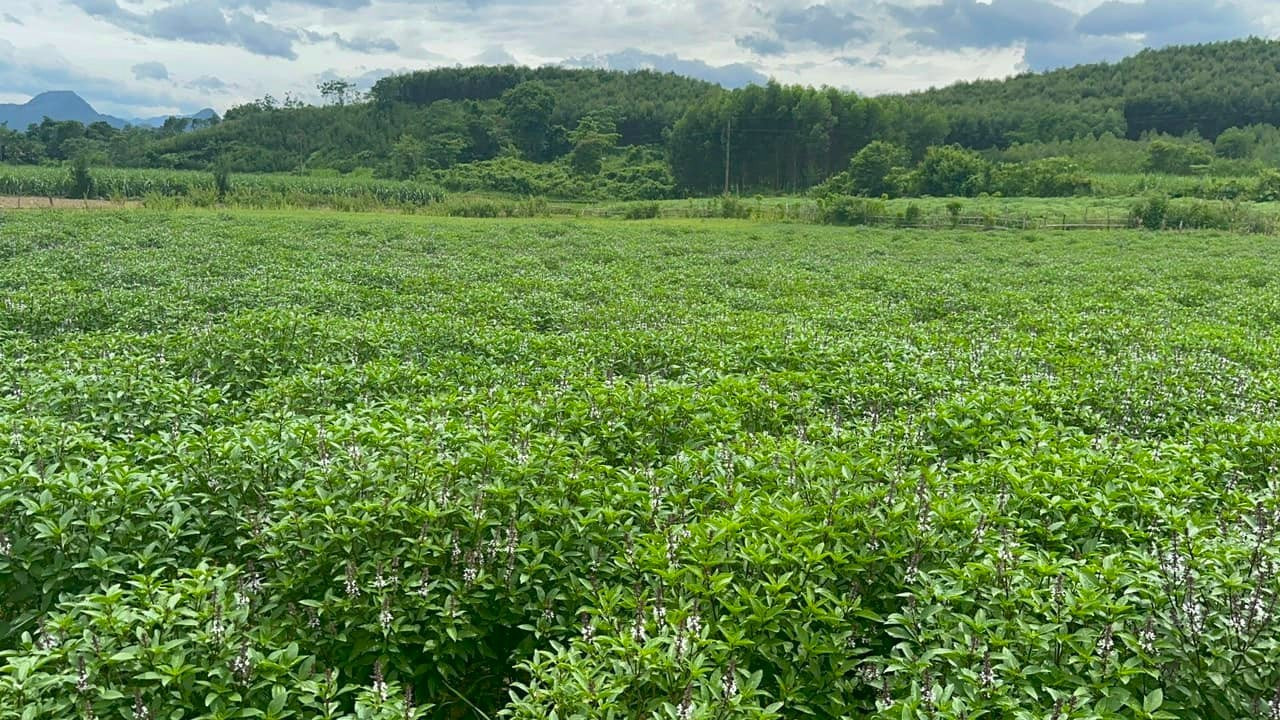
On a late morning at the end of the year in Nha Nat village (Muong Ham commune, Nghe An province), a thin layer of mist still covers the rows of basil ready for harvest. Mixed with the smell of damp earth is the faint aroma of essential oils – a scent that has opened a path out of poverty for dozens of Thai ethnic women here.
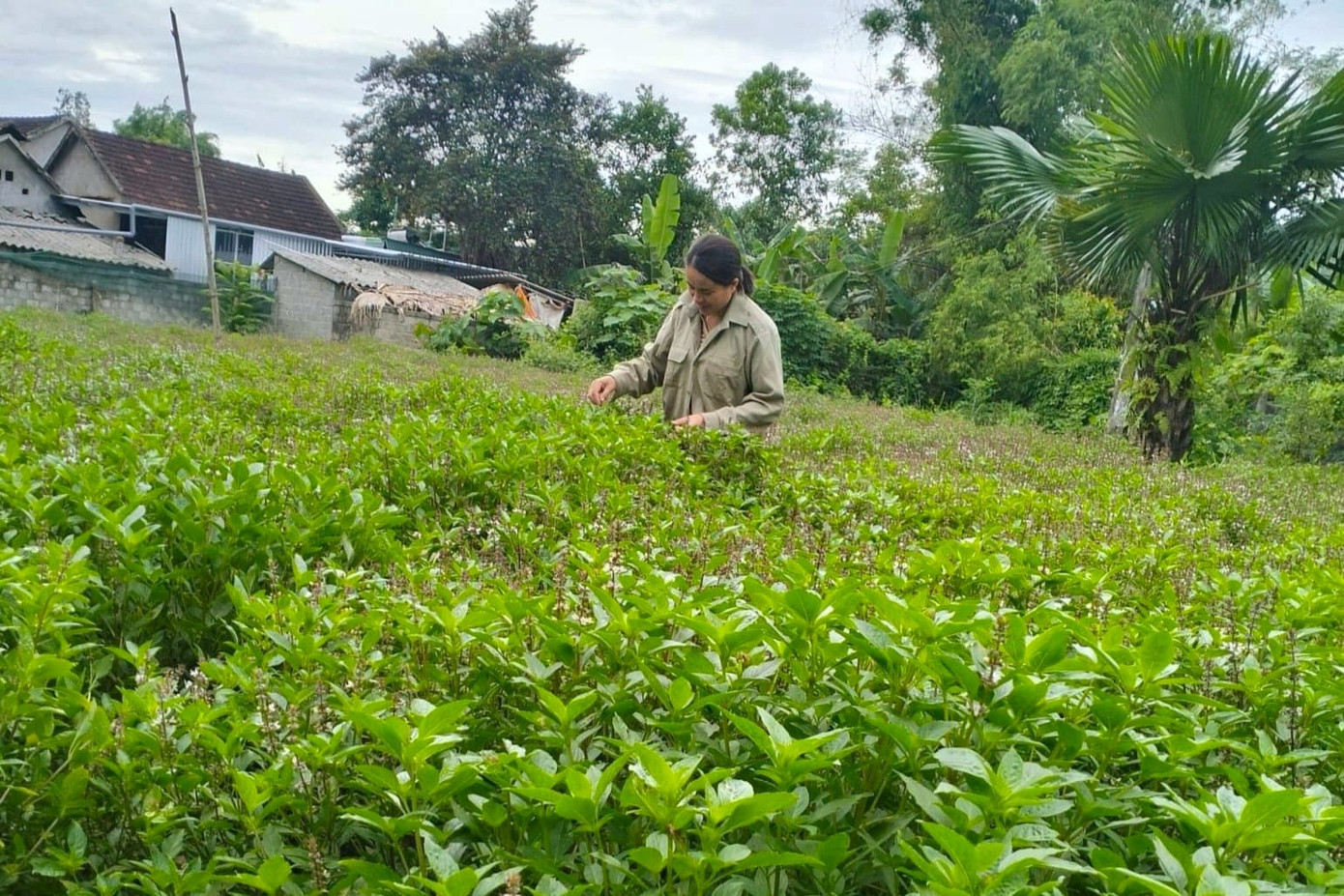
On her more than 3-hectare field, the woman is busily gathering the plants, bundling them into large bunches to be quickly delivered to the distillation furnace that day. “In over 10 years of growing corn and rice, I never thought my garden could yield such a high income. One crop from 1,200 square meters brought me 10 million dong. Even growing corn all year wouldn't necessarily bring in that much. Next year, I plan to expand the area,” said Ms. Ngan Thi Duong, her hands nimbly cutting the last sprigs of basil.
Mrs. Duong's smile, gentle yet confident, partly reflects the changes spreading across the mountainous Muong Ham region thanks to the high-tech medicinal herb cultivation model.
In April 2024, the "Medicinal Plant Cultivation and Essential Oil Production" cooperative model was officially launched in Nha Nat village. Established under the leadership of the Women's Union of the commune, the model attracted 30 members, mostly Thai women – those who are closely associated with farming and are familiar with traditional farming methods.
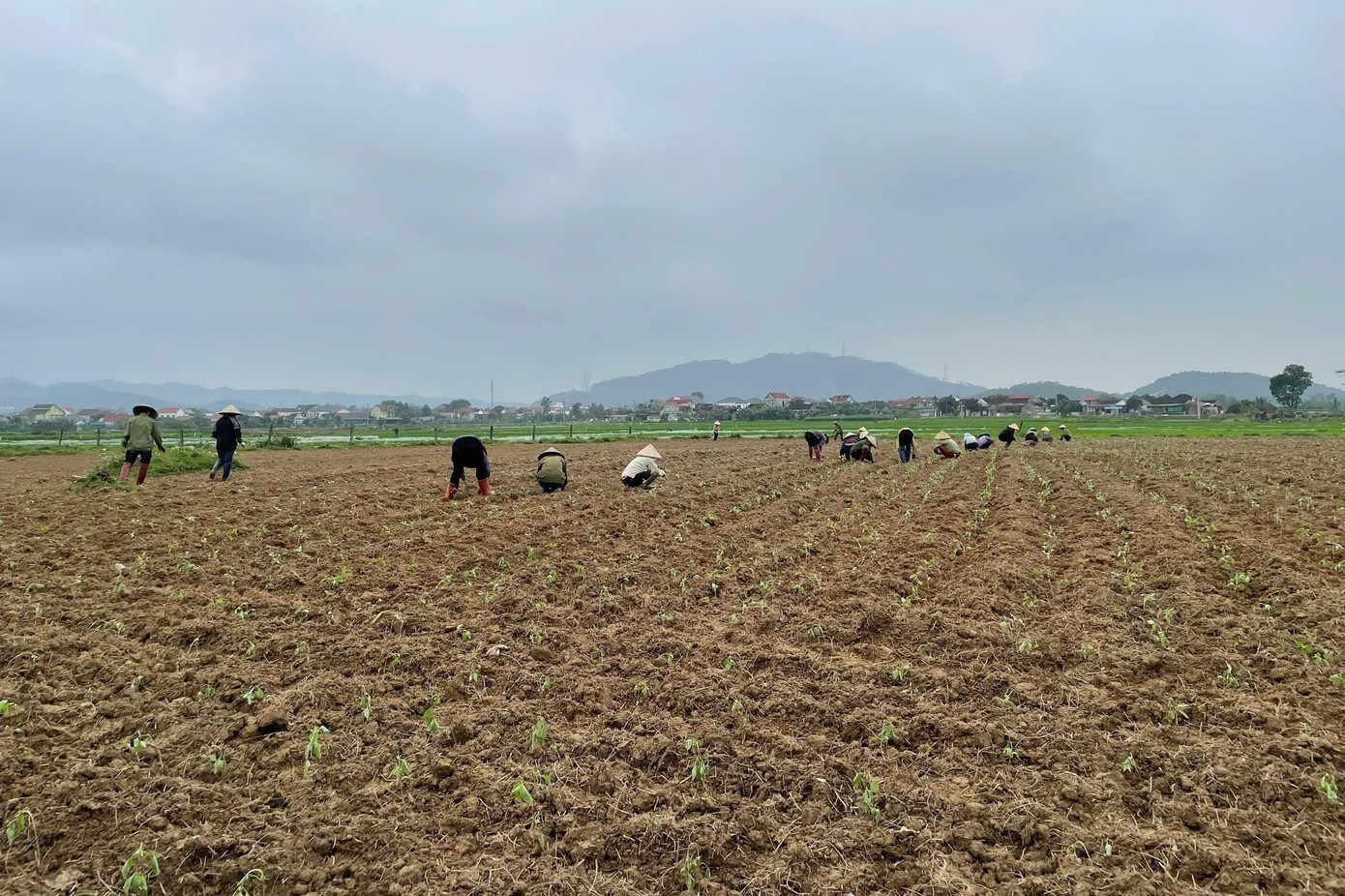
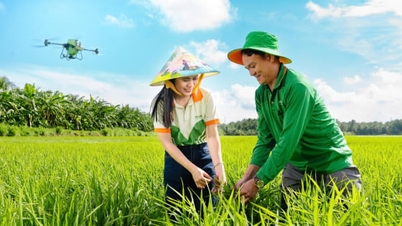
Initially, many women were hesitant. Medicinal plants, machinery, technology… everything was new. To overcome this apprehension, the Women's Union of Muong Ham commune, in coordination with the Quy Hop Medicinal Herb Cooperative, organized training sessions right in the fields. Each session was a day of hands-on instruction: from soil preparation, adjusting the threshing machine, sowing seeds, fertilizing, to using drones for spraying pesticides.
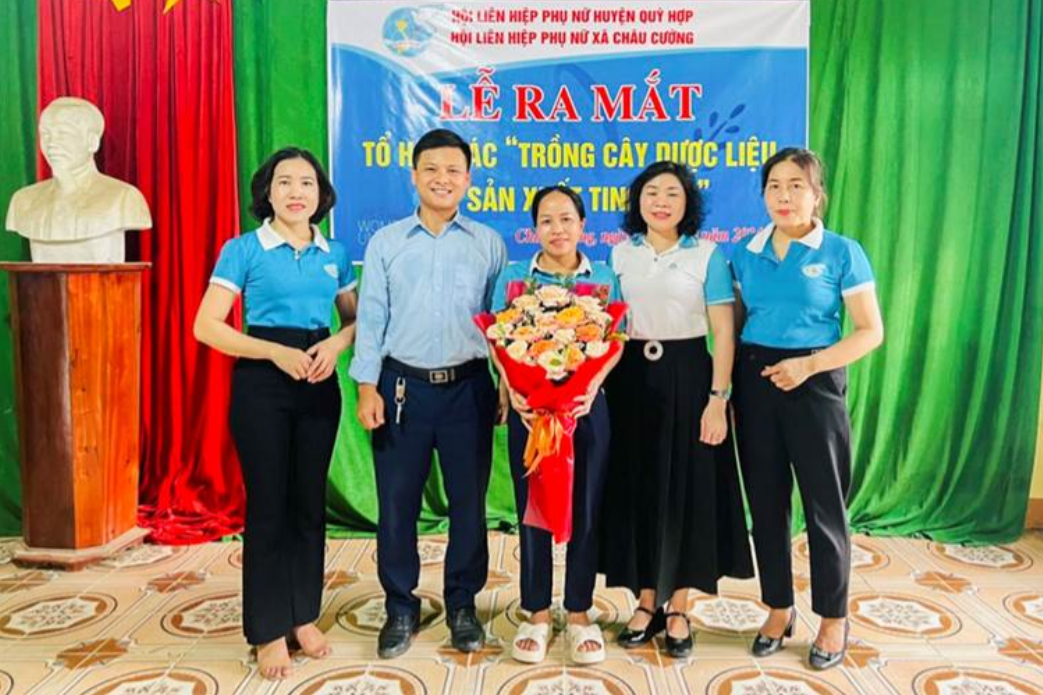
“Women are very hardworking but lack confidence when it comes to accessing technology. We have determined that to escape poverty sustainably, we must change our production mindset. And that can only be achieved when women are equipped with information, knowledge, and techniques,” shared Ms. Vi Thi Hang, Chairwoman of the Farmers' Association of Muong Ham commune (formerly Chairwoman of the Women's Union of Chau Cuong commune).
Thanks to these training sessions, Thai women who were previously only familiar with manual farming now know how to operate machinery, use modern agricultural equipment, and understand the standard process for producing high-quality essential oils.
The fragrance of medicinal herbs ignites new hope.
The cooperative model of "Cultivating medicinal plants and producing essential oils" not only has economic significance but also contributes to changing the fragmented and small-scale production mindset of ethnic minority women. From Nha Nat village, the medicinal plant model has spread to many other villages such as Ban Nhoi and Nhang Tham. Women share with each other how to plant, care for, and preserve the seeds. Even those who previously didn't believe that medicinal plants could "support a family" are now boldly registering to participate.
"Medicinal plants are easy to grow, have a short harvesting time, and yield 2-3 times higher income compared to growing rice or corn. More importantly, the women feel they can do it, become more confident, and learn to apply technology and do economic calculations," said Ms. Vi Thi Hang.
The Quy Hop Medicinal Herb Cooperative acts as a "patron," providing all the seeds, fertilizers, technical assistance, and guaranteeing the purchase of the harvested products. Basil, lemongrass, and melaleuca – medicinal herbs with high resistance and good growth on hilly land – were selected for cultivation. After only 6 months, the results were impressive: 15-18 tons of raw materials per hectare, yielding 75-90 kg of essential oil, equivalent to a revenue of 75-90 million VND per hectare per crop. For many households, this is their largest source of income to date.
Mr. Pham Van Hoang, Chairman of the Nghe An Medicinal Herbs Association and representative of the Quy Hop Medicinal Herbs Cooperative, said: “We apply a closed-loop production line, soil compacting machines, seed spreading machines, and agricultural drones. Advanced steam distillation technology from Germany helps essential oils meet standards for export to foreign markets. Women participating in the model almost don't have to worry about capital or market risks.”
Thanks to a stable supply of raw materials, a range of products such as basil essential oil, tea tree essential oil, herbal shampoo, natural hygiene solutions, etc., have been standardized and achieved OCOP 3-4 star certification, affirming their quality and competitiveness in the international market.
In the late afternoon, steam rises from the essential oil distillation area, carrying a gentle fragrance that permeates the entire village. This aroma is the culmination of the sweat, learning, and efforts of the Thai women, opening up a new future for the mountainous commune of Muong Ham.
From lush green medicinal herb plots, a new economic model is taking shape; from simple training sessions in the fields, production thinking is changing; and with the support of the Quy Hop Medicinal Herb Cooperative, women here are taking more confident steps on their journey towards sustainable poverty reduction.
Source: https://tienphong.vn/cay-duoc-lieu-giup-ba-con-vung-cao-thoat-ngheo-post1803666.tpo


![[Photo] Prime Minister Pham Minh Chinh holds a phone call with the CEO of Russia's Rosatom Corporation.](/_next/image?url=https%3A%2F%2Fvphoto.vietnam.vn%2Fthumb%2F1200x675%2Fvietnam%2Fresource%2FIMAGE%2F2025%2F12%2F11%2F1765464552365_dsc-5295-jpg.webp&w=3840&q=75)




![Passion fruit 'capital' faces sustainability challenge: [Part 3] Building supply chain linkages](https://vphoto.vietnam.vn/thumb/402x226/vietnam/resource/IMAGE/2025/12/12/1765517075835_1232-akk00534-130606_948.jpeg)



















































Comment (0)