

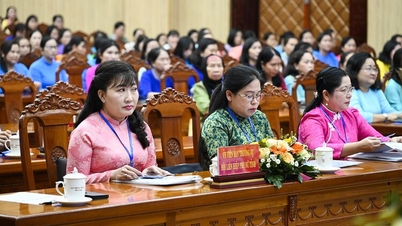
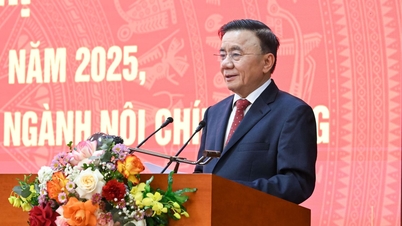
This was the statement made by Associate Professor Dr. Ta Minh Tuan, Vice President of the Vietnam Academy of Social Sciences, at the scientific conference "Gender Equality in Politics, Leadership and Management" organized by the Ministry of Science and Technology in collaboration with the Vietnam Academy of Social Sciences.
Ensuring the development and advancement of women.

A recent report by the United Nations Development Programme (UNDP) indicates that gender equality should be considered a central element in development, integrated into all socio-economic development strategies and policies, ensuring fair participation, contribution, and benefits.
Promoting gender equality, especially ensuring the development and advancement of women in the process of social development, is of particular importance because women tend to be a marginalized group in most societies. Furthermore, women constitute half of the current population and workforce. Promoting development opportunities for female human resources across all social strata, especially high-quality women and women in disadvantaged groups, will contribute to driving socio-economic development, meeting the requirements for more balanced development across regions, maintaining political stability, and ensuring national security and defense for the country's development.
Associate Professor Dr. Ta Minh Tuan argues that greater gender equality in politics reflects both the progress of women in society compared to men and is an effective means of ensuring continuous progress. Women's ability to participate in politics changes the process of determining priorities for public policy and helps the government have a fairer and more comprehensive perspective. When women's right to political participation is more fully realized, women can further promote economic, social, and cultural development efforts.
Associate Professor Dr. Ta Minh Tuan shared: "Previously, gender equality meant giving women the same rights as men and treating them equally. Over time, it has been realized that this approach ignores the power dynamics between men and women. Gender equality does not simply mean a balance in numbers between women and men, or between boys and girls in all aspects of society."
Today, gender equality means providing women and men with fair living conditions, equal opportunities to realize their potential, and equal chances to participate, contribute, and benefit from the national, political, economic, social, and cultural development environment.
In 2024, Vietnam narrowed the gender gap, achieving a gender equality score of 71.5% – higher than the global average as well as the East Asia and Pacific region average, ranking 72nd. However, the reality shows that Vietnam is facing several challenges regarding gender equality, including unequal representation of women in the political system, gender imbalance at birth, gender inequality in wages, working hours, unpaid work, mandatory social insurance participation, high levels of women working in the informal sector, persistent gender-based violence, and declining women's labor market participation and fertility rates.
Gender equality is not simply about balancing numbers.

Associate Professor Tran Thi Minh Thi, Deputy Director of the Institute of Scientific and Social Information, stated that increasing women's participation not only improves the quality of decision-making but also contributes to building a fair, democratic, and civilized society. However, in reality, barriers such as social prejudices, inequality in access to career opportunities, and traditional cultural factors still exist, requiring scientific research to propose solutions suitable to Vietnam's conditions.
In this context, the comprehensive implementation and evaluation of gender equality for sustainable development, particularly in the fields of politics, leadership, and management, is essential. This will assess gender representation and diversity in decision-making processes, ensuring that downsizing does not exacerbate gender inequality, especially by eliminating gender bias in appointments and promotions.
Referring to the history of the process of building and implementing laws and policies on gender equality in Vietnam through the Constitution and Party Congress documents, Professor Dr. Trinh Duy Luan, of the Vietnam Sociological Association, has systematized the most important legal and policy documents related to gender equality in our country in different historical periods from 1945 to the present (including documents such as: the Constitution, the guidelines of the Communist Party of Vietnam, laws, sub-laws, methods and tools for understanding and managing the current situation, progress and issues in the implementation of gender equality and gender practices in our country).
The 1946 Constitution was the first constitution of the Democratic Republic of Vietnam, born after the historic Declaration of Independence read by President Ho Chi Minh on National Day, September 2, 1945. The constitution had 70 articles, with Article 9 containing a concise statement: "Women have equal rights with men in all respects."
The position and wording of Article 9 in the 1946 Constitution have always made a strong impression. It is the shortest article, yet sufficiently concise in its content regarding gender equality (in the language of that era), compared to similar articles in the four subsequent Constitutions.
Sharing her views on gender equality in terms of participation in political organizations, associations, and grassroots political and social organizations, Ms. Dao Thi Vi Phuong, Deputy Head of the Democracy, Supervision and Social Criticism Department of the Central Committee of the Vietnam Fatherland Front, stated that several issues still remain.
In particular, the criteria for female Party committee members in various documents and policies lack consistency and uniformity; there is a gap between regulations and the implementation of planning and training for female cadres; political commitment to ensuring the proportion of women in politics; gender stereotypes and social biases regarding the roles of women and men still persist….

The workshop "Gender Equality in Politics, Leadership, and Management" aims to share research and survey results on gender equality and provide scientific arguments for developing policy recommendations on gender equality in politics, leadership, and management in the coming period.
This also provides an opportunity for managers, policymakers, experts, scientists, and relevant organizations to discuss specific solutions to reduce the gender gap and promote balanced representation and voices for men and women in the political, leadership, and management systems.
At the workshop, delegates discussed and exchanged ideas on this issue, aiming to propose various solutions to promote gender equality at all levels, from central to local governments, political and social organizations; the level of public interest in political activities and leadership; and gender equality in elected bodies...
Source: https://hanoimoi.vn/binh-dang-trong-chinh-tri-thuoc-do-quan-trong-ve-binh-dang-gioi-726571.html

















![[Photo] Prime Minister Pham Minh Chinh holds a phone call with the CEO of Russia's Rosatom Corporation.](/_next/image?url=https%3A%2F%2Fvphoto.vietnam.vn%2Fthumb%2F1200x675%2Fvietnam%2Fresource%2FIMAGE%2F2025%2F12%2F11%2F1765464552365_dsc-5295-jpg.webp&w=3840&q=75)









































Comment (0)