

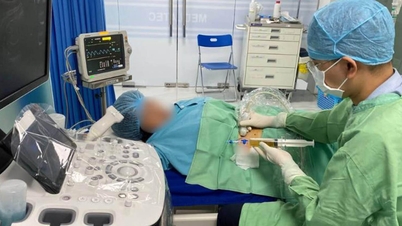
Upon arriving at MEDLATEC General Hospital, she was diagnosed with frozen shoulder and successfully treated using ultrasound-guided injection and rehabilitation techniques.
 |
| Illustrative image. |
Persistent shoulder pain and difficulty moving, especially when rotating or extending the arm, are often overlooked, but they can be warning signs of serious shoulder joint conditions, including frozen shoulder, which severely restricts movement.
Ms. NY stated that the pain had been present for about 6 months, described as inflammatory but without fever and without any prior injury. Upon examination, the doctor noted pain in the left shoulder during both internal and external rotation, with significantly limited range of motion.
Ultrasound and MRI results of the shoulder joint revealed characteristic signs of frozen shoulder, including interrotator cuff edema, axillary synovial membrane thickening, and restricted sliding of structures within the subacromial space.
Shoulder periarthritis is a group of inflammatory diseases of the soft tissues surrounding the shoulder joint, including the rotator cuff tendons, joint capsule, and bursae. It is divided into four clinical forms: simple shoulder pain, acute shoulder pain due to microcrystal deposition, pseudoparalysis of the shoulder due to tendon rupture, and frozen shoulder (frozen shoulder) due to synovial membrane adhesion and capsular contracture.
Frozen shoulder affects 2-5% of the population, is more common in people aged 40-60, and is more prevalent in women than men. Risk factors include underlying conditions such as diabetes, thyroid disease, Parkinson's disease; post-surgery or trauma; and prolonged limited shoulder movement.
The disease progresses insidiously, initially causing mild pain that gradually increases, then subsides but the joint becomes stiff, and the range of motion is severely reduced.
To accurately diagnose the condition, especially in cases of persistent shoulder pain, doctors need to perform advanced diagnostic imaging techniques.
Ultrasound and X-rays may be normal or only suggestive of abnormalities, while MRI is the gold standard, allowing for high-detail visualization of the entire soft tissue around the shoulder joint, helping to differentiate frozen shoulder from other pathologies such as tendon tears, subacromial impingement, or bursitis.
Ultrasound-guided shoulder joint expansion injection is a safe and highly effective method for treating frozen shoulder. Numerous studies have shown that patients experience improvement immediately after the first injection, with significant reductions in pain and shoulder joint function after 2-4 weeks.
Combining rehabilitation exercises helps patients regain almost all of their mobility within a few months. The longer the duration of the illness, the less effective the treatment becomes.
After two treatments, Mrs. NY experienced a 90% reduction in pain and a significant improvement in shoulder range of motion. The doctor emphasized that the later frozen shoulder is treated, the longer the recovery time. Therefore, if shoulder pain persists for more than 2-3 weeks, people should seek medical attention early for timely diagnosis and treatment.
Source: https://baodautu.vn/cham-dut-con-dau-dai-dang-o-vai-nho-ky-thuat-tiem-nong-d455993.html









































































































Comment (0)