

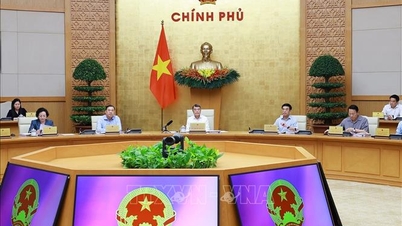
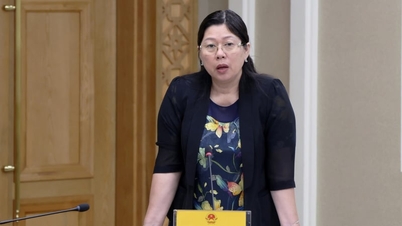
The government has just reported to the Standing Committee of the National Assembly on several aspects of the draft amended Land Law.
One of the important issues that is attracting much attention is the content, methods of land valuation, and conditions for applying each method (Article 158).
Consideration and approval at the extraordinary session.
Accordingly, the Government agreed to review and clarify the concepts of land valuation methods: comparative, surplus, income, and land price adjustment coefficient in Clause 5, Article 158; and to specify the conditions for applying these land valuation methods in Clause 6, Article 158. Specifically, the draft law stipulates many land valuation methods.
Firstly, the comparative method is implemented by adjusting the prices of land parcels with the same land use purpose that have been transferred on the market, or land use rights auctioned where the winning bidder has fulfilled their financial obligations according to the auction decision. This is done by analyzing and comparing factors affecting land prices after excluding the value of assets attached to the land (if any) to determine the price of the land parcel to be appraised.

Secondly, the income method is implemented by dividing the average annual net income per land area by the average interest rate on 12-month Vietnamese Dong savings deposits at state-owned commercial banks in the province for the three consecutive years preceding the end of the most recent quarter for which data is available before the valuation date.
Thirdly, the surplus method is implemented by subtracting the total estimated development costs of the land plot or area from the total estimated development revenue, based on the most efficient land use (land use coefficient, building density, maximum number of floors of the building) according to the land use plan and detailed construction plan approved by the competent state agency.
Fourthly, the land price adjustment coefficient method is a land valuation method performed by multiplying the land price in the land price table by the land price adjustment coefficient. The land price adjustment coefficient is determined by comparing the land price in the land price table with the market land price.
In addition to the four cases mentioned above, the Government will prescribe a new land valuation method after obtaining the approval of the Standing Committee of the National Assembly.
Along with that are the conditions for applying the land valuation method. Specifically, the comparative method is applied to valuation in cases where there are at least 3 plots of land with the same land use purpose, certain similarities in factors affecting land prices that have been transferred on the market, and the winning bidder has fulfilled their financial obligations according to the winning bid decision.
The income method is applied to valuation cases where non -agricultural land plots or areas that are not residential land or agricultural land do not qualify for the comparative method, but where income and expenses from land use according to the land use purpose being valued can be determined;
The residual method is applied to valuation in cases where the land plot or area for investment projects does not qualify for the comparative method or the income method, but the total development revenue and total development costs of the project can be estimated;
The land price adjustment coefficient method is applied to determine the specific compensation amount when the State reclaims land in cases where multiple adjacent land parcels with the same intended use are reclaimed and have already been priced in the land price table, but do not meet the conditions for applying the comparative method or for comparison with the results of land price determination using the above methods.
At the same time, the Government proposes that the regulations on the procedures for land valuation according to each method, and the selection of valuation methods, will be specified in detail in the implementing Decree.
The Government proposes that the Standing Committee of the National Assembly study the Government's comments and proposals to coordinate in finalizing the draft Law on Land (amended) for submission to the National Assembly for consideration and approval at the 5th extraordinary session (January 2024), in accordance with the principles of Resolution No. 18, ensuring the consistency of the legal system, promptly resolving obstacles, and unlocking land resources for socio-economic development.
Don't chase after quantity, even if it's urgent.
Speaking to the press, National Assembly Chairman Vuong Dinh Hue said that one of the notable events at the recent 6th session was that the National Assembly had not yet passed the revised Land Law project despite having discussed it over two sessions.
"This decision has been agreed upon by the Party and State leaders, the people, and businesses. We are not chasing after quantity; although urgent, we must prioritize quality above all else, without haste or impatience," the National Assembly Chairman emphasized.
According to the Speaker of the National Assembly, the Land Law is perhaps second only in importance to the Constitution, having a profound impact on all aspects of socio-economic life and the people. It is no coincidence that there were 12 million comments and suggestions on this draft law.

The Speaker of the National Assembly stated that, to date, there are 27 major issues. Of these, six major issues had been agreed upon by the Standing Committee of the National Assembly before the 6th session; and seven major issues reported by the Party Caucus to the Politburo had received feedback from the Politburo. Thus, 13 issues have been clarified.
Furthermore, at the 6th session of the National Assembly Standing Committee, nine more major issues were thoroughly discussed and decided upon. These were issues that initially had two or three options, but the National Assembly Standing Committee analyzed and decided on one option for all nine issues, which the Government subsequently agreed upon.
Thus, 22 out of 27 items have been agreed upon; the remaining 5 items have also been discussed and are basically agreed upon, awaiting only an official response from the Government.
After agreeing on these 27 items, the Standing Committee of the National Assembly will submit them to the National Assembly for consideration and approval. The decision on whether or not to approve them rests with the National Assembly.
The National Assembly Standing Committee will hold a meeting in January to conduct the final review before submitting it to the National Assembly. "This is a bill with many major issues that require thorough examination," the National Assembly Chairman said.
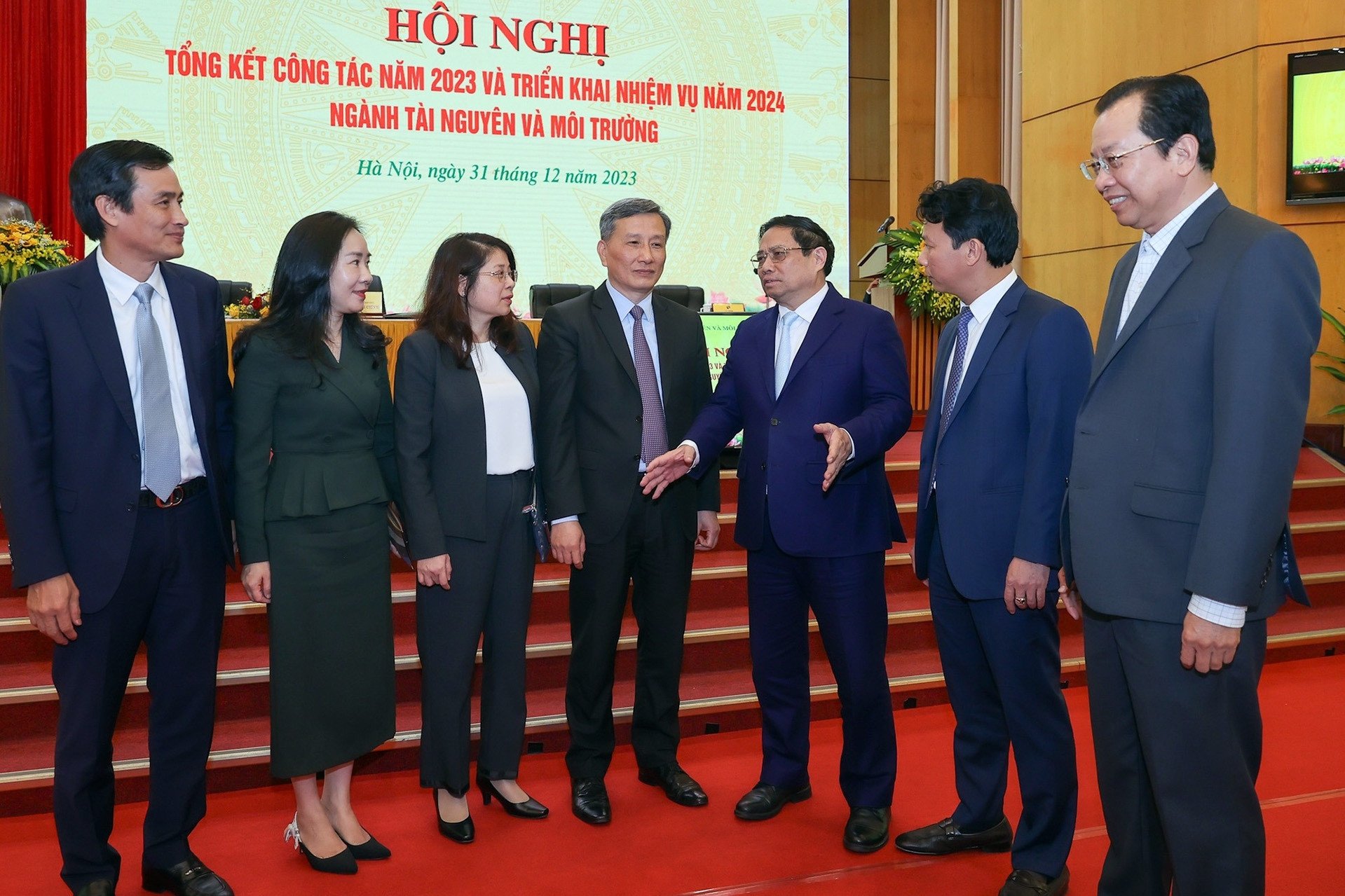
The Prime Minister requested the Ministry of Natural Resources and Environment to focus all resources on completing the draft Land Law.
Source
![[Photo] General Secretary and President To Lam presides over a meeting with the Central Organizing Committee.](https://vphoto.vietnam.vn/thumb/1200x675/vietnam/resource/IMAGE/2026/06/03/1780482764658_a1-bnd-4741-3342-jpg.webp)
![[Photo] Secretary of the National Assembly Party Committee, Chairman of the National Assembly presides over the meeting of the Standing Committee and Executive Committee of the National Assembly Party Committee.](https://vphoto.vietnam.vn/thumb/1200x675/vietnam/resource/IMAGE/2026/06/03/1780480353201_ndo_br_bnd-2585-jpg.webp)

![[Photo] First session of the 14th Congress of the Vietnam Trade Union](https://vphoto.vietnam.vn/thumb/1200x675/vietnam/resource/IMAGE/2026/06/03/1780465947883_ndo_br_img-3852-jpg.webp)












































![[Video] Sunset at Lap An Lagoon – Where the sun sets over the fishing nets](https://vphoto.vietnam.vn/thumb/1200x675/vietnam/resource/IMAGE/2026/05/31/1780192137701_beach-landscape-sea-water-nature-grass-745871-pxhere-com.jpeg)































Comment (0)