

Rapidly increasing demand
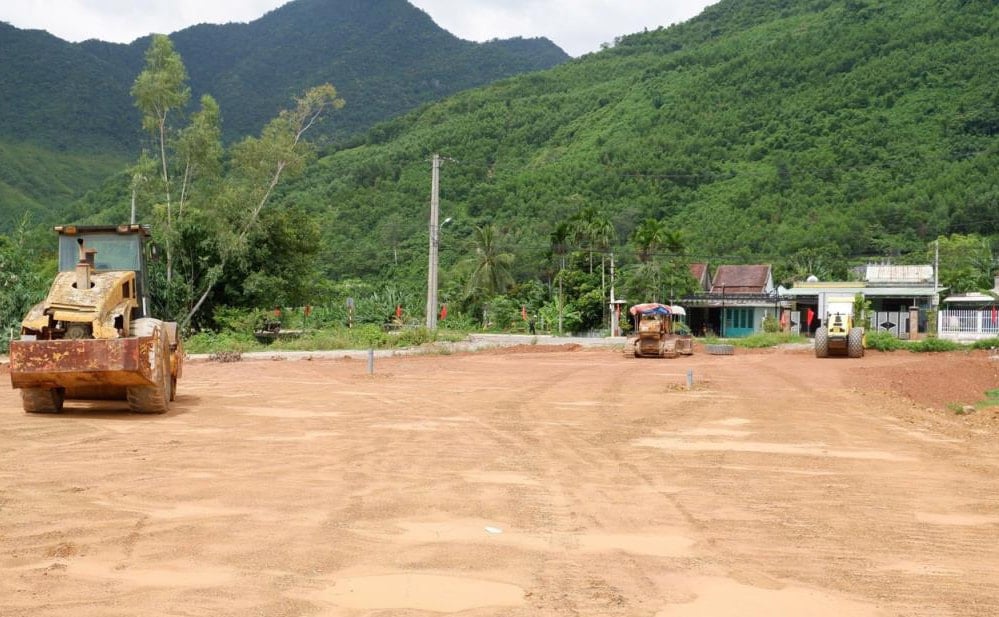
For many years, the city and its (old) districts have implemented the policy of "land acquisition and resettlement arrangements" to ensure the rights of the people and to maintain the progress of projects. However, in reality, not all projects have land acquisition and resettlement arrangements in parallel.
In each project, when there is a policy, the authorities will start to review the demand and look for suitable land to build resettlement areas. This way of doing things causes many projects to fall into the situation of "land acquisition first - resettlement follows".
In some places, people have handed over the land but the resettlement area is still not completed; in some places, the resettlement land fund exists but is too far from where people live so they do not want to receive it; in some cases, when the project is implemented, people still do not know where they will be resettled. As a result, the progress of site clearance for key projects is slow, people are upset and complaints arise.
For example, in Hoa Khanh ward, Mr. Huynh Anh Vu, Chairman of the Ward People's Committee, said that site clearance is the biggest "bottleneck", directly affecting the progress of public investment disbursement. When site clearance is slow, many key projects cannot be implemented as planned, leading to overlapping progress, cost overruns and affecting investment efficiency.
Mr. Vu emphasized that the main reason is the lack of initiative in preparing resettlement land funds and related procedures. In many cases, localities have to spend a lot of time reviewing needs, determining land locations, developing compensation plans and organizing meetings with people, causing the progress of site clearance to be prolonged. This not only slows down the project, but also causes difficulties for people, because they have to temporarily reside for a long time and suffer many inconveniences in living, studying and working.
Recognizing this shortcoming, the City People's Committee has directed a review and forecast of demand to plan investment in resettlement areas for the period up to 2030. The goal is to proactively create land funds to serve socio -economic development projects and key works; minimize the situation of people having to temporarily reside for a long time; and at the same time, build a civilized and synchronous technical and social infrastructure system in resettlement areas.
If in the past, the site clearance work was mainly undertaken by the localities, now the City Land Fund Development Center is assigned to take the lead. Mr. Vo Nguyen Chuong, Director of the Center, said that to ensure the progress of the projects, the unit has developed a detailed plan, setting a target of completing site clearance for each project.
As for the North-South high-speed railway project through Da Nang , the center aims to complete site clearance before December 2026. Accordingly, the center will synchronously implement compensation, support and resettlement work according to the direction of the Government and the City People's Committee, clearly assigning people, tasks, and progress, while minimizing unnecessary administrative procedures.
Given the special importance of the project, the City Land Fund Development Center prioritizes the recovery of agricultural land first, non-agricultural land, especially residential land, later, according to the principle of recovery from the center of the route to the two borders.
Each file has a person in charge; processing time between departments is not more than 2 days; compensation approval files must not exceed 10 files (maximum 20 files for simple files), complicated cases must be reported immediately to the leader.
Mr. Chuong also requested that communes and wards where the route passes and project management boards promptly hand over boundary markers and boundaries, coordinate in organizing public meetings to announce the route direction, serve the work of surveying and establishing cadastral records.
Towards a modern resettlement urban model
Director of the Department of Agriculture and Environment Pham Nam Son said that although the 2024 Land Law and guiding documents have removed many obstacles, compensation, support and resettlement work is still slow, affecting the progress of public investment disbursement, directly impacting people's lives and reducing the economic efficiency of the project.
According to Mr. Son, to overcome this situation, it is necessary to focus on allocating land funds and investing in modern resettlement areas, ensuring adequate infrastructure and essential services, helping people to stabilize their lives soon. At the same time, the city needs to apply a flexible resettlement policy, allowing people to choose to receive land or housing, or even be arranged in other areas if they wish.
Instead of implementing small resettlement areas according to each project as before, Da Nang aims to develop large-scale resettlement areas of dozens of hectares - essentially complete resettlement urban areas.
These areas will be planned in convenient locations, with good transport infrastructure connections and fully integrated with amenities such as schools, medical facilities, community areas, green spaces, parking lots and other social infrastructure. When large resettlement areas are prepared in advance, the "land bottleneck" will be fundamentally resolved.
This model helps avoid fragmented investment, saves on infrastructure costs and creates a synchronous living environment. In particular, residents are guaranteed a quality of life in their new home that is equal to or better than their old home.
From now until 2030, Da Nang will implement a series of large-scale transportation, industrial park and urban projects, leading to a very high demand for resettlement. Therefore, preparing resettlement land funds becomes a key factor in site clearance. This initiative is expected to create an important boost, forming civilized and modern resettlement urban areas, contributing to the strong development of Da Nang in the new period.
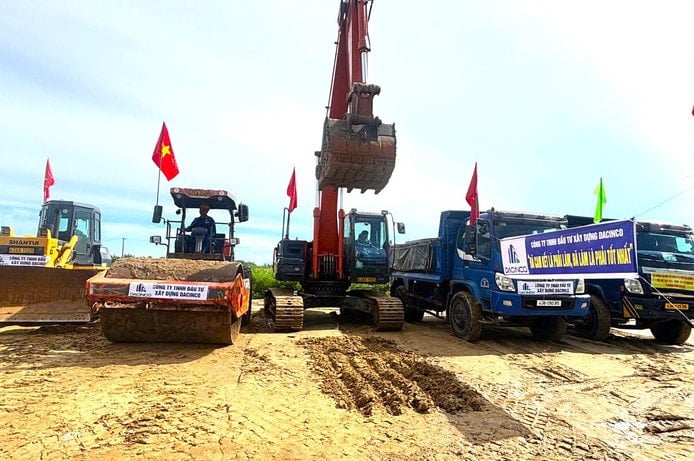
The high-speed railway project through Da Nang is 116.42km long, with a total reclaimed area of 843.55 hectares, affecting more than 2,157 households with the need to arrange 2,258 resettlement lots, with a total estimated compensation cost of more than VND 13,016 billion. Last August, the city started construction of a resettlement area in Dien Ban Bac ward, with a scale of 4.69 hectares and a total investment of more than VND 76 billion, not only serving resettlement but also contributing to completing infrastructure and promoting socio-economic development in the area.
Source: https://baodanang.vn/chu-dong-quy-dat-tai-dinh-cu-3312548.html


![[Photo] Cat Ba - Green island paradise](/_next/image?url=https%3A%2F%2Fvphoto.vietnam.vn%2Fthumb%2F1200x675%2Fvietnam%2Fresource%2FIMAGE%2F2025%2F12%2F04%2F1764821844074_ndo_br_1-dcbthienduongxanh638-jpg.webp&w=3840&q=75)










































![[VIMC 40 days of lightning speed] Da Nang Port: Unity - Lightning speed - Breakthrough to the finish line](https://vphoto.vietnam.vn/thumb/402x226/vietnam/resource/IMAGE/2025/12/04/1764833540882_cdn_4-12-25.jpeg)


































Comment (0)