

According to several health authorities, the idea that adding iodine to food will lead to excess iodine and pose health risks to the population is inaccurate.
According to several health authorities, the idea that adding iodine to food will lead to excess iodine and pose health risks to the population is inaccurate.
Vietnam still suffers from a severe iodine deficiency.
In 1994, Vietnam conducted a nationwide epidemiological survey on iodine deficiency, and the results showed that 94% of the population lived in iodine-deficient areas (iodine deficiency in Vietnam is nationwide, regardless of mountainous, urban, or lowland/coastal regions), and the goiter rate among children aged 8-12 was 22.4% (recommendation of the World Health Organization).
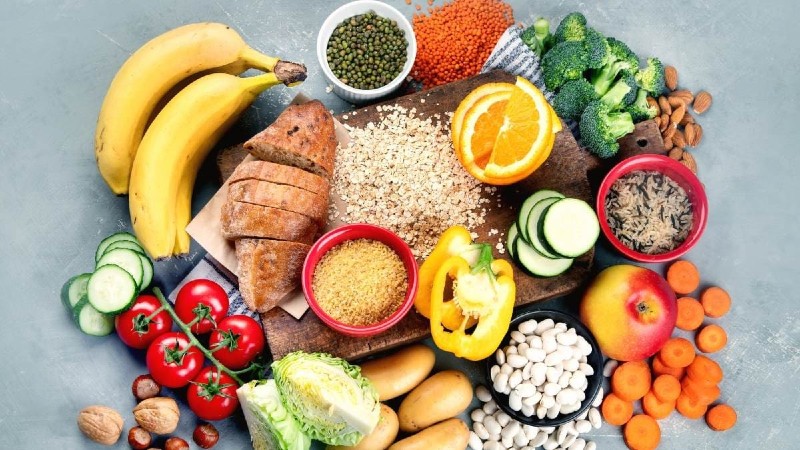 |
| According to several health authorities, the idea that adding iodine to food will lead to excess iodine and pose health risks to the population is inaccurate. |
Due to the serious iodine deficiency situation, on September 8, 1994, the Prime Minister signed Decision No. 481/TTg on organizing and mobilizing the entire population to consume iodized salt.
Five years later, on April 10, 1999, the Government signed and issued Decree No. 19/1999/ND-CP on the production and supply of iodized salt for human consumption, replacing Decision No. 481/TTg.
This Decree mandates that all salt used for human consumption, including food salt, must be iodized. Therefore, after six years of implementing this Decree, Vietnam eliminated iodine deficiency and achieved international standards by 2005: coverage rate with iodized salt meeting disease prevention standards ≥ 90%, median urinary iodine level ≥ 100 mcg/l, and a reduced rate of goiter in children aged 8-10 years.
Considering that Vietnam had successfully addressed the iodine deficiency problem and that the population had maintained the habit of using iodized salt in food preparation, on December 29, 2005, the Government issued Decree No. 163/2005/ND-CP, replacing Decree No. 19/1999/ND-CP, to shift to a new management mechanism. The National Target Program for the Prevention and Control of Iodine Deficiency Disorders became a regular activity of the Ministry of Health and relevant ministries and agencies. Since then, the use of iodized salt in food preparation has no longer been mandatory.
Therefore, according to the assessment results of 9 years of implementing Decree No. 163/2005/ND-CP, less than 50% of provinces and cities nationwide have achieved the required iodine salt coverage rate for disease prevention (the World Health Organization (WHO) recommends that the iodine salt coverage rate for disease prevention should be >90%), and the median urinary iodine level is 84 mcg/l, lower than the safe range recommended by WHO (100-199 mcg/l).
This rate is almost twice as high as the World Health Organization's recommendation.
In 2014-2015, the rate of goiter in children aged 8-10 years increased to 8.3% (based on a nationwide survey of thousands of children). This confirms that Vietnam suffers from iodine deficiency not only in mountainous areas but also in coastal regions of central Vietnam.
Currently, according to the 2021 report by the Global Network for the Prevention of Iodine Deficiency Disorders, Vietnam is still among the 26 remaining countries in the world that suffer from iodine deficiency.
Only 27% of households use iodized salt that meets the required standards, while the WHO recommendation is over 90%. Therefore, both the median urinary iodine index and the index of households using iodized salt that meets the disease prevention standards are at the lower risk level and fall short of the WHO recommendation.
Micronutrient deficiencies are a “hidden hunger” because the current diets of the Vietnamese people do not meet the needs for essential micronutrients. The iodine deficiency situation in Vietnam is so serious that it has significant public health implications.
Statistics from the Global Iodine Network (IGN) database show that, with the addition of iodine to salt, 126 countries now have mandatory fortification regulations, of which 114 countries require the use of iodized salt in food processing.
Within ASEAN, eight countries have implemented mandatory iodine fortification policies for table salt and salt used in food processing: Myanmar, Thailand, Laos, Cambodia, Singapore, Indonesia, Malaysia, and the Philippines; only two countries have incentive policies: Singapore and Brunei.
There is no scientific basis to confirm that Vietnamese people have excess iodine.
The WHO strongly recommends fortifying all table salt used in households and food processing. All table salt, used in households and food processing, should be fortified as a safe and effective strategy for preventing and managing iodine deficiency disorders in populations living in stable and emergency environments.
The Ministry of Health affirms that there are no concerns related to the public's use of iodized salt, including iodized salt used in households and in food processing. In Vietnam, there has never been a case of people having excess iodine.
According to reports from the Central Endocrine Hospital and the National Institute of Nutrition, Vietnam has not yet recorded any cases of iodine excess in patients.
The results of the 2019-2020 National Nutrition Survey show that, in all target groups, the median urinary iodine level was lower than recommended. The percentage of people with urinary iodine levels exceeding 300 ppm was 0% (a level > 300 ppm indicates high urinary iodine).
These results confirm that the Vietnamese people are still not consuming enough iodine daily as recommended. To date, no medical literature has mentioned that the nationwide iodized salt program (from 1994 to the present) has resulted in thyroid disease.
In response to opinions and recommendations from food associations regarding the use of iodized salt that changes in color, taste, or negatively affects consumer health in the implementation of Decree No. 09/2016/ND-CP, dated March 14, 2017, the Ministry of Health issued Official Letter No. 1216/BYT-PC responding to the opinions of businesses in the implementation of Point a, Clause 1, Article 6 of Decree No. 09/2016/ND-CP, addressed to salt and food production and trading establishments and food associations in Vietnam.
To date, the Ministry of Health has not received any scientific evidence from businesses regarding changes in the color, smell, or taste of iodized salt, or any adverse effects on consumer health.
Thus, the inaccurate and unscientific recommendations from businesses in the past have been an obstacle, leading to a delay of approximately 8 years in the implementation of Decree No. 09/2016/ND-CP.
Source: https://baodautu.vn/chua-co-co-so-khang-dinh-nguoi-dan-viet-thua-i-ot-d229250.html

![[Photo] Closing Ceremony of the 10th Session of the 15th National Assembly](/_next/image?url=https%3A%2F%2Fvphoto.vietnam.vn%2Fthumb%2F1200x675%2Fvietnam%2Fresource%2FIMAGE%2F2025%2F12%2F11%2F1765448959967_image-1437-jpg.webp&w=3840&q=75)


![[Photo] Prime Minister Pham Minh Chinh holds a phone call with the CEO of Russia's Rosatom Corporation.](/_next/image?url=https%3A%2F%2Fvphoto.vietnam.vn%2Fthumb%2F1200x675%2Fvietnam%2Fresource%2FIMAGE%2F2025%2F12%2F11%2F1765464552365_dsc-5295-jpg.webp&w=3840&q=75)










































![[OFFICIAL] MISA GROUP ANNOUNCES ITS PIONEERING BRAND POSITIONING IN BUILDING AGENTIC AI FOR BUSINESSES, HOUSEHOLDS, AND THE GOVERNMENT](https://vphoto.vietnam.vn/thumb/402x226/vietnam/resource/IMAGE/2025/12/11/1765444754256_agentic-ai_postfb-scaled.png)














































Comment (0)