

According to UNEP, a green economy is one that improves people's lives and enhances social equity while significantly reducing environmental risks and ecological degradation; simply put, it is an economy with low emissions, efficient resource use, and a focus on social equity. Thus, green transition is not just about adjusting individual techniques or technologies, but a comprehensive transformation of the development model.
To achieve a green economy, society must reinvest in growth in a different way than before. Capital flows from the state, private sector, and international resources need to be directed towards areas that contribute to reducing carbon emissions, mitigating pollution, using energy and resources efficiently, preventing biodiversity loss, and improving ecosystem services. In particular, investments in "natural capital" should be prioritized, linked to policy adjustments and regulatory changes compared to the "brown economy" era. Public spending must lead and guide the way to attract other resources to maintain, improve, and restore natural capital. This is also a way to protect the interests of vulnerable groups whose livelihoods and security depend heavily on nature.
UNEP once proposed a scenario suggesting that, to move towards a green economy, countries worldwide need to invest approximately 2% of global GDP in "greening" key sectors of their economies. A comparison between the green investment scenario and the "current business" scenario for the period 2010–2050 shows that, in the long term, green investment leads to more efficient resource use, higher GDP growth, and greater sustainability. This confirms that green transition is not a "mandatory cost" but a development choice that benefits the economy, society, and environment.
In Vietnam, the policy on green transformation has been defined by the Party for many years and is being increasingly refined.
Resolution No. 24-NQ/TW dated June 3, 2013, of the 11th Central Committee on "proactively responding to climate change, strengthening resource management and environmental protection" set the goal of moving towards a green, environmentally friendly economy by 2020. After 10 years of implementation, the Politburo issued Conclusion No. 81-KL/TW dated June 4, 2024, further affirming the requirement to promote green transformation, circular economy, and just energy transition; focus resources on addressing the risk of resource depletion; gradually reduce dependence on fossil fuels, develop clean and renewable energy; and have policies to attract green investment projects that use energy and resources efficiently and effectively. It can be seen that the shift from the goal of "moving towards a green economy" to the requirement of "promoting green transformation" represents a significant development in awareness and political determination.
The government has concretized the Party's guidelines through various strategies, programs, and policies. The National Strategy on Green Growth, first issued in Decision No. 1393/QD-TTg dated September 25, 2012, for the period 2011–2020 and with a vision to 2050, identifies three key tasks: reducing the intensity of greenhouse gas emissions, promoting the use of clean and renewable energy; "greening" production; and "greening" lifestyles and promoting sustainable consumption. The strategy requires localities to develop green growth programs and action plans, integrating green goals into socio-economic development plans.
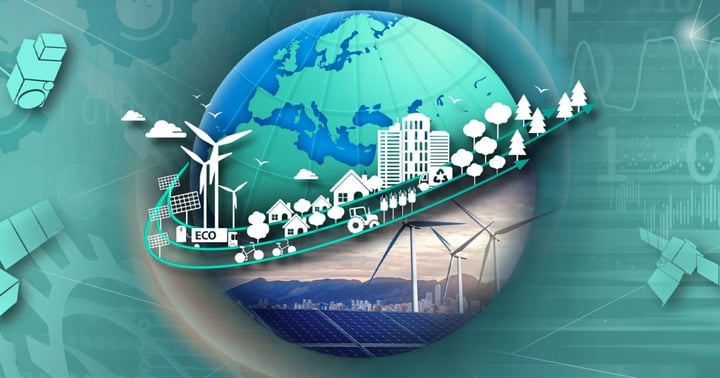
Entering a new phase, the National Strategy on Green Growth for the period 2021–2030, with a vision to 2050, approved by Decision No. 1658/QD-TTg dated October 1, 2021, has updated the context and development trends.
The overall orientation of the Strategy is to restructure the economy in conjunction with innovating the growth model, reducing the intensity of greenhouse gas emissions through the efficient and economical use of energy and resources based on science, technology, and digital transformation; developing green and sustainable infrastructure; building a green lifestyle; ensuring green transition according to the principles of equality and inclusiveness, and enhancing the resilience of the entire economy. The National Action Plan for implementing the Strategy for the period 2021–2030, approved by Decision No. 882/QD-TTg dated July 22, 2022, requires provinces and cities to complete green growth action plans or integrate green growth objectives into their local socio-economic development plans.
The two issuances of the Strategy and Action Plan demonstrate the Government's determination to transform the green economy and green transformation from a policy into a concrete action program.
Based on that foundation, Vietnam is entering a green transition phase with many important opportunities. First, we have a relatively complete political and legal basis, from Party resolutions and Politburo conclusions to the Government's strategies, programs, and action plans, creating a solid framework for ministries, sectors, localities, and businesses to implement. Secondly, the social demand for green, environmentally friendly products and services is increasing strongly. Not only demanding markets like the United States, Europe, Japan, and China, but also the domestic market, as people's living standards improve, increasingly prioritize clean, safe, and resource-efficient products.
The Party's identification of science, technology, innovation, and digital transformation as one of the strategic breakthroughs, particularly in Resolution No. 57-NQ/TW, creates an important foundation for implementing green transformation.
Green transformation requires the application of advanced technology, smart production processes, and new management models, all of which are closely linked to science, technology, and digital transformation.
The green transition trend is also a global trend, opening up opportunities for Vietnam to strengthen international cooperation, receive green knowledge, technology, financial resources, and share experiences.
In addition, Resolution No. 68-NQ/TW on developing the private economy as an important driving force of the economy creates conditions for mobilizing resources from the private sector for green investment and promoting innovation in businesses.
However, alongside the opportunities, the green transformation process in Vietnam is facing many challenges. Awareness of green transformation is not yet uniform across different levels and sectors, among policymakers, the business community, and the general public. Without systematic improvement, green transformation can easily be misinterpreted as a few superficial "greening" projects, failing to become a genuine change in the development model.
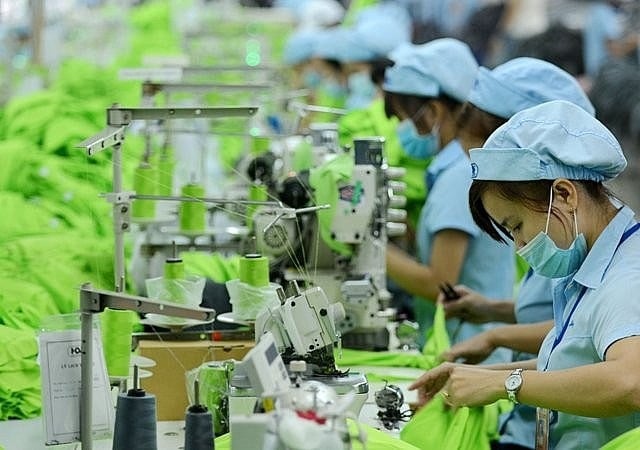
Although the policy and legal framework related to green transformation has received attention, there are still inconsistencies, especially regarding incentive mechanisms, support, green credit, and loan procedures for green investment projects. This increases transaction costs and reduces the motivation for businesses and individuals to participate. Technologically, many Vietnamese industries still operate with outdated technologies that consume a lot of energy, emit high levels of pollutants, and struggle to meet increasingly stringent green standards. Technological innovation towards green production requires significant resources and a suitable roadmap.
High-quality human resources for green transformation are lacking and weak. Operating new and modern technologies and digital management systems requires a well-trained workforce with interdisciplinary capabilities, while training human resources for the green economy and circular economy is, in reality, only in its early stages.
Financial resources also present a significant challenge. The majority of Vietnamese businesses are still small, medium, and micro-sized; farms and households still produce according to traditional practices. The transition from a "brown" to a "green" model requires substantial costs for production restructuring, technological innovation, and compliance with green standards; without appropriate risk-sharing and support mechanisms, many stakeholders will find it difficult to proactively participate.
Green transformation is an inevitable trend in the new era, and the path for Vietnam to achieve high and sustainable growth. Implementing green transformation, through the transition from a "brown" economy to a green economy, in its true nature, requires persistent effort, a clear roadmap, and synchronized solutions.
Vietnam has been promoting a green economy and green growth for over a decade, guided by the Party's guidelines and the State's policies and laws. The challenge for the coming period is to effectively utilize opportunities from both the international and domestic contexts, while simultaneously developing appropriate solutions to overcome bottlenecks and challenges. Only then will green transformation truly become a crucial driving force in this "era of progress," contributing to Vietnam's rapid and sustainable development, and realizing the goal of becoming a developed, high-income, net-zero-emission nation by the middle of the 21st century.
Source: https://mst.gov.vn/chuyen-doi-xanh-co-hoi-va-thach-thuc-cho-viet-nam-197251210180549532.htm













![[Video] The craft of making Dong Ho folk paintings has been inscribed by UNESCO on the List of Crafts in Need of Urgent Safeguarding.](https://vphoto.vietnam.vn/thumb/402x226/vietnam/resource/IMAGE/2025/12/10/1765350246533_tranh-dong-ho-734-jpg.webp)














































Comment (0)