

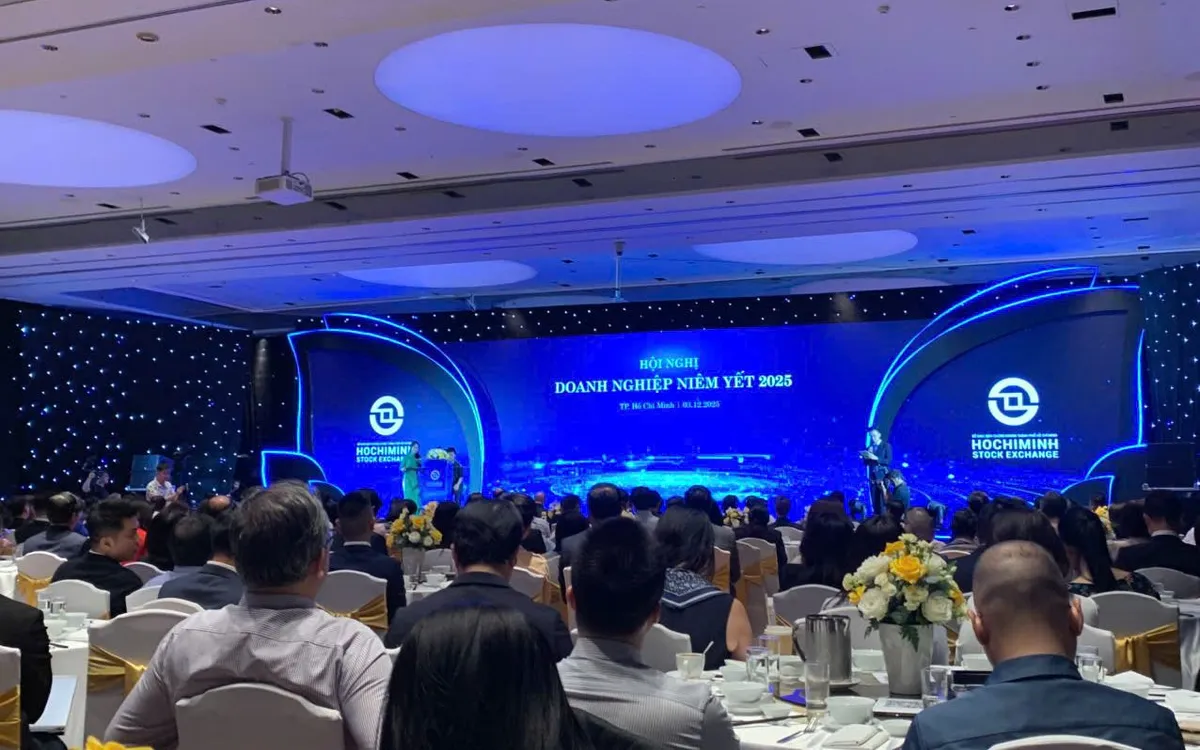
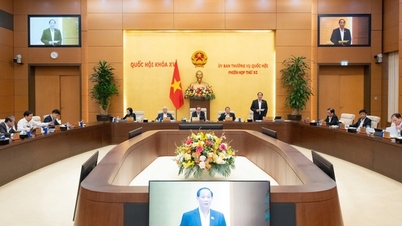
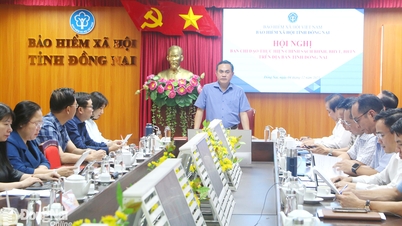
More than 300 listed companies, securities companies, fund management companies and other financial institutions in the market participated in the conference.
Great opportunity to attract huge capital flow
After 25 years, the Vietnamese stock market has become an important capital mobilization channel for the economy with the number of public companies and listed enterprises equivalent to many ASEAN countries. However, the capitalization scale and competitiveness of listed enterprises are still modest compared to other emerging markets.
Being recognized as an emerging market by FTSE Russell is a milestone reflecting efforts to improve the legal framework, promote transparency and protect investors, and open up opportunities to access long-term capital flows from global funds. In particular, 2026 is the most important "pivotal" year for businesses to change and take advantage of this opportunity. Ms. Nguyen Nam Anh, Director of HOSE Listing Management Department, said at the Annual Listed Enterprises Conference with the participation of leaders of the Ministry of Finance , State Securities Commission; leaders of Stock Exchanges... held in Ho Chi Minh City on December 3.
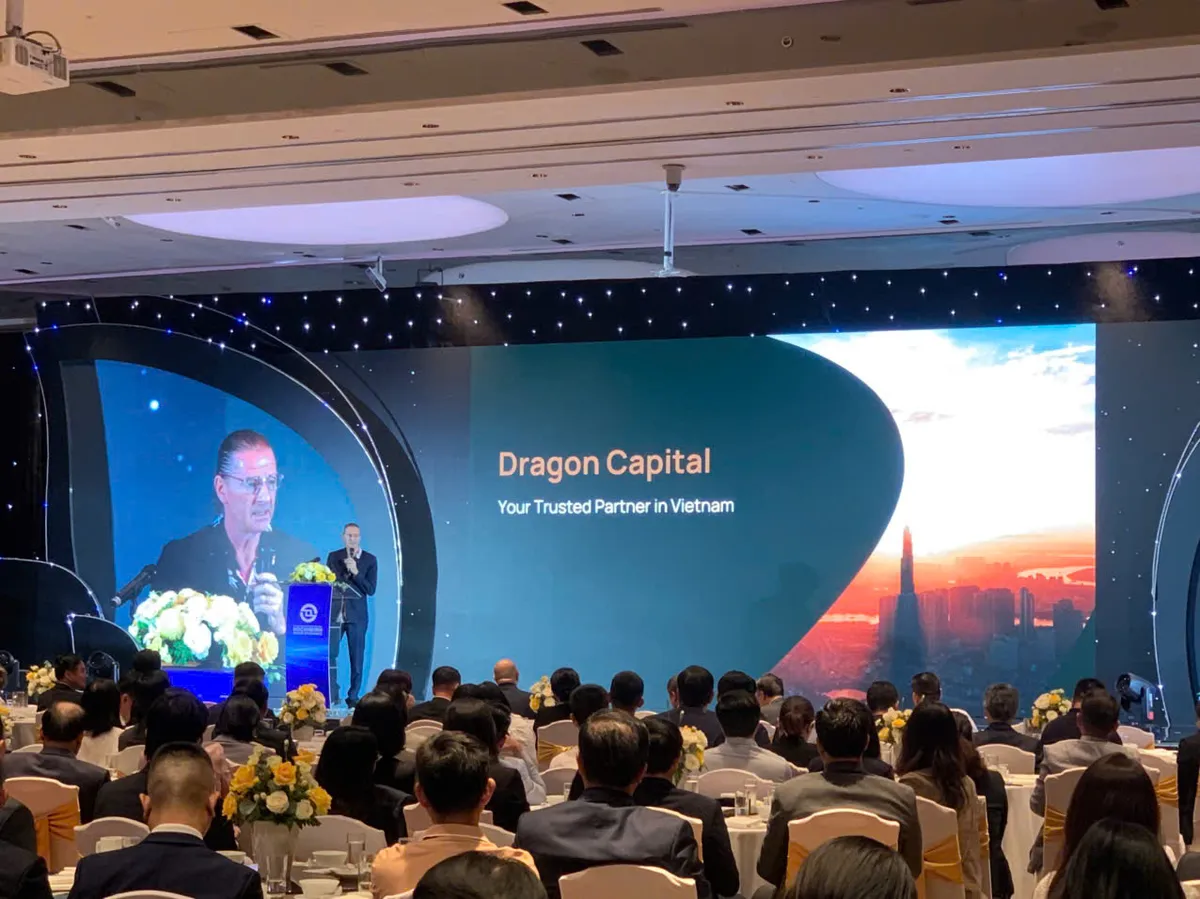
Vietnam's economic outlook for 2026 is viewed quite optimistically, Dragon Capital predicts that Vietnam is likely to achieve 10% GDP growth in 2026.
Although there are many opportunities, from an investor's perspective, Mr. Dominic Scriven, Chairman of Dragon Capital, also believes that there are five major challenges facing the world: currency risks, political polarization, geopolitical conflicts, climate change, and rapidly changing technology. "These five factors, when combined, create an uncertain context that Vietnam cannot stand outside of," he emphasized. In fact, 2025 marks a clear recovery for Vietnam after the 2022-2023 slump, thanks to the strong reform message from the Government and Resolution 68 on private economic development. The business confidence index according to Dragon Capital has surpassed the 50 mark, the optimistic threshold.
The outlook for 2026 is therefore seen as quite optimistic. Dragon Capital forecasts that Vietnam is likely to achieve 10% GDP growth by 2026. Total social investment capital is currently around 150 billion USD per year, equivalent to 30% of GDP, of which public investment is around 25 billion USD, FDI is around 25 billion USD and the private sector is around 100 billion USD. The government aims to raise public investment to 32-33 billion USD in the coming time, creating a "seed capital" effect that will attract private capital flows. Regarding FDI, Mr. Scriven warned that we must be alert to the trend of shifting to real estate, emphasizing the 2008 lesson about the difference between registered capital and actual capital in production.
From a market perspective, according to Dragon Capital, after-tax profits will increase continuously every quarter in 2025, spreading from large enterprises to small and medium enterprises. Notably, the forecast of corporate profits has been adjusted up from 15% at the beginning of the year to over 20% in the last quarter of 2025. Looking forward to 2026, this fund forecasts that Vietnamese corporate profits will increase by 16-18%, while the market P/E is still at the historical average, attractive enough for foreign capital flows. On that basis, the market being recognized by FTSE Russell can open up a capital flow of 3 to 6 billion USD in the early stages, and much larger in the medium term.
Businesses must "transform"
If upgrading is a ticket to the market, then businesses must prioritize "restructuring" to meet more stringent conditions to step into the new "playing field". Ms. Tran Anh Dao, Deputy General Director of HOSE, believes that 2025 is a pivotal year on the journey to breakthrough in quality according to emerging market standards, in line with the spirit of Resolution 68. The opportunity to attract international capital is huge, possibly up to tens of billions of USD, but will only truly expand when businesses meet increasingly high requirements for green governance, transparency and sustainable development. With this sustainable capital, investors are willing to pay higher prices for businesses with transparent and effective governance.
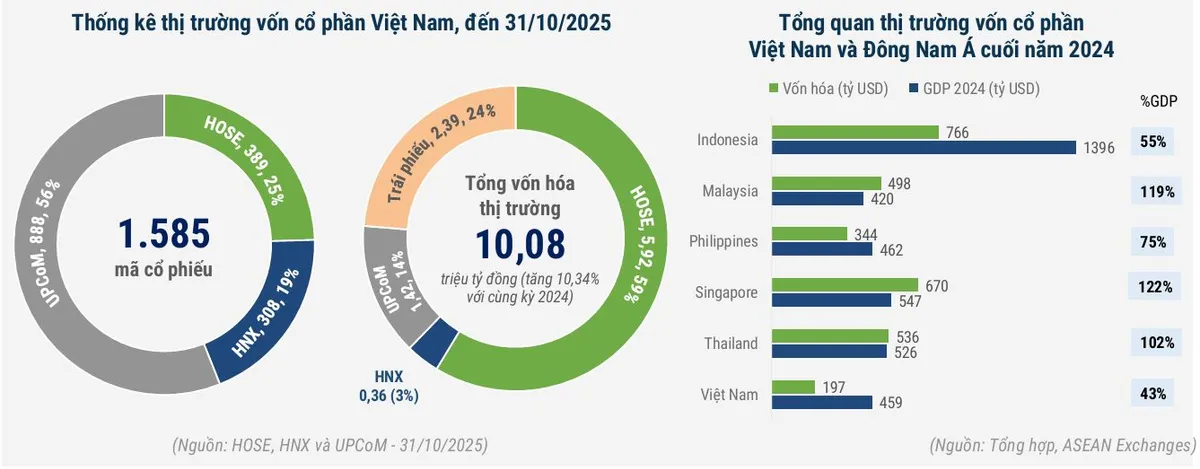
Vietnam's equity market statistics as of October 31, 2025
A fundamental challenge today lies in the ownership structure. According to analysis from HOSE, concentrated ownership is still common in Vietnam where corporations, families and the public sector account for a large proportion, while institutional investors, especially foreign investors, are still modest compared to Singapore or Malaysia. When shares are concentrated in a few large shareholders, the role of institutional investors is reduced, leading to risks in transparency, minority shareholder rights and market valuation.
Not only ownership structure, information disclosure standards and corporate governance are "mirrors" for foreign capital to reflect on. International investors do not only look at profits, but also pay attention to the quality of the board of directors, independence in supervision, control mechanisms for related-party transactions, how to handle conflicts of interest and the quality of ESG reports. Vietnam's implementation of Circular 68/2024/TT-BTC requiring periodic information disclosure in English from the end of 2024 has created an important step forward. In 2025, most listed companies on VNX Allshares have complied with bilingual disclosure, helping international investors access information more conveniently.
Transparent disclosure and ESG governance are not only a "capacity profile" for investors, but also a measure of a business's reputation, risk management capacity and long-term vision. In the context of climate change, carbon taxes and increasingly strict green standards, businesses that do not meet ESG standards will have difficulty accessing cheap capital and may even be eliminated from the supply chain.
The bigger challenge lies within Vietnam. Vietnam currently has about 500,000 private enterprises and up to 5 million individual business households, most of which operate in the informal sector. According to Mr. Dominic Scriven, the application of electronic invoices, bank payments and new transparency requirements will pull this sector into the formal economy. This "formalization" process could contribute about 1% of GDP each year over the next 3 years, creating room for expansion of business scale and capital markets. But along with the opportunity comes pressure to standardize governance, accounting and compliance.
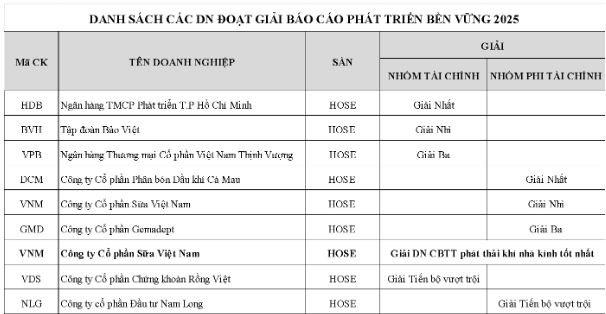
The opportunity to attract international capital is huge, possibly up to tens of billions of USD, but will only truly expand when businesses meet increasingly high requirements for green governance, transparency and sustainable development.
Vietnamese enterprises must therefore prepare from today, not only with the story of immediate profits, but also with a comprehensive restructuring strategy. Restructuring ownership to expand "room" for institutional investors, raising the standards of the board of directors towards independence and professionalism, standardizing financial reports according to IFRS, investing in risk management systems and sustainable development are things that cannot be delayed. Welcoming the "huge" foreign capital flow in 2026 is not a short-term race, but the result of a long-term preparation process.
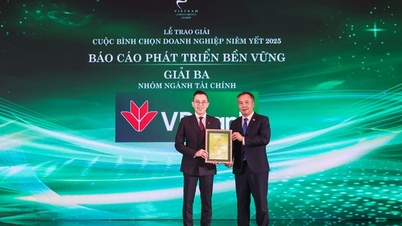
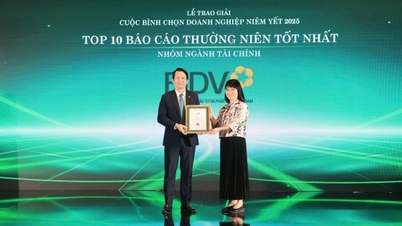
The 50 best listed companies in information transparency in 2025 were honored at the 18th Vietnam Listed Companies Awards (VLCA) Ceremony at the Annual Listed Companies Conference with the participation of leaders of the Ministry of Finance, the State Securities Commission; leaders of the Stock Exchanges, the Vietnam Securities Depository and Clearing Corporation and representatives of more than 300 listed companies, securities companies, fund management companies and other financial institutions in the market.
Source: https://vtv.vn/co-hoi-thu-hut-von-6-ty-usd-trong-nam-2026-doanh-nghiep-can-chuan-bi-gi-100251203173407204.htm
![[Photo] Cat Ba - Green island paradise](/_next/image?url=https%3A%2F%2Fvphoto.vietnam.vn%2Fthumb%2F1200x675%2Fvietnam%2Fresource%2FIMAGE%2F2025%2F12%2F04%2F1764821844074_ndo_br_1-dcbthienduongxanh638-jpg.webp&w=3840&q=75)

































![[VIMC 40 days of lightning speed] Hai Phong Port determined to break through, reaching the target of 2 million TEUs by 2025](https://vphoto.vietnam.vn/thumb/402x226/vietnam/resource/IMAGE/2025/12/04/1764816441820_chp_4-12-25.jpeg)




































Comment (0)