

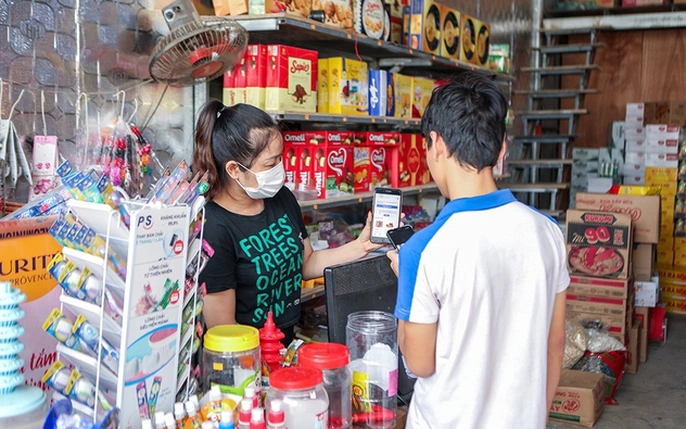
The problem of cost equity
The proposal to adjust the threshold for non-personal income tax (PIT) revenue to VND500 million/year, recently proposed by the Ministry of Finance, is an important content in the draft law on PIT (amended), marking a major turning point in tax policy for the individual economic sector. The current threshold of VND200 million/year has been applied for many years and is no longer suitable for the current context of fluctuating prices and incomes.
According to detailed calculations by the Ministry of Finance, with the proposed level of VND 500 million/year, it is expected that about 2.3 million business households out of a total of 2.54 million business households (data as of October 2025) will not have to pay taxes, equivalent to about 90% of the total number of households. This decision is expected to create a historic boost, helping to reduce huge financial pressure, creating room for recovery and sustainable development for the small traders.
According to economist Dr. Nguyen Tri Hieu, this is an urgent fiscal solution, introduced in the context of Vietnam's economy trying to recover from the pandemic and facing challenges from inflation and global economic recession. The individual business household sector, despite its small scale, contributes greatly to job creation, providing essential goods and promoting domestic supply chains. However, they are also the most vulnerable group due to unstable income, high input costs and lack of access to preferential capital sources.
The proposal to raise the threshold for non-taxable revenue from VND200 million to VND500 million per year is considered appropriate given the current fluctuations in costs and income. According to the Ministry of Finance, if approved, about 90% of regular business households will not have to pay personal income tax; at the same time, the threshold for non-taxable revenue is also proposed to be raised to a corresponding level.
It is estimated that the total tax reduction for the household business sector could reach about VND11,800 billion. This resource will be retained in the individual economic sector, supporting reinvestment, improving living standards and contributing to stimulating purchasing power.
Adjusting the tax exemption threshold to VND500 million/year not only reduces the tax burden, but also accurately reflects the current business cost level. The policy is expected to facilitate small businesses, simplify tax compliance and create incentives for them to confidently expand their operations.
Transforming the tax management model: Towards transparency and professionalism
Along with the proposal to raise the tax exemption threshold, the Ministry of Finance proposed changing the tax calculation method for households and individuals with revenue from over 500 million to 3 billion VND/year. Accordingly, this group will pay tax based on actual income (revenue minus expenses) instead of applying a rate on revenue as the current lump-sum method. The proposed tax rate is 15% on taxable income, equivalent to the corporate income tax rate applied to small and medium-sized enterprises with revenue under 3 billion VND/year.
The shift from calculating taxes based on revenue to actual income is considered a step forward in fairness and professionalization of tax administration. The new calculation method accurately reflects the profitability of each business household: high revenue but high expenses will pay low taxes; no income or loss will not incur tax obligations. This overcomes the situation where business households have to pay taxes based on estimated revenue even when profits are insignificant - a problem that has lasted for many years.
This proposal received consensus from many experts and the business community, as it is considered a solution to promote transparency, reduce the burden of compliance costs and create a foundation for sustainable development for the private economic sector.
The proposal to raise the tax exemption threshold and change the tax calculation method is not only a simple fiscal support policy, but also a comprehensive reform strategy, aiming to build a transparent, fair, flexible and realistic tax system, helping to reduce tax obligations for nearly 90% of business households, while creating motivation for the individual economic sector to develop, move towards professionalization and contribute positively to the country's long-term socio-economic development goals.
According to Associate Professor Dr. Le Xuan Truong (Head of the Tax - Customs Department, Academy of Finance), the new tax calculation method and taxable revenue threshold as proposed by the Ministry of Finance will ensure much more fairness than the current calculation method, and business households will benefit more. Mr. Truong analyzed that switching to calculating tax on actual income will overcome the shortcomings in costs and profits. Moreover, eliminating the lump-sum tax form not only ensures transparency and equality in tax regimes between business households and enterprises, but also creates motivation for business households to develop in the context of the digital economy and non-cash payments are growing strongly. "The tax exemption threshold of VND 500 million is quite suitable for the average income per capita and living expenses in the current context, helping business households feel that tax policy really supports them," Mr. Truong emphasized.
Reflecting the hopes of the small and medium-sized enterprise community, Dr. To Hoai Nam, Permanent Vice President and General Secretary of the Vietnam Association of Small and Medium Enterprises, shared that tax exemption and tax calculation adjustment will help small traders save costs, maintain capital, and gradually make business operations more transparent. At the same time, for the group of business households with revenue of over 500 million VND, allowing tax calculation on actual income is a great fairness, encouraging them to do more professional accounting. In the long term, this policy will promote business households to develop into small enterprises, taking advantage of tax incentives as prescribed, thereby helping the private economic sector develop sustainably and contribute more effectively to GDP, aiming to have more businesses in the coming years.
"The VND500 million tax exemption for business households will significantly increase the purchasing and spending capacity of this sector, which is a large part of the supply chain. Increased purchasing power will create an overall boost, helping larger businesses have more stable output, reduce inventory and boost production. This creates a positive economic cycle, stimulating growth from the social roots," Mr. Nam further analyzed.
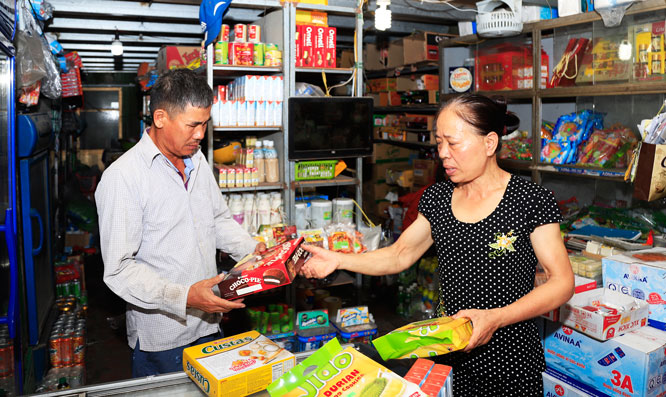
From the perspective of a small trader, Ms. Nguyen Thanh Mai, a businesswoman at Nghia Tan market, shared: "Raising the tax-free threshold to 500 million VND is really good news. With 200 million VND as before, we often had to pay taxes even though we only had enough to spend all year, because the cost of renting space, electricity and water was already very high. This new policy not only helps us save a large amount of money to renovate the store, but also helps us feel secure in doing business, no longer worrying about complicated declarations"./.
Source: https://vtv.vn/nang-nguong-mien-thue-500-trieu-dong-giai-phong-nguon-luc-cho-90-ho-kinh-doanh-100251202234651173.htm


![[Photo] Cat Ba - Green island paradise](/_next/image?url=https%3A%2F%2Fvphoto.vietnam.vn%2Fthumb%2F1200x675%2Fvietnam%2Fresource%2FIMAGE%2F2025%2F12%2F04%2F1764821844074_ndo_br_1-dcbthienduongxanh638-jpg.webp&w=3840&q=75)




































![[VIMC 40 days of lightning speed] Hai Phong Port determined to break through, reaching the target of 2 million TEUs by 2025](https://vphoto.vietnam.vn/thumb/402x226/vietnam/resource/IMAGE/2025/12/04/1764816441820_chp_4-12-25.jpeg)






































Comment (0)