

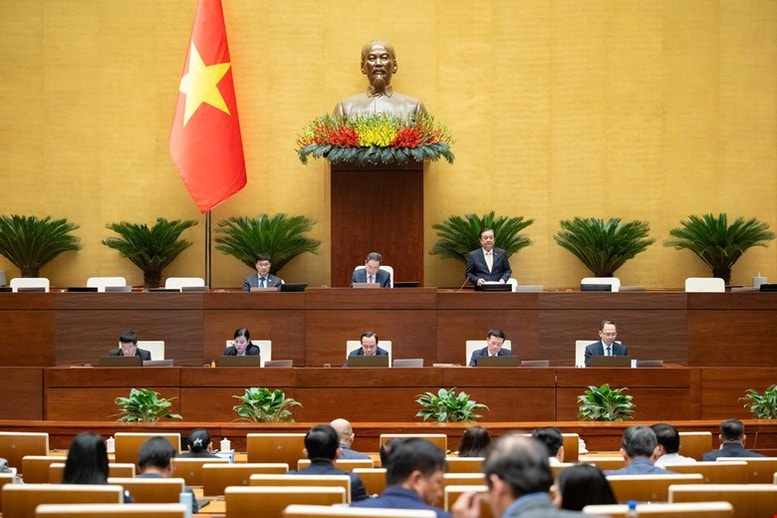
Focus on social security for workers adversely affected by digital transformation
National Assembly Deputy Tran Thi Thu Phuoc ( Quang Ngai ) highly appreciated the draft Law on Digital Transformation for boldly institutionalizing specific financial mechanisms to solve the biggest current bottleneck in implementing technology projects. In particular, shifting from the mindset of investment ownership to prioritizing the model of the State hiring available services from enterprises to invest and prioritizing the application of this model. Changing the method of budget management from controlling input factors to focusing on controlling quality and output results...
The draft Law also regulates the training and development of digital human resources. However, delegate Tran Thi Thu Phuoc noted that the draft Law still lacks regulations on social security and responsibility for the workforce that loses their jobs due to the impact of digital transformation such as automation, AI replacing humans, and changing work processes.

The delegate emphasized: “Digital transformation is a process of replacing the old with the new. The Law only regulates the positive aspects, which is training the new, while ignoring the negative impacts such as solving the surplus labor from the old, which does not ensure the humanity and inclusiveness of the sustainable development policy.”
In addition, Article 23 of the draft Law stipulates support for enterprises, cooperatives, and business households to carry out digital transformation, but does not yet bind the responsibilities of these enterprises to employees directly affected by this process.
Therefore, delegates recommended that the drafting agency study and add to the draft Law regulations on policies to support career transition and social security for workers adversely affected by the digital transformation process. This clearly demonstrates the spirit of not leaving anyone behind and anticipating social risks when applying large-scale automation technology.

National Assembly Deputy Pham Trong Nhan (Ho Chi Minh City) also noted that Japan has considered digital transformation as a tool to cope with population aging, labor shortages and improve the quality of life for the disadvantaged. Vietnam also has to answer the questions: how can the elderly, people in remote areas, and low-skilled workers become digital citizens in the most convenient and effective way?
Building a set of national digital transformation indicators
Noting that the draft Law on Digital Transformation still has gaps, delegate Pham Trong Nhan said that the digital economy and digital enterprises currently lack minimum mandatory mechanisms and maximum incentives. The digital economy is only strong when Vietnamese enterprises have data, a foundation and the ability to innovate.
The delegate frankly stated that a worrying reality is: 99% of Vietnamese people's digital behavioral data such as travel, shopping, entertainment, and consumption are on the ecosystems of large foreign platforms, while Vietnamese startups do not have data to train AI and develop competitive products, meaning that in the digital economic "game", Vietnamese businesses are having to run on someone else's turf. And when data is not within one's legal borders, it is very difficult to protect digital sovereignty and develop domestic digital businesses. Without Vietnamese data, there is no Vietnamese AI.
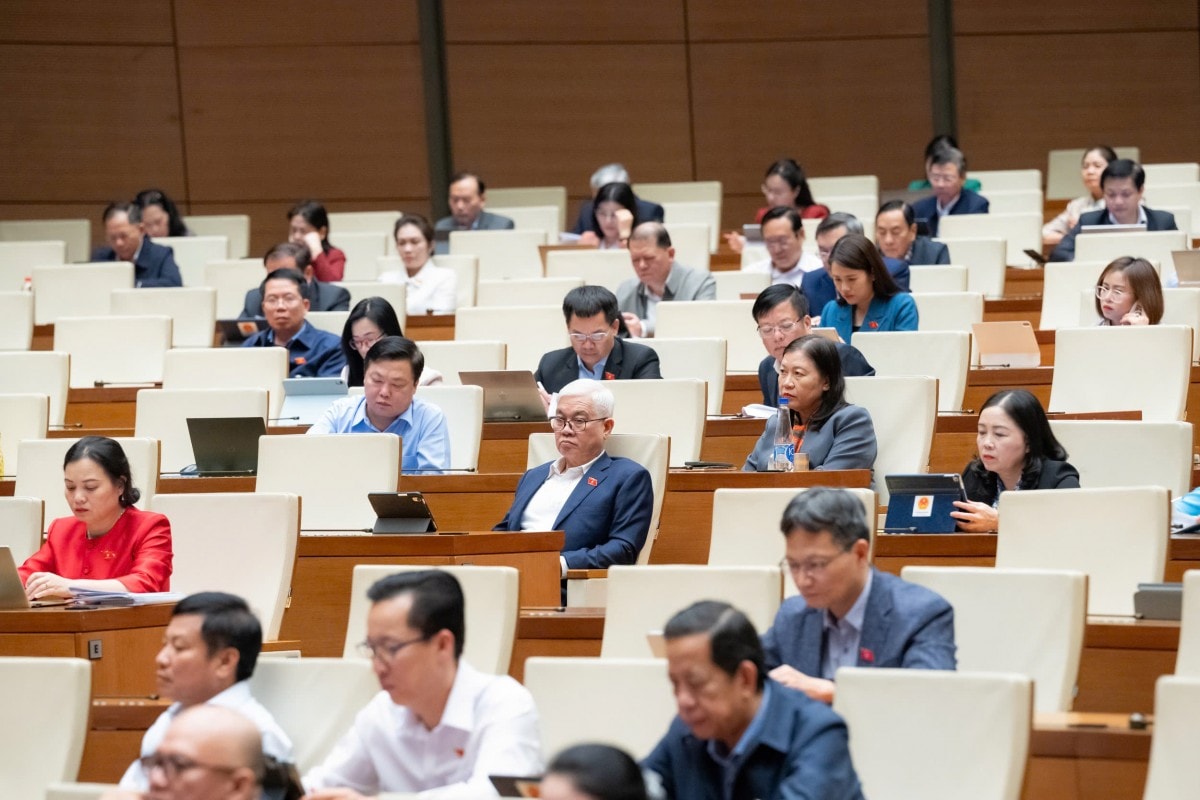
“If the Law does not set a principle against data lock-in, open API, and controlled data sharing, Vietnamese enterprises will be likened to “bonsai”, and the private sector will not be able to transform digitally on its own without a mechanism for hiring digital services, tax incentives, credit, and a sandbox for the new model,” the delegate emphasized.
The delegate also said that digital citizenship and data rights have not yet become a protection mechanism. All digital public services go through personal data, but the draft Law only stops at principles, without clear regulations on data autonomy, data processing transparency, compensation and complaint mechanisms or privacy standards... If the Law does not create a strong enough protection corridor, people will enter digital transformation in a worrying state of mind.
From the above analysis, delegates proposed to supplement the principles of digital economic and digital society development in the direction of combining minimum mandatory combinations in transactions with the State and maximum incentives for businesses to rent digital services, sandboxes, and clouds; at the same time, it is necessary to establish economic principles, data is a new production factor, non-personal data must be shared in aggregated, anonymous form, anti-data monopoly and anti-data lock-in.
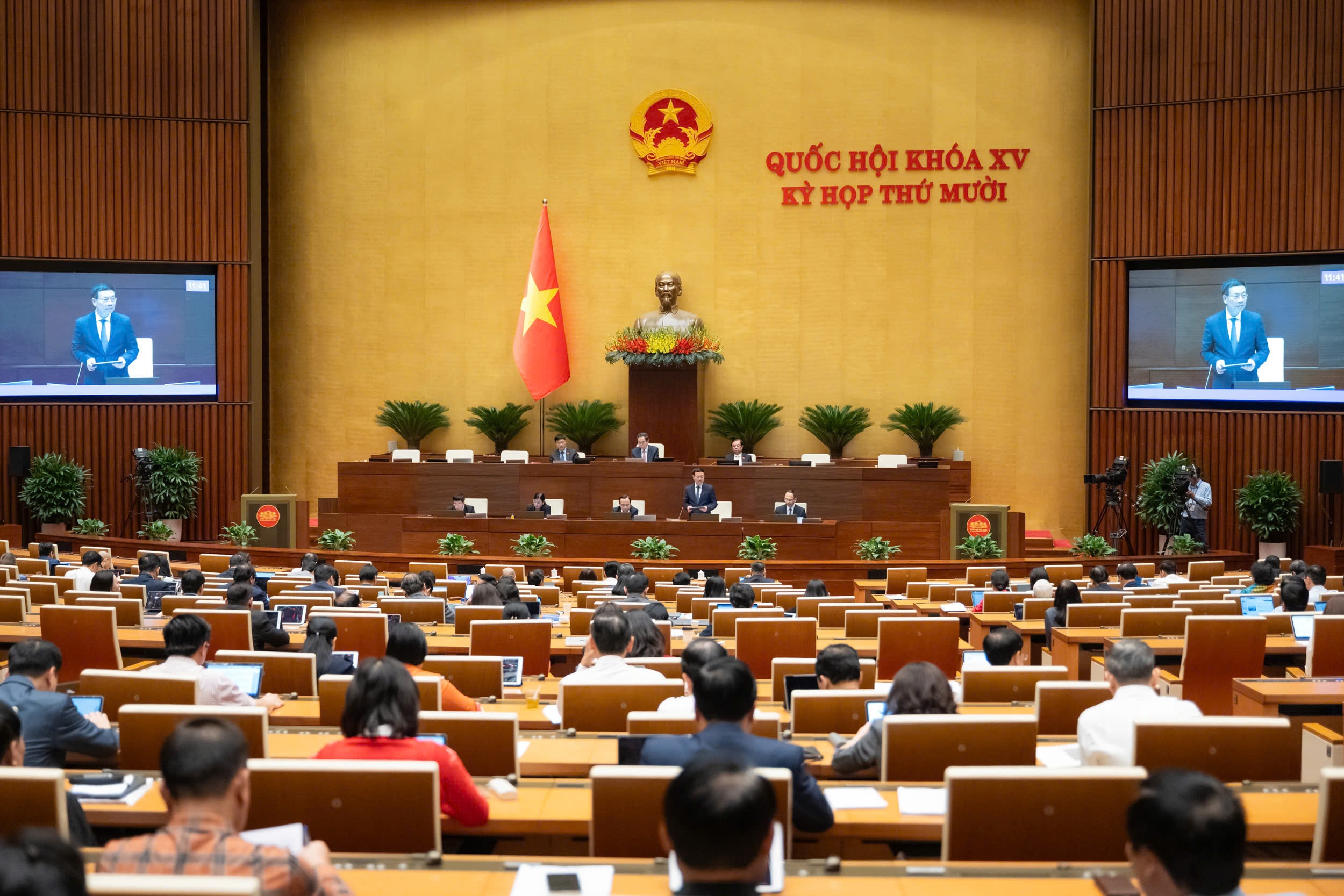
In Chapter 5 on digital citizens' rights and obligations, delegates proposed that it is necessary to stipulate a minimum set of tools for digital citizens, including: electronic identification, digital signature, digital payment account, single public service account, and principles of personal data protection according to international standards. The Government is assigned to popularize digital skills and design public services for easy access for all population groups.
Delegate Pham Trong Nhan also recommended that the Government develop a set of national digital transformation indicators similar to the EU's Digital Compass 2030 in Chapter 6 of the draft Law. Only when it can be measured can it be managed, and only when there is data can decisions be based on evidence, not on emotions.
Source: https://daibieunhandan.vn/du-thao-luat-chuyen-doi-so-chong-doc-quyen-du-lieu-va-chong-khoa-chat-du-lieu-10397904.html


![[Photo] Cat Ba - Green island paradise](/_next/image?url=https%3A%2F%2Fvphoto.vietnam.vn%2Fthumb%2F1200x675%2Fvietnam%2Fresource%2FIMAGE%2F2025%2F12%2F04%2F1764821844074_ndo_br_1-dcbthienduongxanh638-jpg.webp&w=3840&q=75)













![[Video] The National Assembly acknowledged the Government's management efforts and proposed solutions for education, rural areas and culture.](https://vphoto.vietnam.vn/thumb/402x226/vietnam/resource/IMAGE/2025/12/04/1764829347590_2-6561-png.webp)

![[Video] 15th National Assembly: Completing a large amount of work, creating many innovative marks during the term](https://vphoto.vietnam.vn/thumb/402x226/vietnam/resource/IMAGE/2025/12/04/1764829039607_1-4364-png.webp)




































![[VIMC 40 days of lightning speed] Da Nang Port: Unity - Lightning speed - Breakthrough to the finish line](https://vphoto.vietnam.vn/thumb/402x226/vietnam/resource/IMAGE/2025/12/04/1764833540882_cdn_4-12-25.jpeg)














































Comment (0)