

 |
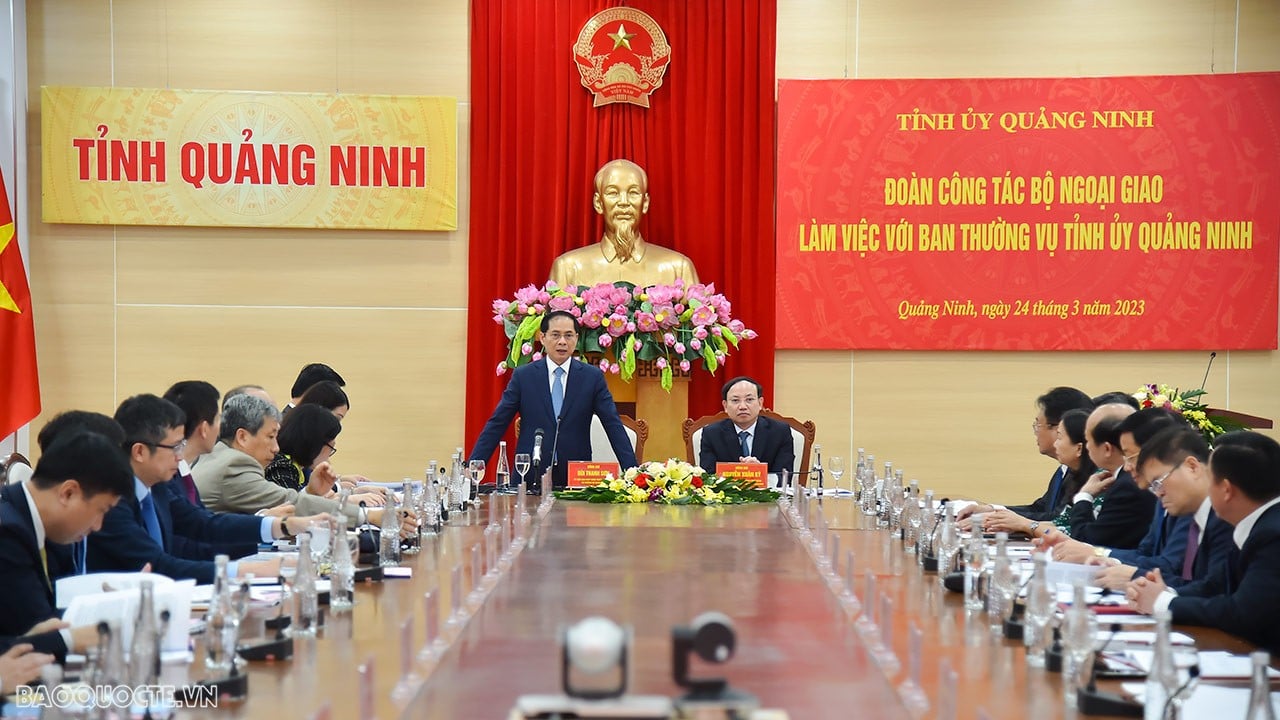
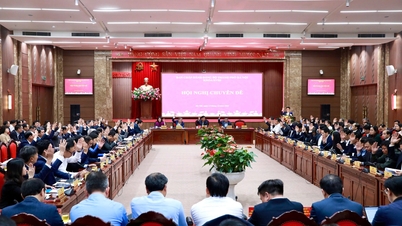
| Foreign Minister Bui Thanh Son speaks at a working session with the Standing Committee of the Quang Ninh Provincial Party Committee on international integration and local foreign affairs, March 2023. (Photo: Tuan Anh) |
Promoting the mobilization of resources for green development and digital transformation; connecting and supporting localities and businesses... are tasks that economic diplomacy needs to actively implement in the context of a volatile global economy.
At the seminar "Some notable developments and trends in the world economy, their impact on Vietnam and the implementation of economic diplomacy" held on the morning of May 16th in Hanoi, Assistant Minister of Foreign Affairs Nguyen Minh Hang assessed that the world economy in 2023 is projected to continue to slow down, with intertwined opportunities and challenges, but challenges are somewhat more prominent.
New trends in the global economy
Many organizations and economic experts believe that "the world is at a turning point" or warn that the global economy is entering a "lost decade".
Against this backdrop, according to Assistant Minister Nguyen Minh Hang, the accelerated implementation and legalization of new standards and criteria for international trade and investment, linked to digital transformation and green transition, such as the Cross-Border Carbon Adjustment Mechanism (CBAM), the Anti-Deforestation Act (EUDR), and the global minimum tax, by various countries, raises unprecedented issues and has far-reaching impacts on developing countries, including Vietnam.
Sharing the same view, Dr. Can Van Luc, chief economist of BIDV Bank, said that the global economy is forecast to slow down this year, increasing the likelihood of a short-term recession.
The continued high inflation in many countries; strategic and geopolitical competition among major powers; the Russia-Ukraine conflict; and policy adjustments by major powers pose risks to the stability of financial and monetary markets, energy security, food security, and regional and global geopolitical issues… all of which tend to become more complex, unpredictable, and difficult to forecast.
In this new phase, the expert pointed out: “The main economic trends of the world include: uneven and increasing uncertainty in the pace of recovery; globalization and changing economic linkages; strategic competition and the increasing role of government; restructuring of supply chains, investment, and labor; changes in fiscal and monetary policies; increased financial risks; catalyzing digital transformation; climate change and faster population aging; recovery and development of the green economy; and changing lifestyles, investment, and consumption behaviors.”
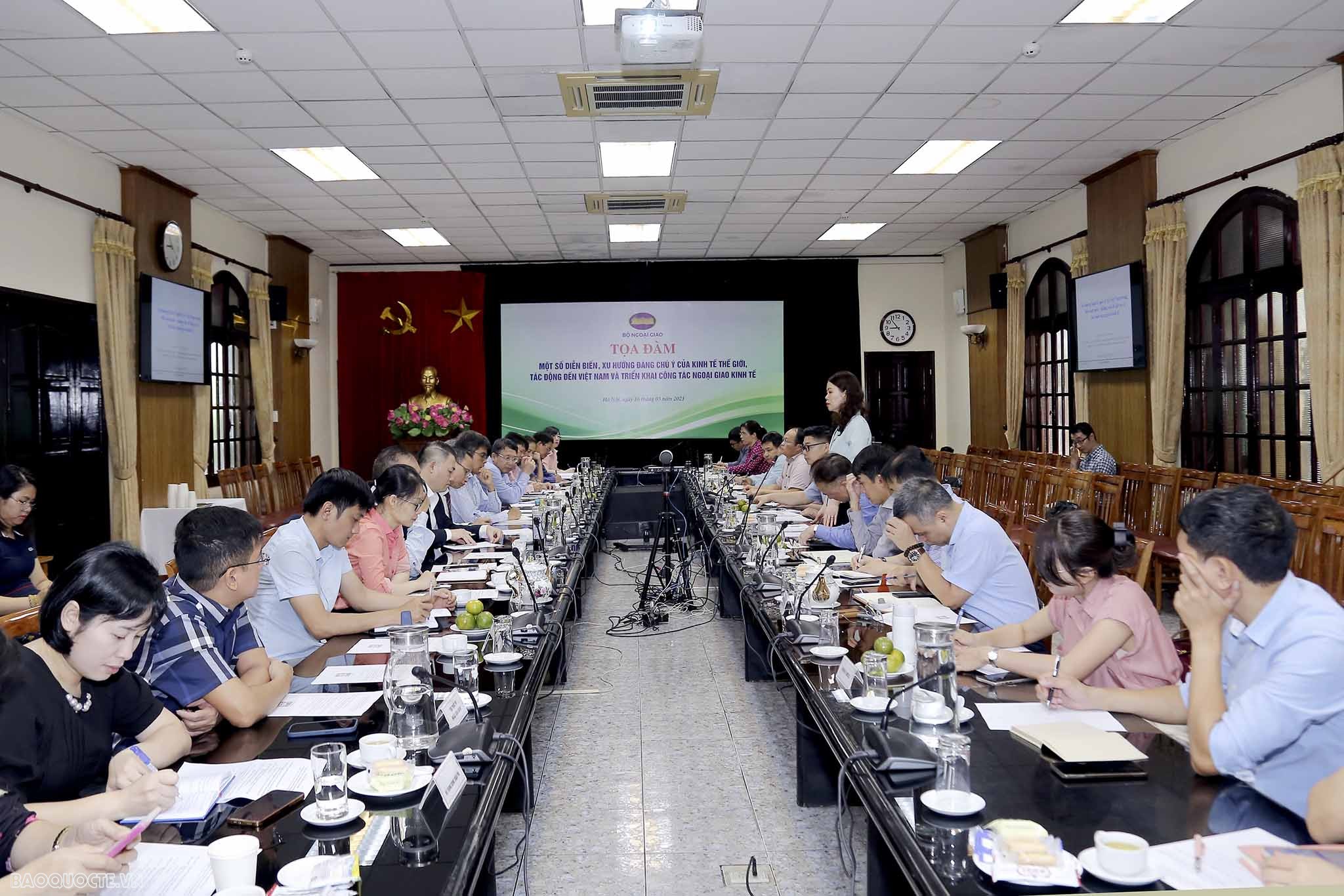 |
| Overview of the seminar "Some notable developments and trends in the world economy, their impact on Vietnam and the implementation of economic diplomacy." (Photo: Quang Hoa) |
Opportunities and challenges for Vietnam
New global trends will, to some extent, influence and impact the Vietnamese economy.
Regarding risks and challenges, according to Dr. Can Van Luc, the mild global economic downturn has narrowed Vietnam's export and investment markets; international tourism is recovering slowly, and high inflation is slowing economic growth. At the same time, interest rates at major banks worldwide have decreased but remain high. Risks in the international financial and monetary markets are negatively impacting Vietnam.
In addition, businesses still face many difficulties; economic restructuring, institutional reform, and administrative procedures are slow; strategic competition among major countries is intense; political and economic linkages are changing; protectionism and trade defense measures are increasing; cybersecurity and non-traditional security risks are rising; and Vietnam's self-reliance, self-sufficiency, and resilience are not yet high.
However, amidst the crisis lies opportunity, and Dr. Can Van Luc believes that Vietnam will be able to take advantage of certain opportunities.
For example, China's reopening has helped Vietnam export consumer goods to a market of over 1.4 billion people; creating opportunities to attract supply chain shifts and investment flows; boosting the socio-economic recovery and development program for 2022-2023 and public investment; and maintaining positive growth in services and consumption.
Simultaneously, Vietnam's macroeconomic foundation and experience in combating the Covid-19 pandemic and managing risks have improved; fiscal risks are at a moderate level, and there is still room for policy maneuvering. Domestic inflation is gradually decreasing and is under control; interest rates are falling; and the stock and real estate markets are showing signs of recovery.
In addition, the digital economy, green economy, circular economy, and energy transition are being promoted. Restructuring the economy and improving institutions are being accelerated (amending the land law, housing law, real estate business law, electronic transaction law, price law, etc.).
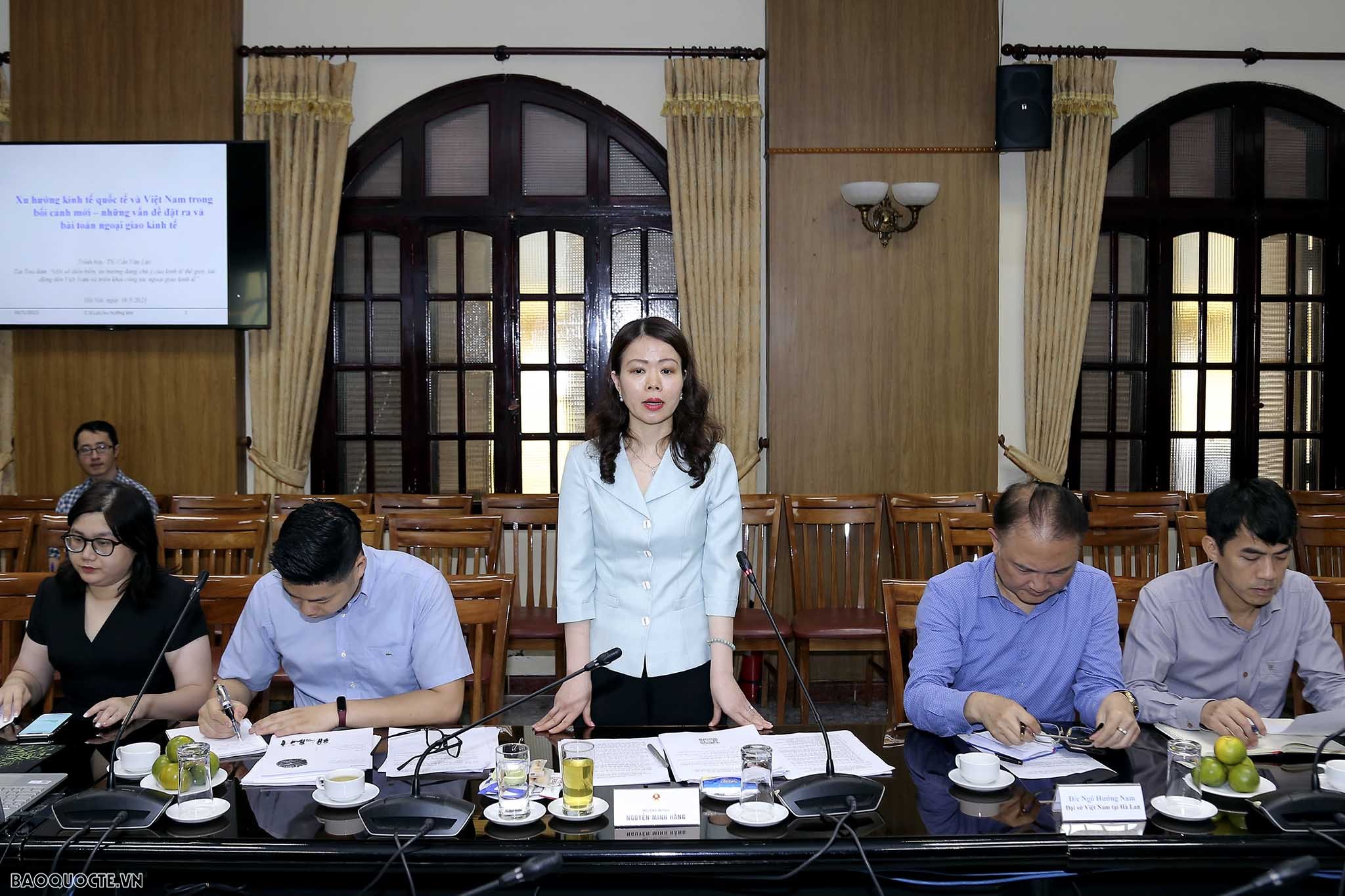 |
| Assistant Minister Nguyen Minh Hang delivered the opening remarks at the seminar. (Photo: Quang Hoa) |
Solving the NGKT "problem"
Assistant Minister Nguyen Minh Hang stated that, in recent times, the Ministry of Foreign Affairs has implemented economic diplomacy in a proactive and positive manner, closely following the directives and guidance of the Government and domestic needs, promptly shifting the focus to the recovery and socio-economic development of the country.
Dr. Can Van Luc observed that the Vietnamese Government has implemented international cooperation in a comprehensive, in-depth, effective, and substantive manner, with many outstanding activities.
The government implemented the Socio-Economic Development Strategy for the period 2021-2030; issued fiscal policies (tax and fee deferrals and reductions) and monetary policies (interest rate reductions, debt restructuring) to support people and businesses heavily impacted by the decline in business and income; and issued numerous policies to address difficulties and obstacles in the real estate and capital markets.
Simultaneously, the Government regularly organizes meetings with foreign investors to listen to their concerns and find solutions to remove obstacles; continues to improve the investment and business environment; supports businesses in diversifying export markets, promoting digital transformation, circular economy, and energy transition; stabilizes the macroeconomy and financial market; accelerates the completion of institutions; and promulgates the Foreign Investment Strategy for the period 2021-2030.
However, in the context of a volatile global economy, to effectively promote the implementation of economic diplomacy to meet the Government's expectations, Dr. Can Van Luc believes that diplomatic officials need to strengthen information dissemination, research, consultation, and support to promote growth drivers and make good use of opportunities for the country's rapid and sustainable development.
In the long term, Vietnam's economic diplomacy efforts need to focus on minimizing external impacts; leveraging opportunities from existing free trade agreements; and proactively seizing and capitalizing on trends.
The chief economist of BIDV Bank emphasized: "It is necessary to strengthen connections and support businesses and localities in diversifying markets, partners, products, and services; mobilizing resources to serve 'green' development, digital transformation, and sustainable growth; independence, self-reliance, and self-strengthening associated with integration and enhancing the resilience of the economy."
According to Dr. Can Van Luc, only in this way can the work of international cooperation achieve tangible results, contribute to national development, realize the goals and aspirations set forth by the 13th National Party Congress, and contribute to the effective implementation of the Government's Action Program to implement Directive No. 15-CT/TW dated August 10, 2022, of the Party Central Committee on international cooperation to serve national development until 2030.
Source


![[Photo] Prime Minister Pham Minh Chinh attends the Conference summarizing and implementing tasks of the judicial sector.](/_next/image?url=https%3A%2F%2Fvphoto.vietnam.vn%2Fthumb%2F1200x675%2Fvietnam%2Fresource%2FIMAGE%2F2025%2F12%2F13%2F1765616082148_dsc-5565-jpg.webp&w=3840&q=75)
































































Comment (0)