

The ITER project, the world's largest fusion energy experiment, is entering its most crucial phase at the center of Provence, in southern France. This is considered a groundbreaking step that could lead to an unlimited energy source for humanity.
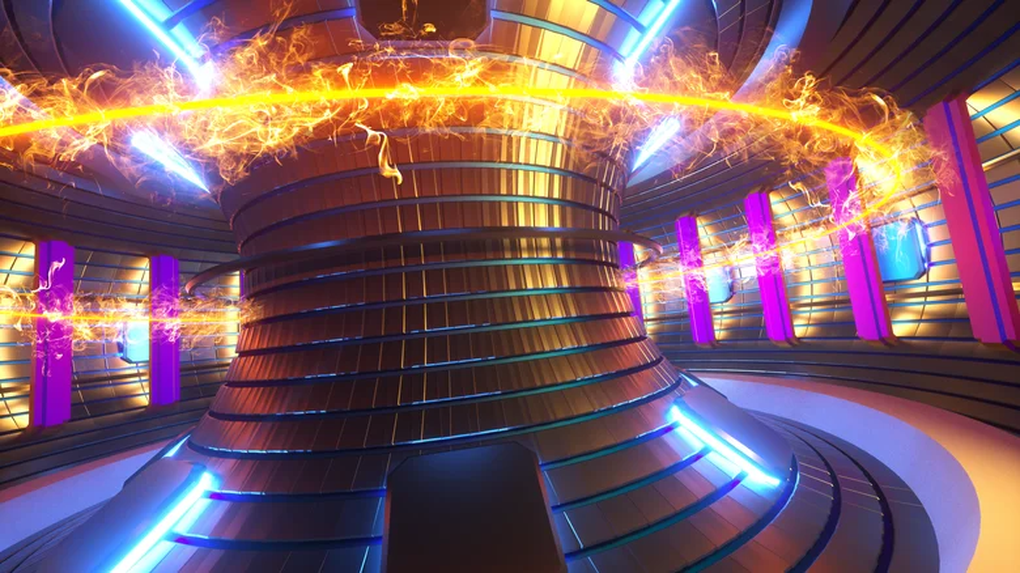
This decades-long international collaborative project is now focused on assembling the reactor core, marking a transition from the construction phase to the fabrication phase.
After years of meticulous design, component sourcing, and integration planning, engineers have begun assembling the inner core of the fusion power plant. This is not only an engineering feat but also a symbolic milestone, marking humanity's attempt to replicate the Sun's energy generation process.
The coming months, as the components are assembled, aligned, and connected, will determine whether ITER succeeds in creating the first plasma and laying the groundwork for commercial use of nuclear fusion.
This project has long been described as humanity's greatest scientific endeavor, even greater than the first moonwalk.
Science is once again connecting nations, laboratories, and industries across continents with a shared ambition. With the reactor core being assembled, ITER is entering its final and most critical phase.
ITER: A global effort for the energy of the future.

The International Experimental Fusion Reactor (ITER) was an extraordinary effort to demonstrate that nuclear fusion – the process that powers stars like the Sun – could be harnessed on a large scale on Earth.
Previously, China had also conducted nuclear fusion tests, burning energy hotter than the Sun, and showing promising results.
ITER, built in Cadarache, France, is a joint project of seven key members: the European Union, China, India, Japan, South Korea, Russia, and the United States.
Each member contributes by manufacturing and supplying components and systems, demonstrating global industrial participation and ensuring shared ownership.
This approach also helps the project avoid dependence on a single funding source. The European contribution accounts for the largest share (approximately 45.6%), while the remaining members each contribute about 9.1%.
Since its inception in the mid-1980s, ITER has grown into a massive engineering project. Its purpose is not to provide immediate power, but rather to test the scientific, technological, and engineering feasibility of a reactor-scale fusion device.
The project needs to maintain a burning plasma state, validate systems such as superconducting magnets, heating systems, diagnostics, tritium cultivation, remote maintenance, and create a stepping stone toward experimental power plants.
According to a revised schedule in early 2025, ITER aims to operate hydrogen and deuterium plasma for the first time in the 2030s and achieve full magnetic capability by 2036.
The final phase, the deuterium-tritium experiment, is expected to begin around 2039. Following ITER, scientists plan to build a DEMO reactor, considered a stepping stone towards commercial nuclear fusion in the latter half of the 21st century.
Completing the core component: the "heart" of the machine.

In recent months, ITER engineers have begun assembling the reactor core – the central tokamak structure that houses the plasma. This core assembly phase includes aligning and integrating the main magnetic coils made of superconducting material, the vacuum vessel, the support structure, the central solenoid, and internal components.
One of the most crucial and complex components, the central solenoid magnet, has recently been declared complete. This part of the core reactor, also known as the "heart" of the machine, is now ready for delivery and installation at ITER.
Meanwhile, the vacuum vessel, composed of nine toroidal chambers, is being assembled under contract by industrial partners. A $180 million contract has been awarded to Westinghouse Electric Company to weld and join the chambers of the core unit into a single vessel capable of containing plasma.
The core assembly process is a delicate "ballet" of precision engineering. Tolerances under 1mm, alignment, thermal shrinkage, cryogenic conditions, and integration with the factory system must all be taken into account. Each component is sourced from domestic suppliers around the world and meticulously assembled, tested, and integrated.
This is an extremely critical and risky process. Successful core assembly is a crucial milestone on the road toward the first plasma. Delays or misalignments can lead to years of delays or rework of the engineering.
With the reactor core currently under rapid construction, ITER is believed to be entering its final major test, the outcome of which could determine whether fusion energy will become humanity's next great technological leap.
Source: https://dantri.com.vn/khoa-hoc/cong-trinh-khoa-hoc-lon-nhat-vua-buoc-vao-giai-doan-lo-phan-ung-cuoi-cung-20251023003529369.htm












































































Comment (0)