

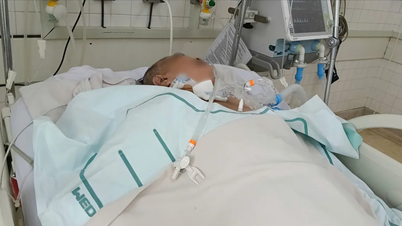
On May 17th, the National Hospital for Tropical Diseases reported that its doctors had recently admitted and treated a 78-year-old female patient, NTQ (from Bac Giang province), with severe cellulitis of the face, forehead, and scalp caused by Staphylococcus aureus bacteria. The affected areas were swollen, red, and oozing pus, accompanied by sepsis.
The patient has a history of bronchial asthma and frequently uses corticosteroids without medical prescription. Additionally, the patient suffered a stroke two years ago resulting in left-sided hemiplegia and is currently being treated for hypertension, although the specific medication is unknown.
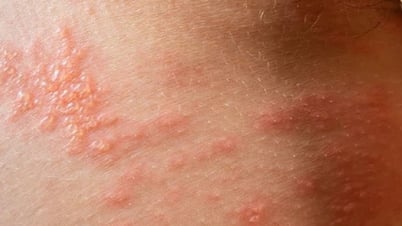
According to the patient's family, about 20 days before hospitalization, Ms. Q. developed clusters of blisters on a red, irritated skin background on her face and scalp. She was treated at a lower-level hospital for 7 days, but her condition did not improve; the lesions spread, became severely swollen, and oozed pus, so she was transferred to the National Hospital for Tropical Diseases.
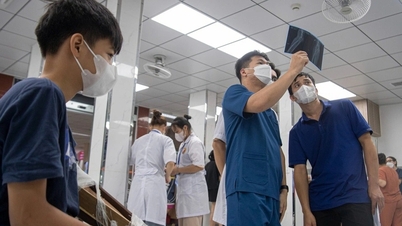
Dr. Nguyen Hong Long, Deputy Head of the Department of General Infectious Diseases, said the patient was admitted with a severe infection after suffering from shingles that was not detected and treated promptly, leading to widespread cellulitis of the face and scalp. A CT scan of the brain showed suspected osteomyelitis.
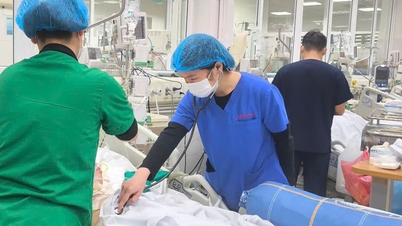
After 7 days of intensive treatment, the infection was brought under control. However, extensive necrosis of the scalp necrosis necessitated surgical debridement and the placement of a negative pressure suction system to clean the lesion.
According to Dr. Nguyen Ngoc Linh, a specialist in plastic and reconstructive surgery, shingles affecting the scalp with hair growth is a relatively rare condition. In this case, the patient was elderly and had a weakened immune system due to prolonged corticosteroid use, leading to widespread and severe lesions.
In this patient, Staphylococcus aureus bacteria had deeply penetrated the subcutaneous tissue, causing necrosis of the entire Galea fascia (a layer of tendon located under the scalp, between the subcutaneous connective tissue and the cranial periosteum) and the fatty tissue of the head. The affected scalp area measured approximately 7x10cm, while the necrotic fascia extended to nearly half the circumference of the head, accompanied by pus and pseudomembranes. This was a very complex case of Staphylococcus aureus infection of the head, with extensive necrosis and a risk of inflammation spreading to the skull bone, and even to the brain parenchyma, if not treated promptly.
The patient then underwent surgery to remove all necrotic tissue, and a negative pressure suction system was implanted to remove foul fluid, necrotic tissue, and bacteria, cleaning the inflamed area and stimulating the formation of new granulation tissue. After 1-2 weeks of treatment with this system, when the inflammation was under control, the doctors proceeded with reconstructive surgery on the missing scalp area to repair the damage.
According to Dr. Linh, the main reason for the patient's severe necrosis was the delayed treatment of shingles, coupled with a weakened immune system due to prolonged corticosteroid use. This created favorable conditions for bacteria to invade and cause dangerous complications.
Following intensive treatment, the infection has been brought under control, and the lesions on the scalp are healing well.
Dr. Nguyen Nguyen Huyen, Director of the Center for Disease Control and Prevention (National Hospital for Tropical Diseases), recommends that people aged 50 and older, especially those with underlying health conditions or weakened immune systems, should proactively get vaccinated against shingles. This vaccine not only reduces the risk of contracting the disease but also alleviates symptoms if infection does occur. This is a proactive and effective measure to help older adults protect their health and improve their quality of life.
Dr. Huyen also emphasized that when initial signs such as burning pain, redness, or blisters appear on the skin, patients need to seek medical attention early for timely diagnosis and treatment, avoiding the risk of serious complications such as necrosis, sepsis, or long-term nerve damage.
Source: https://www.vietnamplus.vn/cu-ba-78-tuoi-hoai-tu-nua-dau-do-zona-than-kinh-khong-dieu-tri-kip-thoi-post1049725.vnp




























































































Comment (0)