

The 4 billion dong compensation from their parents' inherited house became the spark that ignited a family conflict within the Ma clan. The eldest brother took the majority of the money, bluntly challenging his siblings: "If you don't like it, sue!"
The origin of the conflict
The Ma family in China has four sons. From a young age, the eldest son, Ma, shouldered the responsibilities of being the firstborn. At the age of 10, he began working outside the home to help alleviate the financial burden on his parents.
He sent all the money he earned home to help his parents support his three younger brothers' education. Every Lunar New Year, he also gave them extra pocket money, so the image of the eldest brother always held a special place in their hearts.
After more than 20 years of working away from home, seeing his elderly parents frail and needing someone to support the family in his hometown, the eldest son, Ma, decided to request a transfer back to his hometown. He moved into his parents' house and lived with them to take care of them.
After growing up, the four Ma brothers all had their own families, but they still frequently visited their parents, so the relationship between the brothers was considered close and harmonious.

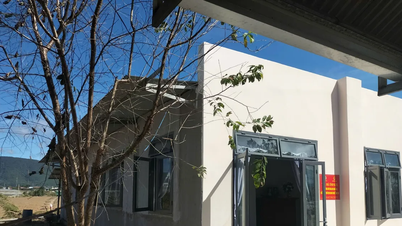
Illustrative image
The compensation money was divided unequally, so the brothers sued the eldest brother.
When their parents passed away, the eldest son, Ma, no longer needed to care for them. Therefore, he and his wife bought a new house and moved out. He rented out the old house, and the rental income was divided equally among all four brothers.
However, after the house was compensated with 1,150,000 RMB (approximately 4 billion VND) for land clearance, the eldest brother, Ma, wanted to take 1,070,000 RMB (over 3.7 billion VND), leaving 80,000 RMB (over 280 million VND) for his three younger brothers to divide among themselves.
Believing that their eldest brother, Ma, had betrayed their trust, the three younger brothers decided to sue him, demanding an equal share of the compensation money.
In court, the eldest son, Ma, explained why he divided the money in that way. According to him, this method of distribution was perfectly reasonable because:
1. From a young age, he earned a lot of money to help his parents, and he also contributed a significant amount when building that house.
2. All three of his younger brothers have been allocated houses, so this house is the inheritance left to him by their parents.
3. The original house was only 18 square meters. After he returned from working away from home, he spent money to build an additional 60 square meters. This additional area was included in the total area to be demolished, so the compensation amounted to 1,150,000 yuan.

Illustrative image
However, the three younger brothers completely disagreed with their eldest brother's reasoning, arguing that he had confused duty with right. According to the three brothers, the decision of their parents to divide the house among them was their parents', and since their eldest brother was financially capable, it was normal that he did not receive a house.
They further emphasized that the compensation was based on the original house left by their parents. Without the original house, the additional area that Ma's eldest son built would not have been eligible for compensation.
After the trial, the court concluded that the house belonged to the father. However, since their father had passed away without leaving a will, the house was considered an inheritance and had to be divided equally among all four brothers.
This ruling displeased the eldest brother, Ma, who refused to accept the equally divided money. Therefore, the three younger brothers were forced to invite a mediator to resolve the matter.
Final agreement
When meeting with the mediator, Mr. Ma did not hesitate to criticize his three heartless younger brothers. He emphasized that without his past contributions and sacrifices, his brothers would not have been able to have the life they have today.
Ma's eldest brother stated that, of the compensation money, 200,000 yuan (approximately 700 million VND) was actually compensation for his personal injuries.
Currently, his health is not good, and he is unable to work, so he wants to leave some money to his wife and children. He also asserted that if it weren't for him building an additional 60 square meters, the compensation amount would never have reached this level.
What angered the eldest brother, Ma, the most was the ingratitude of his youngest brother. Previously, when the youngest brother wanted to transfer ownership of their parents' house to his name, both middle brothers objected.
He was the one who persuaded them to let the youngest sibling have a house. Yet now, this sibling is the most vehement opponent in the property dispute.
The youngest brother said that each matter should be handled separately. He always remembered everything his eldest brother had done to help him, but among brothers, money matters should be clear. This house had not been allocated to anyone by their parents, and now it needed to be divided equally among all four brothers.
The two middle brothers also agreed and criticized the eldest brother's actions. They said, "What the eldest brother did was wrong! Previously, when our household registration was still at our maternal grandparents' house, and that house was demolished, we didn't keep any part for ourselves but divided it equally among ourselves."
Furthermore, previously, in the presence of our parents, the whole family signed an agreement that if our parents' house were ever demolished, the proceeds would be divided equally. Now, my eldest brother is going against that agreement; isn't that breaking his promise?”
Faced with the evidence presented by his two younger brothers, the eldest brother, Ma, finally relented. The three younger brothers also gave in, agreeing to let their eldest brother reclaim 80,000 yuan for the construction costs of the 60m² building and 200,000 yuan in compensation for injuries. The remaining 870,000 yuan (approximately 3 billion VND) would be divided equally among the four brothers.
Public reaction: Who is right, who is wrong?

The incident has attracted a lot of attention. Some commented that the eldest brother should receive 80% of the assets, arguing that without his care, the younger siblings wouldn't be where they are today. Furthermore, the house, originally only 18 square meters, expanded to 60 square meters thanks to the eldest brother's hard work, so logically, he should receive a larger share.
Some netizens believe the older brother was wrong for not respecting the agreement.
Conversely, some people expressed: "After dividing the property, family ties are broken! Couldn't the younger siblings have given this house to their older brother?"
It can be said that this family's story accurately reflects the reality of life. Many families that were once harmonious experience conflicts and rifts in their relationships after the division of assets.
This story needs to be viewed with empathy and understanding. Because the "big brother" of the past and the "big brother" of the present, as well as the "younger brothers," all had to change to keep up with the realities of life.
In the past, sibling relationships were often solely tied to personal gain. But today, each person represents not only themselves but also carries the responsibility of their own "family" behind them. Even if siblings can easily talk to each other, the pressure from each person's small family can make things more awkward.
Therefore, the best approach is for both sides to strike a balance between feelings and self-interest. When both feelings and self-interest remain, everything can be accomplished.
Glass
Source: https://giadinh.suckhoedoisong.vn/can-nha-bo-me-de-lai-duoc-den-bu-gan-4-ty-dong-anh-ca-tu-nhan-90-3-em-trai-cung-phan-doi-cung-la-con-dua-vao-dau-anh-lay-nhieu-the-172241130190553319.htm






















































































Comment (0)