

 |
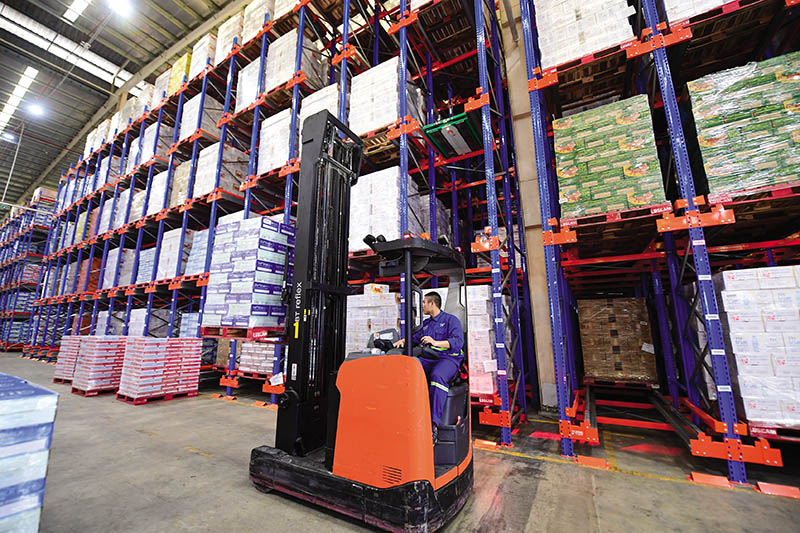
| An effective system of support tools for Vietnamese businesses investing abroad needs to be established. (Photo: Duc Thanh) |
Impact of removing administrative barriers
Many Vietnamese businesses have improved their capabilities and become multinational corporations by investing abroad. Lawyer Nguyen Hong Chung, an investment policy expert and CEO of DVL Ventures, raised this issue when discussing the Ministry of Finance 's new proposal regarding regulations on overseas investment.
"The proposal to abolish licenses and replace them with a registration-post-audit mechanism for overseas investment activities would be a strong institutional reform, bringing many positive impacts," Mr. Chung expressed his view.
The most obvious benefit is the reduction of administrative barriers. According to the plan proposed by the Ministry of Finance, the procedures for approving overseas investment projects, which are under the authority of the National Assembly and the Prime Minister, and the procedures for issuing certificates of registration for overseas investment, which are under the authority of the Ministry of Finance, will be abolished. Investors making overseas investments will register with the State Bank of Vietnam regarding the transfer of funds abroad.
Thus, many administrative procedures will be abolished, and compliance costs will be significantly reduced, because the Investment Law stipulates a fairly broad scope of management for the agency issuing certificates of registration for overseas investment, encompassing all overseas investment activities (objectives, scale, location, scope of operation, total investment capital, etc.).
Mr. Chung analyzed that businesses, especially private enterprises and small and medium-sized enterprises, can quickly implement projects abroad without lengthy approval processes. This allows businesses to seize opportunities in international markets, particularly in sectors requiring quick decisions such as trade, services, and technology.
The issue is that the management of overseas investment activities will be more substantive. In explaining the chosen option, the Drafting Committee of the Ministry of Finance clarified that when investors register with the State Bank of Vietnam, they already have foreign investment approval documents (including investment licenses, business establishment certificates, capital contribution or share purchase contracts in foreign companies, etc.). At that point, the investment activity is more "certain" and "authentic".
The State Bank of Vietnam will also be able to quickly compile and monitor the implementation of investment capital and the repatriation of funds through the banking system, allowing for timely assessments and adjustments when there is an impact on the balance of payments and foreign exchange reserves. Furthermore, the banking system has the tools to promptly handle cases of non-compliance with reporting regulations (such as temporarily suspending remittances, freezing investment accounts in emergency situations, etc.).
Vietnamese businesses must step outside the box.
Mr. Phan Huu Thang, Chairman of the Vietnam Industrial Park Finance Association (VIPFA), mentioned Viettel, Vinamilk, TH Truemilk,FPT , etc., as bright spots of Vietnam's outbound investment, alongside state-owned economic groups that are leading enterprises in overseas investment activities.
“No one thought Vietnamese businesses would invest in dairy processing plants in Europe. Nor can we fully express the emotion of seeing people in many countries using Viettel's mobile network as their primary choice. It's time for Vietnamese businesses to step out and become foreign investors in countries and markets around the world,” Mr. Thang shared.
The dynamism and opportunities from the global market, which is undergoing a restructuring following changes in tariff policies and new development trends, along with the growth of Vietnamese businesses, have led Mr. Thang to show great interest in overseas investment plans.
This step is even seen as a proactive move that should be encouraged for Vietnamese businesses to participate in global production chains, seek opportunities to import technology, develop new markets, and find customers… However, Mr. Thang believes that the barriers on the path to overseas investment for Vietnamese businesses are not necessarily the market or the capacity of the businesses themselves, but also largely stem from procedures.
Essentially, private enterprises using their own capital to make overseas investments must comply with the laws and regulations of the host country. However, according to the Investment Law, Vietnamese state agencies approve many aspects of a project, such as its form, scale, location, implementation schedule, overseas investment capital, and funding sources.
During the meetings, many businesses expressed concern that these matters fall under the jurisdiction of the host country's laws, thus making Vietnamese approval less significant. Mr. Thang even argued that this cautious approach hinders businesses from being flexible in seizing business opportunities.
In practice, many countries around the world only implement control over the flow of money abroad for investment purposes and have policies prohibiting or restricting money transfers abroad in certain cases to ensure macroeconomic balance and the legality of the funds, without managing all overseas investment activities.
Currently, only Vietnam and Laos still issue certificates for overseas investment. China does issue these certificates, but with more lenient regulations, only managing large projects and certain sectors. Other countries have shifted to a mechanism where investors declare and register their overseas investment capital with the banking system when conducting investment and business activities abroad.
According to international experts, outbound investment can play a crucial role in the development strategy and growth of a developing country. Through this capital flow, the investing country can expand its export and consumption markets, creating more development opportunities for its businesses.
Of course, not all overseas investments are successful in bringing profits back home, but Mr. Thang believes that a change in mindset and perception is needed, and overseas investment must be considered an important part of the national socio-economic development strategy, planning, and plan. Along with perfecting the institutions and policies related to overseas investment, the Government needs to develop and soon announce a complete and comprehensive Overseas Investment Strategy, covering short-term, medium-term, and long-term goals.
In particular, an effective system of support tools for businesses and investors going abroad needs to be established, such as promoting market research through trade and investment promotion organizations and diplomatic agencies overseas; providing financial support for the implementation of foreign investment projects, etc.
As of the end of June 2025, Vietnam had 1,916 active overseas investment projects, with a total Vietnamese investment capital of over US$23 billion. Statistics show that the majority of these projects have investment capital under VND 20 billion, accounting for 67.4% of the total number of projects, but representing a small proportion of the total capital (approximately 1.7% of total overseas investment); projects with investment capital exceeding VND 20 billion account for about 28% of the total number of projects, but represent the majority of the capital (approximately 98.3% of total overseas investment); the remainder are small projects under VND 1.2 billion (equivalent to US$50,000).
These projects all require approval in principle from the Prime Minister or the issuance of certificates of registration for overseas investment. To date, no overseas investment projects have been recorded that fall under the authority of the National Assembly to approve investment policy.
Source: https://baodautu.vn/da-den-luc-doanh-nghiep-viet-tro-thanh-nha-dau-tu-nuoc-ngoai-d368064.html




























































































Comment (0)