


National Assembly delegates from Hanoi City discuss matters in their group on the afternoon of October 31. Photo: Nhu Y.
During the discussion on the draft Law on Protection of State Secrets (amended), delegate Do Duc Hong Ha (Hanoi delegation) expressed concern about the prohibited acts in the protection of state secrets (Article 5). Specifically, Clause 10 states: "Using artificial intelligence systems to commit acts that violate the law is strictly prohibited as stipulated in this Law."
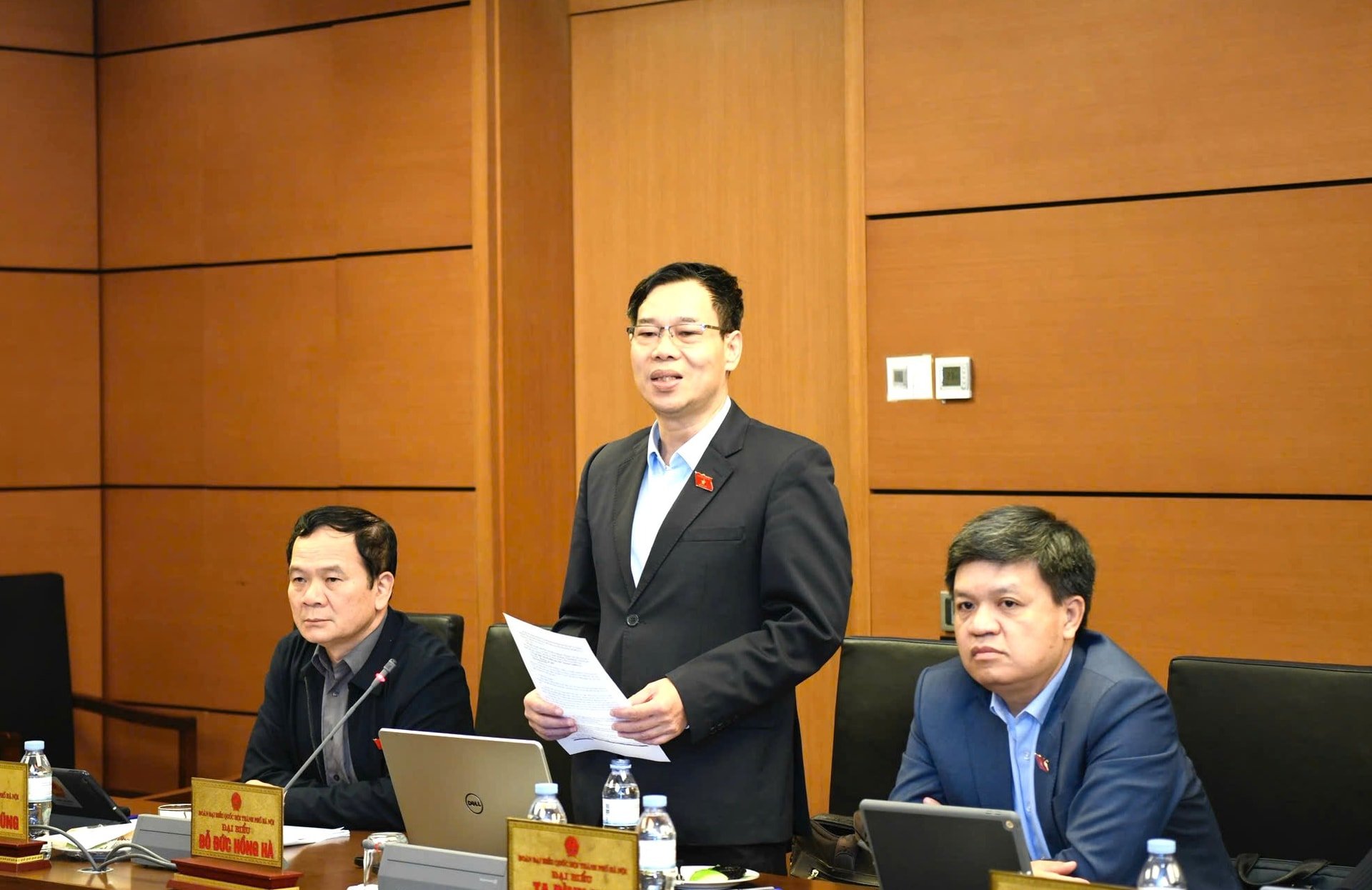
Delegate Do Duc Hong Ha (Hanoi Delegation) delivers a speech. Photo: Nhu Y
According to the representative, Article 5 clearly lists the prohibited acts in clauses 1 to 9. Logically, these acts are prohibited regardless of the means or tools used. Therefore, the content of clause 10 seems to have already been encompassed by the preceding clauses. Specifying artificial intelligence as a separate tool might not be entirely necessary and could make the text less concise.
"
"I suggest that the drafting agency reconsider Clause 10, Article 5 to ensure the conciseness of the draft. Because violations, whether using artificial intelligence or any other tool, are already strictly prohibited in Clauses 1 to 9 of this article," Representative Do Duc Hong Ha stated.
Discussing the draft Law on Cybersecurity, delegate Nguyen Quoc Duyet (Hanoi delegation) stated that cyberspace has now become the fifth operational environment, in contrast to the four traditional operational environments: air, sea, land, and outer space. This is crucial, and therefore requires strong legal frameworks to protect the nation early, from afar, and from cyberspace.
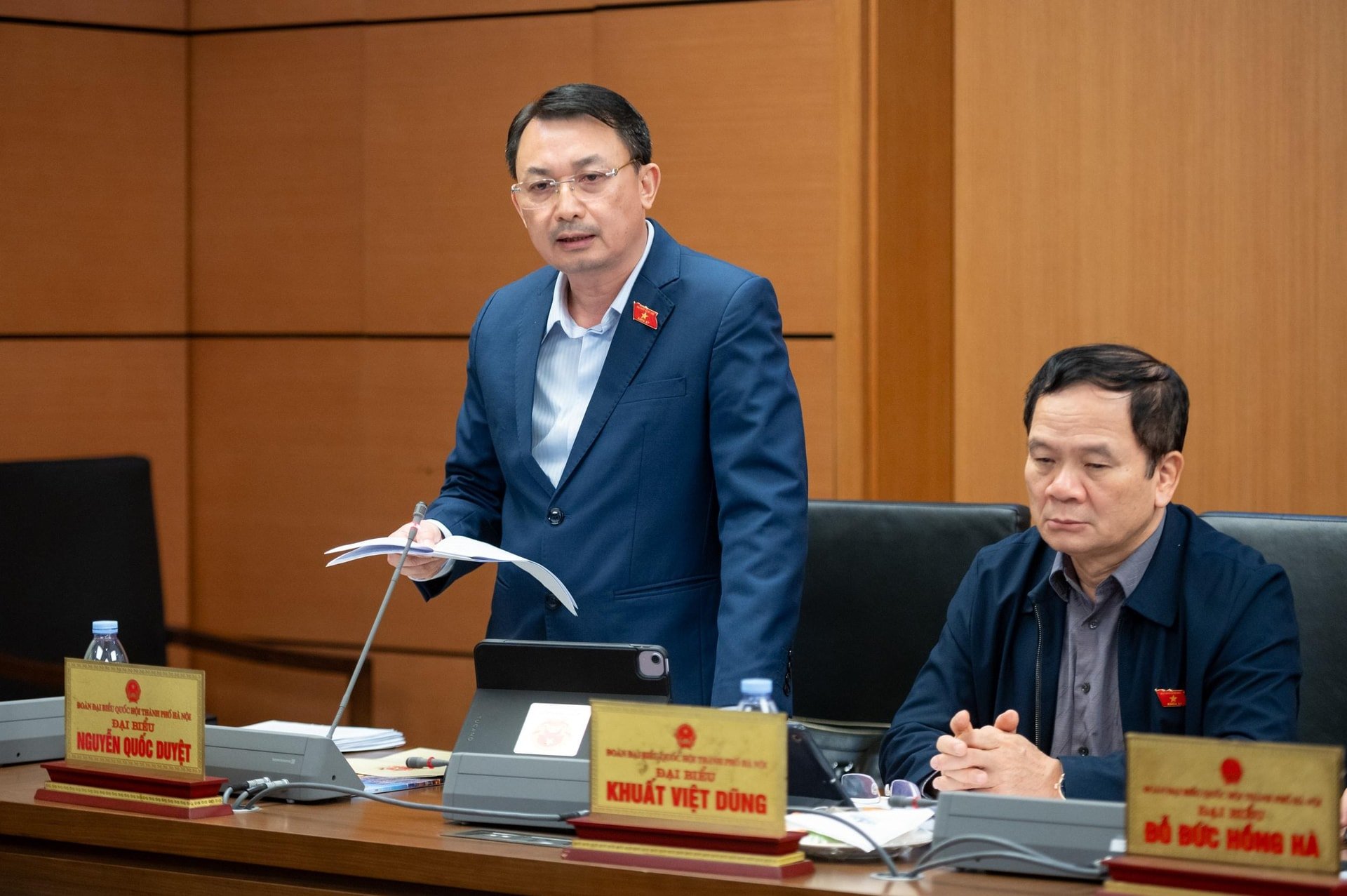
Delegate Nguyen Quoc Duyet (Hanoi delegation) delivers a speech. Photo: Pham Thang
Delegate Venerable Thich Bao Nghiem (Hanoi Delegation) argued that if the revised Cybersecurity Law is built on the spirit of "Security for the people's safety, and the people's safety for the nation's safety," it will certainly become an important foundation for the harmonious development between technology and people, between safety and freedom, and between law and ethics in the digital age.
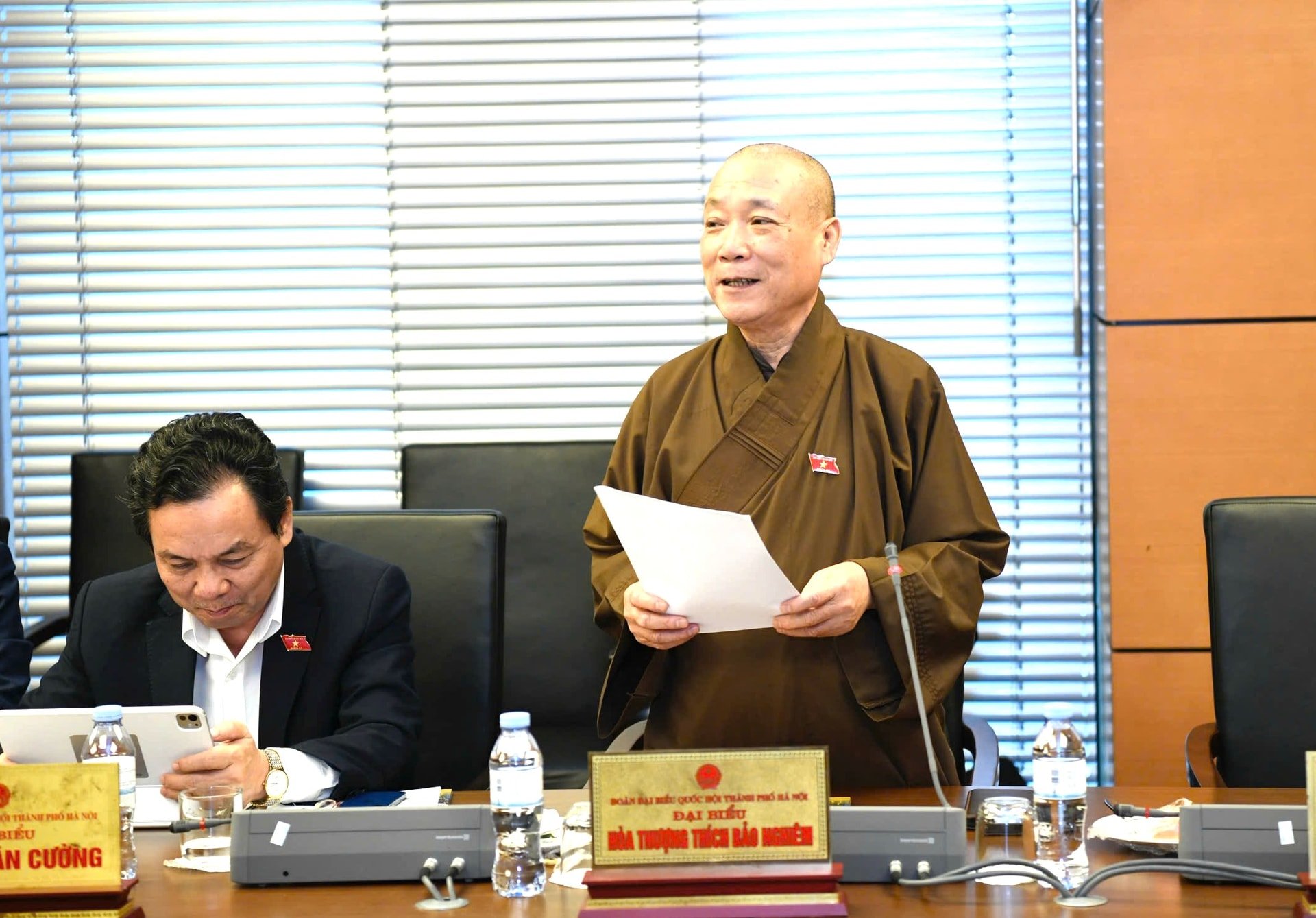
Delegate Venerable Thich Bao Nghiem (Hanoi Delegation) delivers a speech. Photo: Nhu Y
From an ethical and humanitarian perspective, delegates argued that it is necessary to strengthen regulations to prevent and handle misinformation, distortions, and incitement to hatred, in order to maintain the integrity of the media and protect social trust. At the same time, these regulations also protect the honor, dignity, and personal data of citizens, considering this as respect for human dignity – a fundamental ethical value.
Furthermore, the bill needs to clearly define the responsibilities of businesses operating social networks, especially cross-border platforms, in controlling and removing harmful content and coordinating with Vietnamese authorities. At the same time, it should promote education and awareness campaigns on online etiquette, helping people develop correct understanding and use the internet to spread positive messages and avoid disseminating negative information.
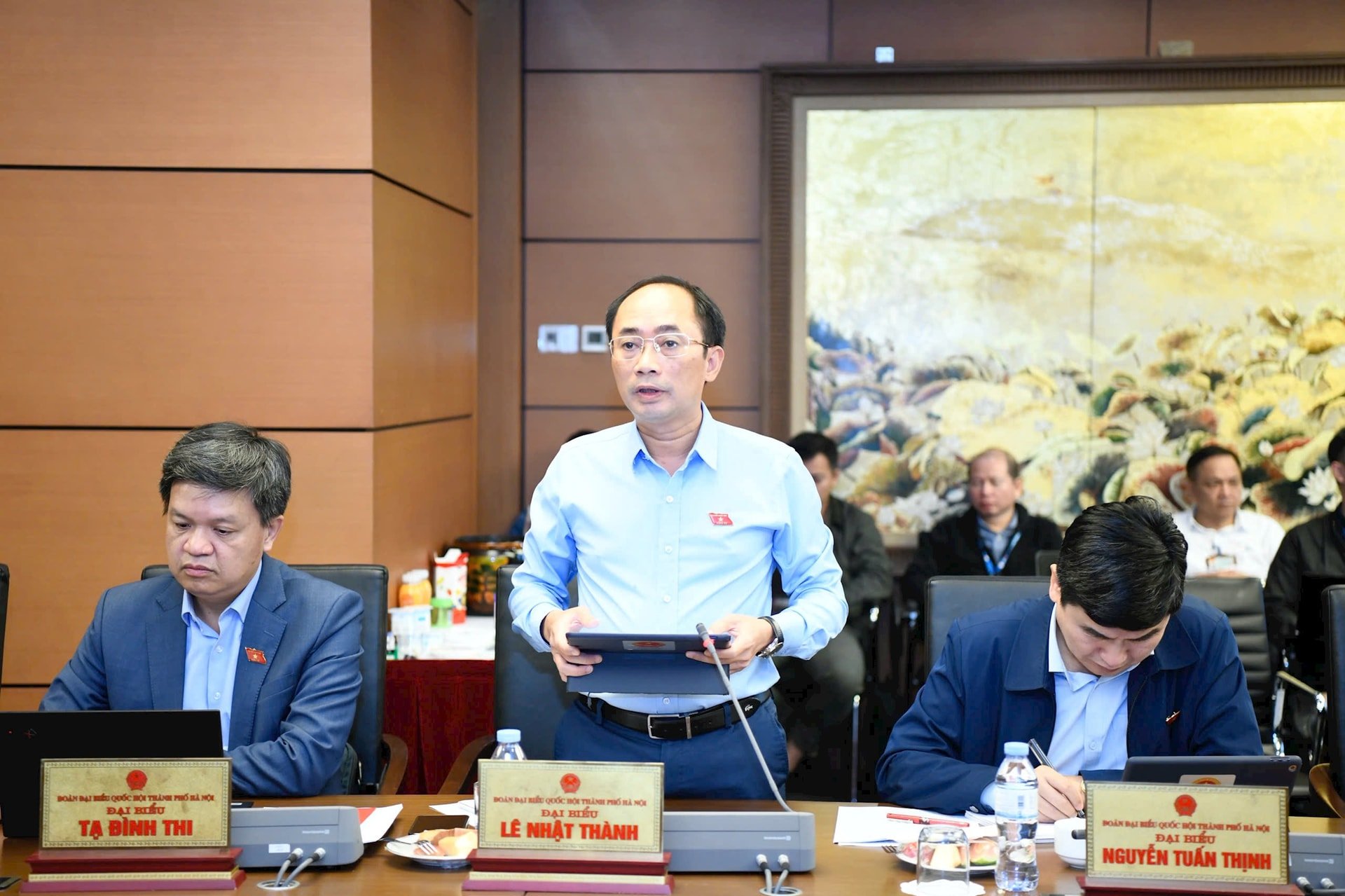
Delegate Le Nhat Thanh (Hanoi Delegation) delivers a speech. Photo: Nhu Y
Concerned about data protection, Representative Le Nhat Thanh (Hanoi Delegation) stated that at the recent ninth session, the National Assembly passed the Law on Personal Data Protection. However, in addition to personal data, there is also organizational data, system data, data during transmission, technology infrastructure, and data related to users' privacy rights...
"
"Given its diverse nature, when data is illegally seized, used, exploited, or destroyed, the consequences can be extremely dangerous, potentially directly affecting national security, social order and safety, and even causing disasters," the representative stated.
With the remarkable development of science and technology, coupled with the unique characteristics of data, data security has become an inseparable part of cybersecurity. Therefore, ensuring data security is an extremely important, indispensable, and continuous requirement throughout the national digital transformation process and the development of the digital ecosystem in Vietnam. Consequently, the delegates emphasized the need to include provisions on data security in the draft Law on Cybersecurity.
However, delegates suggested studying related draft laws also considered and passed by the National Assembly at this session, such as the Law on Protection of State Secrets (amended), the Law on Digital Transformation, the Law on Artificial Intelligence, the Law on High Technology, etc., in order to ensure that the revisions and improvements concretize the spirit of Resolution 57-NQ/TƯ of the Politburo on breakthroughs in the development of science, technology, innovation and national digital transformation, as well as related guiding viewpoints of the Party.
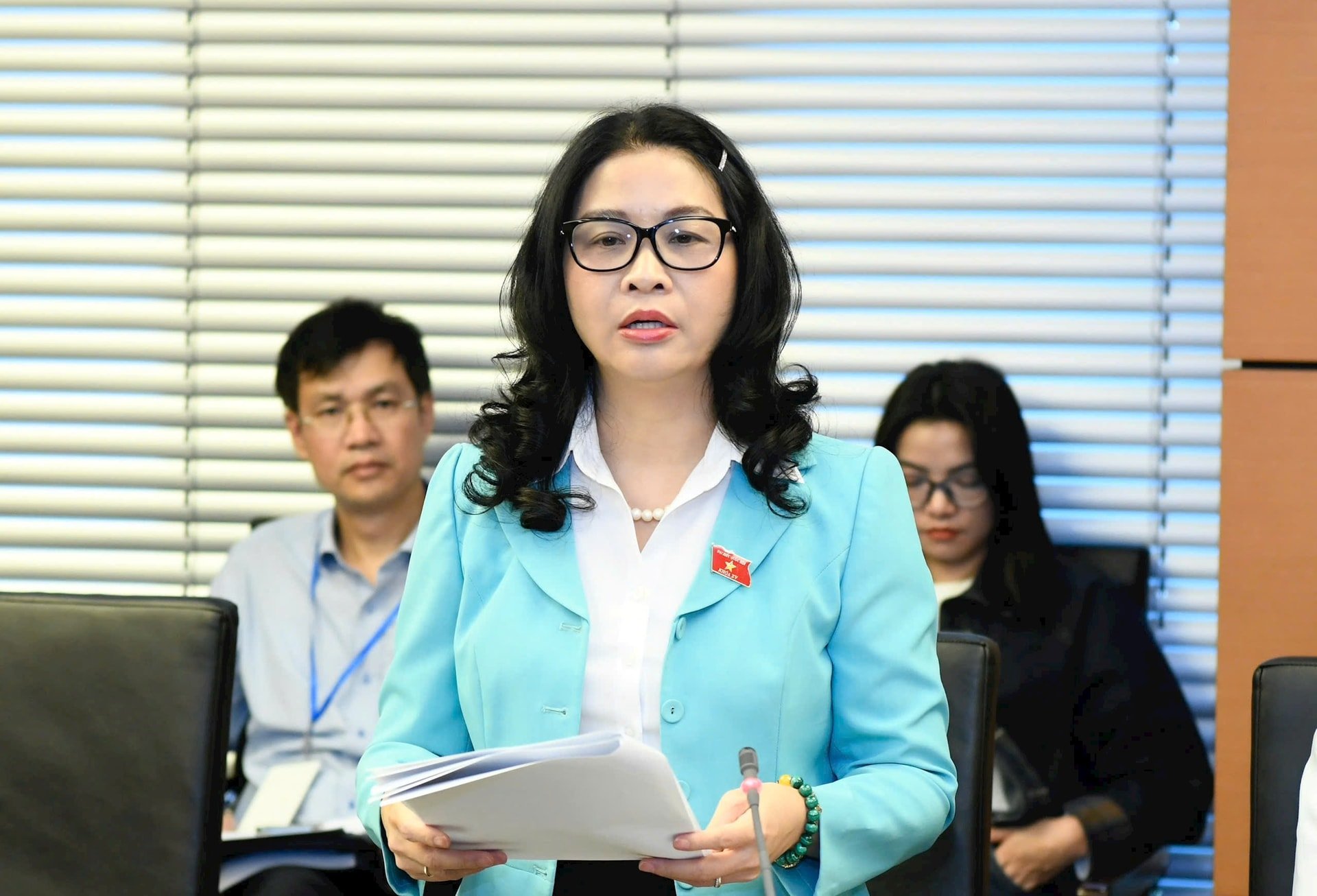
Delegate Nguyen Thi Lan (Hanoi Delegation) delivers a speech. Photo: Nhu Y
Regarding the section on Critical Information Systems for National Security (Article 14) in the draft Law on Cybersecurity, Representative Nguyen Thi Lan (Hanoi Delegation) proposed adding agriculture and food security to the current list – a sector undergoing rapid digital transformation.
Delegates analyzed that modern agriculture utilizes IoT, satellites, artificial intelligence, blockchain, etc., making crop data, plant varieties, and supply chains highly vulnerable to cyberattacks, potentially impacting food security and social stability. Regulating a national information system in the fields of agriculture, food security, agricultural supply chains, and natural resource data will help protect agricultural data infrastructure, ensure food security, and encourage businesses and universities to invest more heavily in technology and security. Experience from Israel and Japan shows that they have considered agricultural data as a strategic resource, protected similarly to energy or finance.
Source: https://hanoimoi.vn/dai-bieu-quoc-hoi-quan-tam-quy-dinh-ve-bao-dam-an-ninh-du-lieu-trong-cac-du-an-luat-721712.html


![[Photo] Prime Minister Pham Minh Chinh receives Lao Minister of Education and Sports Thongsalith Mangnormek](/_next/image?url=https%3A%2F%2Fvphoto.vietnam.vn%2Fthumb%2F1200x675%2Fvietnam%2Fresource%2FIMAGE%2F2025%2F12%2F16%2F1765876834721_dsc-7519-jpg.webp&w=3840&q=75)
![[Photo] Prime Minister Pham Minh Chinh receives the Governor of Tochigi Province (Japan)](/_next/image?url=https%3A%2F%2Fvphoto.vietnam.vn%2Fthumb%2F1200x675%2Fvietnam%2Fresource%2FIMAGE%2F2025%2F12%2F16%2F1765892133176_dsc-8082-6425-jpg.webp&w=3840&q=75)
![[Live] 2025 Community Action Awards Gala](/_next/image?url=https%3A%2F%2Fvphoto.vietnam.vn%2Fthumb%2F1200x675%2Fvietnam%2Fresource%2FIMAGE%2F2025%2F12%2F16%2F1765899631650_ndo_tr_z7334013144784-9f9fe10a6d63584c85aff40f2957c250-jpg.webp&w=3840&q=75)
![[Image] Leaked images ahead of the 2025 Community Action Awards gala.](/_next/image?url=https%3A%2F%2Fvphoto.vietnam.vn%2Fthumb%2F1200x675%2Fvietnam%2Fresource%2FIMAGE%2F2025%2F12%2F16%2F1765882828720_ndo_br_thiet-ke-chua-co-ten-45-png.webp&w=3840&q=75)






















































![[Live] Closing Ceremony and Award Presentation for the "Impressive Vietnam Tourism" Video/Clip Creation Contest 2025](https://vphoto.vietnam.vn/thumb/402x226/vietnam/resource/IMAGE/2025/12/17/1765974650260_z7273498850699-00d2fd6b0972cb39494cfa2559bf85ac-1765959338756946072104-627-0-1338-1138-crop-1765959347256801551121.jpeg)



















Comment (0)