

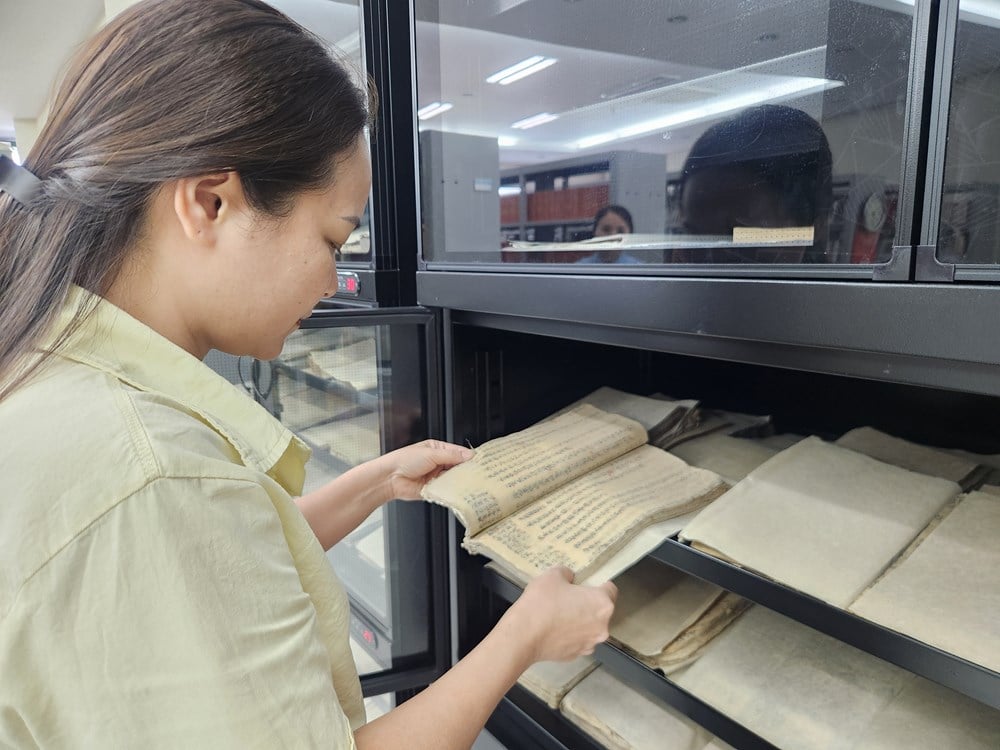
It is not just an effort to preserve physical objects, but a process of restoring historical memory, preserving local cultural identity, and gradually spreading the heritage values of Thanh Hoa beyond the local area, reaching the national and international academic communities.
Quietly in the heart of the library
With nearly 490,000 books, newspapers, and documents of all kinds in its possession, the Thanh Hoa Provincial Library is not only a center of knowledge for the locality but also a repository of a valuable part of the nation's history and culture. Among its collection, the rare and valuable ancient documents, including over 1,000 Han Nom manuscripts and, notably, 106 royal decrees and many documents dating back hundreds of years, serve as vivid evidence of historical progress, social institutions, beliefs, lineages, and unique indigenous values.
Many of these are royal decrees recognizing the merits of historical figures, village tutelary deities, and ancestors who contributed to the people and the nation; the Sino-Vietnamese documents include poetry, Buddhist scriptures, medical texts, genealogies, and legends—genres that reflect the depth of culture, consciousness, and spiritual life of ancient Vietnamese people, especially in the Thanh Hoa region within the flow of national history.
However, due to limited storage conditions over the years and the effects of time, many documents are in serious disrepair, with rotting paper, faded ink, torn surfaces, and attacks by termites and mold. Some ancient royal decrees are reduced to tattered pieces of paper that peel off at the slightest touch. These precious artifacts face the risk of permanent loss if not restored promptly and using the correct methods.
“We have often felt heartbroken when encountering royal decrees that were decaying, with faded and illegible text. Behind each of these documents lies the history, culture, and spirit of our ancestors, which cannot be lost due to delays,” shared Mr. Le Thien Duong, Director of the Thanh Hoa Provincial Library.
According to Mr. Duong, implementing the plan is not only a responsibility but also a mission to preserve cultural heritage in the new era. Recognizing the urgency of the issue, in 2023, the Thanh Hoa Provincial People's Committee officially issued the Plan for the preservation, restoration, translation, and editing of imperial decrees and ancient Han Nom documents for the period 2023-2025, with a total budget of over 7.5 billion VND from the cultural and information sector's budget.
This is a long-term, comprehensive plan that mobilizes the participation of experienced experts, cultural officials, and librarians. According to the plan, over the three years of implementation, Thanh Hoa aims to restore all 106 royal decrees and over 1,000 rare Han Nom documents. Each year will be a phase with specific content and targets to ensure progress and professional quality.
In 2023, the first year of the plan, the Provincial Library cleaned and disinfected 300 Sino-Vietnamese documents, restored five severely damaged documents, and translated the first 30 imperial decrees. Preservation was carried out according to professional procedures: cleaning, mold treatment, disinfection, and physical stabilization. In 2024, the plan continued with the cleaning and disinfection of 345 Sino-Vietnamese documents; the comprehensive restoration of 5 books; and the meticulous preservation and translation of 35 ancient imperial decrees.
Notably, the imperial decrees selected for restoration during this period mainly date back to the 18th and 19th centuries, bearing the imprint of the Nguyen Dynasty, a dynasty with a rich system of imperial decrees of high historical value. In 2025, the final phase will continue to clean the remaining 385 Sino-Vietnamese documents, restore five severely damaged documents, and translate 35 imperial decrees, completing the entire planned workload.
In parallel, the Provincial Library has been equipped with specialized preservation equipment such as high-capacity dehumidifiers, specialized cabinets for storing royal decrees, acid-free lining paper, electronic thermometers, etc., to create optimal conditions for document preservation. At the same time, leading experts have been invited to participate in the assessment and supervision of each stage to ensure the technical aspects and principles of heritage preservation are followed.
Ms. Vu Minh Hoa, a librarian directly involved in the cleaning and classification of Sino-Vietnamese documents, shared: "The work is very meticulous; some sessions require hours spent removing mold and cleaning each page. But when we see the restored imperial decrees, perfectly preserved, we are truly moved."
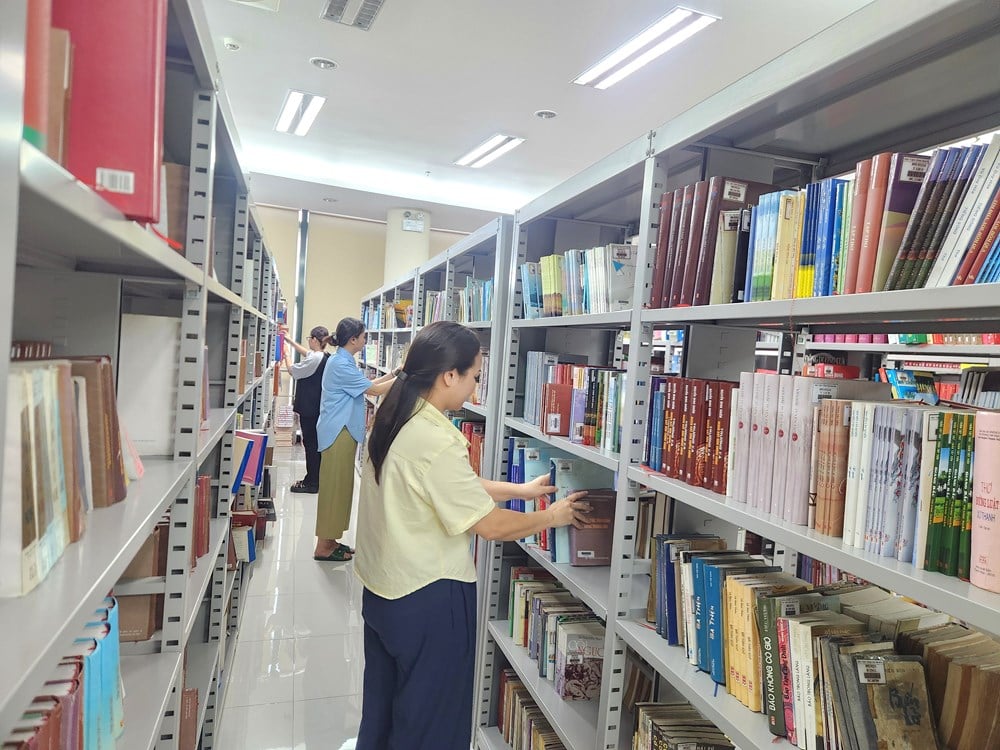
New vitality in contemporary life
Unlike reactive conservation plans, the work at Thanh Hoa Provincial Library is carried out not only to preserve artifacts, but also towards a larger goal: promoting the value of ancient documents in modern life.
After the restoration process is complete, the documents will be translated into the Vietnamese Quốc ngữ script and simultaneously digitized within the library's system for wider public access. Readers can access this resource not only in-person but also through digital platforms, opening up possibilities for students, researchers, and citizens both domestically and internationally.
The provincial library also collaborates with specialized units to inventory, classify, and create scientific dossiers for documents of exceptional value, aiming to propose their recognition as National Documentary Heritage, and subsequently to UNESCO. This is not only an official recognition of the value of the document collection but also an opportunity for Thanh Hoa to affirm its position on the map of Vietnamese cultural heritage.
According to assessments from members of the expert council, the results achieved in the first two years of the plan have confirmed the correct and effective direction. The successful restoration of hundreds of Sino-Vietnamese documents and royal decrees not only helped save valuable documents that were in dire straits, but also provided an opportunity to revive cultural values that were once thought to be forgotten.
Within each page, faded by time, still resonate the teachings, songs, stories, and moral lessons of our ancestors. Each imperial decree, each Han Nom text, is a part of the nation's memory, the cultural voice of our forefathers passed down to posterity. Preserving these documents is not only a professional task but also an act of moral significance: respecting the past, nurturing identity, and building the future. This is also the commitment of those working in Thanh Hoa's cultural sector: that amidst the vibrant flow of the times, traditional values will continue to be preserved, cherished, and disseminated.
With its rich heritage, Thanh Hoa is gradually transforming its treasure trove of ancient documents into a vibrant cultural resource, serving education , research, promotion, and integration. Without fanfare or ostentation, but with perseverance and determination, the journey of preserving this heritage is being quietly undertaken by those who are dedicated to their homeland and national heritage.
Source: https://baovanhoa.vn/van-hoa/danh-thuc-di-san-tien-nhan-trong-thu-vien-149115.html


![[Photo] Prime Minister Pham Minh Chinh attends the Conference summarizing and implementing tasks of the judicial sector.](/_next/image?url=https%3A%2F%2Fvphoto.vietnam.vn%2Fthumb%2F1200x675%2Fvietnam%2Fresource%2FIMAGE%2F2025%2F12%2F13%2F1765616082148_dsc-5565-jpg.webp&w=3840&q=75)







































































Comment (0)