

- The Chinese Full Moon Festival in July
- Chinese Festival - cultural bridge, tourist highlight of Ca Mau
- Unique Chinese longevity noodles
In fact, traditional Chinese cakes are a potential resource for tourism development. At traditional cake festivals or Southern culinary events, although they have only appeared recently, Chinese cake stalls always attract a large number of tourists to visit, enjoy and learn about the culture contained in each type of cake. Many film crews and domestic and foreign tourists also visit the houses of traditional cake makers to discover the stories, philosophies and thoughts of the Chinese community hidden in each cake.
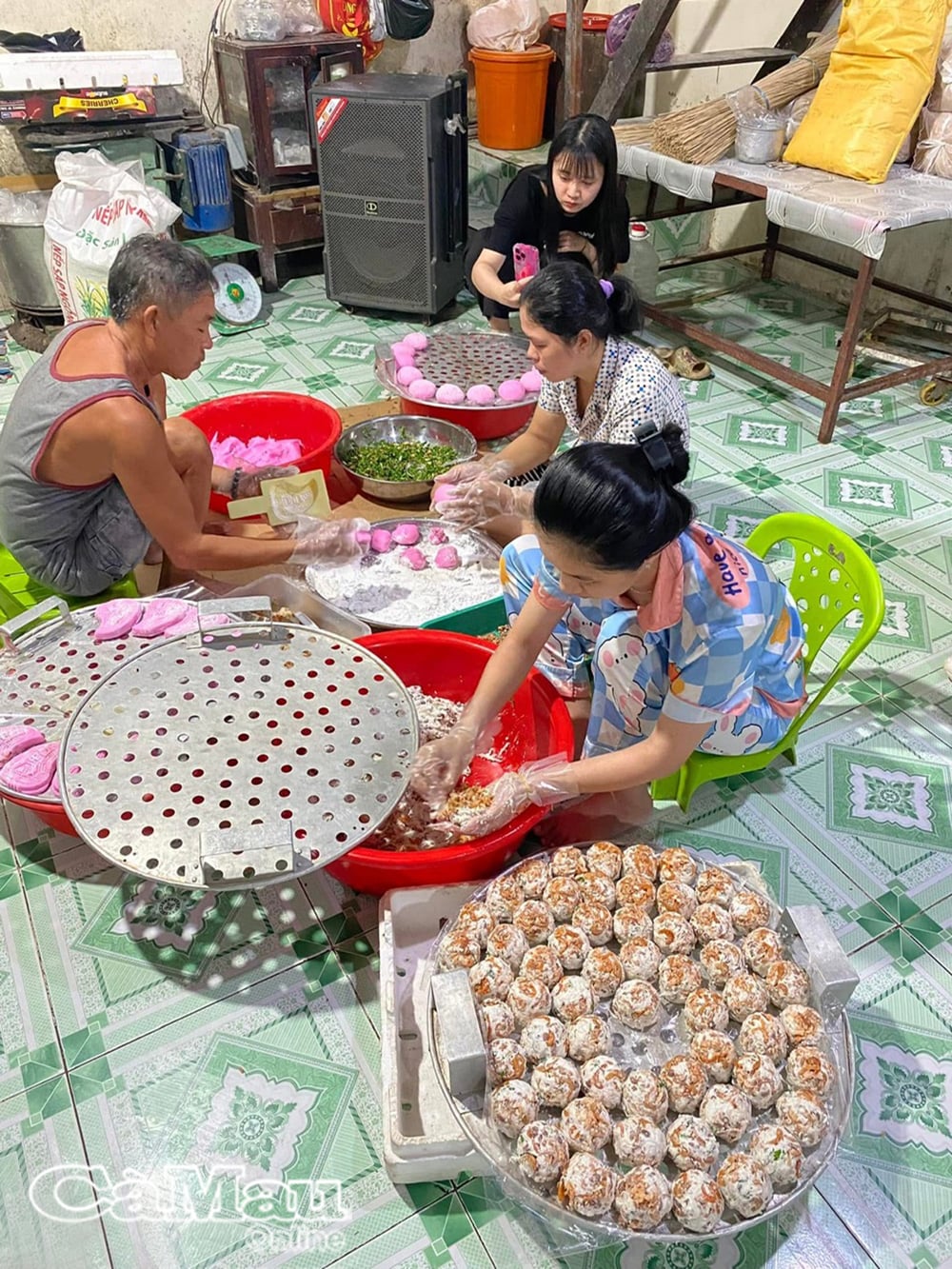 A family specializing in making traditional cakes of the Chinese community in Bac Lieu ward.
One of the cakes that is easily seen at Chinese festivals and cultural activities is the red cake (called "an coi" in Teochew). The cake is made from rice flour and glutinous rice flour, the filling includes fried glutinous rice with Chinese sausage, dried shrimp, pork, peanuts and coriander, symbolizing the desire for fertility. The shape of the cake is stylized from a red peach, the surface of the cake is printed with the word "longevity", meaning to wish the family prosperity and longevity. Therefore, the cake is also called "an to coi".
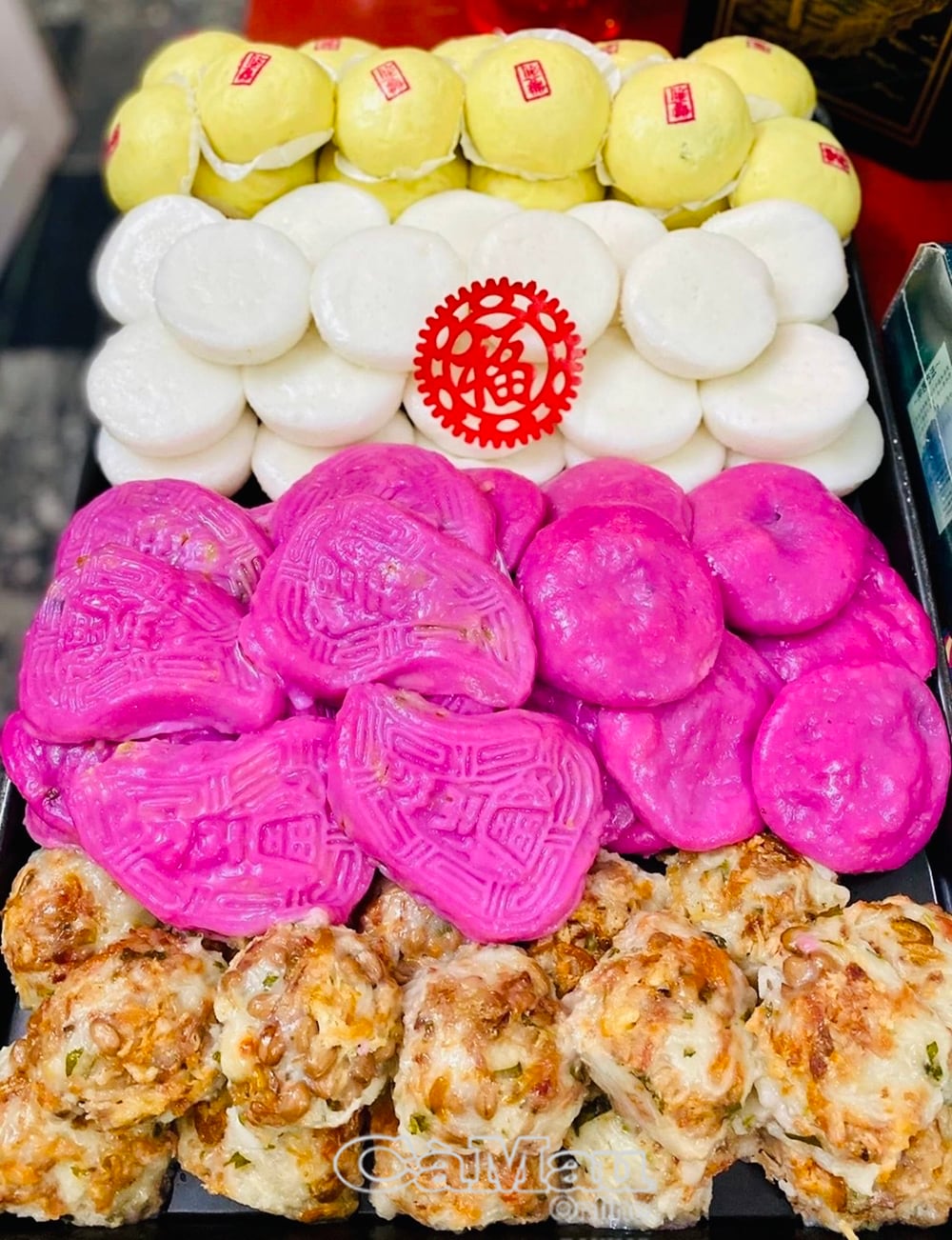 Traditional cakes of the Chinese community (including: radish cakes, an cui cakes, sponge cakes and golden buns).
In addition, the Chinese community also has a type of "rice cake" (called "Sít Sụi Cúi" in Teochew), a product that was almost lost and has only been mentioned again in recent years when the folk cake culture was revived. The cake is associated with the worship of the god of agriculture or the mother of cereals of the Teochew people. The main ingredients are rice flour or glutinous rice flour, shaped into small sticks with a savory filling including peanuts, meat, and dried shrimp. With the sweet version, the cake is simply made with green beans and sugar. When picked up, the shape of the cake is slightly bent down, symbolizing the heavy rice grains, an offering to the god of agriculture to pray for a bountiful harvest. The cake is usually only made on the 5th day of the 5th lunar month (Doan Ngo Festival), the 15th day of the 6th lunar month, and the 15th day of the 10th lunar month - occasions associated with the community's agricultural rituals.
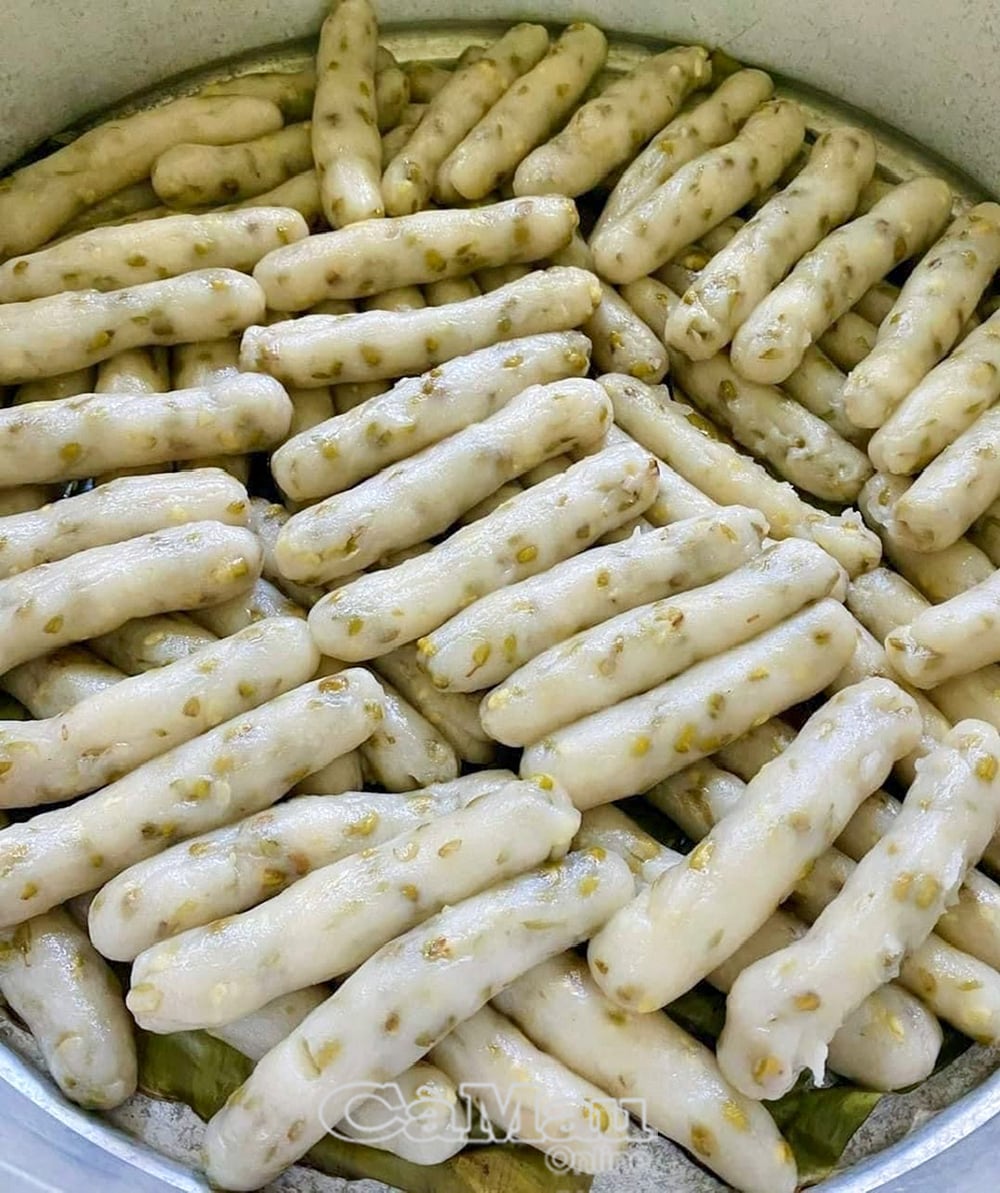 Rice cake represents the desire for a good harvest.
In addition, the Chinese community has many other traditional cakes such as: Banh bo printed with the word "tai" symbolizing wealth, fertility, growth and continuous development; Cu radish cake symbolizing prosperity; Banh to commemorate one's roots and show gratitude to one's grandparents; Banh troi nuoc symbolizing fulfillment...
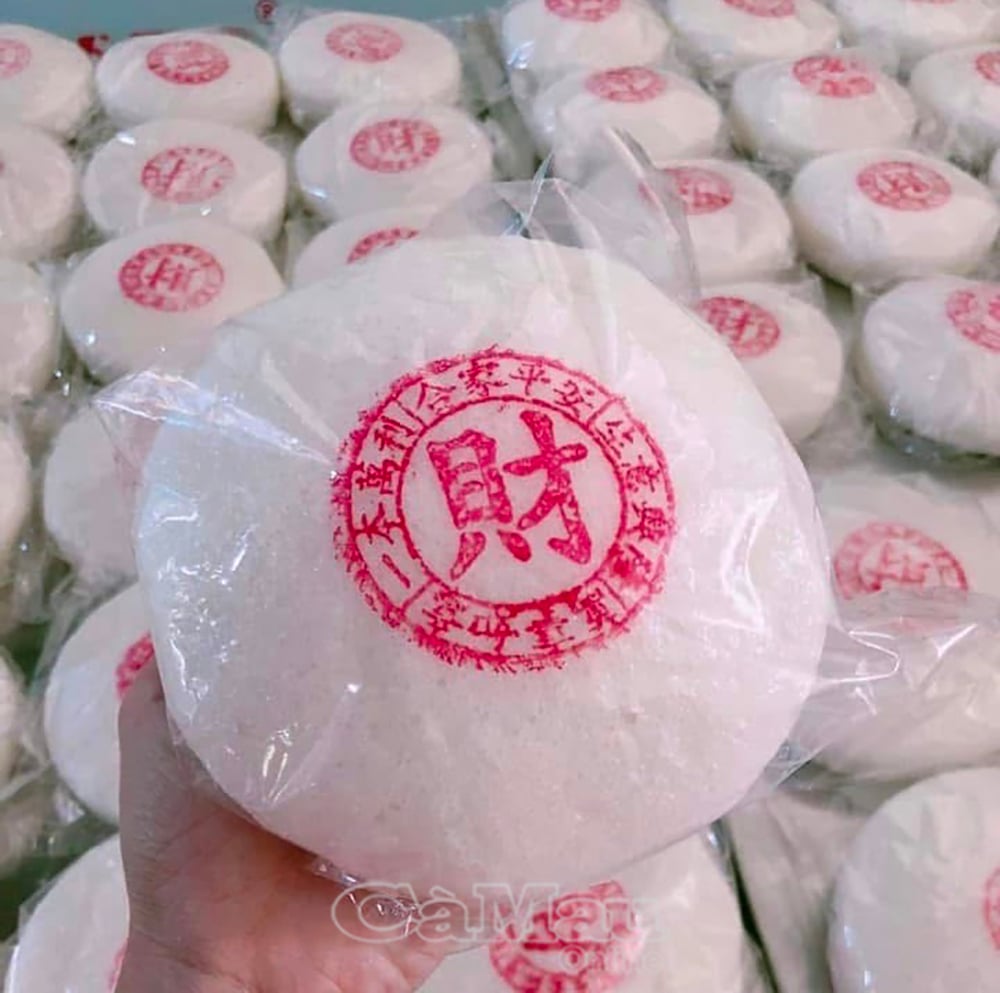 Banh bo printed with the word "tai" symbolizes continuous development.
Preserving and promoting the value of traditional cakes of the Chinese community must be considered one of the important solutions in preserving traditional cultural beauty. This will create a special attraction and create a unique identity for Ca Mau tourism when traditional culture is exploited and honored.
Lu Lam Hy
Source: https://baocamau.vn/danh-thuc-tiem-nang-du-lich-tu-banh-dan-gian-nguoi-hoa-a124429.html

























































Comment (0)