

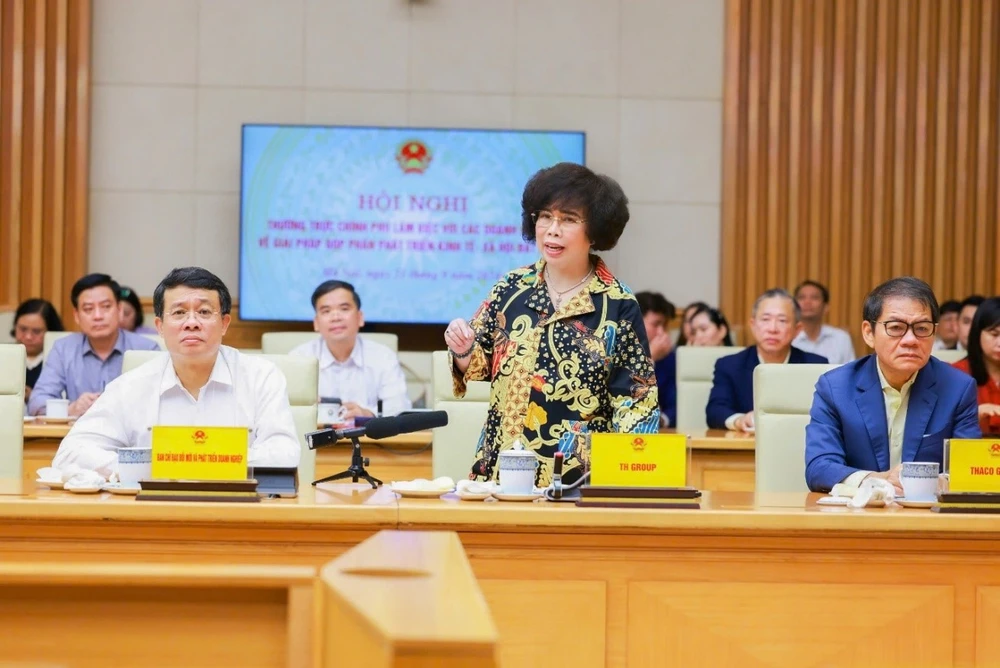
The proposal to create a separate law on school nutrition was put forward at a meeting of the Government Standing Committee with leading businesses on solutions contributing to the socio -economic development of the country on the morning of September 21st.
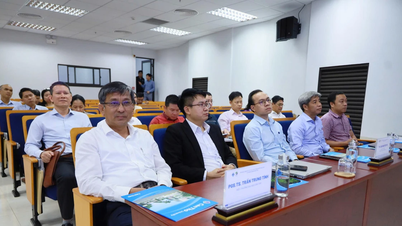
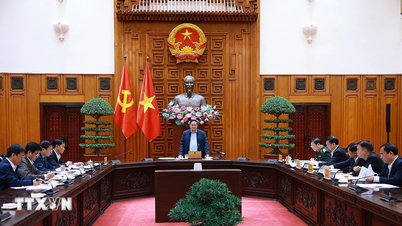
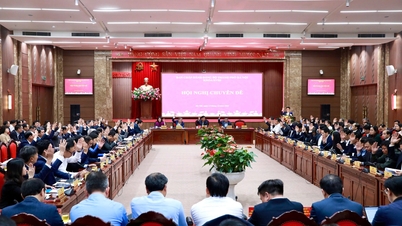
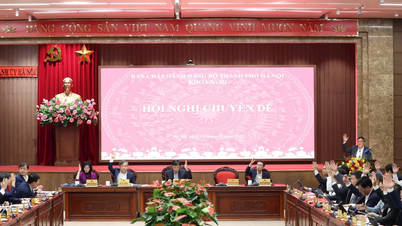
On the morning of September 21st, Prime Minister Pham Minh Chinh chaired a meeting of the Government Standing Committee with businesses to discuss solutions contributing to the socio-economic development of the country.
Also attending were Deputy Prime Ministers Tran Hong Ha, Le Thanh Long, and Ho Duc Phoc; leaders of ministries, central agencies; and leaders of businesses including Vin Group, Hoa Phat, Thaco, KN Holdings, Sun Group, T&T, Geleximco, Minh Phu, Masan, Sovico, TH Group, and Refrigeration and Electrical Engineering Corporation (REE).
A pioneering enterprise in tackling big and difficult tasks.
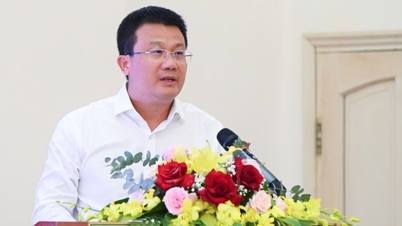
Speaking at the conference, Minister Nguyen Chi Dung urged the large business community to "proactively take the lead and pioneer in major, difficult, and new tasks." "Businesses need to solve national-level problems to create momentum for economic development and create room for the development of small and medium-sized enterprises in other sectors," he said.
Participating in the conference discussion, Labor Hero Thai Huong – Founder of TH Group, attracted attention with her proposal to develop a Law on School Nutrition, aimed at improving the health and stature of the younger generation in particular and Vietnamese people in general.
Improving the nutrition, health, and stature of the younger generation, and standardizing school nutrition programs are currently major challenges facing Vietnam. The proposal for this challenging undertaking by TH Group stems from the spirit and aspiration of a "patriotic business group," wishing to contribute to breakthroughs in socio-economic development, as encouraged by the Minister of Planning and Investment.
Labor Hero Thai Huong, Founder and Chairwoman of TH's Strategic Council, analyzed that in recent years, Vietnam has achieved many successes in improving the nutritional status of its people, but many nutritional problems still exist, especially among preschool and school-aged children. Currently, Vietnam is still among the countries and territories with a low average height, ranking 15th from the bottom among countries and territories worldwide.
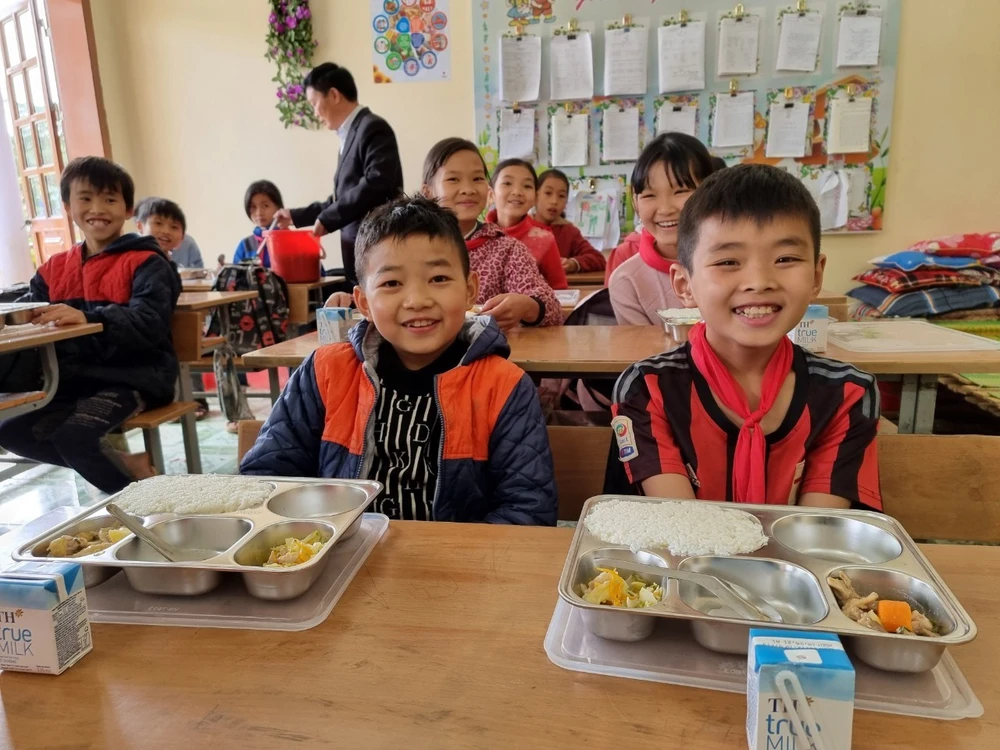
Fresh milk is a complete source of essential nutrients for the body. According to the World Health Organization (WHO), approximately 86% of a person's height and physical development occurs by the age of 12. Therefore, investing in physical and intellectual development during this crucial period is extremely important to avoid missing out on valuable developmental opportunities throughout life.
In many countries around the world, such as Japan, since 1954, there have been laws on school nutrition, regulating nutritional standards and food safety management for school meals. In Thailand, the government has issued a set of standards for school lunches. And in Indonesia, the newly elected president has pledged to implement a free school lunch program starting in 2025…
“TH Group proposes the creation of a separate law, the Law on School Nutrition. A separate law is necessary because the regulations will be very broad and comprehensive, affecting the health and stature of future generations. The experience of successful countries, including Japan, is a clear example,” – Labor Hero Thai Huong expressed.
There is already a practical basis for considering the establishment of school nutrition laws.
Given the current shortcomings in school nutrition and school meals, the proposal by Labor Hero Thai Huong and TH Group to develop a Law on School Nutrition is considered necessary, especially in the context of existing scientific and practical grounds from systematic experimental studies by agencies such as the National Institute of Nutrition, the Ministry of Education and Training, etc.
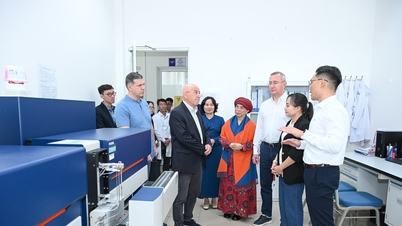
In 2013, the National Institute of Nutrition and French nutrition experts, in collaboration with TH, developed a model combining research and product testing, implemented in 15 kindergartens and primary schools with 3,600 children in Nghia Dan district, Nghe An province.
This study was deemed rigorous, scientific, and included transparent control groups, assessing dietary intake and micronutrient deficiencies through blood tests for vitamin A, zinc, and Hb before and after milk consumption.
The TH true MILK pasteurized fresh milk used in the study is the first product certified by the Ministry of Health for its effectiveness in improving the nutritional status and micronutrient levels of children. This serves as a practical basis for issuing the School Milk Standard in the National School Milk Program, as per Decision No. 1340/QD-TTg of the Prime Minister, contributing to minimizing the supply of milk of unknown origin and not meeting food safety and hygiene standards to schools.
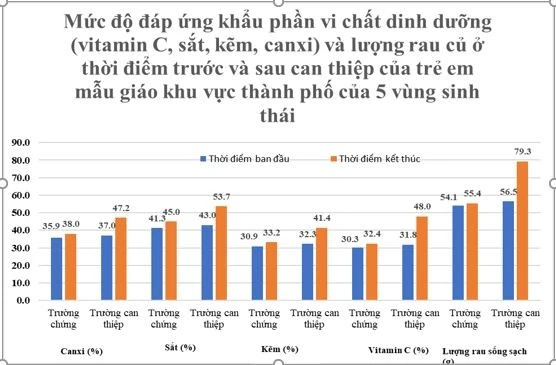
In 2019, the Ministry of Education and Training, the Ministry of Health, and independent experts consulted the practical experiences of developed countries (such as Japan) to implement the "Model of school meals ensuring balanced nutrition combined with enhanced physical activity for children, students, and university students."
The pilot model was implemented during the 2020-2021 school year in 10 schools across 10 provinces and cities, representing 5 major ecological regions nationwide, including: the northern mountainous region, the Red River Delta, the central region, the Mekong Delta, and the Central Highlands.
In the Model, school meals are approached using entirely natural foods, based on the agricultural advantages of the region, and fresh, whole milk is scientifically incorporated into the meal composition.
The main intervention of the model is 400 diverse, balanced, and micronutrient-rich school meal menus, an afternoon snack including a glass of whole milk to improve calcium intake, combined with nutrition education and physical education.
Practical results from the pilot model indicate that, if schools are provided with the necessary and sufficient conditions, including improved infrastructure, human resources, professional training, and the integration of nutrition education and physical education, it is possible to improve children's nutritional status, reduce malnutrition and overweight/obesity, promote better physical development, cultivate healthy eating habits, and help prevent non-communicable diseases in adulthood.
The collaborative scientific research and community nutrition intervention program for the period 2023-2025 aims to strengthen communication and nutrition education for children and school-aged children.
Source: https://www.vietnamplus.vn/de-xuat-luat-dinh-duong-hoc-duong-doanh-nghiep-di-tien-phong-trong-viec-kho-post978192.vnp


![[Photo] Prime Minister Pham Minh Chinh attends the Conference summarizing and implementing tasks of the judicial sector.](/_next/image?url=https%3A%2F%2Fvphoto.vietnam.vn%2Fthumb%2F1200x675%2Fvietnam%2Fresource%2FIMAGE%2F2025%2F12%2F13%2F1765616082148_dsc-5565-jpg.webp&w=3840&q=75)







































































Comment (0)