

Vietnam's 4th largest seafood export market
Vietnam - EU Trade Magazine, 3rd quarter of 2025, citing statistics from the Vietnam Customs Department, reported that Vietnam's seafood exports to the EU market in the third quarter of 2025 reached 71,070 tons, worth 327.78 million USD, up 11% in volume and 18% in value compared to the third quarter of 2024. In general, in the first 9 months of 2025, seafood exports to this region reached 194,100 tons with a value of 867.22 million USD, up 4.6% in volume and 11.2% in value compared to the same period in 2024, accounting for 10.73% in volume and 10.62% in value of Vietnam's total seafood exports. The EU is Vietnam's 4th largest seafood export market (by value) after China, the United States, and Japan.
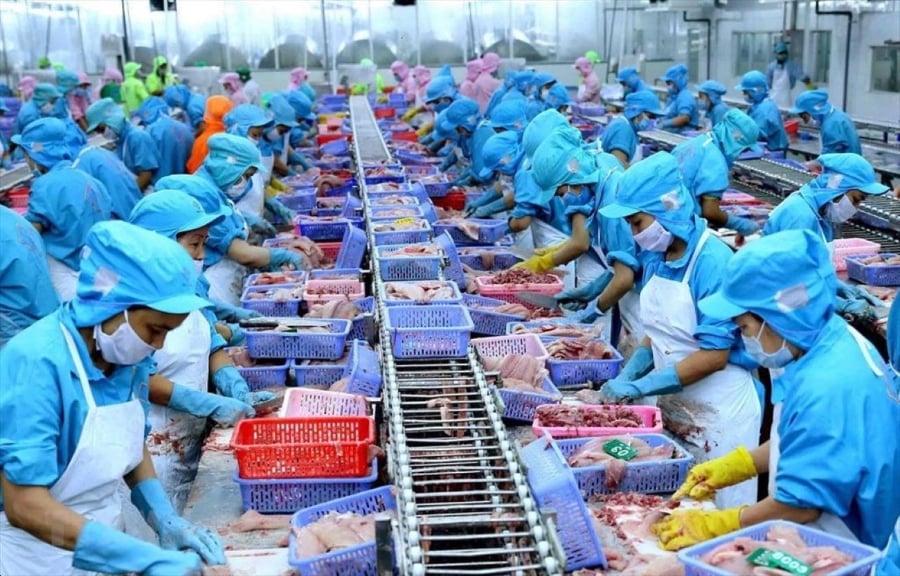
In the third quarter of 2025 and the first 9 months of 2025, the Netherlands, Germany, Belgium, Italy, and Spain are Vietnam's major seafood export markets in the EU. Of which, exports to Belgium, Italy, and Spain increased in both volume and value compared to the same period in 2024, with exports to Belgium increasing the most in the third quarter of 2025, up 17.3% in volume and 15.7% in value compared to the third quarter of 2024; in the first 9 months of 2025, up 22.1% in volume and 20.6% in value compared to the same period in 2024. Next, seafood exports to markets reached less than 20 million USD, of which exports to Lithuania, France, Sweden, Ireland, Hungary, and Estonia all grew compared to the same period in 2024. The growth in other markets was uneven.
In the structure of Vietnam's seafood exports to the EU in the third quarter of 2025 and the first 9 months of 2025, shrimp of all kinds is the largest export item and achieved a fairly high growth rate. Specifically, in the third quarter of 2025, shrimp exports to the EU increased by 20.6% in volume and 25.6% in value compared to the third quarter of 2024. In the first 9 months of 2025, this item increased by 33.1% in volume and 24.1% in value compared to the first 9 months of 2024. After shrimp, frozen fish and fish cake exports also achieved growth in the third quarter of 2025 and the first 9 months of 2025. On the contrary, exports of tuna, tra fish, basa fish, octopus, dried fish, etc. decreased.
Vietnam's seafood market share in the EU increased in both quantity and value.
The EU is one of the world's leading seafood consumption markets, with an average per capita consumption of about 24.5 kg/year. EU consumers tend to prioritize deeply processed products with high added value and convenience - a product group in which Vietnamese enterprises have an advantage and are encouraged to develop by this market. According to calculations from the European Statistical Office (Eurostat), EU seafood imports from non-bloc markets in the first 8 months of 2025 reached 3.6 million tons, worth 19.76 billion EUR (equivalent to 22.84 billion USD), up 8.9% in volume and 7% in value compared to the same period last year. Major seafood suppliers to the EU are Norway, Ecuador, Morocco, China, the UK, Iceland, India, Vietnam, and Turkey. In particular, the EU increased seafood imports from many markets, the EU also increased seafood imports from Vietnam with an increase of 14.3% in volume and 15.5% in value compared to the same period in 2024.
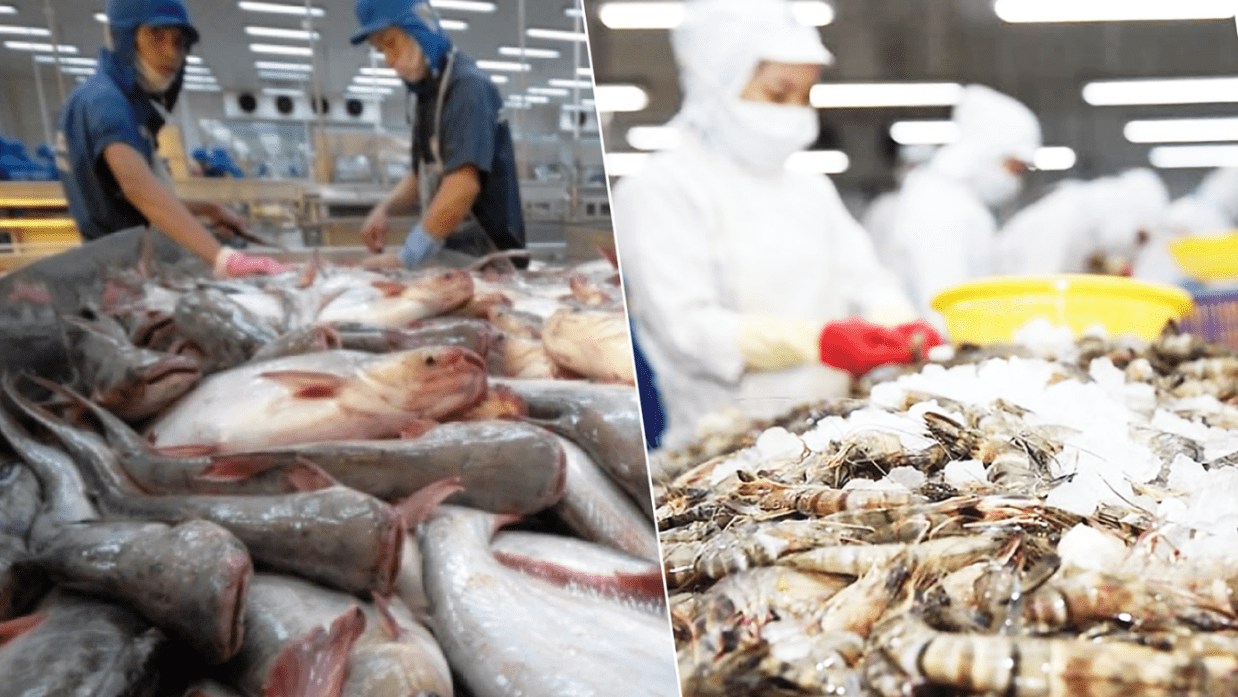
Vietnam's seafood market share in the EU outside the bloc increased from 3.73% in volume and 2.91% in value in the first 8 months of 2024 to 3.91% in volume and 3.14% in value in the first 8 months of 2025. Thus, in the first 8 months of 2025, the demand for seafood consumption in the EU is still increasing, creating opportunities for many supply partners, including Vietnam. With incentives from EVFTA, Vietnamese seafood exporting enterprises have more advantages and opportunities to compete in exporting to the EU market.
With the results achieved in the past time, it is estimated that in 2025, Vietnam's seafood exports to the EU will reach 257.2 thousand tons, worth about 1.18 billion USD, an increase of 2.6% in volume and 13.6% in value compared to 2024. In 2026, export turnover is forecast to continue to maintain over 1 billion USD.
It is forecasted that in the coming time, shrimp will still be Vietnam's main seafood product in the EU. However, the level of competition is expected to increase as competitors continue to improve quality and optimize prices to increase competitiveness. Therefore, Vietnamese shrimp exporters need to create their own advantages, make the most of existing advantages, and proactively overcome technical barriers and increasingly stringent requirements on sustainability. For tuna, ensuring stable supply combined with tariff incentives from EVFTA will help the product maintain its competitive advantage.
If Vietnam can remove the IUU “yellow card” and fully meet the EU’s high standards on food safety, traceability and sustainable exploitation, tuna exports to this market will have room for stronger growth.
At the same time, the demand for tra and basa fish in the EU continues to maintain a positive trend. Vietnamese tra fish is considered a source of white meat fish with affordable prices, suitable for the trend of economical consumption in the context of economic and inflation fluctuations in the EU. Therefore, businesses need to promote communication, while ensuring product quality and strictly complying with EU regulations as well as international quality management standards.
Experts recommend that, in the context of EU consumers increasingly paying attention to sustainability, traceability and carbon emission reduction, Vietnam's strong shift to high-tech farming, achieving ASC, BAP or GlobalGAP certification is a big "plus" to maintain market share and the image of a responsible supplying country. Businesses need to shift from competing on price to competing on quality, transparency and sustainability, ensuring strict technical requirements from the EU. Importers are increasingly interested in transparency and clear traceability; certifications such as ASC, organic, carbon-smart will not only be an advantage but will gradually become a mandatory condition to access the retail system in this market.
Source: https://moit.gov.vn/tin-tuc/thi-truong-nuoc-ngoai/evfta-giup-mo-rong-thi-truong-va-nang-cao-suc-canh-tranh-cho-thuy-san-viet.html


![[Photo] Cat Ba - Green island paradise](/_next/image?url=https%3A%2F%2Fvphoto.vietnam.vn%2Fthumb%2F1200x675%2Fvietnam%2Fresource%2FIMAGE%2F2025%2F12%2F04%2F1764821844074_ndo_br_1-dcbthienduongxanh638-jpg.webp&w=3840&q=75)


































![[VIMC 40 days of lightning speed] Da Nang Port: Unity - Lightning speed - Breakthrough to the finish line](https://vphoto.vietnam.vn/thumb/402x226/vietnam/resource/IMAGE/2025/12/04/1764833540882_cdn_4-12-25.jpeg)






























Comment (0)