

The Cold Moon, the 12th and final full moon of 2025, will rise on the evening of December 4 and reach its highest point in the night sky.
Although peak brightness occurs on Thursday night (December 4), observers can start seeing the full moon as early as the night of December 3 and even the following evening (December 5).
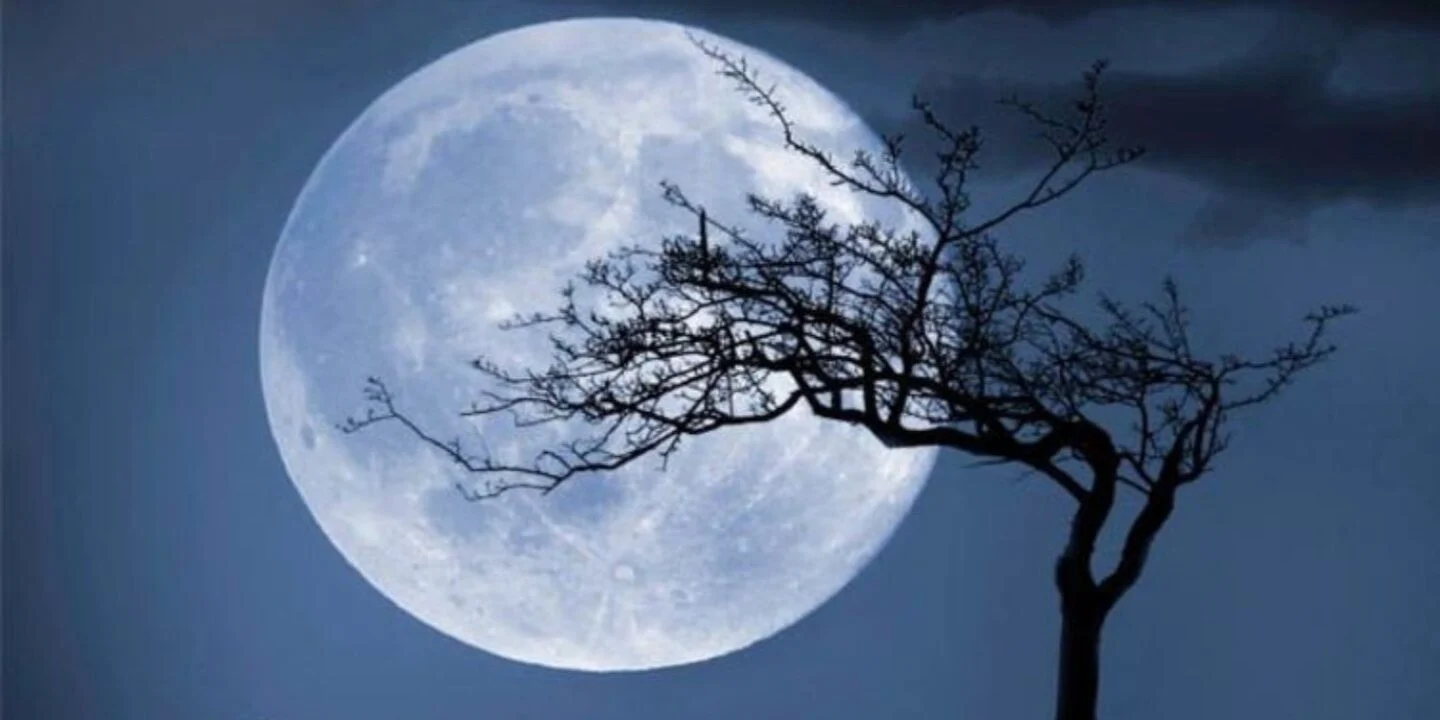
December's Cold Supermoon will begin to be full on the evening of December 3 and continue to shine brightly through the night of December 5.
December's Cold Supermoon will be the last supermoon of the year, an opportunity not to be missed for night sky lovers.
The second biggest supermoon of the year
This week, sky enthusiasts will witness one of the most impressive sights of the year: the Cold Supermoon, the second largest full moon of 2025, rising from the east at sunset and reaching a position higher than any other full moon of the year.
The moon will reach its full state at 6:14 p.m. EST on December 4, or 6:14 a.m. on December 5 (Vietnam time). However, the most attractive moment of the full moon is when it just appears above the horizon – the moment when the moon appears larger and more impressive than when it is high in the sky.
Four consecutive supermoons
This is the third supermoon in a series of four consecutive supermoons and is second only to November's "Beaver Moon" in size.
A Supermoon is defined as a full moon that coincides with the Moon's closest approach to Earth in its elliptical orbit – known as perigee. At this point, the Moon can appear about 10% larger than average.
Although it reaches its fullest extent at sunset on December 4, the Cold Moon will continue to shine brightly for two nights in a row. Particularly on the evening of December 5, when the Moon rises about an hour after sunset, the early darkening skies will create ideal viewing conditions for those looking to test out new telescopes or binoculars this holiday season.
Why is the Cold Moon always at the highest position?
The Cold Moon of December always rises higher than all other full moons. This is because of the Earth's movement around the Sun, as the winter solstice in the Northern Hemisphere (December 21) approaches, the Sun will be at its lowest point in the sky during the day. Conversely, the Full Moon, which by definition is always opposite the Sun, will rise highest at night.
This makes the Cold Moon not only bright and large, but also appears almost directly on the Moon, allowing observers to see the Moon's surface and geological structures much more clearly than other Moon phases.
Traditional name of Cold Moon
According to the Old Farmer's Almanac, many Native American tribes gave different names to the December full moon, reflecting their natural environment and life, such as "Antlers' Moon," "Exploding Tree Moon," or "Long Night Moon."
The name “Long Night Moon” also appears in Old English and Anglo-Saxon, referring to the time of the moon close to the winter solstice, the longest night of the year.
The next full moon will be a Wolf Moon on January 3, 2026 – also the fourth and final supermoon in a series of four supermoons.
Vietnamnet.vn
Source: https://vietnamnet.vn/viet-nam-don-sieu-trang-lanh-hien-tuong-thien-van-man-nhan-khep-lai-nam-2025-2469346.html


![[Photo] Cat Ba - Green island paradise](/_next/image?url=https%3A%2F%2Fvphoto.vietnam.vn%2Fthumb%2F1200x675%2Fvietnam%2Fresource%2FIMAGE%2F2025%2F12%2F04%2F1764821844074_ndo_br_1-dcbthienduongxanh638-jpg.webp&w=3840&q=75)































































































Comment (0)