

Revealing effective tools to reduce greenhouse gas emissions.
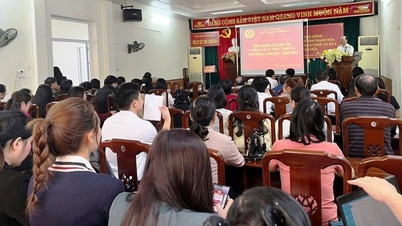
Speaking at the Net Zero Vietnam 2025 Forum: The Carbon Market in the New Era on the morning of July 18th, jointly organized by the Institute for Development Consulting (CODE) and TheLEADER online magazine, Mr. Nguyen Tuan Quang, Deputy Director of the Climate Change Department ( Ministry of Agriculture and Environment ), emphasized that the impacts of climate change are and will continue to be extremely severe if the world does not have solutions to respond.
At the COP26 conference, the Prime Minister committed that Vietnam aims to achieve Net Zero by 2050 with the support of the international community. Immediately afterwards, the Government issued a plan to fulfill this commitment with five main solutions to be implemented.
First, there's the energy transition, gradually shifting from fossil fuels to clean energy. This is an extremely important factor and requires significant effort.
However, the nature of renewable energy is unstable. Mr. Quang cited statistics from EVN showing that the stability of power plants in the South is 5 hours/day, while in the North it is 3 hours/day. The challenge for clean, renewable energy is the need for a storage system.
The second solution is to use resources economically and efficiently. Currently, the economy is being oriented towards a green economy and a circular economy.
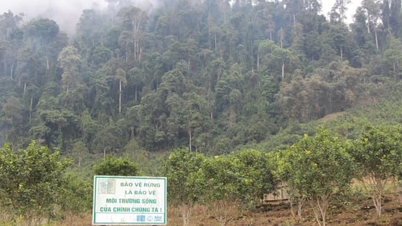
Thirdly, developing forests and ecosystems is crucial. These ecosystems help absorb carbon. Coastal forests, in particular, can absorb 3.4 times more carbon than terrestrial forests. Fourthly, carbon capture and storage are costly solutions, but advancements in science and technology will provide a way to address them.
Fifth is carbon pricing. A representative from the Ministry of Agriculture and Environment stated that many countries worldwide are currently implementing this measure. This solution has two main approaches: carbon taxation and carbon markets. According to Mr. Quang, carbon pricing controls up to 28% of greenhouse gas emissions.
Mr. Tuan Quang assessed this solution as very effective. For example, Europe reduced emissions by 30% when implementing it. Singapore implemented a carbon tax to reduce emissions. China and other countries are also researching and implementing it.
In Vietnam, on January 24th, the government approved a plan to develop a carbon market and set out a roadmap for pilot operation from now until 2028. The carbon market will officially operate and connect with the world from 2029. Prior to this, since the 2000s, Vietnam has also participated in the global carbon market through other independent mechanisms. Currently, ministries and agencies are working diligently to build the legal framework to establish a carbon market by the end of this year.
The Ministry of Finance has submitted a proposal to the Government for a carbon exchange. This exchange will focus on trading domestic carbon credits according to international standards and other independent mechanisms.
However, Mr. Quang also noted that carbon credits need to adhere to international standards and calculation methods. Carbon credit transactions need to be regulated by the State to ensure Vietnam's commitments and those of domestic industries.
He cited the example of the Vietnamese aviation industry registering to participate in the voluntary phase of CORSIA (Carbon Reduction and Offsetting Mechanism for International Flights), starting from January 1, 2026.
If domestic carbon credits are not used for offsetting, domestic airlines will have to purchase them from abroad. The estimated figure is around 2.3 million carbon credits. Similarly, other transport sectors, such as shipping companies, also need to purchase carbon credits.

Dr. Le Xuan Nghia speaking at the event (Photo: Organizing Committee).
New pressures on the aviation industry.
Commenting on this issue, Dr. Le Xuan Nghia stated that the already struggling Vietnamese aviation industry will face even greater pressure to comply with greenhouse gas emission reduction measures.
He suggested three solutions for aviation businesses in this situation. First, they must reduce energy consumption, saving electricity at airports, on the ground, and on aircraft. Second, they should find new energy sources, although this is very difficult to implement. Third, they should purchase forest carbon credits to offset the costs.
However, Mr. Le Xuan Nghia predicted that airlines would change ticket prices and consumers would be the ones bearing the carbon tax. According to estimates in European countries, airfares could increase by 3-8% when a carbon tax is implemented.
Experts say the third solution is the most feasible because Vietnam has a sufficient supply of forest carbon credits to compensate for the loss.
Dr. Tang The Cuong, Director of the Climate Change Department, Ministry of Agriculture and Environment, stated that Vietnam is considered by international experts and partners as one of the countries with great potential for reducing greenhouse gas emissions and generating carbon credits.
Vietnam currently has a relatively high forest cover rate (over 42%) as well as favorable conditions for forest development, protection, and enrichment, increasing forest carbon stocks. The exchange of carbon credits with the world has been carried out by businesses since the mid-2000s when implementing programs and projects under the Clean Development Mechanism (CDM).
Vietnam has become one of the top four countries with the most CDM projects, after China, Brazil, and India; ranking ninth out of 80 countries with CDM projects that have been awarded carbon credits, mainly focusing on renewable energy production and energy efficiency.
In the forestry sector, Vietnam exchanged 10.3 million tons of CO2 resulting from emission reductions from forests in the North Central region.
Source: https://dantri.com.vn/kinh-doanh/gia-ve-may-bay-co-the-tang-tu-nam-2026-vi-dieu-nay-20250718135431134.htm






















































































Comment (0)