

Billion-dollar deals are back.
The State Bank of Vietnam has been continuously adjusting its policy interest rates. From June 19th, the ceiling for deposit interest rates was set at only 4.75% per year, causing both deposit and lending interest rates to fall sharply. At many banks, the highest rates are now only 6.3% per year for long-term deposits and 3.4% per year for short-term deposits.
Falling deposit interest rates have made saving money less attractive. Investors are expected to seek alternative channels to achieve better returns. While gold and exchange rates continue to decline, stocks remain the most promising option.
Since the beginning of June, more money has flowed into the market, and the Ho Chi Minh City stock exchange has witnessed the return of billion-dollar trading sessions.

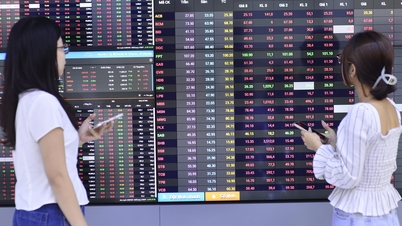
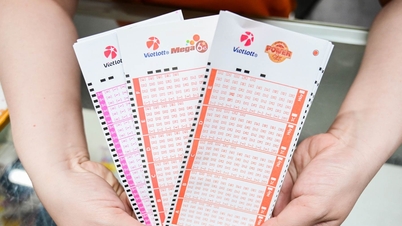
Despite sharply reduced interest rates and a return of multi-billion dollar transactions, investors remain hesitant to go all-in due to lingering concerns. (Illustrative image)
Specifically, on June 8, 2023, on the Ho Chi Minh City stock exchange alone, nearly 1.3 billion shares, equivalent to VND 23,545 billion (approximately USD 1 billion), were successfully traded, an increase of 324 million shares, equivalent to 33.2% in volume, and an increase of VND 5,552 billion, equivalent to 30.9% in value, compared to the previous trading session.
Subsequently, trading value on the Ho Chi Minh City stock exchange continuously declined, at one point reaching just over 13,000 billion VND, meaning it had decreased by almost half since its peak on June 8th. It wasn't until June 16th, 2023, that trading value approached the billion-dollar mark, reaching 22,185 billion VND, equivalent to a trading volume of 1.14 billion shares.
On average, from June 1st to June 22nd, the average trading volume per session on HOSE reached 900 million shares, equivalent to 16,940 billion VND.
Thus, compared to May, the trading volume per session increased by 283 million shares, equivalent to 45.9%; the trading value increased by VND 6,329 billion, equivalent to 59.6%.
Investors are still holding onto their wallets.
It can be seen that, after the billion-dollar trading session on June 8th, investors have restrained their enthusiasm despite further interest rate reductions.
According to Mr. Vo Xuan Thien, Securities Investment Consultant at SSI Securities Company, viewed cautiously, interest rates are trending downwards, and stocks reflect expectations, but the financial picture of businesses is not very bright.
The real estate sector is still struggling with bond debt, while manufacturing sectors such as retail, textiles, and seafood are negatively impacted by weak demand. The price trends of some commodities like cement and steel are also not supporting the industry's business results.
According to the P/E valuation formula, if the price (P) increases as the market recovers while corporate earnings (E) do not increase correspondingly, or even risk decreasing due to the increasing number of companies planning losses, then an increase in the P/E ratio implies that the market is becoming more expensive.
Petri Deryng, fund manager of Pyn Elite Fund, reiterated his view several times in reports sent to investors that the Vietnamese stock market would rebound in 2023 after the 2022 slump brought stock prices down to excessively low levels.
Since the market bottomed out in mid-November 2022, many stocks have increased in value multiple times, with some tripling or quadrupling in just a few months. The current market value of many stocks remains significantly lower than their previous peaks. Many investors who held stocks when the VN-index was around 1,500 points are still experiencing losses exceeding 50%.
"Currently, the rapid price increase from the bottom is creating a 'fear of falling branches' mentality, with some investors worried about short-term stock reversals when making new purchases, while stocks are likely to reverse immediately after selling at a loss to restructure their portfolios," Mr. Thien stated.
Furthermore, foreign investors expect that the negative news has passed and the stock market will turn positive, but that is not enough to confirm a favorable state for investment. Fundamental factors such as macroeconomic conditions and the financial capacity of businesses remain paramount and must be prioritized.
Vietnam's GDP growth in the first quarter reached only 3.3%, a low figure compared to the average of 6% in previous years. Exports decreased by 11.5% in the first five months of the year, but showed a more positive trend in May, declining by only 5.9% compared to the same period in 2022.
Weak export activity has led these companies to report lower profits for two consecutive quarters.
However, one positive macroeconomic indicator for Vietnam is that inflation remains at a moderate level and the government 's policies have had a positive impact on domestic demand.
Source





























![[Video] The craft of making Dong Ho folk paintings has been inscribed by UNESCO on the List of Crafts in Need of Urgent Safeguarding.](https://vphoto.vietnam.vn/thumb/402x226/vietnam/resource/IMAGE/2025/12/10/1765350246533_tranh-dong-ho-734-jpg.webp)




























































Comment (0)