

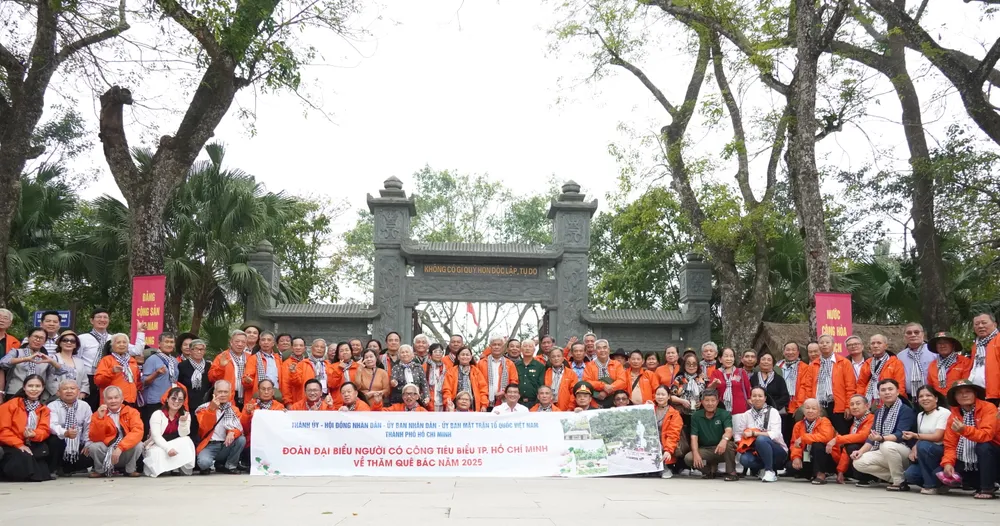
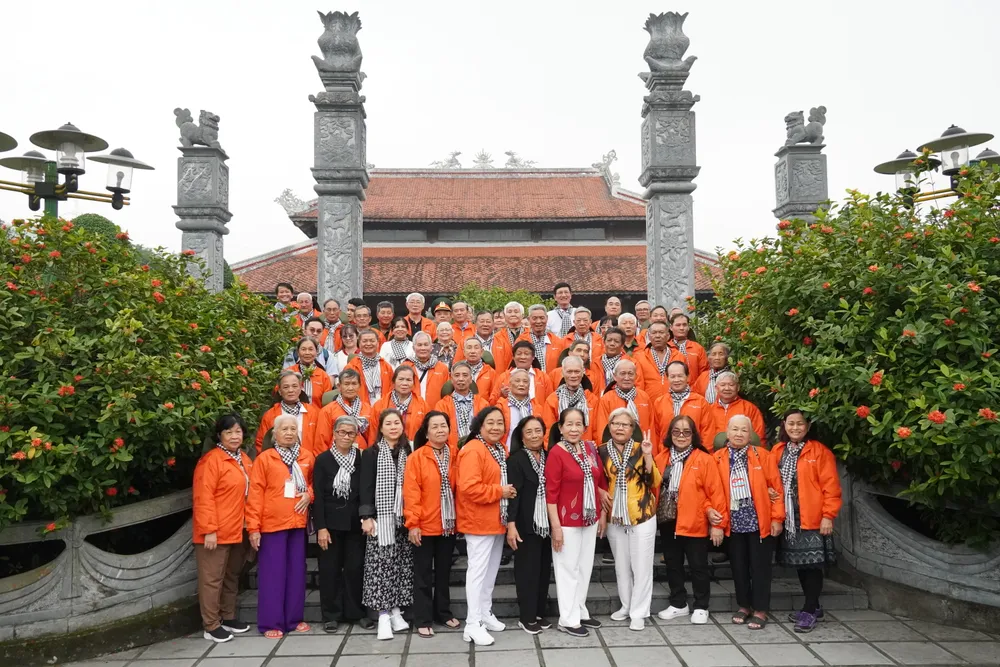
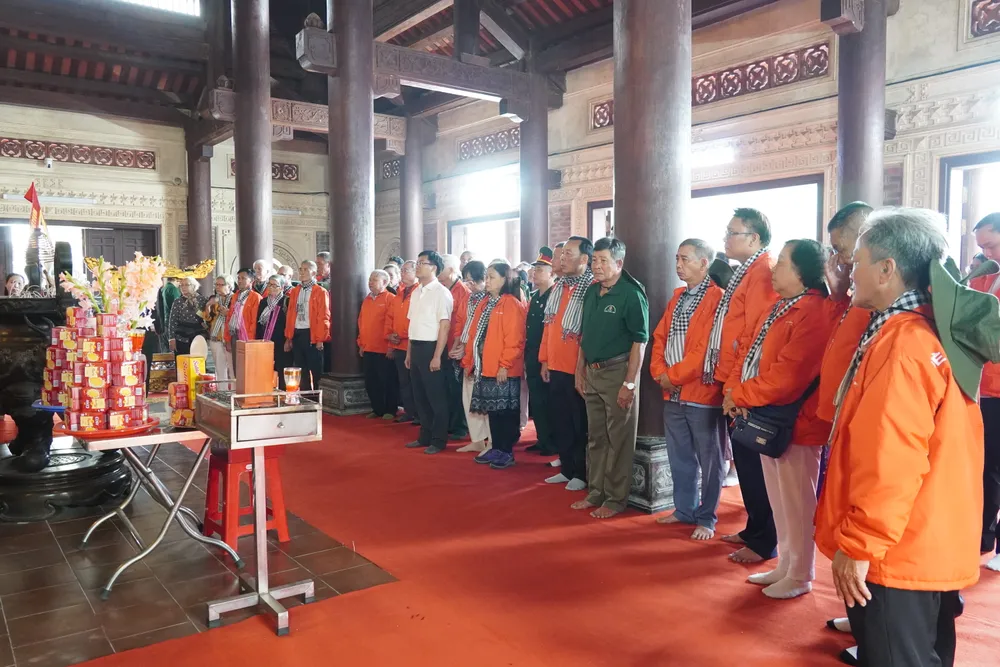
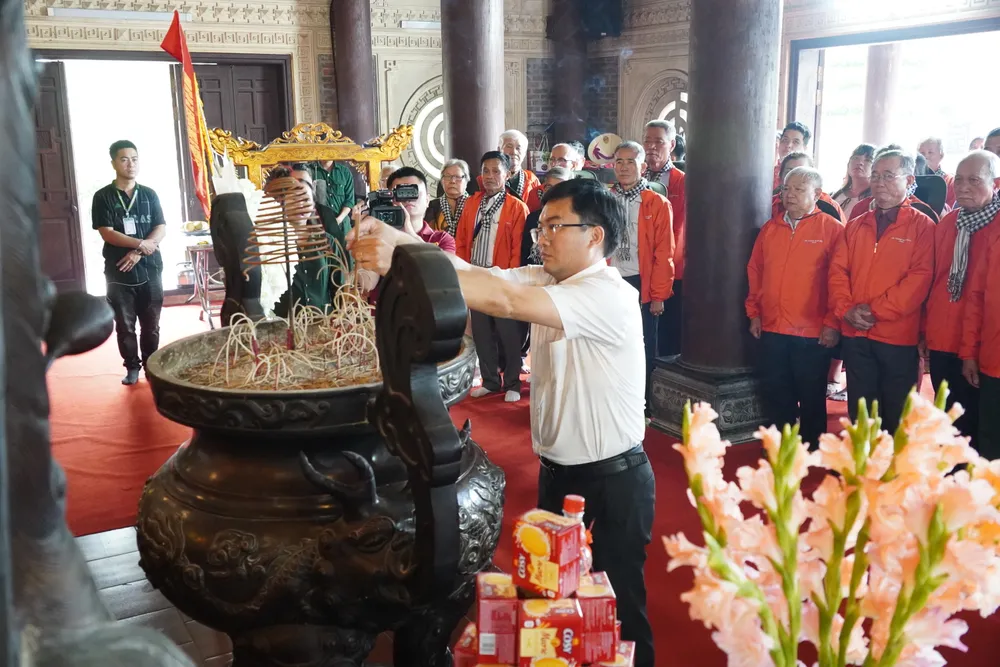
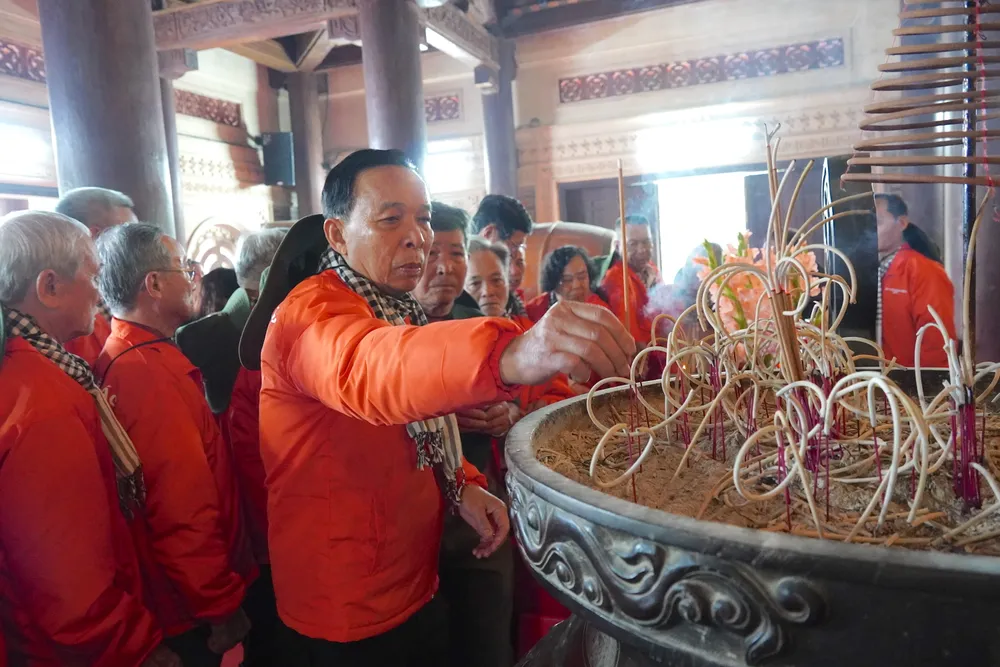
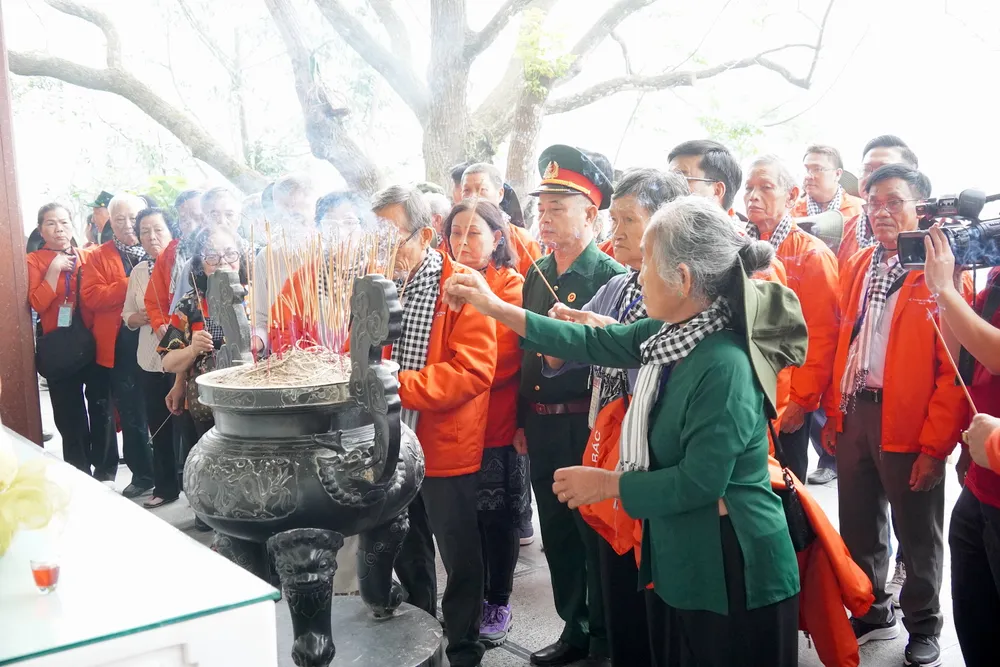
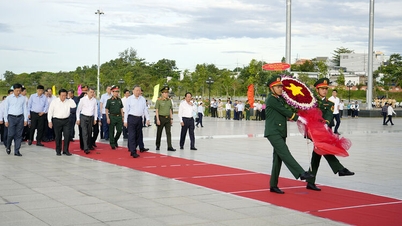
At the Kim Lien Special National Historical Site (Kim Lien commune, Nghe An province) , in the tranquil setting of the Nghe An countryside, the delegation solemnly laid flowers and incense, and observed a moment of silence to commemorate the immense contributions of the great President Ho Chi Minh .
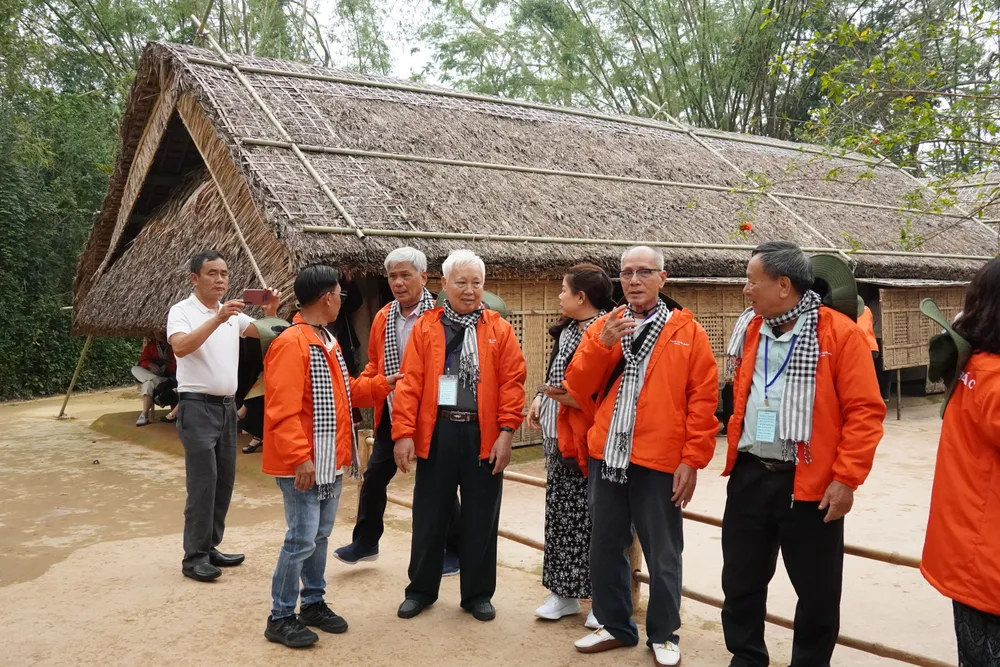
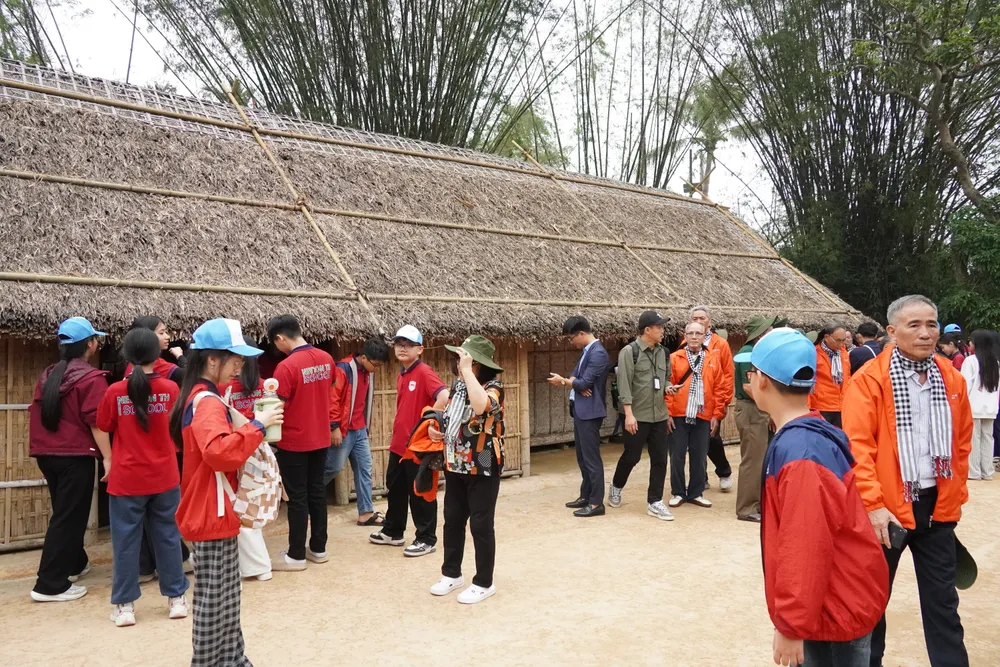
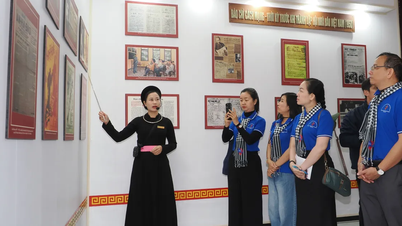
The delegation visited and listened to explanations about the Lang Sen historical site complex - the paternal hometown of President Ho Chi Minh; and the Hoang Tru historical site complex - the maternal hometown of President Ho Chi Minh - where he was born.
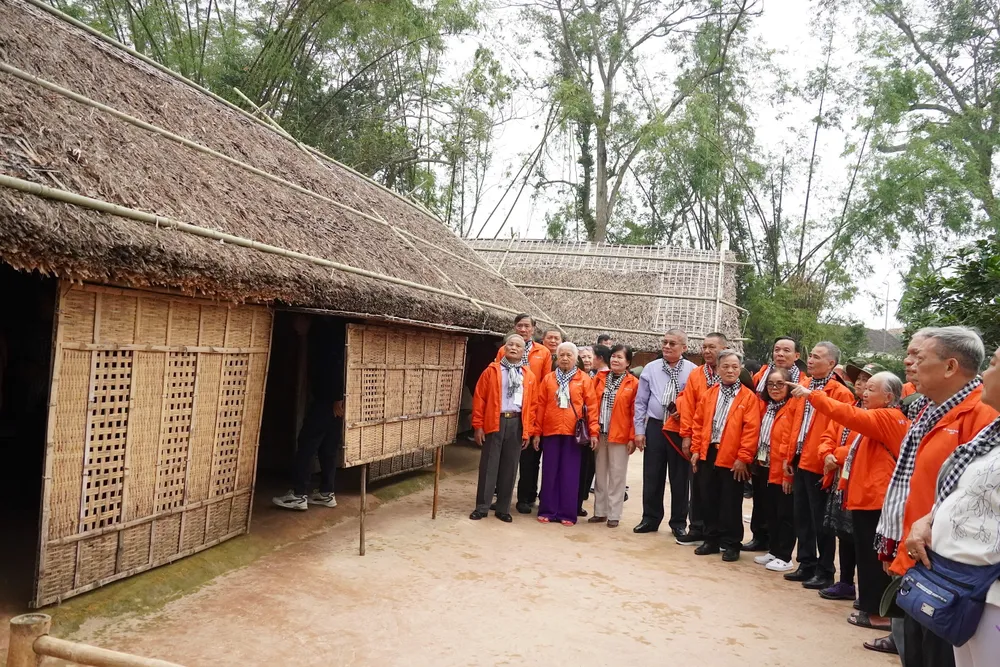
Visiting President Ho Chi Minh's birthplace for the first time, Ms. Nguyen Thi My Le (from Tang Nhon Phu ward) couldn't hide her emotion. Standing before the simple thatched house in Lang Sen village, she was speechless, tears welling up in her eyes. "Hearing stories about President Ho Chi Minh's childhood and the hardships he endured, I understand even more why he lived a simple life, dedicating himself to the people and the nation. This trip is not just a journey, but a great lesson in morality and the meaning of life for each of us," Ms. My Le shared.
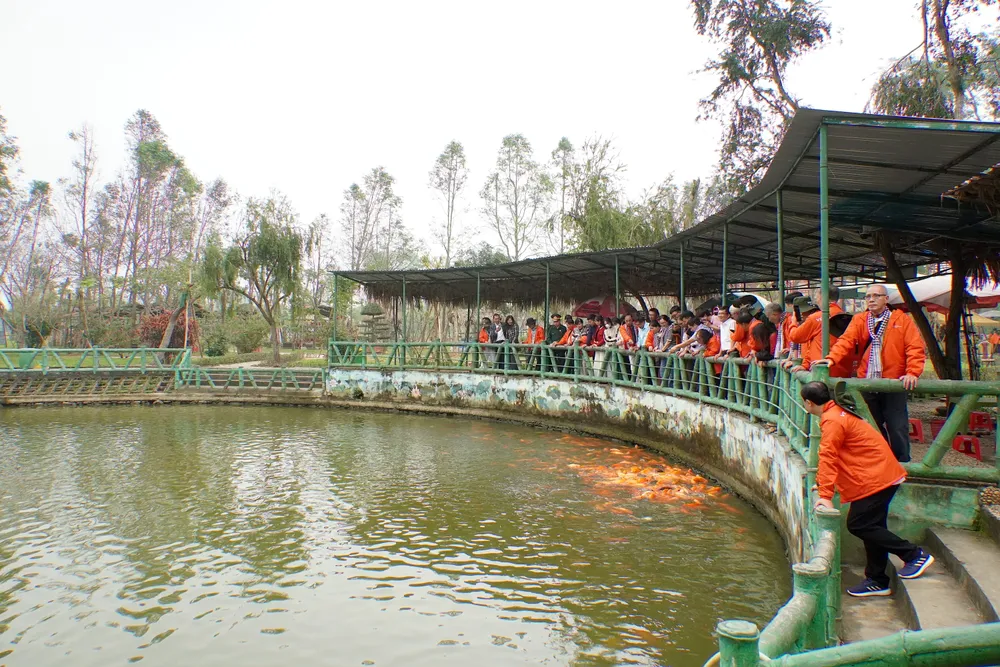
Sharing the same sentiment, Mr. Bui Tan Nghia (Phu Nhuan ward) said that although he had read, listened to, and learned about President Ho Chi Minh many times, only when he stood directly in the space of his hometown did his emotions truly come to fruition.
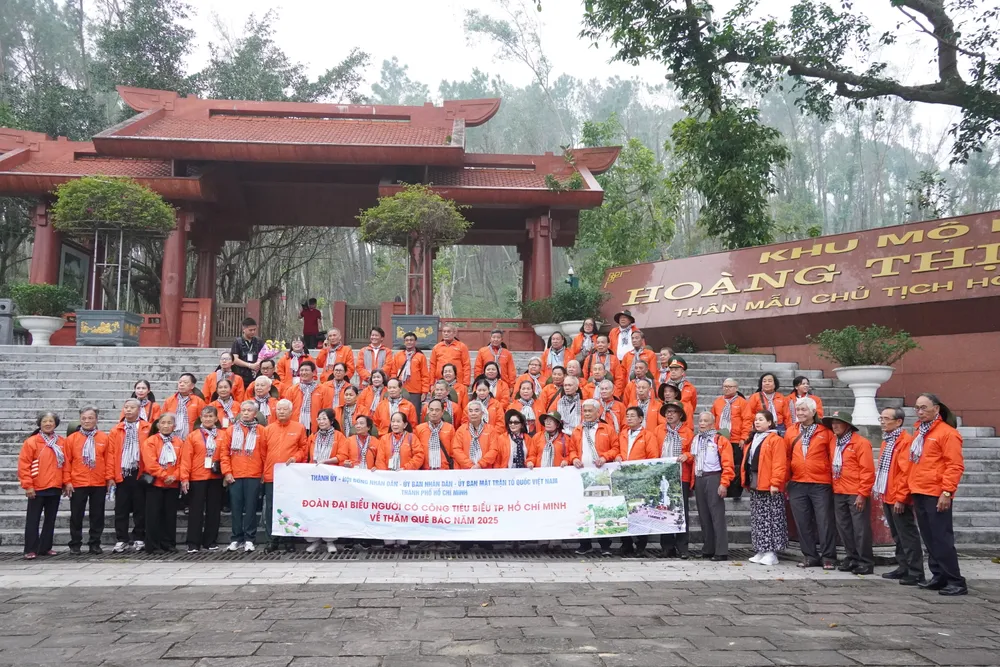
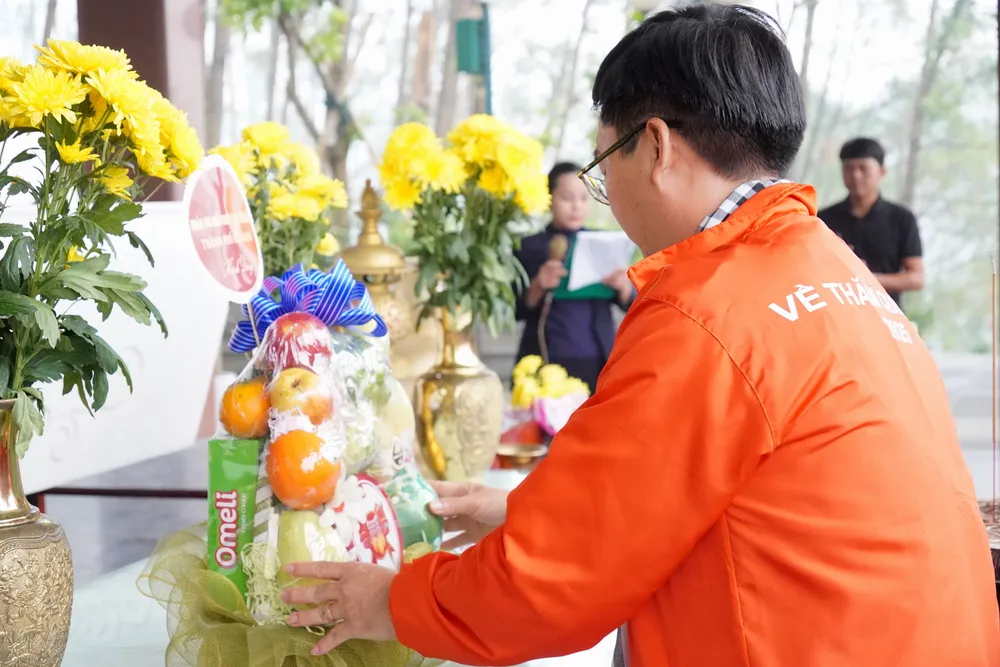
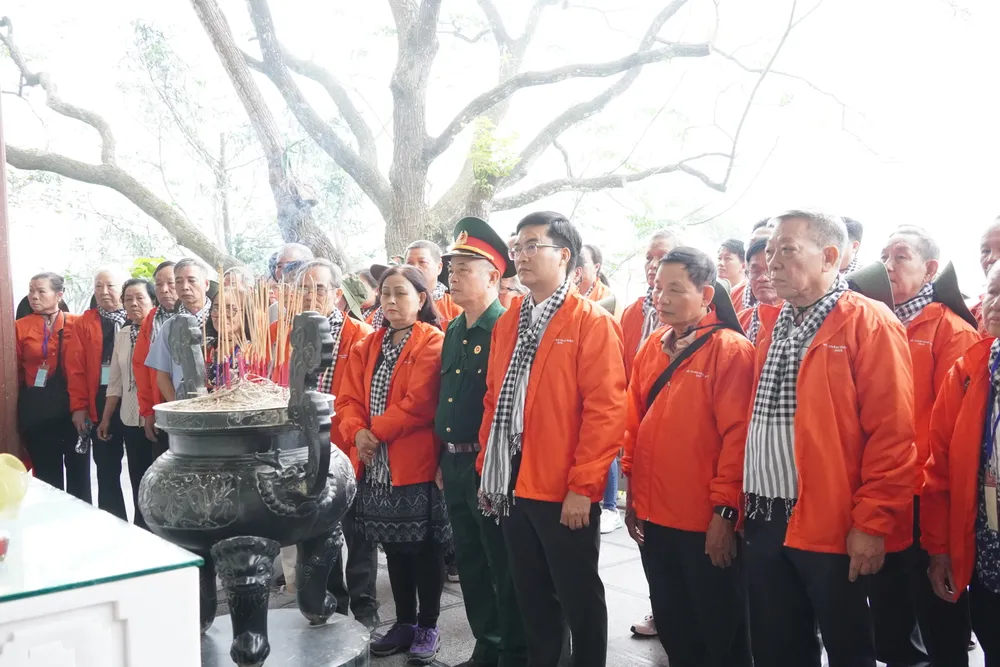
Before arriving at the Kim Lien Historical Site, the delegation visited Dong Tranh Mountain to pay respects at the tomb of Mrs. Hoang Thi Loan, the mother of President Ho Chi Minh. In the tranquil atmosphere of the mountains and forests, before the tomb of the devoted mother who tirelessly nurtured the character and soul of President Ho Chi Minh, the members of the delegation offered incense and flowers, expressing their profound gratitude.
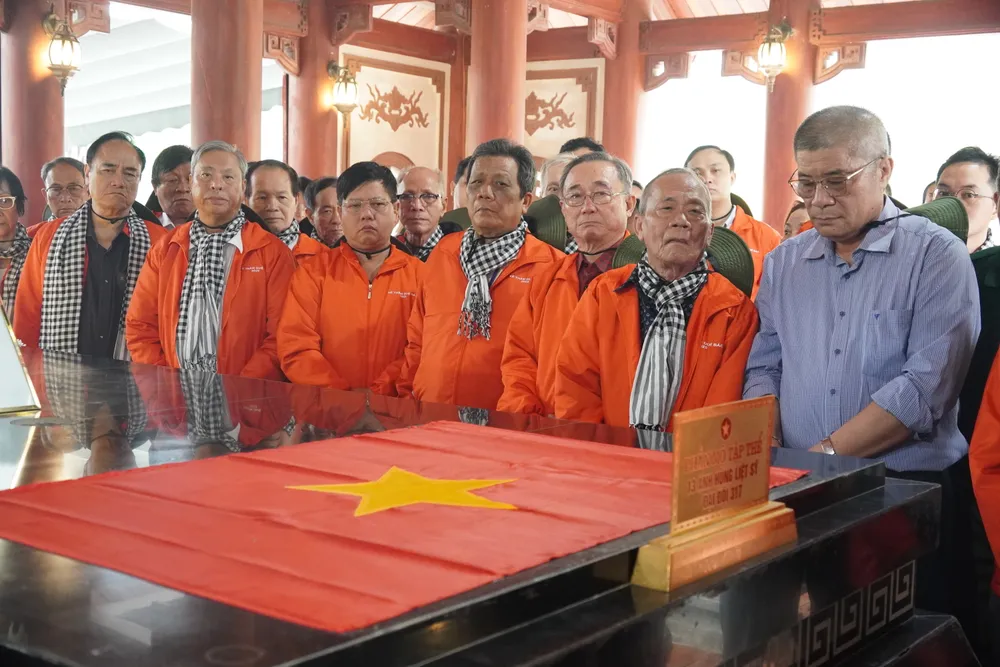
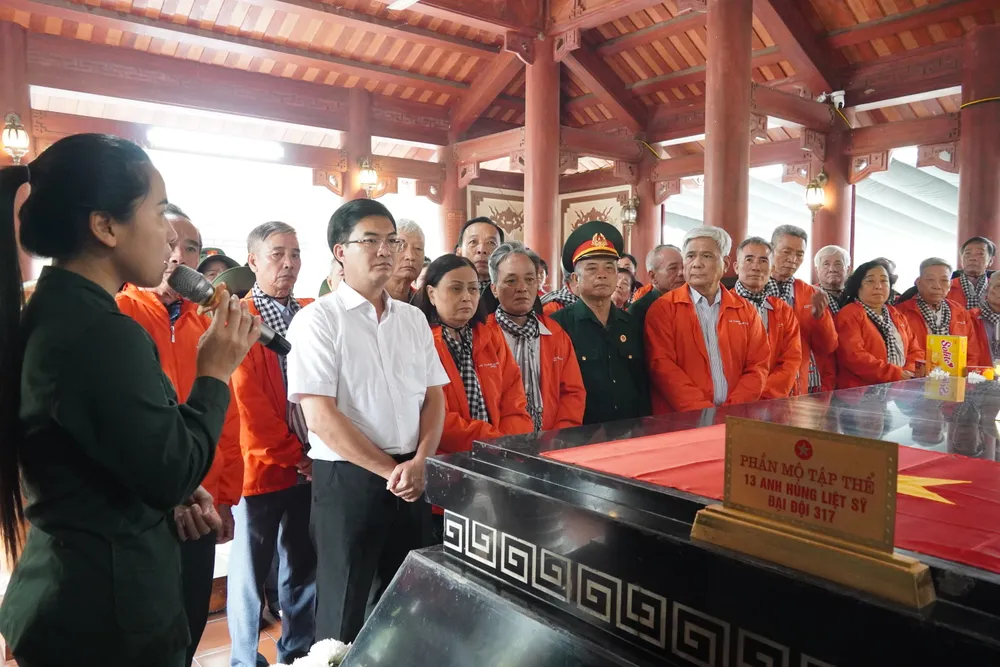
On the same day, the delegation visited and laid flowers and incense at the Truông Bồn Historical Site – a significant historical landmark commemorating the heroic contributions and sacrifices of generations of youth volunteers, soldiers, and civilian workers on the front lines during the resistance war against the US to save the nation. Before the graves of the martyrs, the delegation solemnly observed a moment of silence, remembering the outstanding sons and daughters of the nation who fell for national independence, for the freedom and happiness of the people.
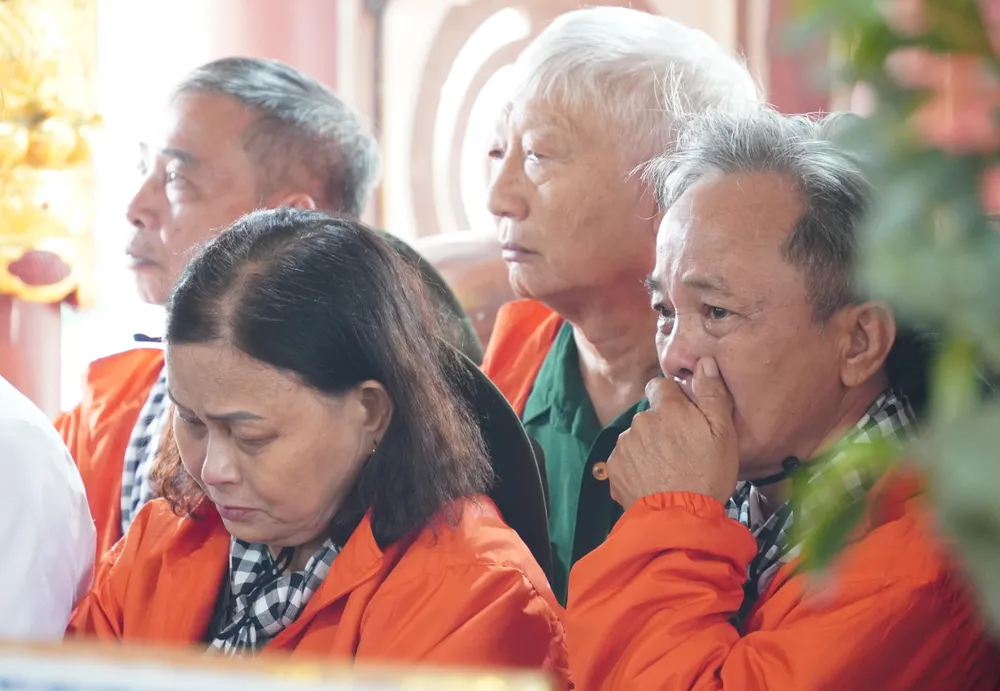
The narratives about each bombing raid, each event, and each person who fell at Truong Bon brought many members of the delegation to tears. The delegation of exemplary war veterans from Ho Chi Minh City were mostly former soldiers who had experienced war, faced bombs and bullets, and suffered losses. More than anyone else, they understood the value of life and the price of peace.
Constantly wiping away tears with her handkerchief, Mrs. Nguyen Thi Kim Hoang (An Lac ward) choked back sobs as she shared: “The martyrs here were about the same age as we were back then, but they were forever cut short in their twenties. Thinking about that, I feel even more fortunate to be alive, to have returned, and even more grateful to those who sacrificed themselves.”
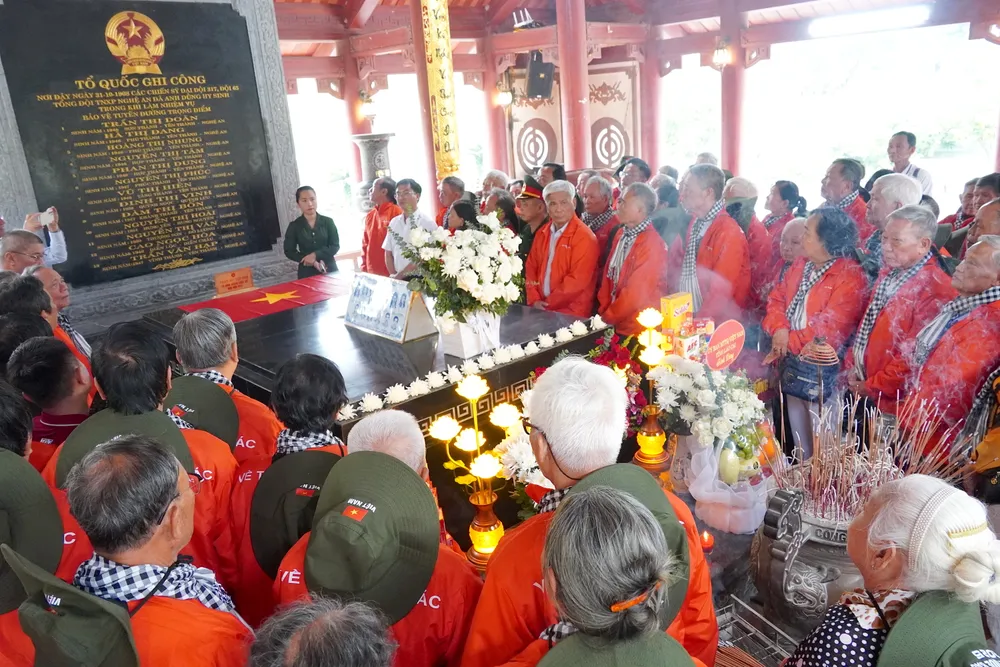
The Truông Bồn historical site commemorates the heroic spirits of 1,240 officers and soldiers who bravely fought and heroically sacrificed their lives to protect the vital Truông Bồn transportation artery. Among them is the mass grave of 13 young volunteer soldiers from the "Steel Squad," "Suicide Squad," and "Living Marker Squad," belonging to the 317th Youth Volunteer Company, Team 65, General Youth Volunteer Brigade fighting against the US for national salvation, Nghe An province, who died on October 31, 1968.
Located on the strategic Route 15A through Bach Ha commune, Nghe An province, Truong Bon was once considered a "fire zone" and "bomb crater" during the resistance war against the US. Between 1964 and 1968 alone, it endured nearly 20,000 bombs of various types. With the spirit of "our hearts may stop beating, but the road cannot be blocked," the victory at Truong Bon contributed to maintaining this vital transportation artery, allowing tens of thousands of vehicles and over 1 million tons of goods to be delivered to the front lines.
Here are some photos from our journey back to our roots:
Source: https://www.sggp.org.vn/hanh-trinh-ve-nguon-lang-dong-nghia-tinh-que-bac-post828538.html






































































Comment (0)