

 |
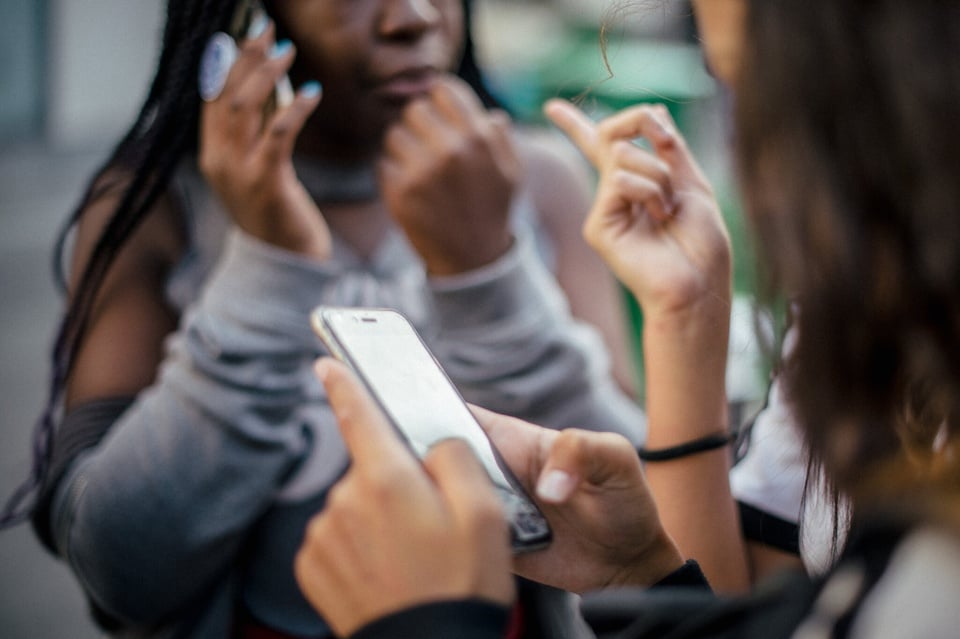
Young people have an easy time accessing shocking, unverified content. Illustration: New York Times. |
When using the Internet, users are easily drawn into violent or negative content, disguised as sensational, curious news.
Lures and curiosity-inducing content are common on the internet and are the starting point for many online scams. Fear of missing out causes many people to click on links without checking their authenticity.
According to experts, fake news and sensational headlines often exploit people's curiosity and fear. When clicking on links without careful evaluation, users may face the risk of fraud. More worryingly, the content often spreads very quickly, has a large impact, and can leave serious psychological consequences for viewers.
Psychological consequences of viewing shocking content
Statistics from Viettel Security show that nearly 4,000 phishing domains and 877 fake websites were detected in Vietnam in the third quarter of 2025, an increase of about 300% compared to the same period last year. The number of stolen personal accounts reached 6.5 million, an increase of 64% compared to the previous quarter.
According to Dr. Sreenivas Tirumala, senior lecturer in Information Technology at RMIT Vietnam, young people are the target group through “free benefit” applications, such as AI photo editing, “viewer who visited your personal page” software or discount code search engines.
“These apps are used to collect login credentials, which are then sold on the black market and can be used to hijack accounts for blackmail,” Dr. Tirumala emphasized.
While the financial damage is immediate, the psychological impact on young people can be long-lasting. Vu Bich Phuong, M.A., lecturer in Psychology at RMIT Vietnam, said that exposure to negative content on social media, scams that cause financial loss and invasion of privacy can be devastating experiences for teenagers.
“They are no longer young enough to be completely protected by their parents, but they are not mature enough to understand shocking content, nor to deal with the consequences of being deceived,” Ms. Phuong shared.
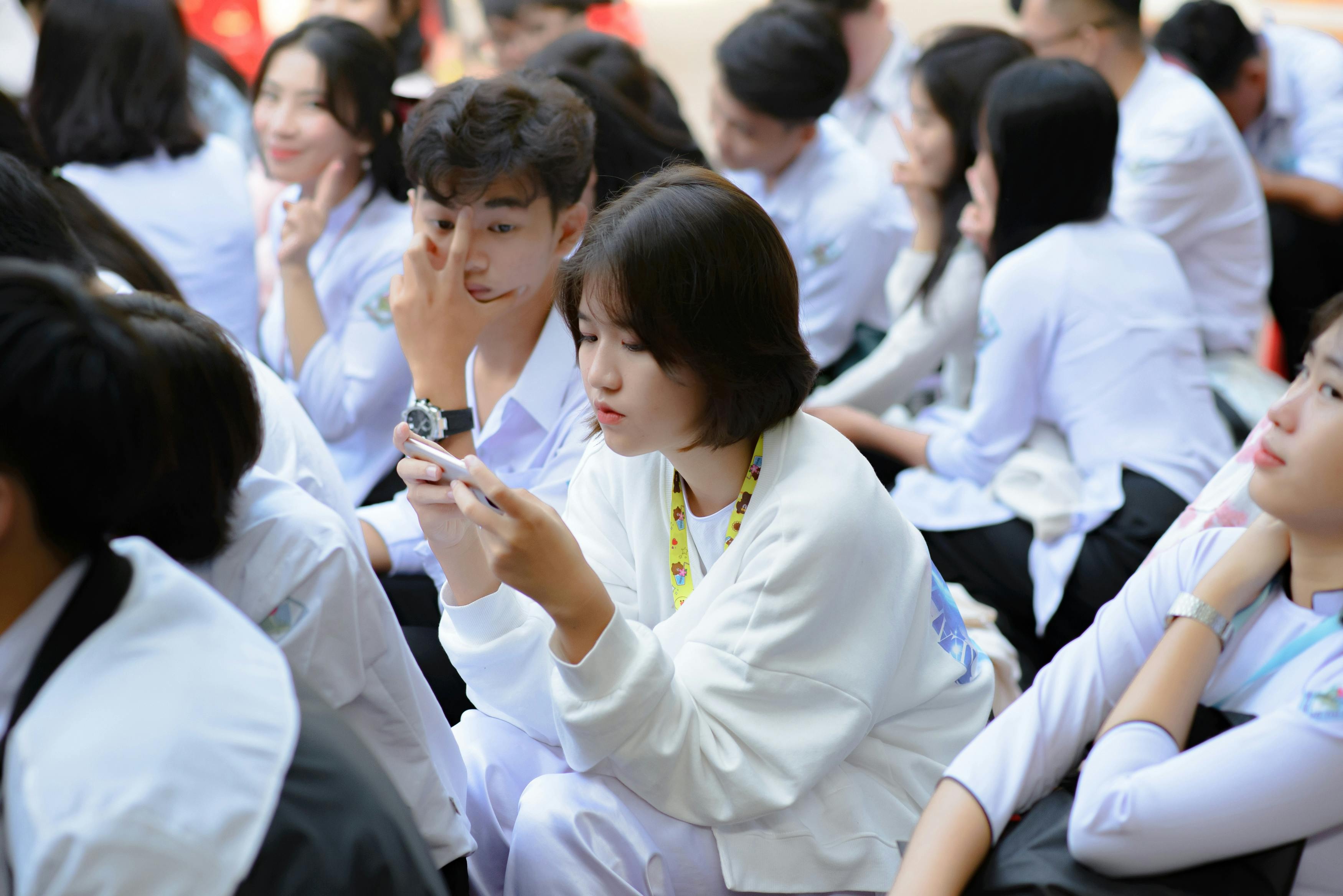 |
Viewing shocking content or being scammed can leave lasting psychological scars on young people. Illustration: Pexels . |
Most of the time, young people use social media for positive things like entertainment and connecting with friends. Therefore, accidentally accessing negative content makes them easily fall into confusion, stress, and anxiety while still struggling with other difficulties of real life.
In some severe cases, Dr Gordon Ingram, lecturer in Psychology at RMIT Vietnam, warns of a form of trauma called “secondary trauma”. For example, young people can suffer the same psychological shock as firefighters at an accident scene just by accidentally watching a violent video .
According to Dr. Ingram, this phenomenon is common in professional groups such as psychotherapists, first responders or journalists, who have direct contact with other people's traumatic experiences.
“For young people, accidentally clicking on a link or opening an attachment is even more vulnerable, because they do not have enough life experience or skills to deal with such shocking content,” he emphasized.
Symptoms of psychological trauma are very similar to post-traumatic stress disorder (PTSD), including unwanted intrusive thoughts, a state of hypervigilance/persistent anxiety, sleep disturbances, emotional numbness, and changes in the way the young person perceives the world , leaving them feeling darker or more desensitized to violence.
“The problem is compounded by the fact that social media’s repetitive algorithms continually push similar content, inadvertently reinforcing the behavior of endlessly scrolling to find a thrill, even when the experience is unpleasant,” Dr. Ingram added.
Equip yourself with skills to analyze and evaluate information
While not all interactions on social media are negative, children, teens, and young adults are vulnerable to harmful content. This is because much of their online activity is unregulated and unsupervised. While digital platforms continue to evolve, many people’s media literacy has not kept up.
From December 10, Australia will ban children under 16 from using social networks. Some countries such as Denmark and Malaysia are also considering similar regulations. However, organizations such as UNICEF question whether banning is the optimal solution. This is also a lesson for countries like Vietnam.
“Vietnam needs to consider solutions to make social networks a useful tool for people who are psychologically ready and have the skills to receive information, instead of only benefiting large technology corporations or online scammers,” emphasized Master Vu Bich Phuong.
Skills and tools are necessary measures to prevent unfortunate consequences. MSc. Luong Van Lam, lecturer of Professional Communication at RMIT Vietnam, said that young people's information reception skills are still "quite instinctive", easily attracted by sensational and mysterious content, quickly sharing with people around them.
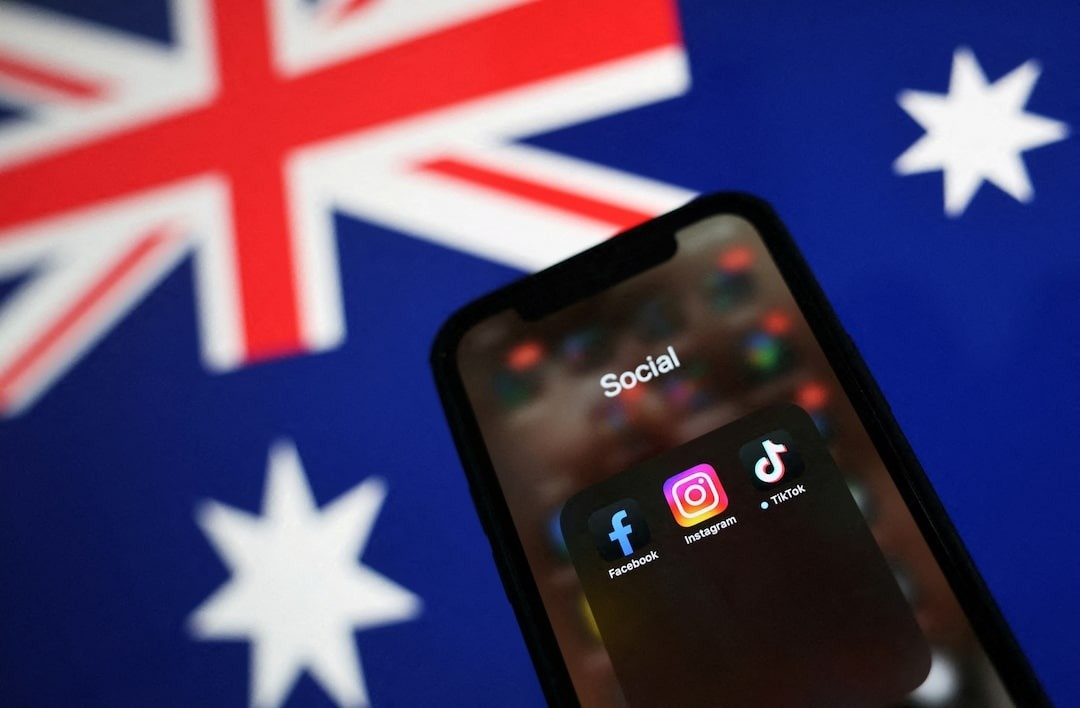 |
Some countries are considering regulations to ban teenagers from using social networks. Photo: Reuters . |
According to MSc. Lam, this comes from the negative bias mechanism, the tendency to pay attention to dangers and warn people around to survive and protect themselves.
However, many young people only use it at the step of approaching and then sharing, skipping the important stage of receiving information including analysis and evaluation. Sharing first and verifying later is motivated by the desire to show that they “know things quickly”, to warn the community, or simply to participate in discussions of hot topics.
“In the current context, especially in the digital environment where information spreads rapidly, instead of watching, reading, and surfing hastily, we need to stop to evaluate information before trusting and sharing,” MSc. Lam emphasized.
RMIT Vietnam representative shares CRAAP assessment rules to protect the community from shocking and difficult-to-verify content.
Instead of believing and sharing hastily, users can stop to evaluate 5 factors: Currentity to see if the information is new, Relevance to see if it is related to the topic being searched, Authority to see who is providing the information, Accuracy to see if it can be verified or compared, and finally Purpose to see what the content is created and shared for, whether there is a motive behind it or not.
Some tools can also help verify information and detect threats, such as Bitdefender Link Checker to check URLs, Bitdefender Scamio chatbot to analyze emails, images. In Vietnam, the National Cyber Security Association's nTrust application helps check suspicious links, QR codes and account numbers.
Dr Jeff Nijsse, Senior Lecturer in Software Engineering at RMIT Vietnam, shares more about confirming with the sender if receiving unclear files or links. Avoid opening PDF or Microsoft Word files from unverified sources. At work, you can forward messages and emails to the IT department to check for safety.
Source: https://znews.vn/he-qua-tam-ly-khung-khiep-tu-video-bao-luc-tieu-cuc-post1608260.html


![[Photo] Cat Ba - Green island paradise](/_next/image?url=https%3A%2F%2Fvphoto.vietnam.vn%2Fthumb%2F1200x675%2Fvietnam%2Fresource%2FIMAGE%2F2025%2F12%2F04%2F1764821844074_ndo_br_1-dcbthienduongxanh638-jpg.webp&w=3840&q=75)








































![[VIMC 40 days of lightning speed] Da Nang Port: Unity - Lightning speed - Breakthrough to the finish line](https://vphoto.vietnam.vn/thumb/402x226/vietnam/resource/IMAGE/2025/12/04/1764833540882_cdn_4-12-25.jpeg)












































Comment (0)