

Effectively fulfilling the role of flood control and ensuring safety in downstream areas.
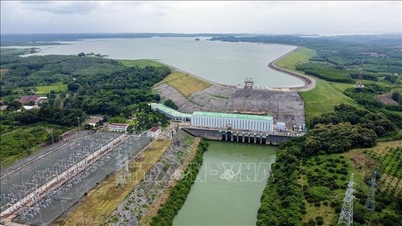
Due to the impact of prolonged heavy rainfall, a major flood occurred in the upstream area of the Ban Ve Hydropower Reservoir in recent days. The flood started at 3 PM on August 3rd, when the reservoir was at its dead water level (158.8m). Just three days later, at 1:15 AM on August 6th, the floodwaters reached their peak with a maximum flow rate of 2,700 m³ /s.

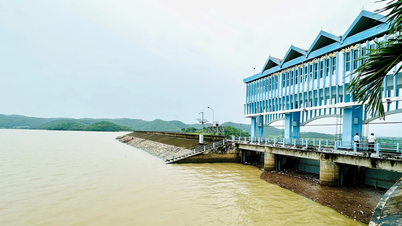
After peaking, the floodwaters receded slowly but remained at a high level. At 2 PM on August 9th, the inflow into the reservoir was 950 m³ /s, and the water level in Ban Ve reservoir was at 184.7 m (nearly 7 m lower than the lowest flood-receiving water level and 8 m lower than the highest water level before the flood).

The water storage in the reservoir, aimed at mitigating flooding in downstream areas, has caused the reservoir's water level to rise rapidly. In just six days, by August 9th, the water level had increased by approximately 30 meters, equivalent to a total inflow of nearly 800 million cubic meters. Not only was the rate of water level increase high, but it was also sustained for an extended period; and according to representatives of the Ban Ve Hydropower Company, such a volume and duration of water inflow into the reservoir is rarely seen in the history of Ban Ve hydropower reservoir operation.
Mr. Nguyen Truong Thanh, Chief of the Office of the Provincial Steering Committee for Disaster Prevention, Search and Rescue, and Civil Defense, stated: In recent days, the volume of water flowing from Laos has been very large. Thanks to the Ban Ve reservoir's water storage, the flooding has been mitigated, ensuring the safety of the downstream areas without any impact. Data from 20 rain gauge stations in Laos shows that the rainfall in Laos in recent days has been very heavy, averaging 400 mm. From August 3rd to 9th, the amount of water flowing into the reservoir reached nearly 800 million cubic meters. If this volume of water were to flow downstream, it would cause significant impacts on production, daily life, and people's livelihoods.
Develop plans for water release and flood control.
According to forecasts from the North Central Region Hydrometeorological Station, the water flow into the Ban Ve hydropower reservoir is currently decreasing but remains at a high level. To ensure the safety of the structure and to ensure operation according to the Inter-Reservoir Operating Procedure on the Ca River basin, Ban Ve Hydropower Company has submitted Report No. 203/BC-TĐBV to the Provincial Steering Committee for Disaster Prevention, Search and Rescue and Civil Defense, requesting guidance on operating the Ban Ve reservoir to reduce flooding downstream.

Mr. Ta Huu Hung, Director of Ban Ve Hydropower Company, said: "Currently, we are closely monitoring rainfall and weather developments in the Ban Ve reservoir basin. If floodwaters continue to flow in, the possibility of having to regulate and release water is very high. Given the impacts on downstream areas if floodwaters are released, the company has worked with and notified local authorities to urgently review the areas of crop production, livestock, aquaculture, and people's assets in the affected areas to develop response plans and minimize damage caused by floodwater release."

During the meeting, after inspecting the actual situation at the construction site, Mr. Nguyen Truong Thanh stated: Even from the first flood of this year's rainy season, the scale and impact have been very significant, clearly demonstrating the unpredictable risks posed by climate change. The Ban Ve Hydropower Company, as well as the downstream localities, need to anticipate the risk of a double flood, as happened in 2018, thereby increasing vigilance and developing appropriate response plans to avoid being caught off guard and confused when the situation occurs.
Source
![[Photo] Prime Minister Pham Minh Chinh holds a phone call with the CEO of Russia's Rosatom Corporation.](/_next/image?url=https%3A%2F%2Fvphoto.vietnam.vn%2Fthumb%2F1200x675%2Fvietnam%2Fresource%2FIMAGE%2F2025%2F12%2F11%2F1765464552365_dsc-5295-jpg.webp&w=3840&q=75)





























































Comment (0)