

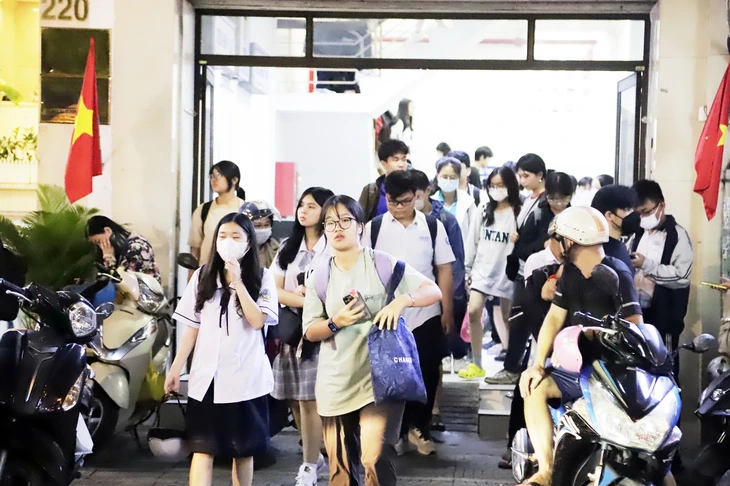
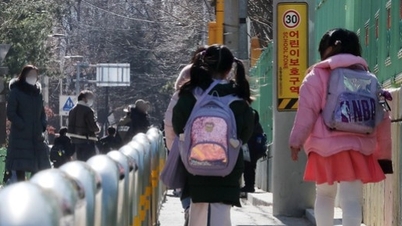
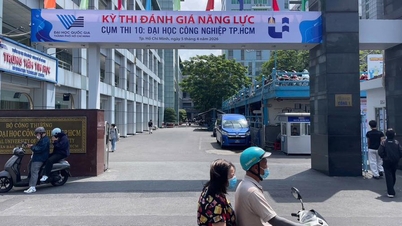
Students leaving a tutoring center in Ho Chi Minh City - Photo: NHU HUNG
Reporters from Tuoi Tre newspaper recorded the opinions of students, parents, teachers, administrators, and education experts following the minister's response.
* Mr. Huynh Thanh Phu (Principal of Bui Thi Xuan High School, Ho Chi Minh City):
The minister shared insightful and multifaceted perspectives.
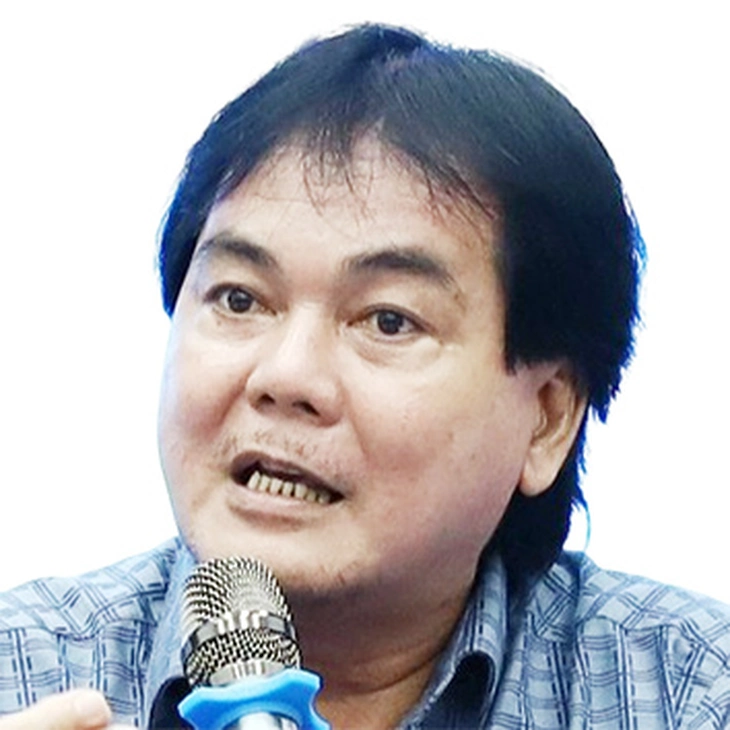
I found Minister Nguyen Kim Son's comments at the National Assembly recently regarding the issue of tutoring and extra classes to be extremely relevant and multifaceted.
From a manager's perspective, I think tutoring and extra classes aren't entirely negative. The best, and undeniable, aspect is the knowledge gained.
High school students who attend extra classes will, to varying degrees, acquire a better level of knowledge compared to their own abilities without such extra classes. And I believe that no teacher who teaches extra classes will fail to teach anything or provide any value beyond the regular class hours.
What needs to be addressed are the distorted forms of tutoring. That is, we need to put an end to the situation where teachers pressure students into taking extra classes. In my opinion, this isn't difficult. We just need to listen to feedback from the students themselves and increase the severity of penalties when violations are detected, even potentially dismissing teachers who violate the rules from the profession. With sufficiently strong penalties, teachers will no longer dare to engage in negative behavior or put pressure on students.
If we could achieve that, I think there wouldn't even be a need for regulations prohibiting teachers from teaching their own students. In my opinion, that restricts students' freedom to choose their teachers. Many students deeply appreciate and trust their excellent teachers, many of whom are currently teaching them in class.
* Dr. Hoang Ngoc Vinh (former head of the Department of Professional Education, Ministry of Education and Training):
Relieving exam pressure
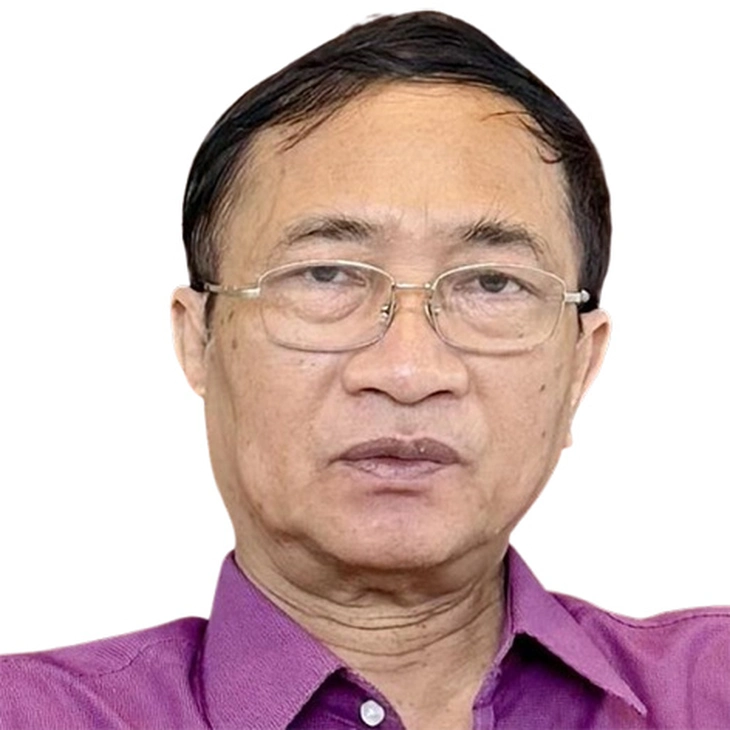
I believe we need to frankly acknowledge that the pressure to attend extra classes among students stems from exam pressure. Ultimately, Vietnamese students want to attend extra classes in order to perform well and achieve good scores in important exams.
At the secondary school level, the two most stressful exams are the high school graduation exam for 12th-grade students and the 10th-grade entrance exam for 9th-grade students. The closer it gets to the exam, the greater the pressure to attend extra classes. Therefore, to overcome the problem of excessive tutoring, we must start by addressing the exams themselves.
Regarding the high school graduation exam, I've noticed that in recent years, due to the increased number of university admission methods, the pressure has significantly decreased compared to before.
However, in my opinion, this exam still needs further innovation and diversification in its assessment methods. The exam should not be heavily theoretical but should test critical thinking and application skills. Similar to the national university entrance exams, the exam should focus on genuine ability rather than who has practiced more exam questions. If this is achieved, the pressure to attend extra tutoring sessions will be significantly reduced.
* Ms. Do Thi Huong (parent in Hanoi ):
Look at the root of the problem.

My child is preparing for entrance exams and has to study a lot. I've been following the minister's questioning sessions these past few days, but I feel his explanations haven't addressed the root of the problem.
The most obvious problem is the large number of students per class, which doesn't correspond to the teaching/lesson time. My child's class has 48 students, and each lesson lasts 45 minutes.
A simple average calculation reveals the significant obstacles posed by such a distribution. Teachers cannot possibly convey all the necessary knowledge to 48 students, ensuring they all understand the lesson. Instead, they only teach the required content, resulting in a one-sided approach.
Furthermore, my child is at the top of their class and has excellent self-learning abilities, but there are still days when they don't understand the lesson. They recognize this and ask me for extra tutoring. This stems from the students' own needs.
Clearly, the teacher is covering all the allocated content, but the students don't understand. Understanding is crucial for applying the lesson and preparing for exams. Adding a second lesson would be good, but I'm concerned about what they would teach.
As my child is preparing for the 10th grade entrance exam, they need to focus primarily on three subjects. Will schools add a second class session to teach the subjects students need, or will they create extracurricular activities that don't reflect the actual needs of students and parents?
If tutoring is banned, I think it would be best to abolish the entrance exam for 10th grade and ensure sufficient schools for all students. This would guarantee equal access to education for all students, regardless of their grade level in general education.
* Ms. Tran Thi Hoai Thu (Literature teacher at Nguyen Trai High School, Ninh Thuan):
Prepare well for teaching two sessions.

I completely agree with the minister's opinion on implementing a two-session school day at all levels starting in September 2025.
These second sessions not only teach students knowledge, but also aim to further develop their physical fitness, sports, music, and art skills, enhance their foreign language abilities, self-learning skills, teamwork skills, and life skills. However, I think many issues remain unresolved, even though there are only two months left before this program is implemented.
Firstly, many schools currently lack adequate facilities for activities organized during the second school day. Not to mention schools in remote areas, and even many schools in cities don't have multi-purpose sports halls, how can they achieve effectiveness in extracurricular and skills training activities?
Secondly, there's the issue of human resources. For subjects requiring specific skills and talents, a large number of specialized teachers are needed. Have schools already secured enough? Furthermore, many teachers cannot arrange their schedules to teach full-day classes. If we adopt the approach of not charging for the second class session, mobilizing human resources and arranging schedules that are most convenient for the teaching staff remains a challenging problem.
Therefore, we need significant support from educational institutions and local authorities. Furthermore, we earnestly hope for assistance from all departments and agencies to create a synergistic force for a sustainable, advanced, and long-lasting education system.
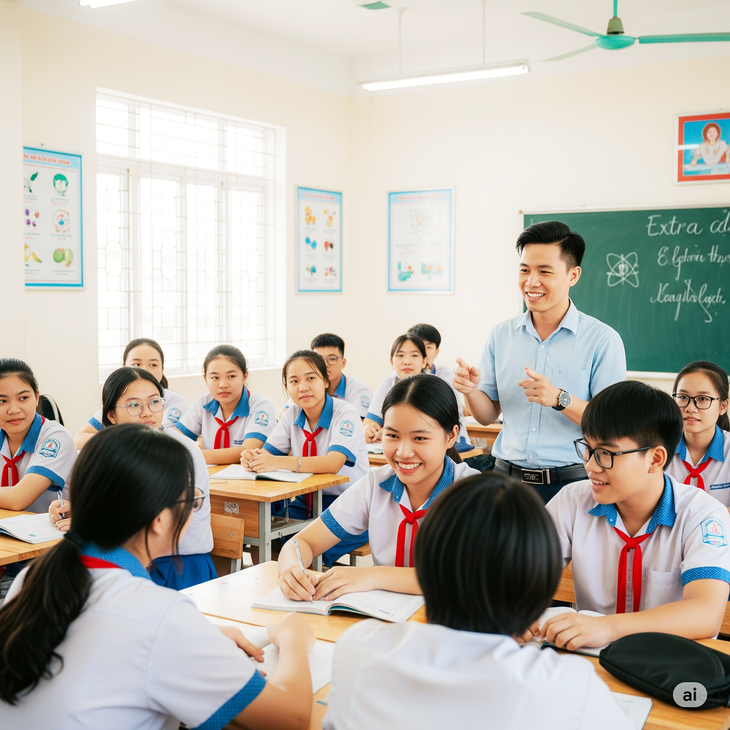
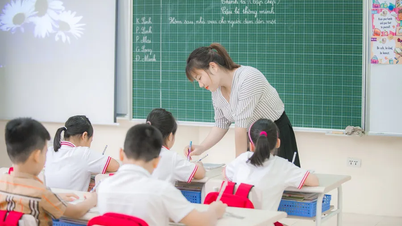
AI illustration
* NTN (12th grade student in Ho Chi Minh City):
We hope that supplementary education will become more equitable.
I don't think extra tutoring is necessarily a bad thing. Many of my classmates take extra classes because they genuinely want to understand the material better, as the time in class is sometimes insufficient for teachers to explain everything. There are advanced topics or difficult types of problems, and if we didn't take extra classes, we wouldn't know who else to ask.
I myself have taken extra math and literature classes, and I found them effective. But I also know that many students feel pressured and afraid they won't keep up if they don't. In my opinion, extra classes should be a voluntary choice. What's important is the learning method and the teacher. If the teachers are good and inspiring, then extra classes are an opportunity to improve, not a burden.
I hope that schools and society will find ways to make extra tutoring fairer and more positive, ensuring no one is forced to attend, but also not completely banning it, because everything has two sides.
Source: https://tuoitre.vn/hoc-them-nen-la-tu-nguyen-20250622080452933.htm






















































































Comment (0)