

Following the success of FreeBuds 5i and 6i, the FreeBuds 7i version launched in early December carries the ambition to redefine the standard of sound experience in the segment under 2 million VND.
The intersection of fashion and practicality
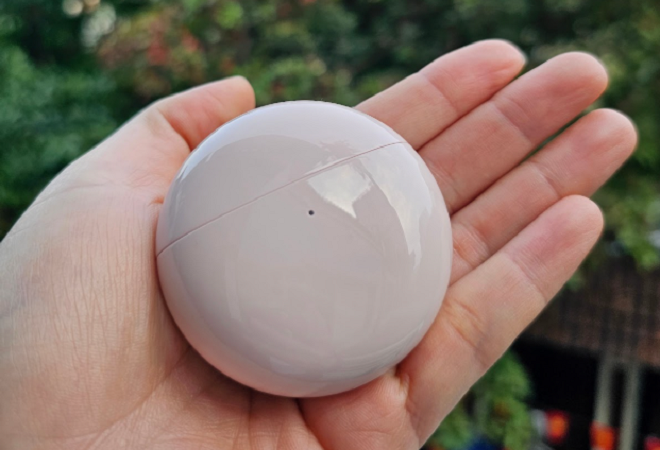
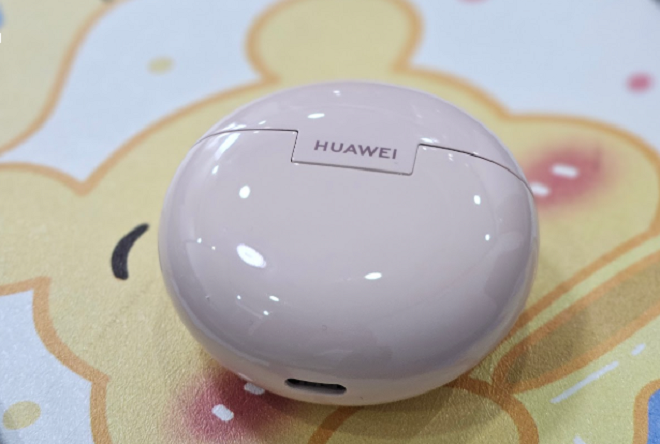
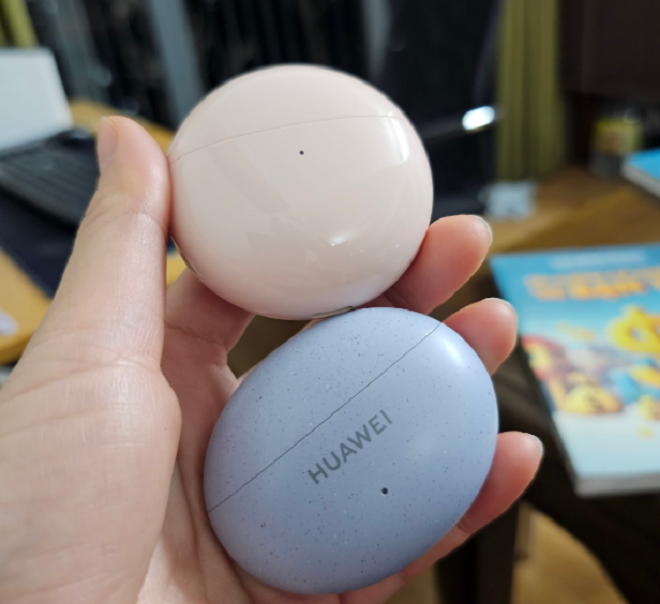
If the FreeBuds 5i once made a splash with its compact pebble-shaped charging case design, dotted with unique marble patterns, the FreeBuds 7i chose a completely different direction. The charging case of the new version returns to the rounded "Cobble" style, with a glossy and minimalist surface.
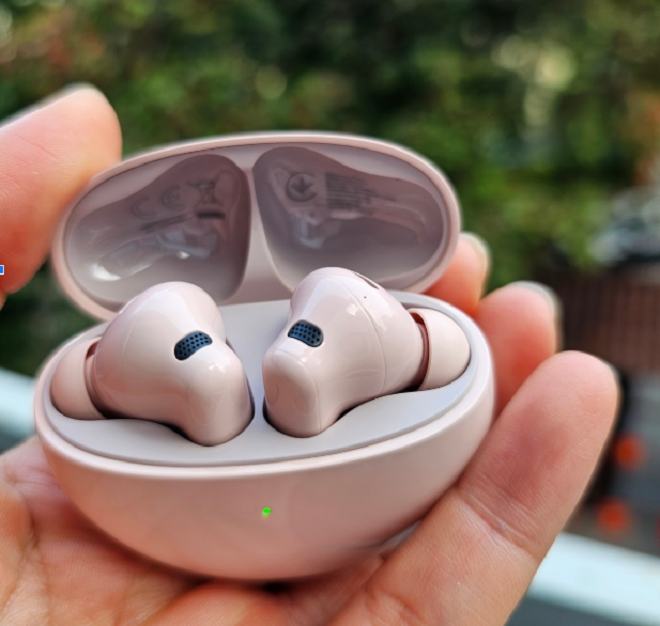
The most noticeable physical change is the size. The FreeBuds 7i charging case is larger and thicker than its predecessor. From a technical perspective, this increase in size is a calculated trade-off. The larger space allows the manufacturer to integrate a higher capacity battery. The more solid, secure grip is also a plus for the product's finishing.
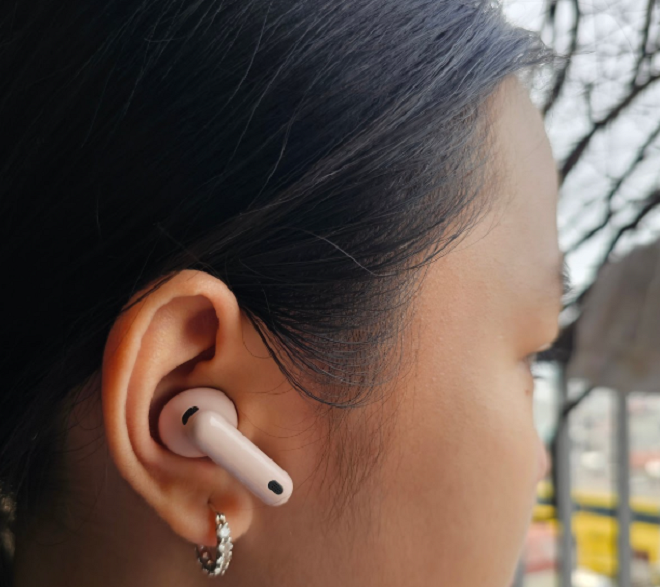
Alongside the two traditional colour options of Ceramic White and Matte Black, the Dusty Pink version is the real star of this year's lineup.
Under different lighting conditions, this shell reflects soft light, creating the feeling of a high-end jewelry or cosmetic accessory. This is a smart move by Huawei to turn the headset from a dry electronic device into a part of fashion style (Lifestyle), especially attracting modern female users.
Opening the product box, in addition to the standard USB-C charging cable, the manufacturer provides 3 sets of rubber ear tips with different sizes. Notably, the appearance of the XS (Extra Small) size. This small detail shows the concern for the product's inclusiveness, solving the problem of ear pain or falling out for users with small ear canals - a very common problem but often overlooked by other companies in the mid-range segment.
Sound power from the "Quad-magnet" structure
The average user often thinks that mid-range noise-canceling headphones will have to sacrifice sound quality, especially bass. However, the FreeBuds 7i has proven the opposite thanks to powerful upgrades in internal hardware.
According to the specifications, FreeBuds 7i is equipped with an 11mm dynamic driver. The key point lies in the magnetic structure: Instead of using a single or dual magnet like previous generations, Huawei has integrated a 4-magnet system (Quad-magnet).
In the operating principle of the speaker, the stronger the magnetic field, the better the ability to control the oscillation of the speaker membrane. The 4-magnet system helps to increase the magnetic flux density, allowing the speaker membrane to move with a larger amplitude but still ensuring precision and decisiveness when stopping.
Actual experience results show that the Bass range of FreeBuds 7i has a remarkable improvement. The bass hits deep (sub-bass), has good bounce and is neat, without boomy or overpowering the mid-range (Mid) - the singer's voice. For vibrant music genres such as Pop, EDM or Hip-hop, the headphones reproduce the rhythm in an exciting way.
Good hardware is only a necessary condition, software is the sufficient condition to optimize the experience. To exploit the full potential of these 4 magnets, installing and using the Huawei AI Life application is required.
Through the app, users can access the audio equalizer (EQ). When the "Bass Boost" mode is activated, the algorithm will push the bass power to the maximum level without causing distortion, providing a more vivid sound experience than the default mode.
Additionally, the Spatial Audio feature also provides an expansive theater effect, which is especially useful when watching movies or playing games.
ANC 4.0: Silence from hardware to algorithm
If the appearance is the initial attraction, the noise cancellation is the factor that keeps users coming back. Huawei calls the technology on the FreeBuds 7i Intelligent Dynamic ANC 4.0, and this is not just a marketing name.
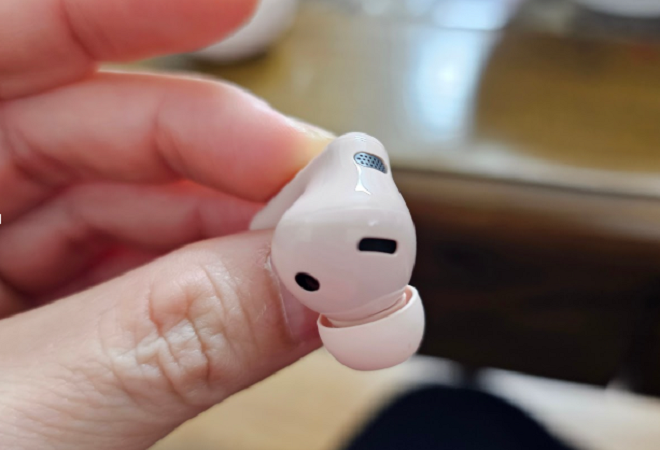
Looking closely at the housing (headphone body), you can see a dense sensor system including: A large oval black spot (containing the proximity sensor and supporting bone vibration reception) and scientifically arranged microphone grids on the top edge and inside the sound tube.
This system works based on a hybrid mechanism (Hybrid ANC). The external microphone collects environmental noise to create an inverse sound wave, while the internal microphone (Feedback mic) continues to listen for residual noise in the ear canal to cancel it a second time.
In a real-life testing environment with complex noise levels (traffic, wind, and talking), the FreeBuds 7i demonstrated impressive noise-canceling capabilities. The low-frequency bass ranges, which are the weak points of many mid-range headphones, were thoroughly handled. Users were almost isolated from the sound of a bus engine or the hum of an office air conditioning system.
However, strong noise cancellation often comes with a feeling of stuffiness due to pressure difference. Huawei has solved this problem by designing a vent system with an area of about 8 mm². This system allows air to circulate, balancing the pressure between the inside and outside of the eardrum. Thanks to that, users can wear headphones with noise cancellation on continuously for many hours without experiencing tinnitus or headaches.
User Experience (UX) and Smart Features
Head Gestures : FreeBuds 7i inherits the head gesture control feature from high-end headphones. Users can nod to accept calls or shake their heads to reject them.
However, it should be noted that this feature is not enabled by default. Users are required to access the Huawei AI Life application, find the Gestures section to activate and calibrate the sensitivity.
Once set up, the accelerometer works very accurately. This is an extremely useful feature in situations where your hands are full (e.g. washing dishes, carrying heavy things) or while driving, making taking calls safer and more convenient than ever.
Auditory Feedback: The Touch Control system on the body of the headset is also refined to enhance the user experience (UX). Tap operations to pause music or change songs have good sensitivity , limiting touch disorder.
In particular, swiping along the body of the headset to increase or decrease the volume brings great satisfaction. Every time the user swipes up or down, the headset will emit small, gentle "beep" sounds corresponding to each volume change. This detail, although small, is extremely delicate, helping the user confirm that the command has been executed without having to guess or take out the phone to check.
Battery life and connectivity
As mentioned in the design section, the larger charging case size has brought practical benefits in terms of energy. According to the announcement, FreeBuds 7i provides up to 35 hours of use (combined with the charging case) with noise cancellation turned off. This number is significantly superior to the average of about 24-28 hours of competitors in the same segment. With a normal usage need of about 3-4 hours per day, users can rest assured to use the device for a whole week before needing to recharge.
In terms of connectivity, the headset supports the new Bluetooth standard, allowing parallel connection of two devices (Dual-device connection). This feature works smoothly when switching between laptop and phone, without significant delay.
With a listed price of about 1,790,000 VND in December (excluding discounts and Early Bird vouchers in the first sale on December 4-5), Huawei FreeBuds 7i is setting a new standard for the mid-range headphone segment.
Source: https://vtcnews.vn/huawei-freebuds-7i-mau-hong-hut-mat-cong-nghe-chong-on-moi-nhat-ar991065.html


![[Photo] Cat Ba - Green island paradise](/_next/image?url=https%3A%2F%2Fvphoto.vietnam.vn%2Fthumb%2F1200x675%2Fvietnam%2Fresource%2FIMAGE%2F2025%2F12%2F04%2F1764821844074_ndo_br_1-dcbthienduongxanh638-jpg.webp&w=3840&q=75)











































![[VIMC 40 days of lightning speed] Da Nang Port: Unity - Lightning speed - Breakthrough to the finish line](https://vphoto.vietnam.vn/thumb/402x226/vietnam/resource/IMAGE/2025/12/04/1764833540882_cdn_4-12-25.jpeg)












































Comment (0)