

Revising the Chemical Law is necessary to promptly institutionalize the Party's new guidelines and policies and to overcome some of the shortcomings of the current law.
Sustainable development of the chemical industry
According to the planned agenda for the 42nd session, the Standing Committee of the National Assembly will give its opinion on the explanation, acceptance, and revision of the draft Law on Chemicals (amended) on the morning of February 7, 2025.
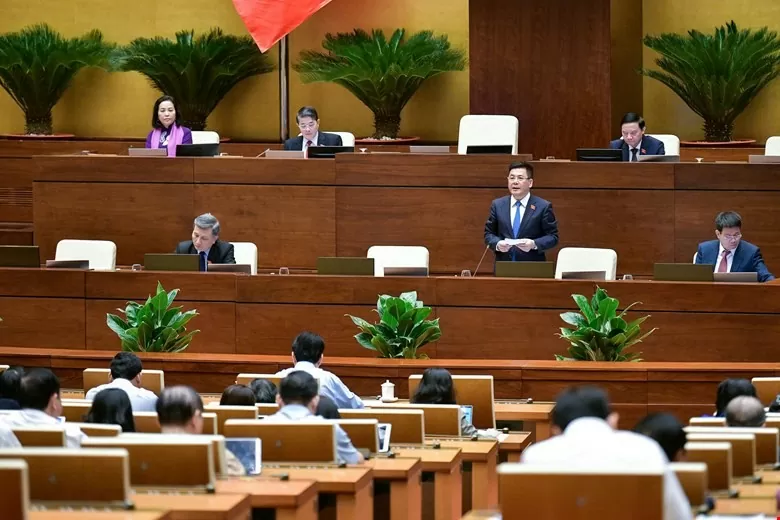 |
| Minister of Industry and Trade Nguyen Hong Dien delivered a speech explaining and clarifying the amended Chemical Law at the 8th Session of the 15th National Assembly. |
The Chemical Law, enacted in 2007, represents a significant step forward in the state management of chemicals in Vietnam. To date, the chemical industry plays a crucial role in many sectors, including agriculture , food processing, pharmaceuticals, and consumer goods manufacturing.
However, with the rapid development of the chemical industry, the current Chemical Law has revealed many shortcomings and has not kept pace with new challenges regarding safety, environmental protection, and international integration. Therefore, reviewing and amending the law is necessary to improve management efficiency and promote the sustainable development of the chemical industry.
According to the Ministry of Industry and Trade, after more than 16 years of implementing the 2007 Chemical Law, several shortcomings and limitations have emerged. Regulations for chemical projects mainly focus on ensuring chemical safety and environmental protection, neglecting requirements related to technology, industry development orientation, product quality, or green chemistry and sustainable development; there is also a lack of attractive and stable incentive mechanisms and policies to attract investment in chemical activities.
Regulations on chemical management mainly focus on the production, trading, and import of chemicals, while regulations on the use of chemicals are not effective enough. Regulations on the transportation and disposal of chemicals are still general and not given enough attention, leading to management gaps in the chemical lifecycle.
Many consumer products contain hazardous chemicals that can directly affect people or have long-term effects on the environment when disposed of; however, the law currently lacks regulations to address this.
The enforcement of chemical management laws is sometimes lax. Many hazardous chemicals are misused, causing numerous difficulties for regulatory agencies and businesses. Many entities disregard chemical safety regulations, failing to implement them or implementing them only superficially, thus neglecting to ensure effective prevention and response to chemical incidents. There is also a lack of coordination and information sharing mechanisms among regulatory agencies regarding chemical management.
Presenting the draft Law on Chemicals (amended) at the 8th Session of the 15th National Assembly, Minister of Industry and Trade Nguyen Hong Dien stated that the Law on Chemicals was passed by the National Assembly on November 21, 2007. After 16 years of implementation, the Government recognizes that, compared to the time of its enactment, the current legal system has undergone many changes; the Party and the State have issued many major policies and guidelines related to the chemical sector; and many new related laws have also been enacted or amended and supplemented by the National Assembly.
Furthermore, Vietnam has joined numerous free trade agreements and several new international conventions and treaties on chemical management. On the other hand, the practical implementation of the law has revealed that some provisions of the current Chemical Law have become inadequate, problematic, and no longer suitable for the current situation.
Therefore, amending the Chemical Law is necessary to promptly institutionalize the Party's new guidelines and policies in the field of chemicals, overcome some obstacles and shortcomings of the current law, ensure the synchronicity and uniformity of the legal system, and conform to the current domestic and international context and international commitments that Vietnam has participated in.
The purpose and perspective behind drafting the amended Chemical Law is to promptly and comprehensively institutionalize the Party's guidelines and policies on the development of the chemical industry.
Simultaneously, a comprehensive and synchronized revision of the regulations of the Chemical Law should be undertaken to ensure the inheritance of regulations that are "mature, clear, widely agreed upon, and proven in practice"; the abolition of regulations that are no longer appropriate, causing difficulties or obstacles; and the addition and development of fundamental and principled regulations suitable to the new situation, coupled with the promotion of decentralization, delegation of power, administrative procedure reform, and the selective adoption of international experience.
The draft Law on Chemicals (amended) closely adheres to the four major policies agreed upon by the Government and submitted to the National Assembly for approval, including: Sustainable development of the chemical industry into a foundational and modern industry; integrated chemical management throughout its entire lifecycle; management of hazardous chemicals in products; and improved effectiveness in ensuring chemical safety.
It is necessary to develop appropriate, coordinated, and feasible policies.
Speaking to clarify the draft Law on Chemicals (amended) at the 8th Session of the 15th National Assembly on the afternoon of November 23rd, the Minister of Industry and Trade shared that during the drafting process, the drafting agency had consistently adhered to the guiding principles of the current Party and State leaders: "Building laws in a constructive direction that both ensures state management requirements and encourages innovation, unleashing the full potential of production," "Resolutely abandoning the mindset of prohibiting what cannot be managed"; "The law should only stipulate framework issues and issues of a principled nature, without being overly lengthy."
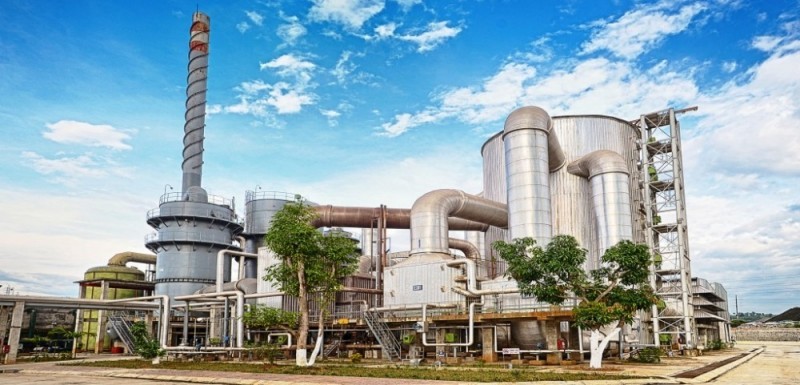 |
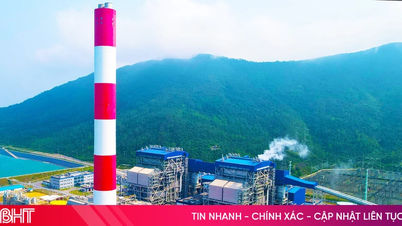
| The chemical industry is one of the foundational industries - Illustration. |
At the same time, the drafting agency consistently implemented the Government's viewpoint presented to the National Assembly: to reduce and simplify administrative procedures, and to maximize the application of information technology in order to reduce management resources and facilitate businesses and citizens; without affecting the effectiveness and efficiency of state management and ensuring the consistency and uniformity of the legal system.
The chemical sector policies in the draft Law have institutionalized the Party's guidelines and policies on the development of the chemical industry (as stated in the 10-year socio-economic development strategy 2021-2030 and Resolution of the 6th Plenum of the 13th Central Committee; Conclusion No. 36-KL/TW and Conclusion No. 81-KL/TW of the Politburo on promoting the implementation of green transformation, circular economy, and just energy transition).
According to the Minister, in order to institutionalize the Party's guidelines and policies on the development of several fundamental industries (including the chemical industry), it is necessary to build appropriate, synchronized, and feasible mechanisms and policies to promote the development of the chemical industry, because chemicals are increasingly asserting their extremely important role in every economy, contributing to the goal of an independent and self-reliant economy.
Accordingly, the draft Law retains the forms of investment incentives as stipulated in the Investment Law, only adjusting the regulations on the subjects entitled to special investment incentives and support for projects in the key chemical industry sector, and assigning the Government to provide detailed regulations to ensure flexibility in management and suitability to the practical operation of investment in the chemical sector.
Compared to the current Chemical Law, the amended Chemical Law has also synchronized regulations to tighten and strengthen the management of chemical activities throughout their entire lifecycle, especially for chemicals requiring special control; and enhanced decentralization, delegation of authority, and data sharing to improve management efficiency at the central and local levels.
During discussions on the draft Law on Chemicals (amended), National Assembly deputies expressed agreement with the necessity of comprehensively amending the law to concretize the Party's policy on developing the chemical industry and managing chemicals, and to overcome the shortcomings and limitations after 17 years of implementing the law.
Representative Nguyen Thi Kim Anh from Bac Ninh province affirmed that it is necessary to enact a Law to institutionalize the Party's guidelines and policies identifying the chemical industry as one of the fundamental industries, creating strong mechanisms and policies to promote the development of the chemical industry.
The delegates also agreed on the need to manage the chemical system throughout its entire lifecycle, from production, transportation, export, import, and disposal; to strictly manage hazardous chemicals; and to improve the effectiveness of chemical incident prevention and response.
Delegate Pham Van Hoa from Dong Thap province expressed the necessity of enacting the amended Chemical Law, as this law is very important. Over the years, chemicals have served the national interest, contributed to economic development, and also played a role in medicine, research, and scientific and technological advancements in all fields.
However, chemicals also pose a health risk to consumers. If we don't manage them properly and people are unaware of their dangers, unscrupulous individuals or profit-seeking businesses can exploit these toxic chemicals by incorporating them into products and food, which is very dangerous.
"Therefore, I think it is very necessary to enact a Chemical Law to limit and amend these shortcomings, and to promote the value of chemicals for socio-economic development as well as national defense and security," the representative emphasized.
| The majority of National Assembly delegates agreed on the necessity of drafting the amended Chemical Law, as it is considered a fundamental industry for every nation and economy; chemicals are now everywhere around us, converging to serve and surround us, therefore, the enactment of the amended Chemical Law is essential. The delegates also highly appreciated the preparation of the draft law's documentation. |
Source: https://congthuong.vn/can-thiet-sua-doi-luat-hoa-chat-huong-toi-phat-trien-ben-vung-372609.html


![[Photo] “Red Journey” 2026: Vietnamese Youth Continue Building the Bridge of Friendship Between Vietnam and China](https://vphoto.vietnam.vn/thumb/1200x675/vietnam/resource/IMAGE/2026/04/20/1776629730866_4055880775670638308-9618-4200-jpg.webp)















































































Comment (0)