

 |
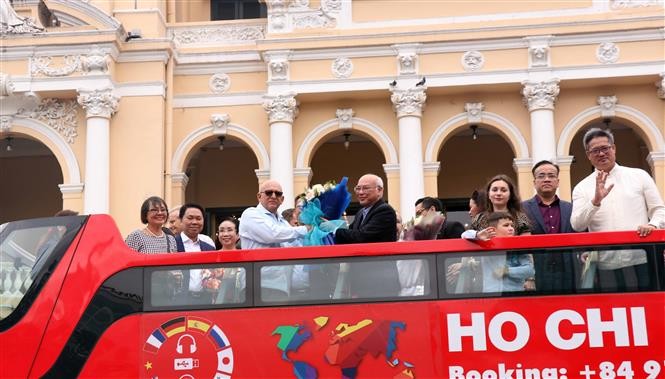
| Mr. Phan Nguyen Nhu Khue (right), Head of the Propaganda Department of the Ho Chi Minh City Party Committee, presents flowers to congratulate Mr. Rene Antonio Mesa Villafana (left), Minister of Construction of Cuba, at the inauguration ceremony of a commemorative vehicle marking the 50th anniversary of Cuban President Fidel Castro's visit to the liberated areas of South Vietnam in Quang Tri province. (Source: VNA) |
At the ceremony, recalling the visit of the late leader Fidel Castro to the liberated zone of South Vietnam in Quang Tri 50 years ago, Ms. Ariadne Feo Labrda, Consul General of Cuba in Ho Chi Minh City, emphasized that the late leader Fidel Castro was the first and only head of state in the world to visit the liberated zone of South Vietnam, and his presence became a symbol for the liberation forces while the war was still ongoing.
Fidel Castro's visit showed the world that Vietnam was not alone and affirmed the unconditional support of the Cuban people. Fidel Castro's vision of the importance of reunification and the work done by the international solidarity movement with the Vietnamese cause was a tremendous support for the Vietnamese people in their just struggle for independence.
The Cuban Consul General stated that Cuba was the first country to have an Ambassador to the Provisional Government of South Vietnam, located in the heart of the Tây Ninh province's jungle. On August 3, 1982, Cuba opened its Consulate General in Ho Chi Minh City, and since then, relations between Cuba and the city have developed in many areas, enriching the political ties, solidarity, and cooperation in many fields of mutual interest between the two countries.
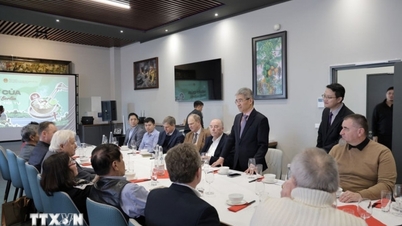
Mr. Rene Antonio Mesa Villafana, Minister of Construction of Cuba, expressed his honor to be present at the program commemorating the visit of leader Fidel Castro to the liberated areas of South Vietnam. He shared: "Fidel Castro taught us to cherish Vietnam through its solidarity, loyalty, and mutual assistance in all circumstances. The struggle of the Vietnamese people is not only for independence for the Vietnamese people themselves, but also for the world revolutionary movement and the liberation of nations. Vietnam has been and continues to be an example and a source of inspiration in Cuba's struggle."
The Cuban Minister of Construction stated that the relationship between the two countries is characterized not only by relations between parties, economic and trade ties, or other social sectors, but also by a spirit of independence and anti-imperialism forged by our heroes. Relations between Cuba and Vietnam are expanding in many areas of cooperation despite distance, economic difficulties, and even during the impact of the Covid-19 pandemic. Vietnam is Cuba's second-largest trading partner and the largest foreign investor in the Asia-Pacific region. High-level bilateral visits have helped maintain regular exchanges between representatives of various political and mass organizations, allowing for continued dialogue between the two countries.
Following the opening ceremony, Mr. Rene Antonio Mesa Villafana, Minister of Construction of Cuba, along with Mr. Phan Nguyen Nhu Khue, Head of the Propaganda Department of the Ho Chi Minh City Party Committee; Consuls General, representatives of consular missions of various countries in Ho Chi Minh City, and representatives of several agencies, units, and socio-political organizations of Ho Chi Minh City participated in a city tour on two double-decker buses decorated with a photograph of the late leader Fidel Castro raising the flag of the National Liberation Front of South Vietnam on Hill 241, Quang Tri province in September 1973.
These double-decker buses, prominently displaying historically significant imagery and considered one of the enduring symbols of the exemplary relationship between Cuba and Vietnam, appear on major thoroughfares and historical landmarks in Ho Chi Minh City. Their purpose is to vividly promote and publicize to residents and tourists the special, close, and exemplary friendship and solidarity between the Vietnamese and Cuban peoples.
Source


















































Comment (0)