

The 200 billion VND technological waste bin model, installed with the aim of improving waste disposal and beautifying urban landscapes, has brought much hope to the people. However, after nearly 6 years of implementation, many of these technological waste bins seem to have become "invisible".
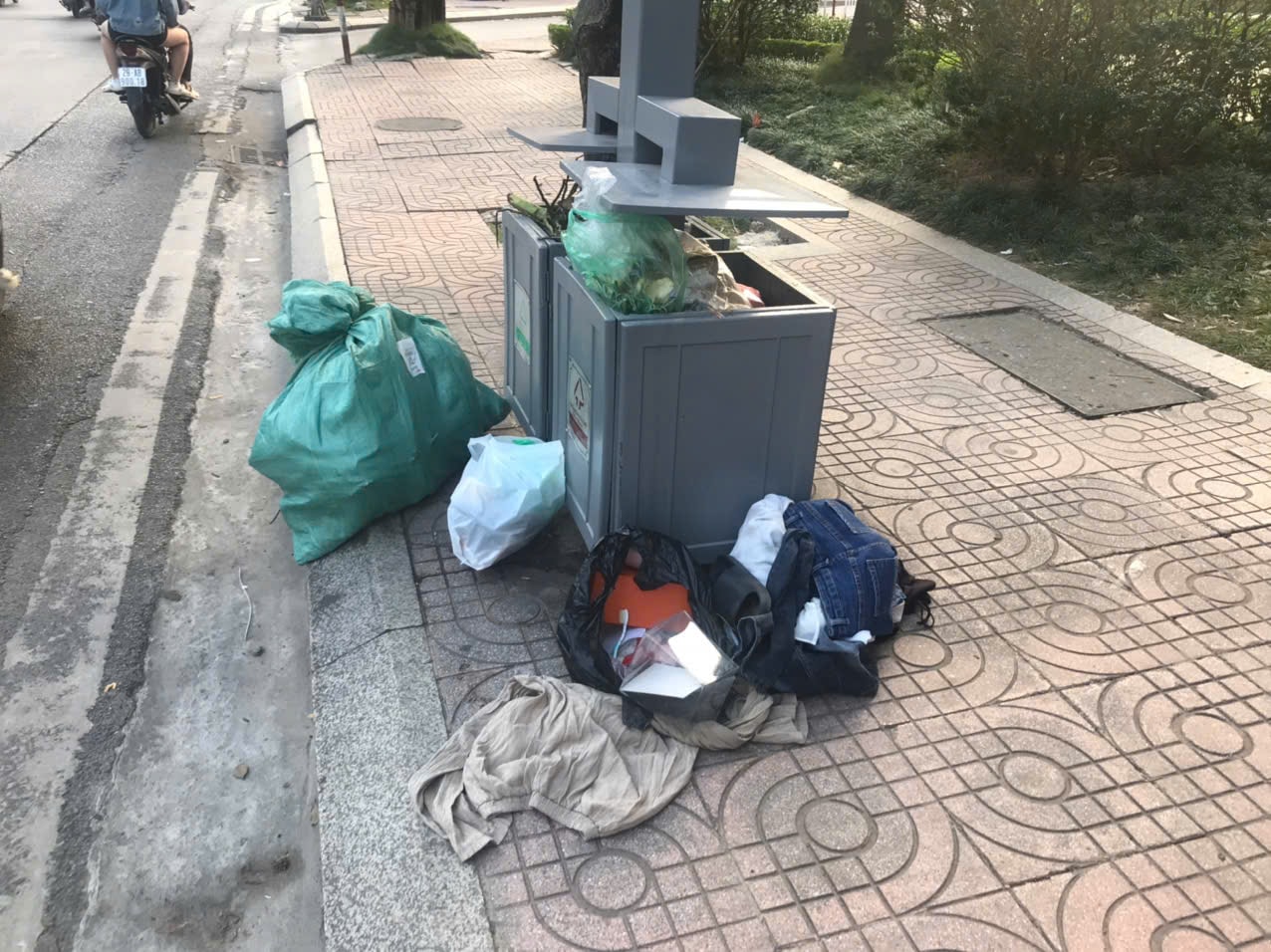
Currently, many technologically advanced trash cans have appeared on the streets of Hanoi to collect generated waste, combining waste collection with advertising opportunities throughout the city. These trash cans have a capacity of 240 liters and are divided into two separate compartments: one for non-recyclable waste (red) and one for recyclable waste (blue), with clear labeling.
Notably, these trash cans are designed with solar panels to power the information and advertisements displayed on top. When the model was first launched, many people were delighted because they believed it would improve the environment.
However, according to observations by reporters from Hanoi Moi Newspaper on October 26th and 27th, many of the technologically advanced trash bins have deteriorated, become damaged, and are no longer effective. On some major roads, the trash bins are tightly closed, with garbage scattered haphazardly next to them, emitting foul odors.
Typically, on Nguyen Chi Thanh Street (Lang Ward), the trash cans are wasteful and detract from the urban landscape as many garbage bags and clothes are discarded on the sidewalks. Due to insufficient capacity compared to the actual amount of waste, the technologically advanced trash cans are practically useless.
A common and noticeable issue is that although the trash cans have two separate compartments for recyclable and non-recyclable waste, people don't do this. Instead, they throw trash, branches, flowers, fruits, plastic bags, clothes, old items, etc., all mixed together. Some trash cans are turned upside down, with one compartment flipped to one side, making it impossible for people to put their trash in, forcing them to leave it on the roadside.
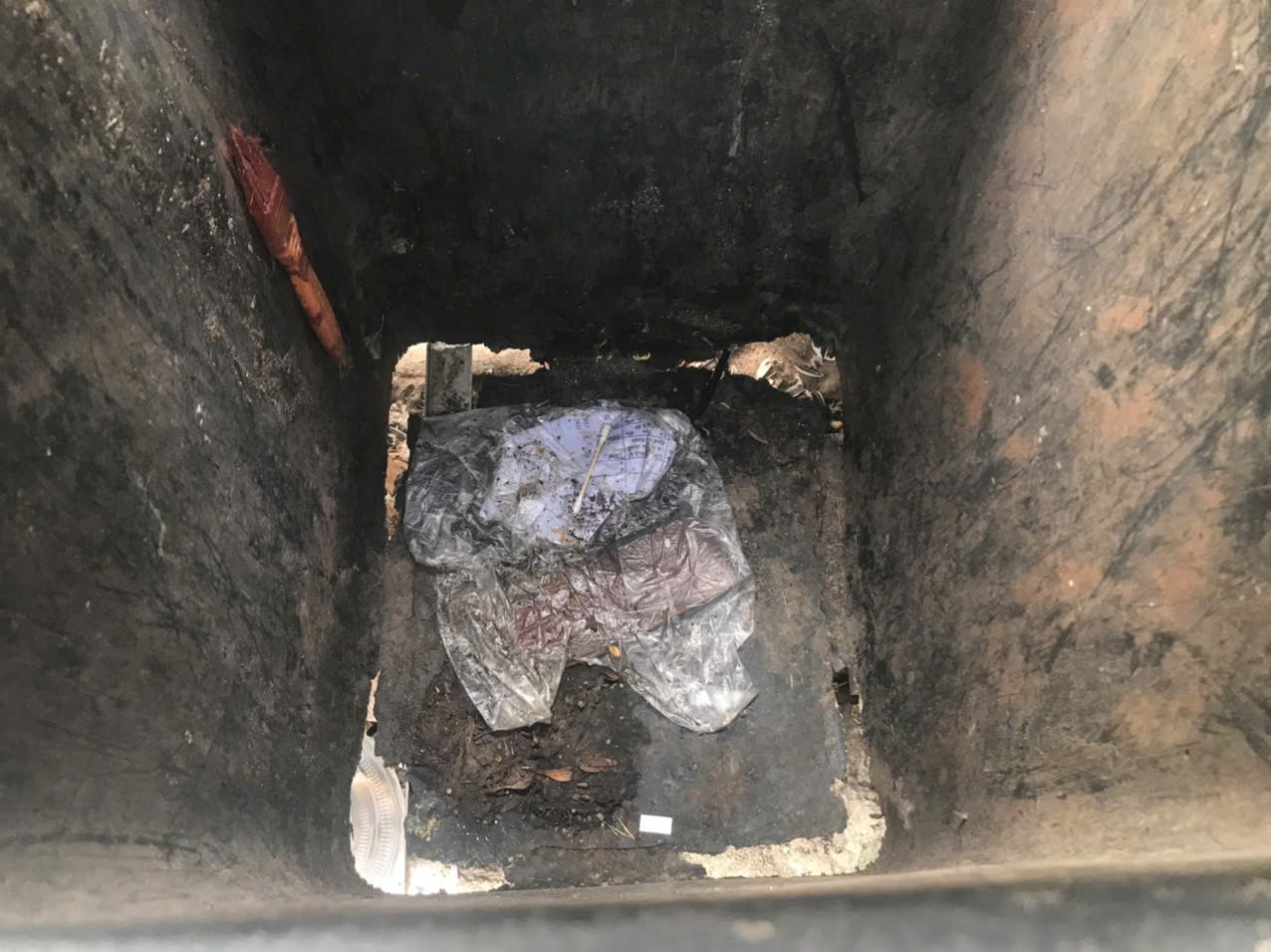
Similarly, on Duy Tan Street (Cau Giay Ward), the technologically advanced trash cans are severely dilapidated. The edges of the trash cans are dented, and the doors are open, allowing flies and mosquitoes to breed. Inside, the inner lining of the trash can is rusty and has many holes. When waste such as milk tea cups, water bottles, and milk cartons are dumped in, the leachate spills onto the street, creating dirty, dark stains.
Along Cau Giay Street, in front of the University of Transport and Communications, trash cans are blocked and covered with bricks, making it impossible to throw trash in. As a result, waste is dumped indiscriminately at the base of trees and at the bottom of trash cans, emitting foul odors and affecting the movement of students and residents in the area.
Ms. Chu Thi Luu, a vendor in front of the University of Transport and Communications, said that the trash cans are very dirty and not regularly emptied. Even when full, more trash is constantly being added, and then it spills onto the road, creating a very unsanitary environment.
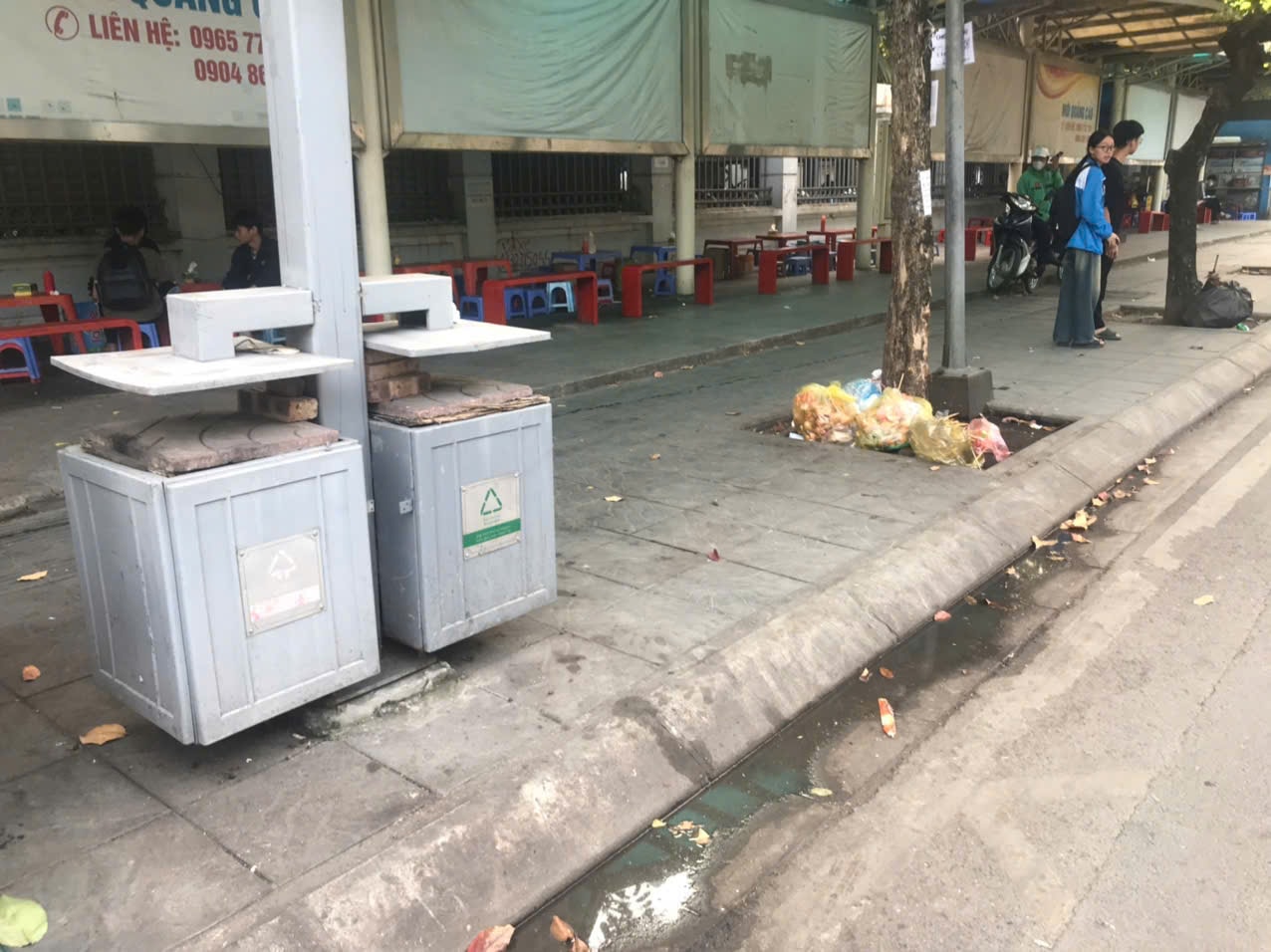
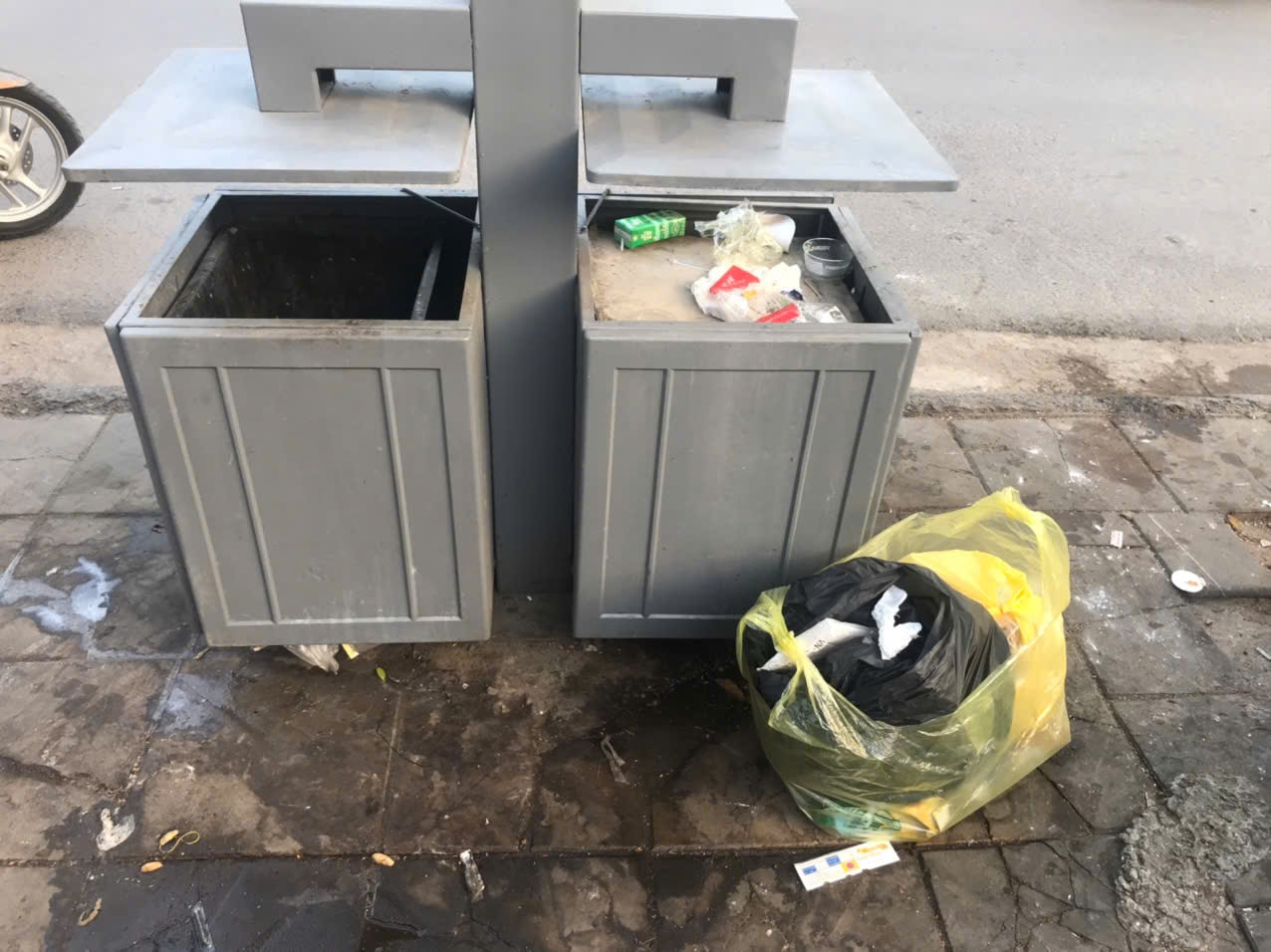
Similarly, on Tran Duy Hung Street (Yen Hoa Ward), many technologically advanced trash cans have become useless because someone has deliberately placed other items inside to prevent people from disposing of trash. Many trash cans have also been overturned, making it impossible to put trash in them.
Technologically advanced trash bins represent a new approach to raising public awareness about proper waste disposal, contributing to a clean and beautiful urban landscape. However, these bins are not meeting the actual waste volume, and many are left unused and deteriorating. If this situation continues without solutions, especially regular inspection, monitoring, and cleaning, these technologically advanced bins will fail to achieve their initial goals, resulting in a waste of social resources.
Source: https://hanoimoi.vn/khi-nhung-thung-rac-cong-nghe-tro-nen-vo-hinh-721223.html


![[Image] Close-up of the newly discovered "sacred road" at My Son Sanctuary](/_next/image?url=https%3A%2F%2Fvphoto.vietnam.vn%2Fthumb%2F1200x675%2Fvietnam%2Fresource%2FIMAGE%2F2025%2F12%2F13%2F1765587881240_ndo_br_ms5-jpg.webp&w=3840&q=75)











































































Comment (0)