

(NLĐO) - The Prime Minister emphasized the principle that the development of regimes and policies must ensure fairness, humanity, harmony, and reasonable correlation among all subjects.
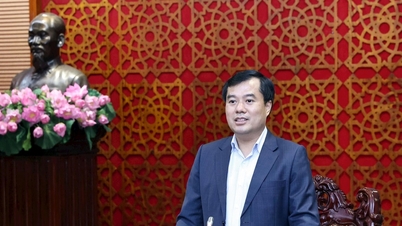
On the afternoon of December 17, Prime Minister Pham Minh Chinh, Head of the Government's Steering Committee for summarizing the implementation of Resolution No. 18-NQ/TW "Some issues on continuing to innovate and reorganize the organizational structure of the political system to be streamlined, effective and efficient," chaired the 4th meeting of the Steering Committee.
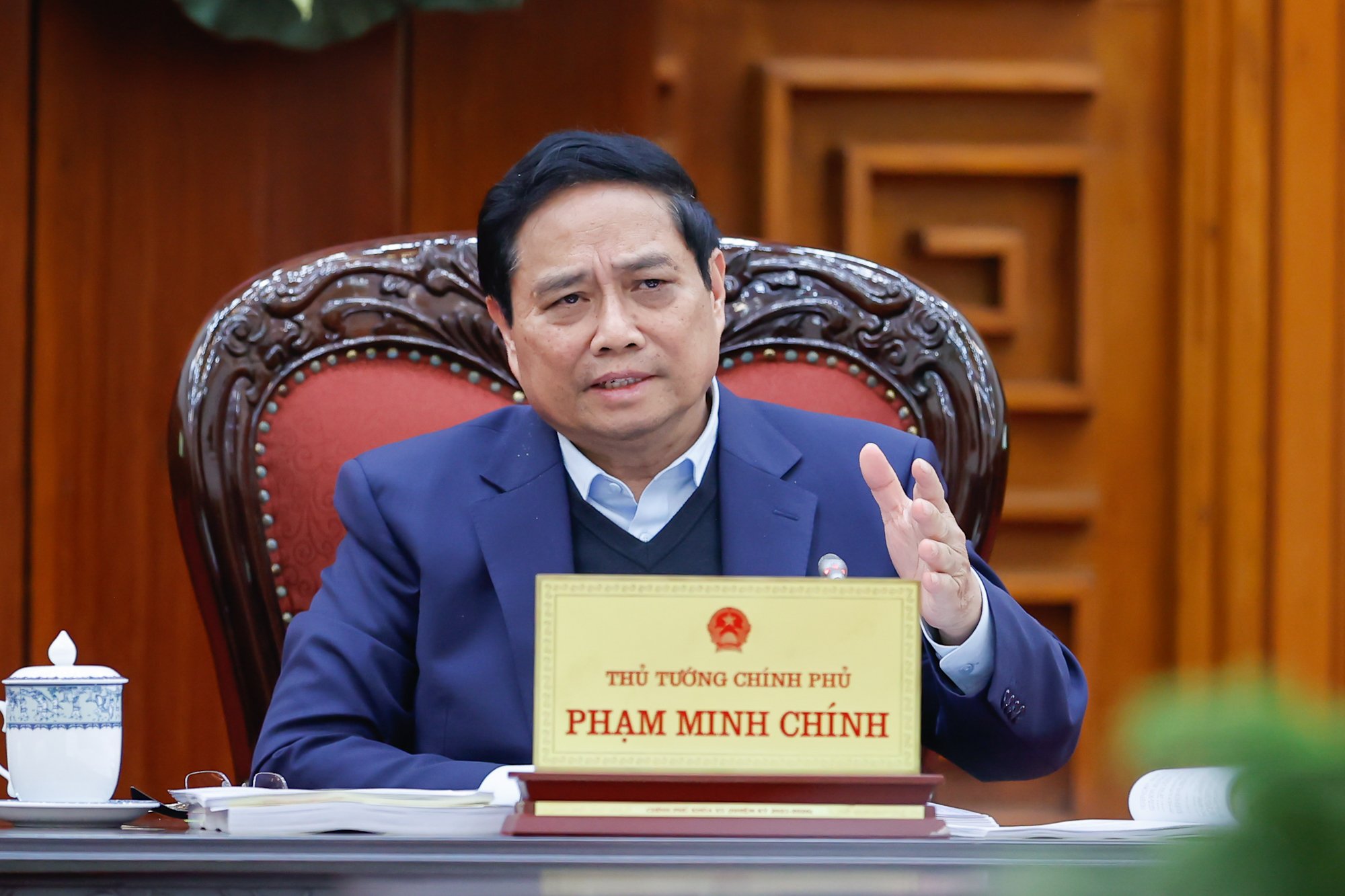
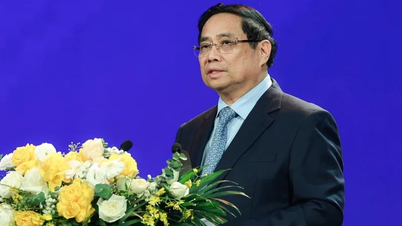
Prime Minister Pham Minh Chinh presided over the meeting on the afternoon of December 17. Photo: Nhat Bac
At the meeting, the Steering Committee continued to review the plan for merging, consolidating, and transferring functions, tasks, and organizational structures; and the establishment of Party Committees of the Government, ministries, ministerial-level agencies, and agencies under the Government.
At the same time, discussions and reviews will be held regarding the regulations and policies for officials, civil servants, public employees, and contract workers in the process of reorganizing the political system's apparatus.
According to the proposed plan, the government apparatus is expected to consist of 13 ministries and 4 ministerial-level agencies, a reduction of 5 ministries and 5 agencies directly under the Government. In addition, there will be a reduction of 500 departments and equivalent units under ministries and general departments; 177 divisions under ministries, ministerial-level agencies and equivalents; and 190 public service units under ministries and agencies within ministries.
The consolidation and merger of government agencies will help streamline operations, adjust the functions and tasks of state management of ministries and ministerial-level agencies, and fundamentally overcome current overlapping issues. Along with this, the number of agencies will be reduced by 35 to 40% after the organizations are reorganized and consolidated.
The internal structures of these organizations are also being reorganized and streamlined. Following the government's directive, the number of general departments and equivalent organizations will be essentially eliminated. Calculations suggest that approximately 500 departments within ministries and general departments could be reduced.
Ministries, ministerial-level agencies, and government agencies are also finalizing plans to streamline organizational structures and adjust the functions and tasks of state management within ministries and ministerial-level agencies. Accordingly, after the restructuring and consolidation of organizations, the number of organizational units will be reduced by 35-40%, while the remaining organizations that are restructured internally will be reduced by at least 15%.
Regarding policies and regulations for officials, civil servants, and contract workers in the restructuring of the political system's organizational apparatus, the Steering Committee believes that the policies must be "revolutionary," ensuring synchronization between streamlining the apparatus; the policies must be outstanding, humane, fair, and ensure a reasonable balance between different groups, aiming to stabilize their lives and guarantee the rights and interests of officials, civil servants, and workers during the restructuring and streamlining of the organizational apparatus.
Specifically, the policy prioritizes and encourages immediate retirement or retirement within 12 months of the agency, organization, or unit implementing the restructuring according to the decision of the competent authority; the policy aims to link downsizing with restructuring and improving the quality of the staff, civil servants, and public employees; and is determined to maintain and retain good, capable, and qualified staff and public employees, preventing "brain drain"...
Concluding the meeting, Prime Minister Pham Minh Chinh emphasized the principle that the development of regulations and policies must ensure fairness, humanity, harmony, and reasonable correlation among different groups to stabilize lives and guarantee the legitimate rights and interests of officials, civil servants, and workers.
The system and policies must be consistent, building upon existing policies and surpassing current ones; the spirit is not to sacrifice progress, social justice, and social welfare for the sake of mere growth, but to ensure that people's lives become increasingly prosperous and happy, with each year better than the last, leaving no one behind.
The Prime Minister requested that policies be designed with specific and detailed target groups; providing more preferential treatment for older individuals with less time to contribute and for younger, newly employed individuals with many job opportunities in various sectors. In particular, there should be a fair system for contract workers, ensuring they are not disadvantaged.
The Prime Minister noted the need to continue refining incentive policies for those who resign immediately after the restructuring and reorganization of the administrative apparatus, in accordance with the country's conditions and circumstances. Policy development must be linked to the responsibility of the heads of agencies, organizations, and units in evaluating, screening, and selecting those who resign, in line with the goals of reducing staff numbers, restructuring, and improving the quality of cadres, civil servants, and public employees; and enhancing the leadership capacity and fighting strength of Party organizations and Party members.
At the same time, organizational restructuring needs to focus on retaining capable, qualified, healthy, experienced, and enthusiastic officials and civil servants, and should be linked to implementing policies to attract talented individuals to the public sector.
Source: https://nld.com.vn/khong-de-chay-mau-chat-xam-khi-sap-xep-tinh-gon-bo-may-196241217202149269.htm





















![[Image] Vietnam's colorful journey of innovation](/_next/image?url=https%3A%2F%2Fvphoto.vietnam.vn%2Fthumb%2F1200x675%2Fvietnam%2Fresource%2FIMAGE%2F2025%2F12%2F14%2F1765703036409_image-1.jpeg&w=3840&q=75)




















































Comment (0)