

Investment capital is certainly flowing strongly, but if the mechanisms don't adapt quickly enough, if the system doesn't move in time, that capital may "pause" and leave. This accurate warning was recently issued by experts at a series of workshops and seminars.
Over the past two years, Resolution No. 98/2023/QH15 on piloting a number of specific mechanisms and policies for the development of Ho Chi Minh City has made a significant contribution to the city's economic recovery and gradual stable development based on innovation in the growth model, structural transformation, linked with the application of science and technology and innovation, and contributing to the improvement of the overall legal system. However, in the context of streamlining the administrative apparatus and reorganizing administrative units, as Ho Chi Minh City expands its natural-urban and socio-economic spaces, the "98 key set" should be passed on to more people to simultaneously open new doors of opportunity, even those with a forward-thinking nature.
The dual driving force for Ho Chi Minh City is the synergy between its special mechanisms and the spirit of "local decision-making, local action, local responsibility." The level of budgetary independence, proactive organizational autonomy, and access to international capital will create new momentum. Furthermore, with the Politburo 's four pillars (Resolution 57 on breakthroughs in national science, technology, innovation, and digital transformation; Resolution 59 on international integration in the new context; Resolution 66 on reforming the work of lawmaking and enforcement to meet the requirements of national development in the new era; and Resolution 68 on the development of the private economy), the scope for connection, exploitation, and development is also opened up and facilitated in both breadth and depth. Therefore, Resolution 98 should be "updated," especially in its fundamental, visionary, and predictive content.
The proposed amendments and additions to Resolution 98 are therefore noteworthy, focusing on two important and practical contents: one amendment (Policy prioritizing the attraction of strategic investors) and one addition (Policy related to Free Trade Zones). In particular, issues with a predictive nature are accompanied by warnings, and preferential commitments are presented with binding legal provisions that are highly transparent and convincing.
To qualify as a "strategic investor," equity capital is only a necessary condition; the sufficient conditions must be measured by credit history, ability to raise capital, experience in implementing similar projects, management capacity, personnel, and, more importantly, a commitment to sharing long-term benefits (7-10 years). Many opinions also suggest a value-added mechanism, avoiding focusing solely on large investors while neglecting potential domestic investors. Independent appraisal and public disclosure of selection data and contracts should be added.
Furthermore, technological criteria must be placed on par with financial criteria: prioritizing the application of advanced technology, global innovation, and alignment with digital transformation and sustainable development. All of this will increase transparency and attractiveness; acting as a "checkpoint" to screen and truly attract high-quality strategic investors with a long-term vision.
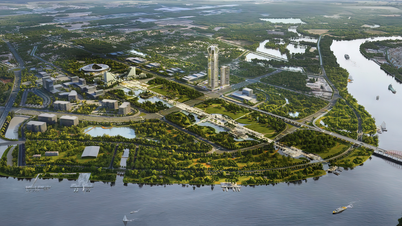
For urban railway projects, a key recommendation is to hold businesses accountable when transferring projects. Regarding the addition of a Free Trade Zone model within the new development space, the vision should not be limited to tax and fee incentives, but should be linked to the maritime economy, seaports, transportation and logistics networks, tourism , and trade services.
The tax and fee incentive package is very broad; if not linked to performance, it could conflict with global minimum tax standards. Conversely, if the incentives are designed to be linked to indicators of logistics, transit, research and development, greening, and have a mechanism for timely adjustments, Ho Chi Minh City can transform this commercial zone into a new "gateway for integration" for the region and the entire country.
The aforementioned suggestions and adjustments are "echoes" reflecting the needs of practice and paving the way for practical development. After the merger, Ho Chi Minh City will not only be a large city in terms of area and population, but also "large" in its mechanisms, vision, and aspirations. Resolution 98, if given timely support, is the tool to realize those aspirations.
Source: https://www.sggp.org.vn/khong-gian-phat-trien-moi-tu-nhung-chinh-sach-dot-pha-dac-thu-post812019.html
![[Photo] Two flights successfully landed and took off at Long Thanh Airport.](/_next/image?url=https%3A%2F%2Fvphoto.vietnam.vn%2Fthumb%2F1200x675%2Fvietnam%2Fresource%2FIMAGE%2F2025%2F12%2F15%2F1765808718882_ndo_br_img-8897-resize-5807-jpg.webp&w=3840&q=75)















































































Comment (0)