

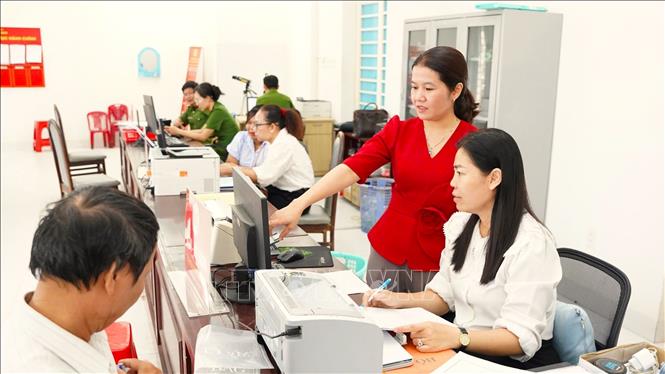
Authorized to issue temporary mechanisms and decentralize revenue sources.
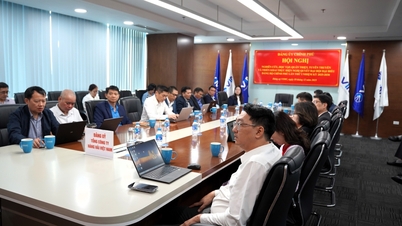
Mr. Nguyen Hong Thanh, Vice Chairman of Tay Ninh Provincial People's Committee said: "The Provincial People's Committee allows that in the new model, if the Central Government has not yet provided timely instructions, the locality will proactively issue temporary regulations, as long as it ensures operation. When there are official instructions, adjustments will be made."
One of the fundamental issues of the new model is financial decentralization. According to the Vice Chairman of the People's Committee of Tay Ninh province, the province is developing two important resolutions on the decentralization of revenue sources and expenditure responsibilities, and the allocation of revenue between the province and communes. Because the Government has not yet issued general principles, Tay Ninh province must temporarily inherit some principles from the two former provinces (Tay Ninh and Long An ) in the decentralization of revenue sources. The province also agreed on the principle of establishing a Commune-level Investment and Construction Management Board; if a commune does not yet meet the conditions for financial autonomy, the province will consider providing initial support.
To leverage economic development, Tay Ninh province has proposed to the Prime Minister a pilot project to implement several mechanisms and policies applicable to the Moc Bai Border Economic Zone, focusing on five main policy groups: mechanisms to incentivize strategic investors, policies to attract high-quality human resources, mechanisms to regulate budget capital from the economic zone's revenue, specific customs policies, and preferential policies for tax-exempt businesses. According to the Chairman of the Tay Ninh Provincial People's Committee, Le Van Han, the goal of the project is to create a flexible and appropriate legal framework to attract strategic investors.
Tay Ninh also proposed that the Central Government support capital (about 2,500 billion VND) to invest in the Long An - Tan Ninh connecting axis (two old provincial capitals), because the current traffic infrastructure is still limited, greatly affecting the movement of officials, civil servants, people and businesses.
In Dong Thap, the organization of the two-tiered local government system is being implemented in accordance with Resolution 60-NQ/TW of the Central Committee of the Communist Party and resolutions of the National Assembly. Ms. Pham Mai Tien, Chief of the Dong Thap Provincial Party Committee Office, affirmed: To date, the two-tiered local government system has operated stably and smoothly; many difficulties and obstacles have been promptly resolved.
In the field of digital transformation, Vice Chairman of the People's Committee of Dong Thap province Huynh Minh Tuan emphasized: The province is constantly improving institutions and policies, overcoming shortcomings in legal documents of the Central and local governments; promoting institutional reform, proactively and urgently building a legal framework for new issues and trends to create opportunities for development, and encouraging innovation and unlocking resources.
Institutional and resource synchronization from the Central Government will be the key to helping provinces like Tay Ninh and Dong Thap, despite difficulties, have enough motivation to make new progress in all aspects.
The Party's major policy and expectations for the stability of the apparatus.
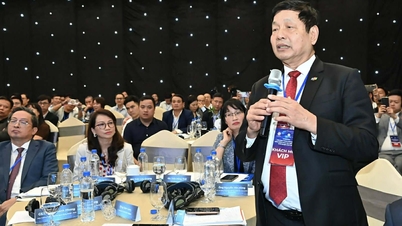
Ms. Nguyen Thi Bach Mai, former National Assembly delegate of Tay Ninh province, terms 11 and 12, commented: The policy of merging provinces and cities is one of the major policies of the Party, National Assembly and State.
At this point, the merger has stabilized relatively well and is gradually becoming more efficient. However, the people still have many expectations, especially regarding how to ensure the stability of the administrative apparatus after the merger and how the major policies and guidelines of the new province will be in line with the people's wishes in terms of economics, politics, culture, society, and social welfare."
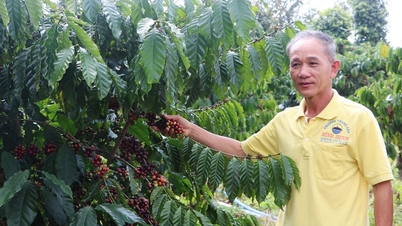
Ms. Nguyen Thi Bach Mai also emphasized that the people's greatest desire is to increase their income through economic development channels, agricultural production and industry related to new technologies.
Recently, on December 8, 2025, Prime Minister Pham Minh Chinh held a working session with the leaders of Tay Ninh province, acknowledging and commending the efforts made by the Party Committee, government, military, and people of Tay Ninh, which have significantly contributed to the overall achievements of the country. The Prime Minister highly appreciated the results of the two-tiered local government system in Tay Ninh, noting that the province had reorganized 15 specialized agencies, established 96 commune-level administrative units, and resolved social welfare issues for 2,545 laid-off individuals with a total expenditure of 1,853 billion VND.
The Prime Minister requested Tay Ninh province to focus on effectively implementing the two-tiered local government model; appropriately assigning personnel, training and improving the capacity and qualifications of officials, especially enhancing digital transformation capabilities and implementing online public services; and at the same time, paying attention to arranging, exploiting, and effectively utilizing surplus office buildings.
In particular, the Prime Minister pointed out strategic directions from the central government aimed at resolving difficulties, including the implementation of three strategic breakthroughs in institutions, infrastructure, and human resources. The Prime Minister also noted that the province should accelerate the development of social housing, pay attention to vulnerable groups, and focus on resolving long-standing and unresolved issues.
Final article: Expecting a substantive solution
Source: https://baotintuc.vn/thoi-su/go-kho-chinh-quyen-dia-phuong-hai-cap-bai-2-linh-hoat-tu-dia-phuong-20251210113848801.htm
![[Photo] The captivating scenery of the fragrant maple forest in Quang Tri](/_next/image?url=https%3A%2F%2Fvphoto.vietnam.vn%2Fthumb%2F1200x675%2Fvietnam%2Fresource%2FIMAGE%2F2025%2F12%2F10%2F1765353233198_lan09046-jpg.webp&w=3840&q=75)


![[Photo] Explore the US Navy's USS Robert Smalls warship](/_next/image?url=https%3A%2F%2Fvphoto.vietnam.vn%2Fthumb%2F1200x675%2Fvietnam%2Fresource%2FIMAGE%2F2025%2F12%2F10%2F1765341533272_11212121-8303-jpg.webp&w=3840&q=75)














![[Video] The craft of making Dong Ho folk paintings has been inscribed by UNESCO on the List of Crafts in Need of Urgent Safeguarding.](https://vphoto.vietnam.vn/thumb/402x226/vietnam/resource/IMAGE/2025/12/10/1765350246533_tranh-dong-ho-734-jpg.webp)





















































Comment (0)