

According to Mr. Dinh Van Thinh, Director of Angel Skills Education Company, judging from the littering after BlackPink's concert, there might still be a "gap" in the education of responsibility and civilized behavior in public places...
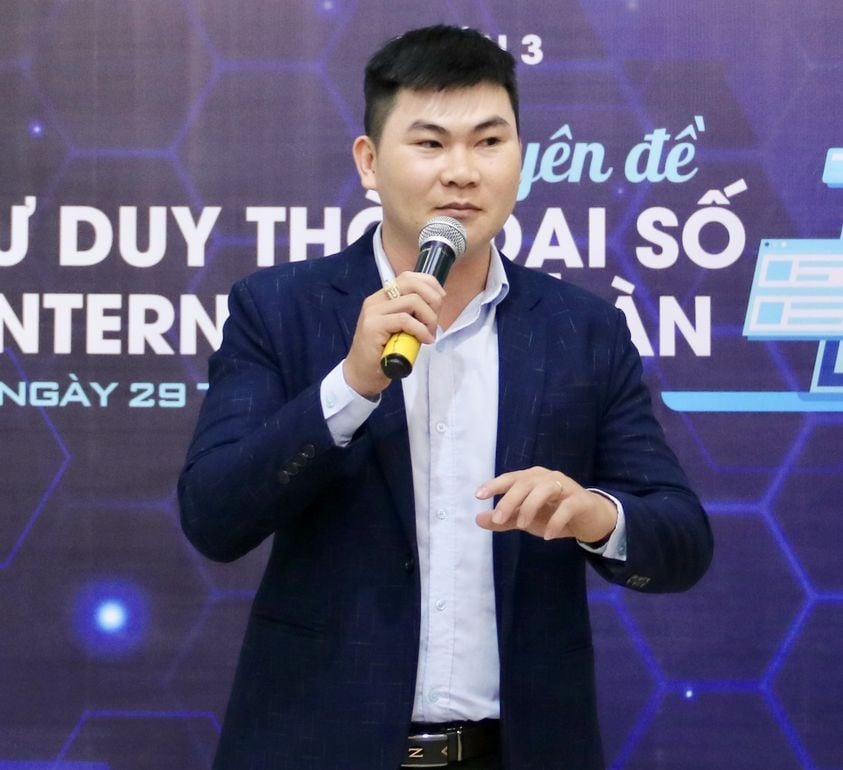 |
| According to Master's degree holder Dinh Van Thinh, the act of littering after BlackPink's concert highlights the need to educate children about civilized behavior in public places. (Photo: Provided by the interviewee) |
BlackPink's two concerts at My Dinh National Stadium recently attracted nearly 67,000 spectators. However, after the concert, the stands and streets were littered with a huge amount of trash, sparking controversy. Many people believe this represents a failure of education...
The Blackpink group's performance in Vietnam attracted significant public attention, presenting an opportunity to promote the country's image. However, after the show, the young people caused a stir by leaving behind a massive amount of trash on the stage and along the streets. What are your thoughts on this?
The images of litter left after the concert partly reveal a "gap" in the sense of community responsibility and a lack of civility among some young people.
This image, in some ways, gives international friends a negative view of our youth. At the same time, it somewhat reduces trust and raises doubts about the sense of community among Vietnamese people when participating in studies, tourism , and events abroad.
In addition, there is a need to invest in more public trash cans, and sufficient trash cans should be prepared for events to handle the amount of waste. The organization process needs to be tight, supervision strict, and penalties should be implemented for littering.
Many have criticized this action as irresponsible, even a failure of education from family, school, and society. What is your opinion?
This shows that the education of community responsibility in schools, families, and society at large is limited and lax, and often superficial. More accurately, education has failed to establish proper and civilized behavior in young people in public, preventing them from feeling remorse for their actions.
However, upon reflection, it's impossible to place all the blame on education from school, family, or society. Because each individual's acquisition of knowledge is different, and subjective and objective factors, life experiences, and past events all significantly influence each person.
In reality, young people become overly energetic and exhibit uncontrolled behavior when they meet their idols. What matters most to them is seeing their idol and joining in the vibrant atmosphere. Other aspects are no longer a major concern, as they think cleaning up after an event isn't their responsibility.
In my opinion, educating people about responsibility and civility in the community shouldn't just be done through words, but also through decisive actions and setting a good example for each other in schools, families, and society. Furthermore, investing in more and standardized public trash cans is necessary, easily forming a habit and fostering a civilized lifestyle everywhere and at all times.
Looking back, wasn't the admirable act of Japanese fans cleaning up trash in the stands after a 2022 World Cup match worth considering?
It can be said that civilized behavior in public places has long been a value among the Japanese. From collecting trash to patiently queuing, not pushing or shoving, and bowing in thanks when given way... these are just a few specific examples. Significantly, this has become a habit, a community-based discipline.
The stories of Japanese players cleaning up their locker rooms and Japanese fans picking up trash after matches at the 2022 World Cup highlight the importance of instilling a sense of responsibility and civilized behavior in children in public spaces.
I don't want to compare Vietnamese people with those of any other country. But looking at others makes us reflect on ourselves, and I hope that young Vietnamese people will examine themselves. From there, they can make changes in their thinking, words, and actions, become more responsible to the community, and contribute to building a beautiful image of the country and its civilized people in the eyes of the international community.
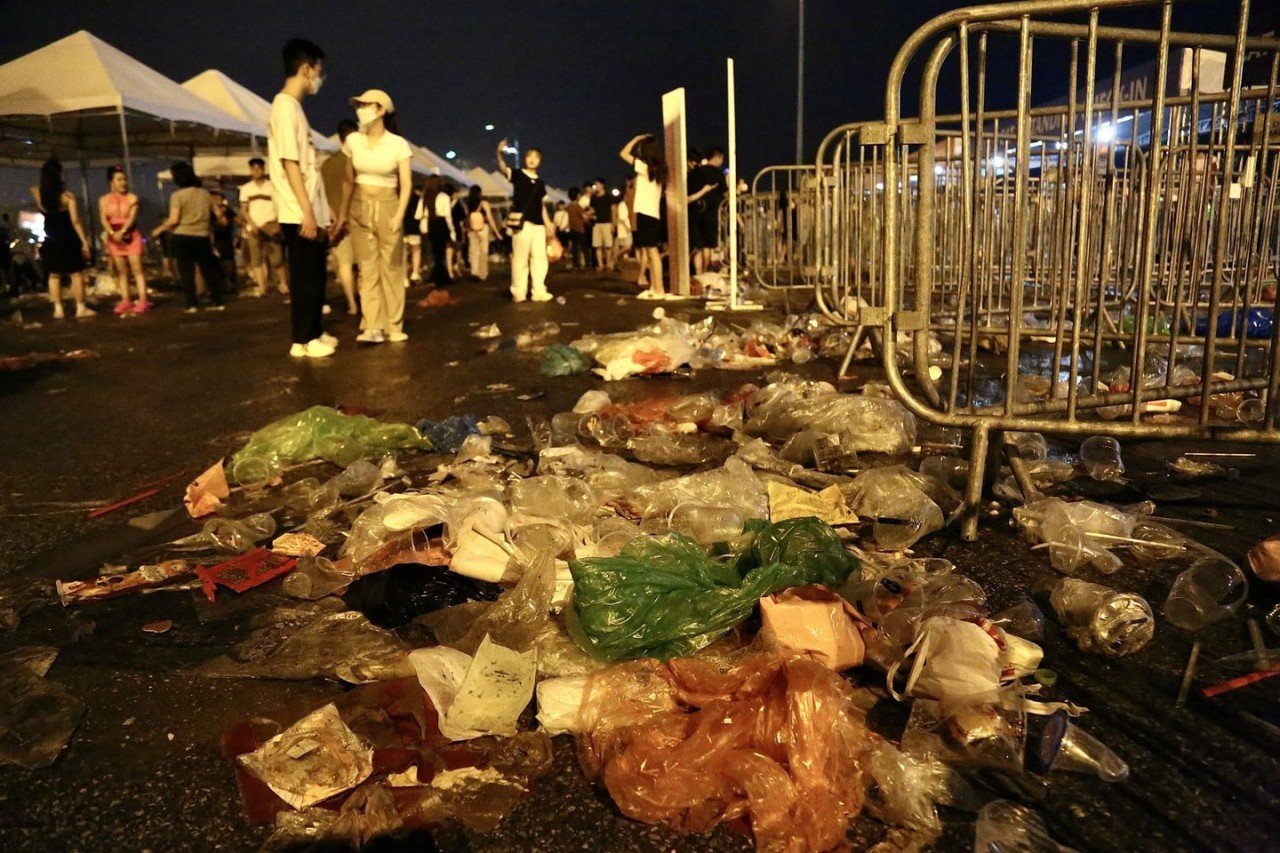 |
| Trash littered the My Dinh National Stadium after BlackPink's performance. (Source: Thanh Nien) |
Education is about conveying messages to children and creating a suitable environment for students to grow, gradually developing habits of dedication and civilized behavior. What are the responsibilities of family education and school education?
The educational responsibilities of both schools and families are essential. In my opinion, the most vibrant and effective form of education comes from the exemplary behavior of teachers and parents.
The Japanese people's civilized behavior in public is remarkable. This requires continuous education and practice throughout life, not just a day or two. It's impossible to rely solely on teachers; establishing civilized habits, lifestyles, and behavior requires education from all three pillars: family, school, and society. The key is for each individual to experience, practice, and apply these values regularly and consistently.
Education plays a crucial role in creating proper values and civilized behavior. Many seemingly small things, such as greetings, bowing in thanks, picking up litter, and not littering in public places, have great significance in helping children become kind people in the future. We can learn this from the Japanese.
Perhaps we need to do something to create a more favorable environment for children to develop into civilized citizens both domestically and internationally?
Education in schools and family activities should integrate the education of community responsibility and environmental protection. Schools need to have strict regulations for maintaining cleanliness in classrooms and on school grounds. Families need to educate and guide their children in maintaining cleanliness at home, during playtime, outings, and events.
To become civilized citizens in our lifestyles, each of us needs to become a "camera" reminding and offering positive feedback to one another in jointly protecting and maintaining public hygiene.
Schools, families, and society need to invest in trash cans to handle the amount of waste. If we only rely on educational philosophy through words without concrete actions and clear, consistent regulations, the lack of awareness and the images of litter after events will continue to recur.
Of course, education is not about "lecturing" on morality, but about conveying messages to children and creating a favorable environment for their growth and development. Those who live in an environment where civilized behavior is valued will naturally develop civilized behavior themselves. Therefore, schools and families need to create an environment that guides children towards noble values.
Instead of focusing on high grades, let's prioritize character education. This will ensure that future generations exhibit admirable and civilized behavior, both at home and in society, domestically and internationally.
Thank you, sir!
Source
![[Photo] Prime Minister Pham Minh Chinh attends the Conference summarizing and implementing tasks of the judicial sector.](/_next/image?url=https%3A%2F%2Fvphoto.vietnam.vn%2Fthumb%2F1200x675%2Fvietnam%2Fresource%2FIMAGE%2F2025%2F12%2F13%2F1765616082148_dsc-5565-jpg.webp&w=3840&q=75)






























































Comment (0)