

Cassava - A common and nutritious root vegetable.
With its simple, rustic appearance, no one would think that this root vegetable, once forgotten and only used as animal feed, and dirt cheap, now evokes nostalgic memories every winter. Cassava is easy to eat, easy to prepare, and also very nutritious.
In the past, when food was scarce, rice mixed with cassava was a common dish in family meals. Therefore, cassava-mixed rice or cassava cake is a childhood favorite for many people.
However, over time, cassava has not only served as a necessary food source but has also become a popular delicacy, especially during the winter months. Cassava is used to make dishes such as cassava sweet soup, roasted cassava, cassava cakes, or steamed cassava with fragrant coconut milk. These dishes create a special, warm flavor that melts the heart on chilly days.
Cassava, once a staple for the poor during difficult times, has now become a delicious delicacy enjoyed every winter. (Illustrative image)
This humble root vegetable seemed to have been forgotten amidst the abundance of delicious and expensive dishes available today. However, cassava remains a symbol in traditional Vietnamese cuisine , transforming from a common staple food into an indispensable part of life, a comforting snack that warms the stomachs of countless people during the winter months.
In the past, almost every household grew cassava. It's a drought-tolerant plant with few pests and diseases, yielding high productivity. Cassava was used as a rice substitute during times of scarcity or in the making of cakes, providing a feeling of fullness not only because it's high in fiber but also because it contains many other nutrients.
Cassava dessert is a popular dish during the winter months. (Illustrative image)
According to research, cassava contains a lot of fiber and flavonoids that can aid digestion and reduce the risk of metabolic disorders. Cassava also contains a lot of vitamin C, which helps the body heal wounds quickly and whiten the skin. Furthermore, the large amount of potassium in cassava can help prevent high blood pressure.
Many women enjoy dishes made from cassava in winter because it's creamy but not fattening. Furthermore, cassava is rich in starch, which is similar to soluble fiber. This helps reduce inflammation, improve metabolism, and is especially effective for weight loss. The abundant fiber in cassava helps you feel full longer and reduces cravings for snacks. This, in turn, limits the accumulation of excess fat and significantly reduces the body's fat absorption.
Some delicious dishes made from cassava
Cassava can be used to make many delicious dishes in winter, but some notable ones include steamed cassava with coconut milk, cassava cake, and cassava sweet soup. With skillful hands and flexible creativity, many delicious dishes have been made from this humble root vegetable, and some places even have cassava cake as a specialty, like Phu Tho .
Phu Tho's cassava cake is a popular specialty enjoyed by many. (Illustrative image)
During the cold season, favorite dishes among women include steamed cassava with coconut milk, or enjoying a hot bowl of cassava sweet soup on a chilly winter afternoon in the city.
Steamed cassava is often flavored with coconut milk or pandan leaves for a beautiful color, and topped with shredded coconut for added richness and creaminess. The combination of the nutty, chewy texture of the cassava and its naturally sweet taste makes it incredibly delicious.
Steamed cassava with coconut milk is delicious and easy to eat. (Illustrative image)
But that's not all; in the fertile Mekong Delta, the locals offer a unique and appealing dish: cassava silkworm cake, a colorful treat enjoyed by many. The cake has a subtly sweet, chewy texture, blended with the rich, creamy flavor of grated coconut, and topped with crushed peanuts for an extra nutty taste. Cassava silkworm cakes are typically long and slender like silkworms, but they can also be creatively shaped into various other forms such as squares and small rectangles, depending on the maker's preference. This cassava silkworm cake comes in a variety of colors, from pink, red, green, yellow, white, and brown, all made from natural colors derived from vegetables, making it very safe for health.
Cassava noodle cake is a distinctive dish of the people in the Mekong Delta. (Illustrative image)
In addition, creative dishes such as roasted cassava topped with cheese or herbs are also tried by many people and offer an appealing flavor.
Grilled cassava is also one of the delicious dishes made from cassava root. (Illustrative image)
Some things to keep in mind when eating cassava.
Firstly, cassava is delicious and offers many health benefits, but it also contains certain substances that hinder nutrient absorption, such as saponins, tannins, and phytates. Naturally, consuming too much cassava frequently will reduce the body's absorption of nutrients.
Secondly, consuming too much cassava, improperly processed cassava, or raw cassava can lead to cassava intoxication or poisoning. This is because cassava contains cyanogenic glycosides, which can release cyanide in the body. More seriously, these can cause damage and paralysis of organs if poisoning occurs. Therefore, people with poor digestion, malnutrition, or weakness should eat cassava in moderation. Additionally, some people are allergic to cassava. Therefore, when eating cassava, they should start with a small amount; only if no reaction occurs can they consume more.
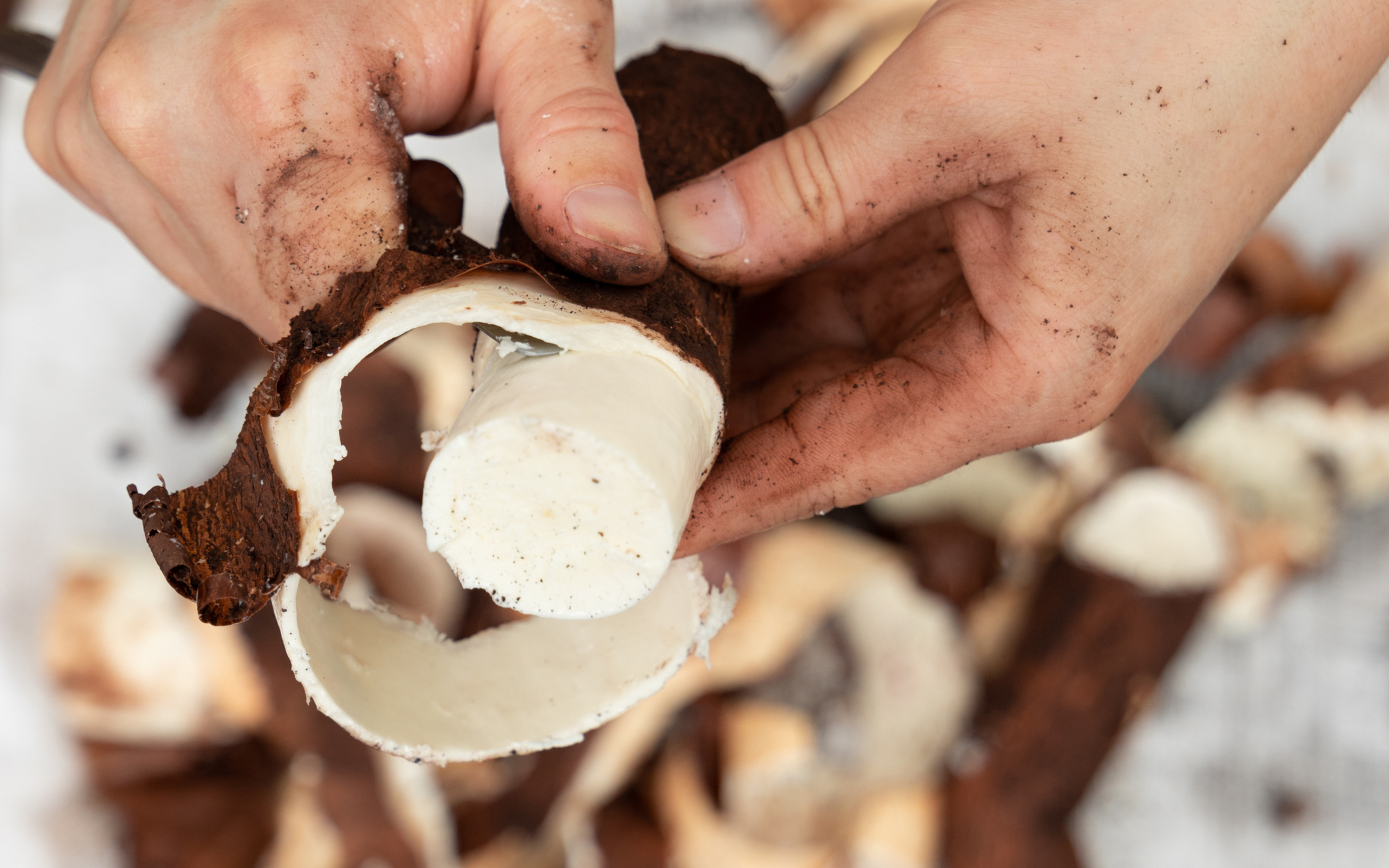
The cassava root needs to have its peel completely removed before further processing. (Illustrative image)
Thirdly, cassava should be properly stored and processed before consumption. It should be kept in a cool place, away from direct sunlight. It is crucial to peel the cassava. The peel contains many compounds that can produce cyanide, so it must be completely removed. Afterward, soak the cassava in water for at least several hours, or even several days, to remove some of the toxins.
Because raw cassava contains many harmful substances, it needs to be thoroughly cooked by boiling, steaming, or grilling. When eating cassava, it should be combined with other foods rich in protein, as this can ensure good health and the protein helps eliminate cyanide toxins.
Fourth, two groups need to be cautious when eating cassava: pregnant women and young children. Pregnant women should absolutely not eat raw cassava; when eating cooked cassava, they should only consume it in limited quantities and consult their obstetrician before eating. Young children, with their immature digestive systems, may experience indigestion from eating cassava, affecting their nutrient absorption.
Source
![[Photo] Closing Ceremony of the 10th Session of the 15th National Assembly](/_next/image?url=https%3A%2F%2Fvphoto.vietnam.vn%2Fthumb%2F1200x675%2Fvietnam%2Fresource%2FIMAGE%2F2025%2F12%2F11%2F1765448959967_image-1437-jpg.webp&w=3840&q=75)
![[Photo] Prime Minister Pham Minh Chinh holds a phone call with the CEO of Russia's Rosatom Corporation.](/_next/image?url=https%3A%2F%2Fvphoto.vietnam.vn%2Fthumb%2F1200x675%2Fvietnam%2Fresource%2FIMAGE%2F2025%2F12%2F11%2F1765464552365_dsc-5295-jpg.webp&w=3840&q=75)

















































![[OFFICIAL] MISA GROUP ANNOUNCES ITS PIONEERING BRAND POSITIONING IN BUILDING AGENTIC AI FOR BUSINESSES, HOUSEHOLDS, AND THE GOVERNMENT](https://vphoto.vietnam.vn/thumb/402x226/vietnam/resource/IMAGE/2025/12/11/1765444754256_agentic-ai_postfb-scaled.png)

















































Comment (0)