

Plantain - a type of wild vegetable: Both a daily vegetable and a medicinal herb in traditional Eastern medicine.
According to Dr. Nguyen Quang Duong, Head of the Oncology Department at Tue Tinh Hospital, plantain (Plantago major) has been used as medicine by people in Vietnam and China since ancient times. Ancient texts describe plantain as having a cooling nature, a sweet taste, and being non-toxic, acting on the liver, kidney, and small intestine meridians. Its effects include diuretic properties, clearing the lungs and liver, dispelling wind-heat, eliminating dampness in the bladder, relieving coughs, expelling phlegm, stopping diarrhea, improving eyesight, and acting as a tonic.
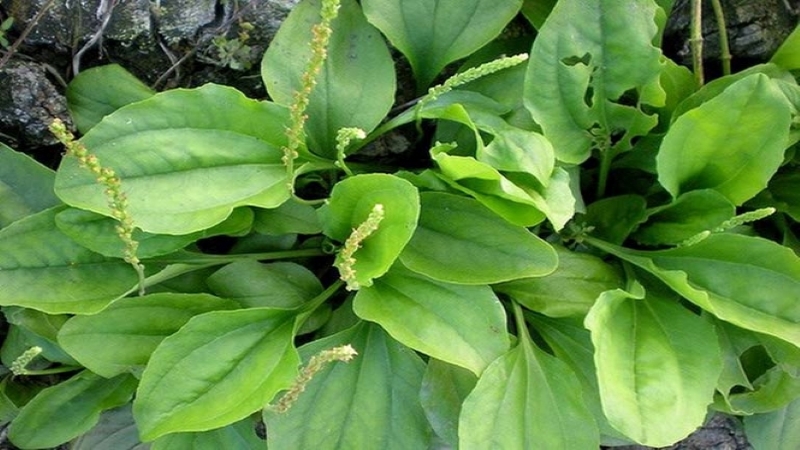
Common herbs from wild plants help improve digestion.
Ancient texts state that it should not be used by those who urinate excessively, have constipation, lack damp heat, have kidney deficiency, or suffer from internal injuries causing a decline in yang energy.
According to Traditional Chinese Medicine, plantain, also known as "ma tien xa," has the scientific name Plantago asiatica. It belongs to the group of herbaceous and perennial plants.
Plantain leaves are rich in calcium and minerals beneficial to health. It is estimated that 100 grams of plantain leaves contain an amount of vitamin A equivalent to that found in carrots. In addition, the leaves contain mucilage and vitamins C and K. The stem of the plantain plant contains many glucosides.
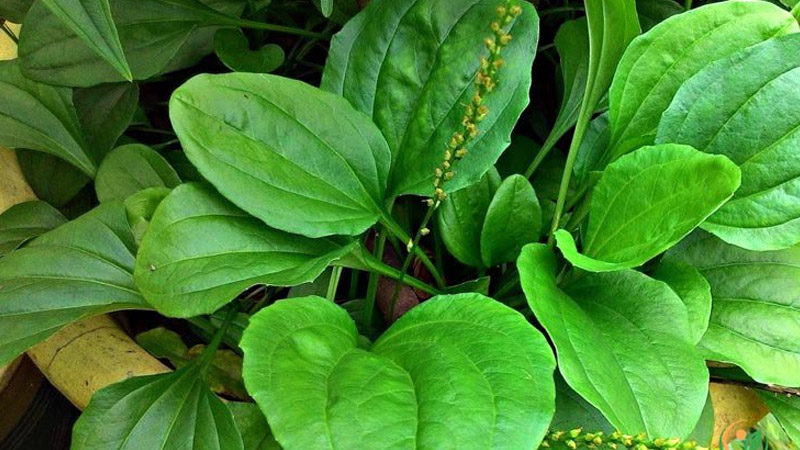
Plantain (Plantago major) has various beneficial effects, including diuretic, anti-dysentery, choleretic, antitussive, anti-inflammatory, and expectorant properties. It is also used in many traditional medicine remedies to treat coughs, excessive phlegm, bronchitis, nephritis, cystitis, urinary tract stones, dysuria, yellow urine, hematuria, hepatitis, cholecystitis, and peptic ulcers.
What are the uses of the wild plant *Plantago major*?
Treatment of kidney-related diseases
For acute glomerulonephritis, use plantain along with gypsum and ephedra as medicine, and jujube with cinnamon and licorice (6g each). One decoction should be taken daily.
For chronic glomerulonephritis, combine 16g of plantain with 12g of Poria cocos, 12g of Phellodendron amurense, 12g of Imperata cylindrica root, 12g of Phellodendron amurense, 12g of Coptis chinensis, 8g of Polyporus umbellatus, and 8g of Akebia quinata. Decoct and drink one dose daily.
Bladder stones
Use 30 grams of plantain along with 30 grams of Houttuynia cordata (another name for fish mint) and Lysimachia nummularia. Boil one dose of this mixture daily and drink it twice a day. Continue this treatment for 5 days.
Urinary tract stones
Use 20g of plantain, 30g of moneywort, and 20g of cogon grass root. Brew one dose of this mixture daily, or stop drinking it and drink it like tea, meaning you drink it several times a day.
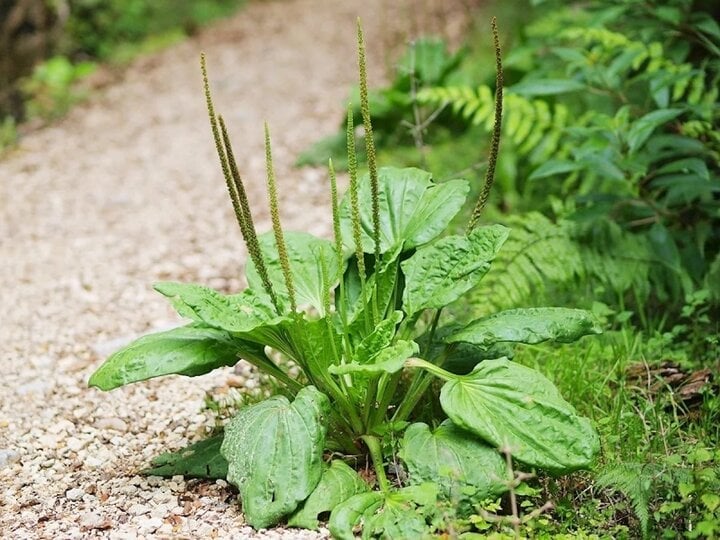
These wild vegetables grow lush and green without being cultivated or cared for, and are as nutritious as ginseng.
Treatment for hematuria (blood in urine)
Prepare 12g of plantain leaves and 12g of motherwort leaves. Crush them together to extract the juice, then drink the resulting liquid.
A remedy for hematuria and body heat in the elderly: Grind plantain seeds until they become a powder. Wrap the powder in a clean cloth, add two bowls of water, and simmer until only one bowl remains. Discard the residue. Mix the resulting powder with three cups of millet and cook into a porridge to eat on an empty stomach.
Taking this medicine regularly has a cooling effect on the body, especially useful on hot days. It also helps improve eyesight.
Treating nosebleeds
Wash fresh plantain leaves thoroughly and crush them into a fine paste. Add a little water to moisten the paste, then squeeze out the juice and drink it.
When experiencing a nosebleed, you should lie still in bed with your head elevated on a pillow, and apply the pulp of plantain leaves to your forehead to treat the condition. If the nosebleed is excessive, use a clean cotton ball to plug the bleeding nostril, and take medication for a few days; you should see an improvement in your condition.
Clears heat, promotes urination.
Take 10g of plantain seeds and 2g of licorice root, add 600ml of water, then simmer until about 200ml remains. Divide this into three equal portions and drink three times a day.
Impetigo in young children
Take a handful of fresh plantain leaves, wash them thoroughly, chop them finely, and then cook them with 100-150g of raw pork sausage. Eating this for a few days will cure the child. Drinking plantain flower tea has a cooling and diuretic effect.
Things to keep in mind when using exam codes
An article on the Medlatec Hospital website states that plantain is quite mild and safe for users. Furthermore, it is a medicinal herb with many benefits in supporting disease treatment, especially its diuretic, liver-cooling, and bile-promoting effects. However, plantain should not be used indiscriminately or excessively. When using plantain as medicine or tea, the following points should be noted:
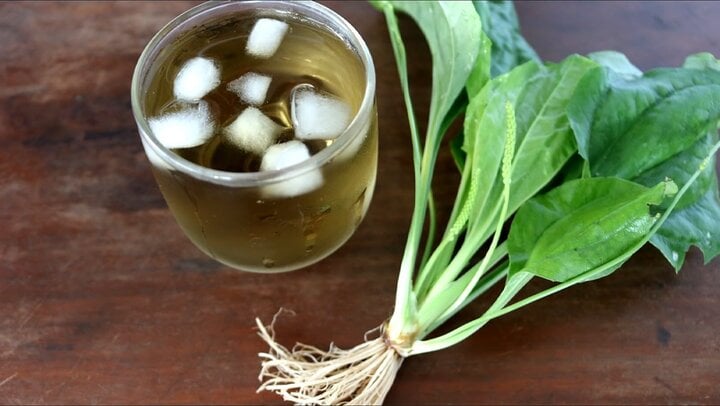
Plantain tea is very good for people with urinary tract infections.
Avoid using plantain as a daily beverage.
Many people believe that plantain is good for the liver and bile, and that dried plantain can be used to make tea to drink daily instead of water to protect the liver. However, using plantain too frequently is not good and may even be harmful.
Avoid using the code at night.
The main effect of plantain is its diuretic effect. Therefore, avoid using plantain in the evening, especially brewing it into a tea. Plantain can cause frequent nighttime urination, affecting sleep. Therefore, it is also a herb to avoid for people with kidney failure or weak kidneys.
Use with caution in pregnant women.
Plantain is not recommended for women in the early stages of pregnancy. The components in plantain are not beneficial for either mother or baby and may cause miscarriage.
Plantain has many uses, but only if used correctly, in the right dosage, and in the right combination with other medicinal formulas. For the best results when using plantain as a medicine, it is advisable to consult with a specialist and doctor.
Source: https://danviet.vn/loai-rau-dai-chang-cham-ma-moc-tot-um-o-khap-cac-vung-que-bo-ngang-sam-duoc-dan-gian-goi-la-cay-thuoc-20240512222203551.htm
![[Photo] Closing Ceremony of the 10th Session of the 15th National Assembly](/_next/image?url=https%3A%2F%2Fvphoto.vietnam.vn%2Fthumb%2F1200x675%2Fvietnam%2Fresource%2FIMAGE%2F2025%2F12%2F11%2F1765448959967_image-1437-jpg.webp&w=3840&q=75)
![[Photo] Prime Minister Pham Minh Chinh holds a phone call with the CEO of Russia's Rosatom Corporation.](/_next/image?url=https%3A%2F%2Fvphoto.vietnam.vn%2Fthumb%2F1200x675%2Fvietnam%2Fresource%2FIMAGE%2F2025%2F12%2F11%2F1765464552365_dsc-5295-jpg.webp&w=3840&q=75)






































![[OFFICIAL] MISA GROUP ANNOUNCES ITS PIONEERING BRAND POSITIONING IN BUILDING AGENTIC AI FOR BUSINESSES, HOUSEHOLDS, AND THE GOVERNMENT](https://vphoto.vietnam.vn/thumb/402x226/vietnam/resource/IMAGE/2025/12/11/1765444754256_agentic-ai_postfb-scaled.png)



























![[Infographic] Preventing students from making their own firecrackers: 7 things parents need to know](https://vphoto.vietnam.vn/thumb/402x226/vietnam/resource/IMAGE/2025/12/11/1765466656703_img_0320_20251211183542.jpeg)
















Comment (0)