

The Ministry of Industry and Trade has reviewed the draft of the revised Electricity Law to ensure consistency and uniformity with the provisions of the legal system.
Review to ensure consistency and uniformity.
In the Draft Electricity Law (revised) this time, Ministry of Industry and Trade A review has been conducted to ensure consistency and uniformity with relevant legal regulations, avoiding conflicts and overlaps in state management of dam and hydropower reservoir safety, especially the operation procedures of hydropower reservoirs and inter-reservoir operation for irrigation purposes, ensuring consistency with the provisions of the Law on Irrigation, the Law on Water Resources, the Law on Dikes, the Law on Disaster Prevention and Control, and the Law on Geology and Minerals.
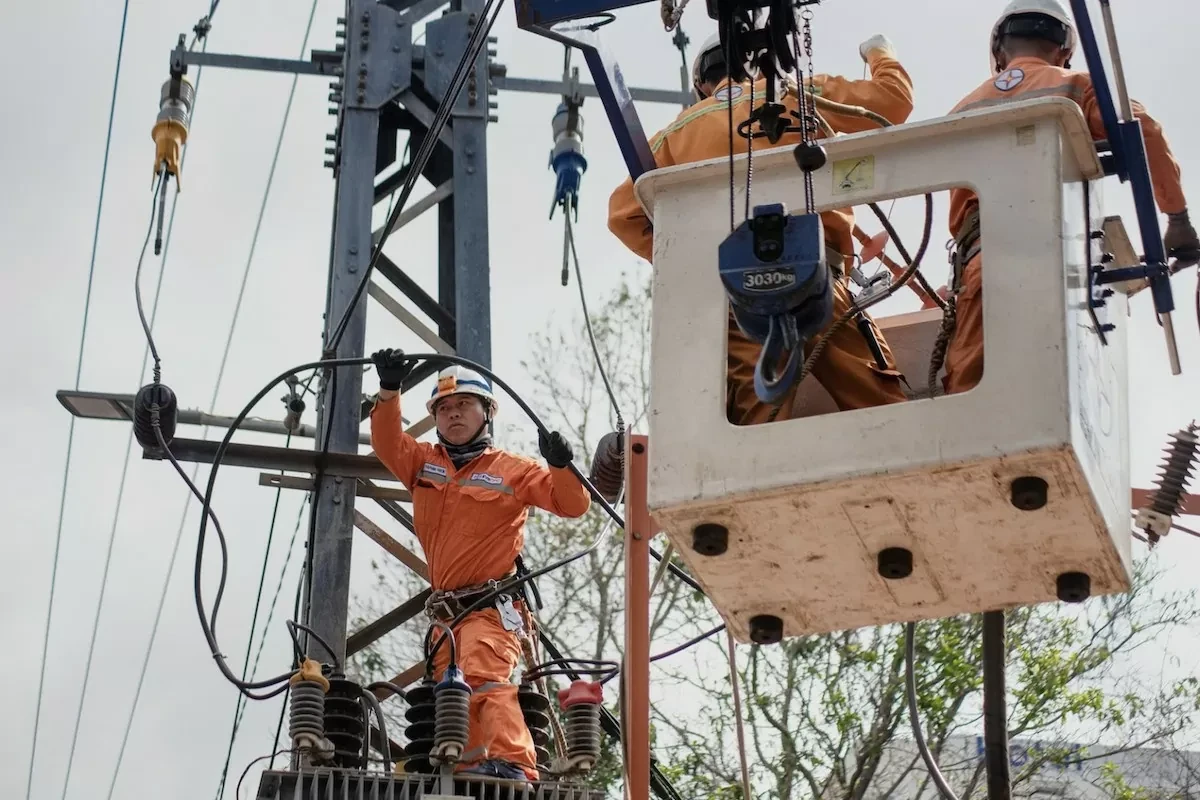
The Ministry of Industry and Trade has thoroughly reviewed relevant legal documents (including: the Law on Irrigation, the Law on Water Resources, the Law on Disaster Prevention and Control, the Law on Dikes, etc.) and found that no law provides detailed regulations on the safety of hydroelectric dams and reservoirs from the design and construction phases to the operation of the project. To date, the highest-level legal document regulating the safety of hydroelectric dams and reservoirs is Decree No. 114/2018/ND-CP (which is a decree guiding the implementation of the Law on Irrigation).
Furthermore, hydropower projects have very different characteristics from irrigation projects (most are privately invested in, managed, and operated; the operating regime and objectives differ from irrigation reservoirs; the power lines and auxiliary structures are also different...), and increasingly complex climate change and natural disasters also significantly affect the operation of these projects. Therefore, right from the drafting stage of the Law, it was agreed to add regulations on the safety of hydropower dams and reservoirs to policy group 6 of the Electricity Law, and this was concretized in Section 3, Chapter VII of the Draft Law with 6 articles detailing the contents on: General principles; safety management during the design and construction phases; safety during the operation phase; and regulations on measures to protect hydropower dams and reservoirs).
Furthermore, to ensure consistency with other relevant specialized laws, the provisions on the safety of hydropower projects require organizations and individuals to comply with regulations on dam and reservoir safety (according to the law on irrigation) and the law on water resources and disaster prevention.
Regarding the Law on Irrigation: Only Article 28 stipulates the operation of hydroelectric reservoirs and the operation of interconnected reservoirs for irrigation purposes during droughts and water shortages.
Law on Disaster Prevention and Control: Point a, Clause 8, Article 42 of the Law stipulates the responsibility of the Ministry of Industry and Trade as follows: “a) To issue, within its authority, or submit to competent authorities for issuance and direct the implementation of legal documents on ensuring the safety of hydropower reservoir projects under its management in disaster prevention and control;”
Law on Dikes: Only Clause 4 of Article 42 stipulates: "The Ministry of Industry shall preside over and coordinate with ministries and ministerial-level agencies to develop and implement plans to ensure the safety of hydropower projects, and direct the operation of water reservoirs according to technical standards on water reservoir operation."
The 2023 Water Resources Law, in Article 23, stipulates the protection of water source corridors for hydropower reservoirs; Article 36 stipulates that the Ministry of Industry and Trade directs the regulation and operation of hydropower reservoirs; Article 38 stipulates the reservoir operation process and the inter-reservoir operation process; Article 45 stipulates that the Ministry of Industry and Trade directs the review and adjustment of hydropower reservoir operation processes according to Article 38, Clause 4; Article 79 stipulates that the Ministry of Industry and Trade performs state management of ensuring the safety of dams and hydropower reservoirs under its management according to regulations on the exploitation and use of water resources.
Thus, all the specialized laws above assign responsibility to the Ministry of Industry and Trade for managing and ensuring the safety of hydroelectric dams and reservoirs. However, none of them contain provisions detailing the content of hydroelectric dam and reservoir safety management. Therefore, the amended Electricity Law needs to regulate the safety of hydroelectric dams and reservoirs during the design, construction, and operation phases, and to decentralize management responsibilities… as a legal basis for the Government and the Ministry of Industry and Trade to issue detailed regulations.
The Electricity Law (amended) is consistent with the draft Law on Fire Prevention, Firefighting and Rescue (amended).
Currently, the issue of safety control in the use of electricity for domestic and service purposes is specifically regulated in legal documents, such as: QCVN 12:2014/BXD, the national technical standard on electrical systems for residential and public buildings, applicable to organizations and individuals involved in the design and construction of electrical systems for residential and public buildings. This standard assigns responsibility to the Ministry of Construction for guiding the application of the standard and to state management agencies in the construction sector for organizing inspections and audits of the application of the standard in the design, construction, and acceptance of projects before they are put into operation.
Regarding this matter, Article 58 of the current Electricity Law, which regulates safety in the use of electricity for domestic and service purposes, specifically stipulates the conditions for ensuring electrical safety in domestic and service use and the responsibilities of electricity users in inspecting and ensuring electrical safety.
Article 17 of the current Fire Prevention and Fighting Law also stipulates fire prevention and fighting regulations for houses and residential areas, including requirements for electrical systems to ensure safety and regulations on electricity usage.
Despite existing regulations, local authorities have not paid sufficient attention to inspecting the safety of electrical systems in residential buildings, and awareness of safety regulations regarding electricity use remains very low. Therefore, recent recommendations from relevant authorities have suggested more specific regulations outlining the responsibilities of organizations and individuals in ensuring electrical safety in residential and commercial settings.
Accordingly, the Ministry of Industry and Trade has reviewed the amended Law on Fire Prevention and Rescue and assessed the content and regulations on electrical safety in daily life and services, concluding that they are consistent with the regulations on fire safety in the use of electricity in the amended Law on Fire Prevention and Rescue.
The draft Law on Electricity (amended) also clarifies the responsibilities of electricity users, electricity suppliers, and state management agencies in ensuring safety in the use of electricity for daily life and services. This will focus on more effectively implementing communication, guidance, and raising public awareness about safe electricity use.
Source


![[Image] Close-up of the newly discovered "sacred road" at My Son Sanctuary](/_next/image?url=https%3A%2F%2Fvphoto.vietnam.vn%2Fthumb%2F1200x675%2Fvietnam%2Fresource%2FIMAGE%2F2025%2F12%2F13%2F1765587881240_ndo_br_ms5-jpg.webp&w=3840&q=75)















































































Comment (0)